Artwork
The Labors of Hercules
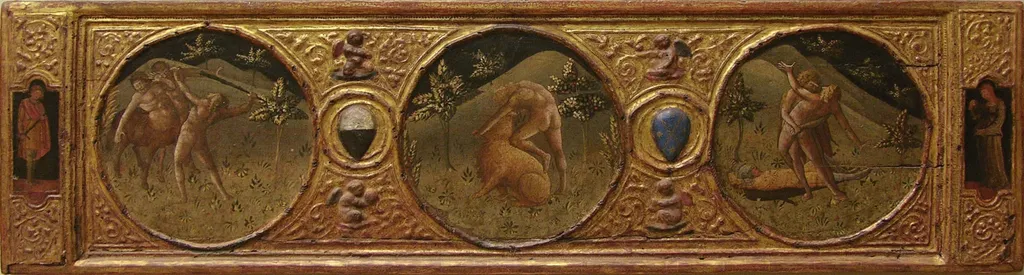
The Labors of Hercules is a tempera painting. It dates from 1437 and is held in the collection of the Metropolitan Museum of Art.
About this work
Subject & Meaning
These figures represent key elements of the canonical Labors, specifically alluding to the defeat of the Nemean Lion and the battle with the Centaurs.
Created in 1437, this tempera panel functions as a mythological narrative centered on Heracles (Hercules). The composition explicitly depicts the hero alongside a centaur, a lion, and a putto. These figures represent key elements of the canonical Labors, specifically alluding to the defeat of the Nemean Lion and the battle with the Centaurs.
The inclusion of a putto suggests a layered allegorical meaning, potentially contrasting heroic virtue with innocence or divine favor. As a work of Italian origin, likely Florentine or Sienese, the painting utilizes these specific iconographic markers to visualize the strength and moral triumph associated with the classical hero, serving as a visual embodiment of mythological struggle and victory.
Technique & Style
Created in 1437, The Labors of Hercules is executed in tempera on a wooden panel support. The work measures 47.6 centimeters in height and 176.5 centimeters in width, presenting a long, narrow format typical of the period's mythological narratives. As a product of the Italian tradition, likely from Florence or Siena, the painting employs the egg tempera technique to render figures such as Heracles, a centaur, a lion, and putti.
The medium allows for precise detailing within the mythological genre, characteristic of mid-15th-century panel painting. The composition relies on the durability and matte finish of tempera applied to the rigid panel structure, a standard practice for Florentine and Sienese artists of the era.
History & Provenance
The Labors of Hercules was created in 1437 as a tempera painting on panel. The work is attributed to an Italian artist, specifically identified as being from either the Florentine or Sienese school. Measuring 47.6 cm in height and 176.5 cm in width, the piece depicts mythological scenes involving Heracles, a centaur, a lion, and putti.
Currently, the painting resides in the collection of the Metropolitan Museum of Art. While the specific commission details and the full chain of ownership prior to its arrival at the museum are not detailed in the available records, the work's inception is firmly dated to 1437. Its classification as a mythological painting places it within the context of 15th-century Italian art traditions.
The Labors of Hercules, a tempera panel dated 1437, is held in the collection of the Metropolitan Museum of Art, where it is recorded as part of that institution's holdings. The work's physical characteristics, including a height of 47.6 cm and a width of 176.5 cm, are documented in its cataloguing data. No specific accession number, department assignment, or prior exhibition history is recorded in the available sources.
Overview
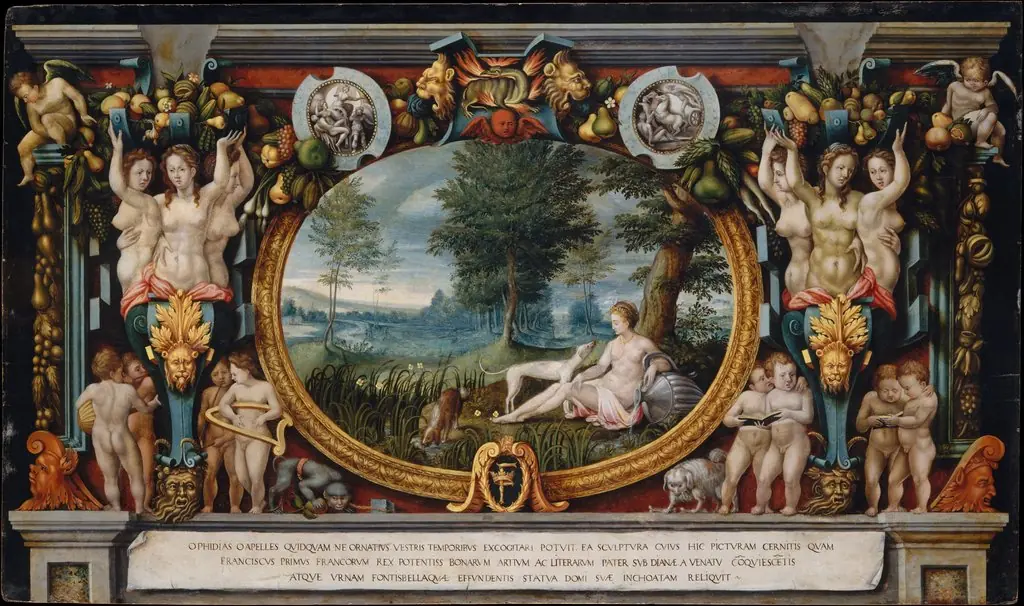
This tempera painting, titled 'The Labors of Hercules,' presents a triptych of oval scenes. Each scene is encased within an elaborate gold frame, which also features intricate decorations and smaller figures filling the surrounding spaces. The work visually narrates aspects of the mythological hero's challenges, offering a condensed visual account of his legendary exploits.
Artist & collection

- Meering between Saint Rochus an Gothardus
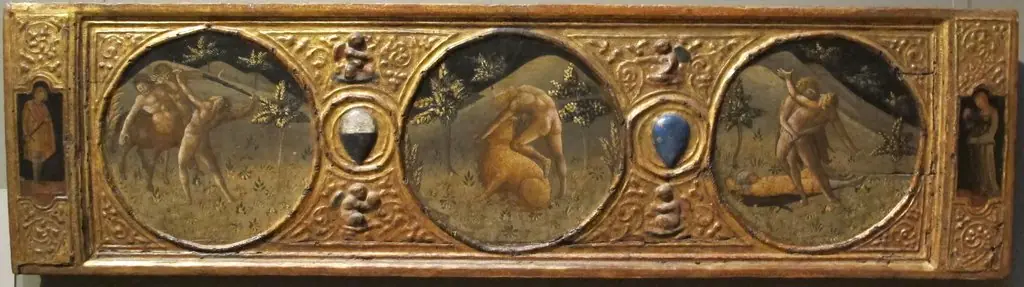 fatiche di ercole con stemmi ginazzi e boni
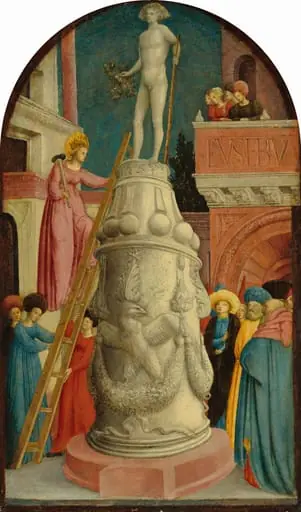 Saint Apollonia Destroys a Pagan Idol
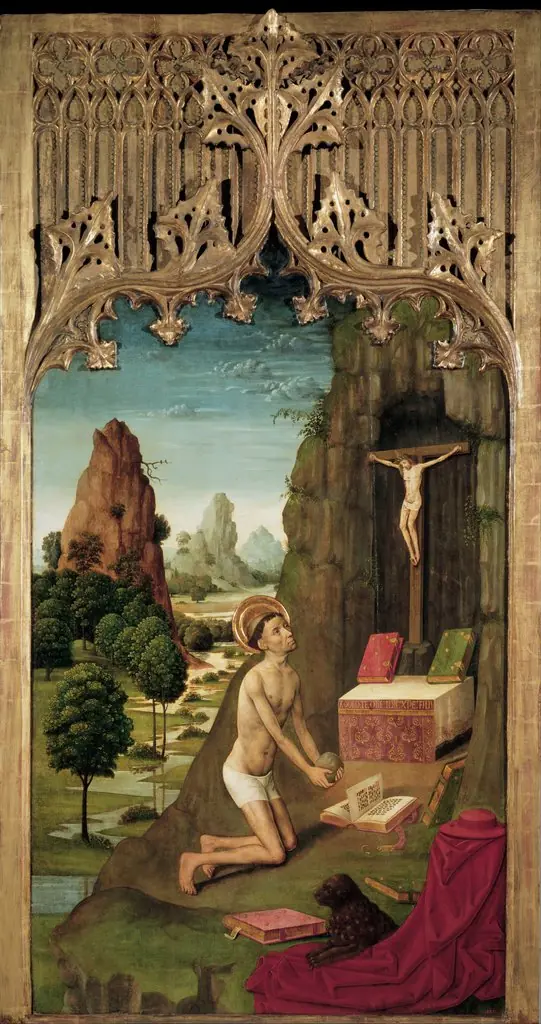 Saint Jerome Penitent
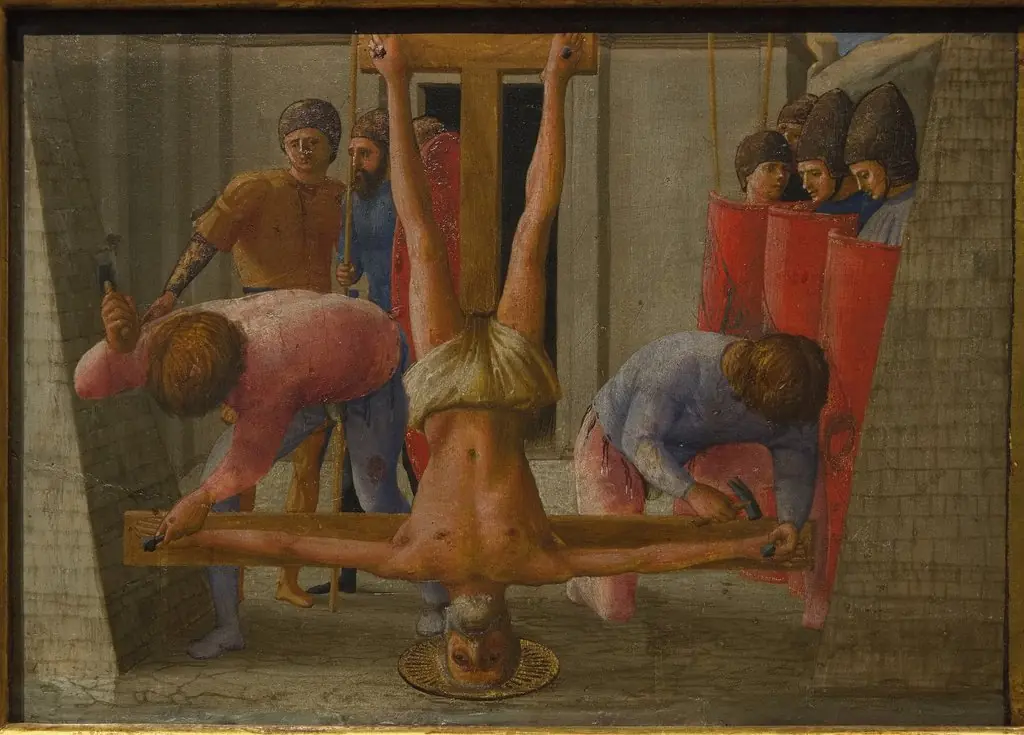 The Crucifixion of Saint Peter
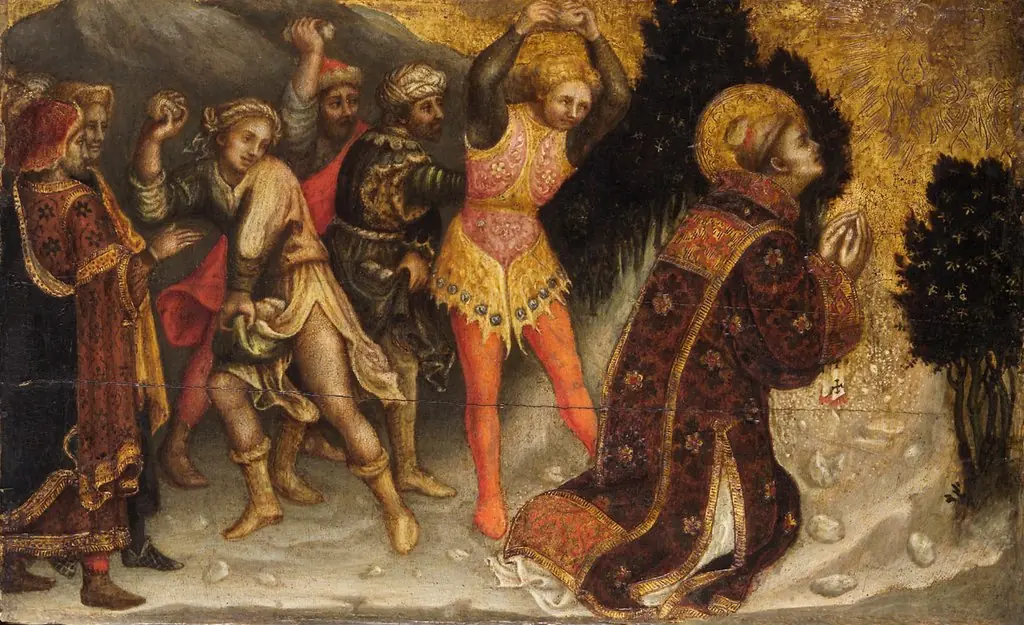 Stoning of St. Stephen
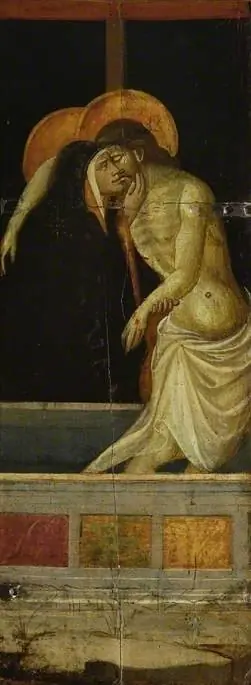 St Jerome and St Francis; reverse, Mary Magdalene embracing The Cross
 Apollo killing Python (Ovid, Metamorphoses, I, 438ff.)
 Discovering the Grave
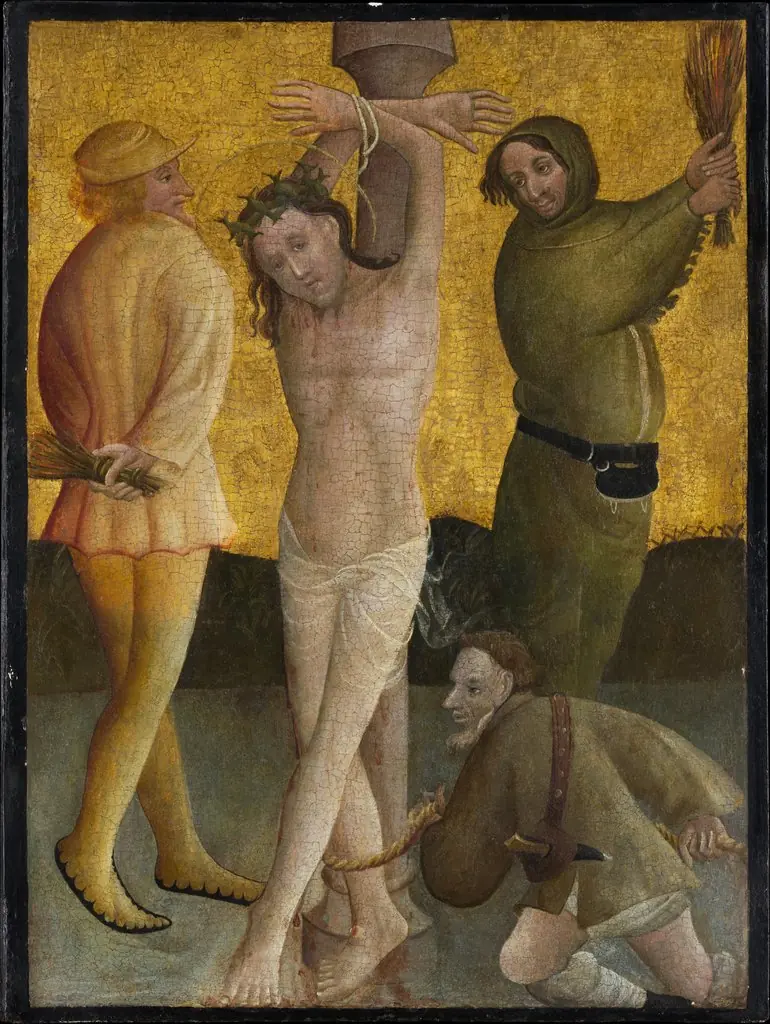 The Flagellation
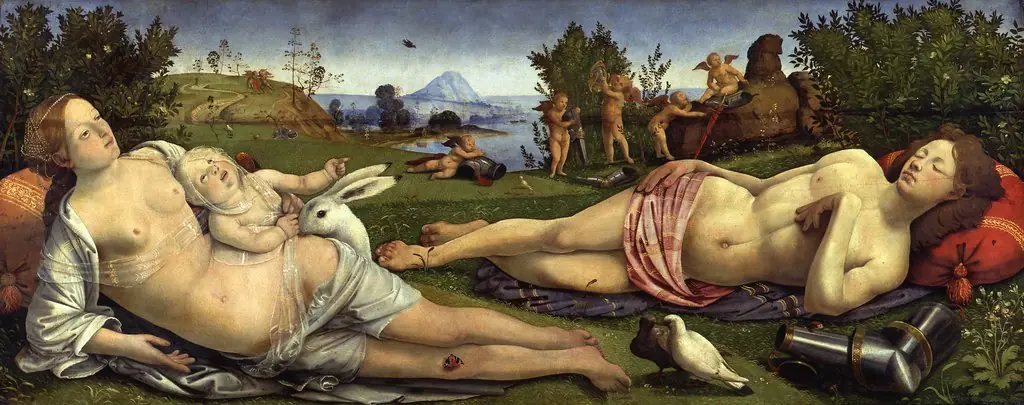 Venus, Mars and Cupid
 São Vicente na Cruz em Aspa