Artwork
The Parrot Addresses Khujasta at the Beginning of the Twelfth Night, from a Tuti-nama (Tales of a Parrot)
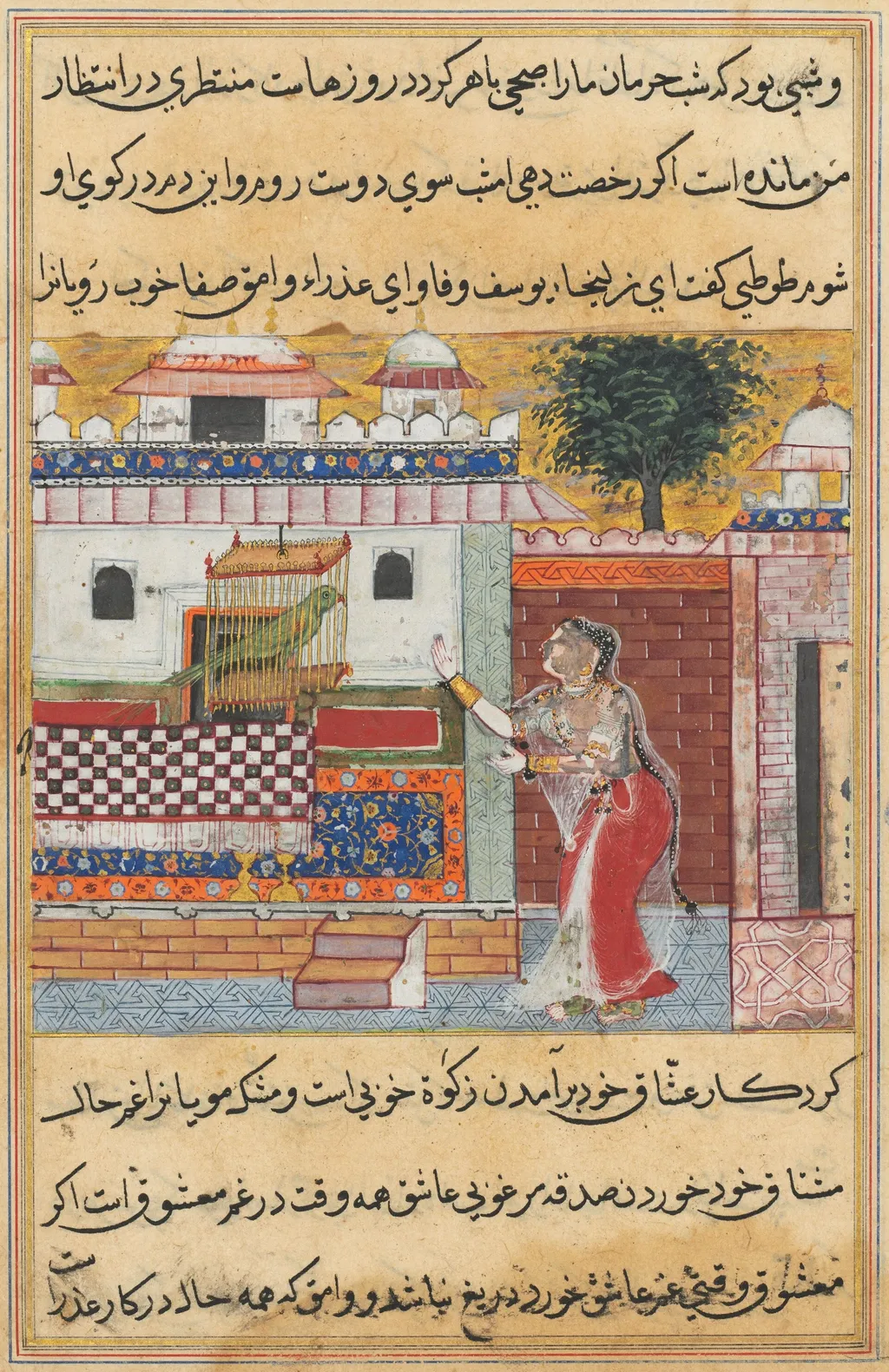
The Parrot Addresses Khujasta at the Beginning of the Twelfth Night, from a Tuti-nama (Tales of a Parrot) is an unspecified painting. It dates from 1560 and is held in the collection of the Cleveland Museum of Art.
About this work
History & Provenance
The painting The Parrot Addresses Khujasta at the Beginning of the Twelfth Night, from a Tuti-nama (Tales of a Parrot), is held in the Cleveland Museum of Art.
The painting, dated to 1560, is attributed to an unknown artist and illustrates a scene from the Tuti-nama (Tales of a Parrot) manuscript. Classified as a painting, it is part of the Cleveland Museum of Art’s collection, where it is recorded under accession number 1962.279.95.a. The work entered the museum in 1962, and no earlier ownership or commission details are documented in the available sources for scholarly study and public.
The painting The Parrot Addresses Khujasta at the Beginning of the Twelfth Night, from a Tuti-nama (Tales of a Parrot), is held in the Cleveland Museum of Art. It forms part of the museum’s permanent collection under the accession number 1962.279.95.a.
The work has been exhibited as part of the museum’s Islamic art holdings, though specific exhibition histories beyond its inclusion in the Cleveland Museum of Art’s galleries are not documented in the available sources.
Overview
The work depicts a woman in a vivid red garment standing before a building façade, her hand raised as if addressing the bird confined within a golden cage. The parrot perches on an ornate platform draped with a checkered cloth, while a tree and a red‑brick wall form the background. Bright hues and intricate patterns give the scene a narrative, storybook quality.
Subject & Meaning
The composition illustrates a moment from the Persian literary tradition of the Tuti‑nama, in which a parrot delivers counsel to the heroine Khujasta. The woman’s concealed face and gesturing hand emphasize the act of communication, suggesting themes of wisdom conveyed through animal interlocutors within courtly romance.
Technique & Style
Executed with meticulous brushwork, the painting employs a flat, decorative surface typical of manuscript illustration, yet rendered on a larger panel. The palette relies on saturated reds, golds, and greens, while patterned textiles and architectural details are delineated with fine linear strokes, creating a stylized yet narrative‑driven visual language.
Context
The Tuti‑nama genre, translating to “Book of the Parrot,” was popular in Persian courts, using the bird as a moral voice. Such illustrated scenes were often employed to adorn luxury books, reinforcing the didactic function of storytelling through elaborate visual accompaniment.
Artist & collection

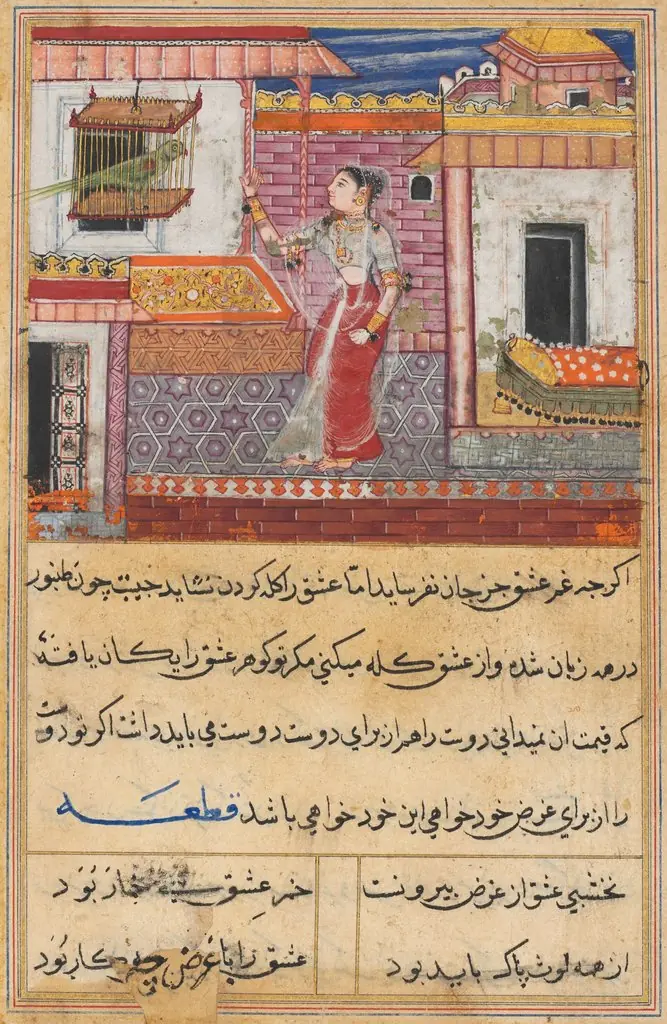
- The Parrot Addresses Khujasta at the Beginning of the Thirteenth Night, from a Tuti-nama (Tales of a Parrot)
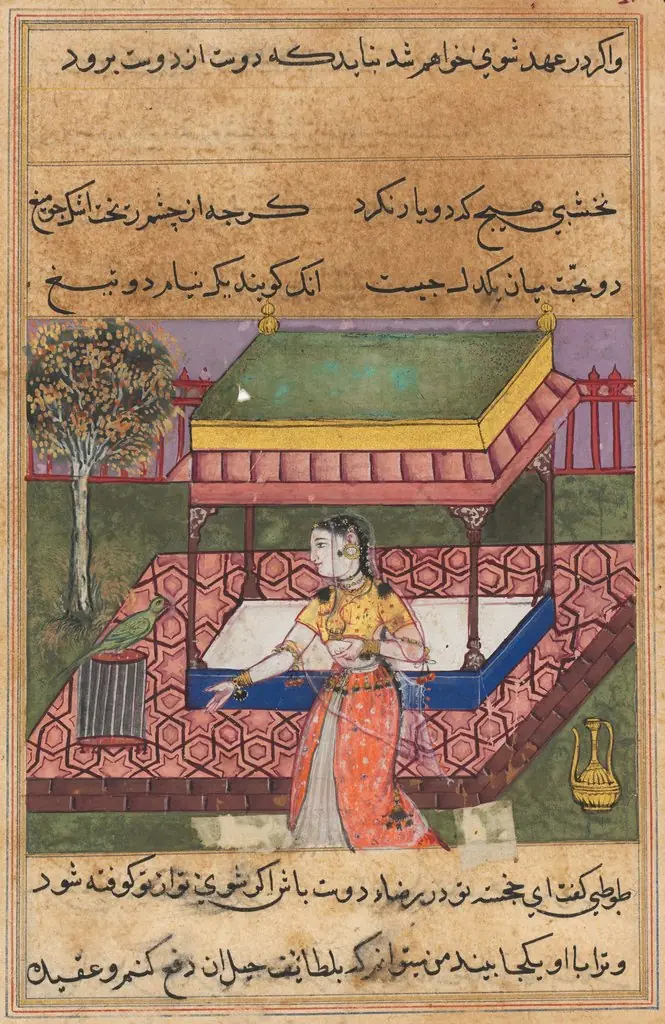 The parrot addresses Khujasta at the beginning of the fortieth night, from a Tuti-nama (Tales of a Parrot)
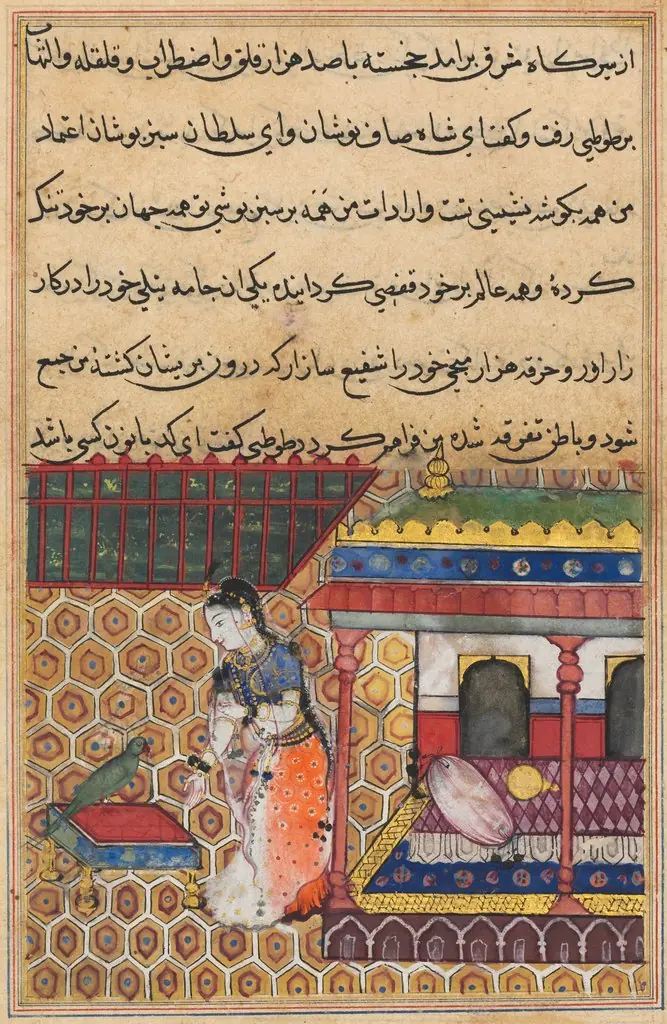 The parrot addresses Khujasta at the beginning of the thirty-eighth night, from a Tuti-nama (Tales of a Parrot)
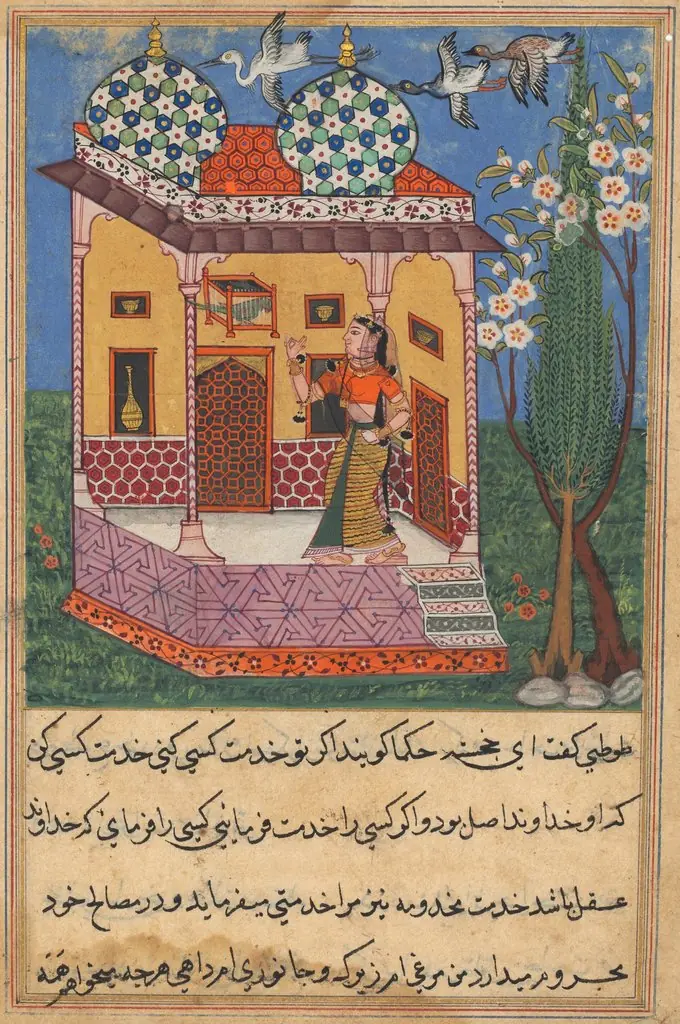 The Parrot Addresses Khujasta at the Beginning of the Twenty-sixth Night, from a Tuti-nama (Tales of a Parrot)
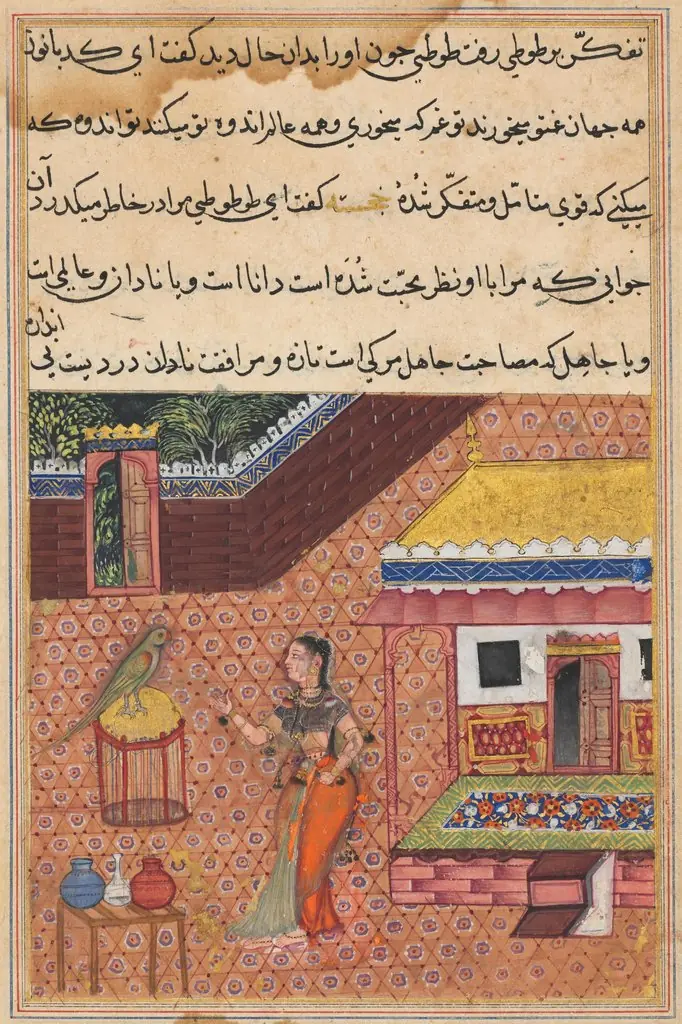 The parrot addresses Khujasta at the beginning of the thirty-fourth night, from a Tuti-nama (Tales of a Parrot)
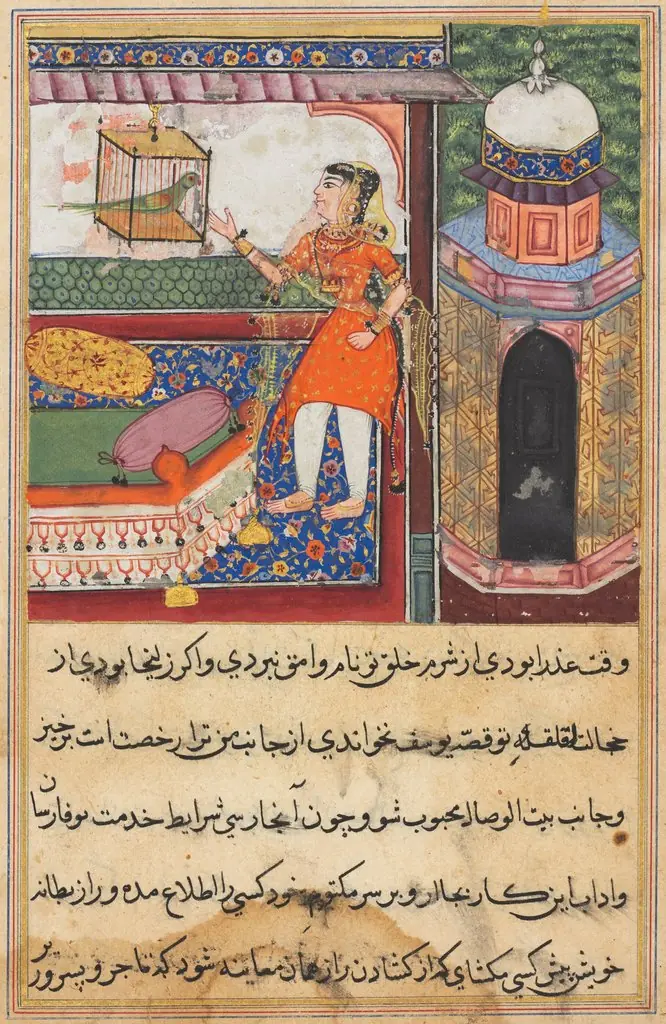 The Parrot Addresses Khujasta at the Beginning of the Tenth Night, from a Tuti-nama (Tales of a Parrot)
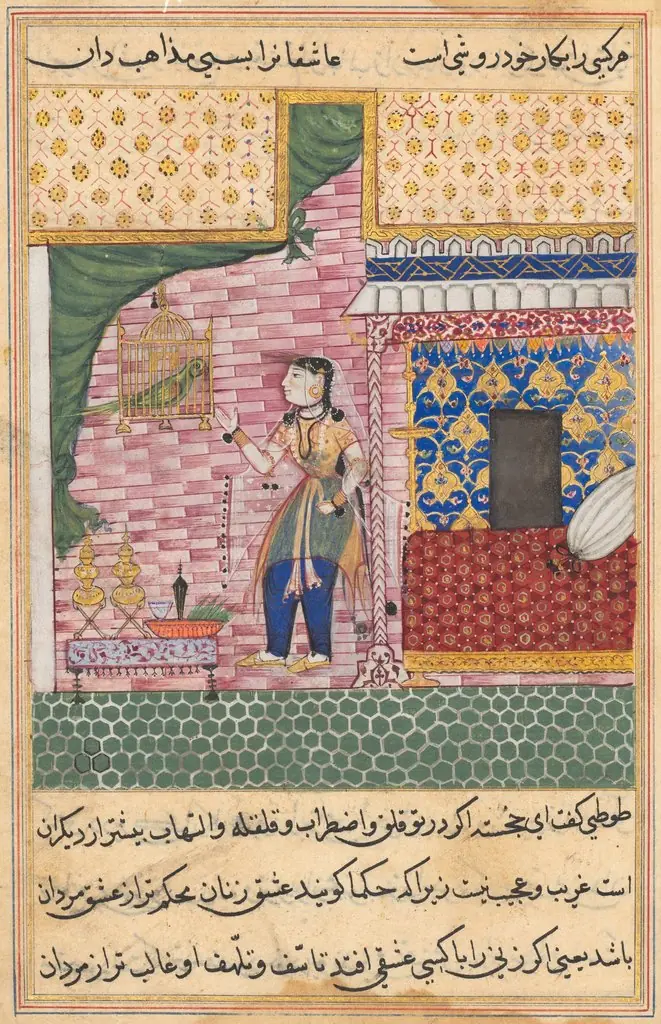 The Parrot Addresses Khujasta at the Beginning of the Seventeenth Night, from a Tuti-nama (Tales of a Parrot)
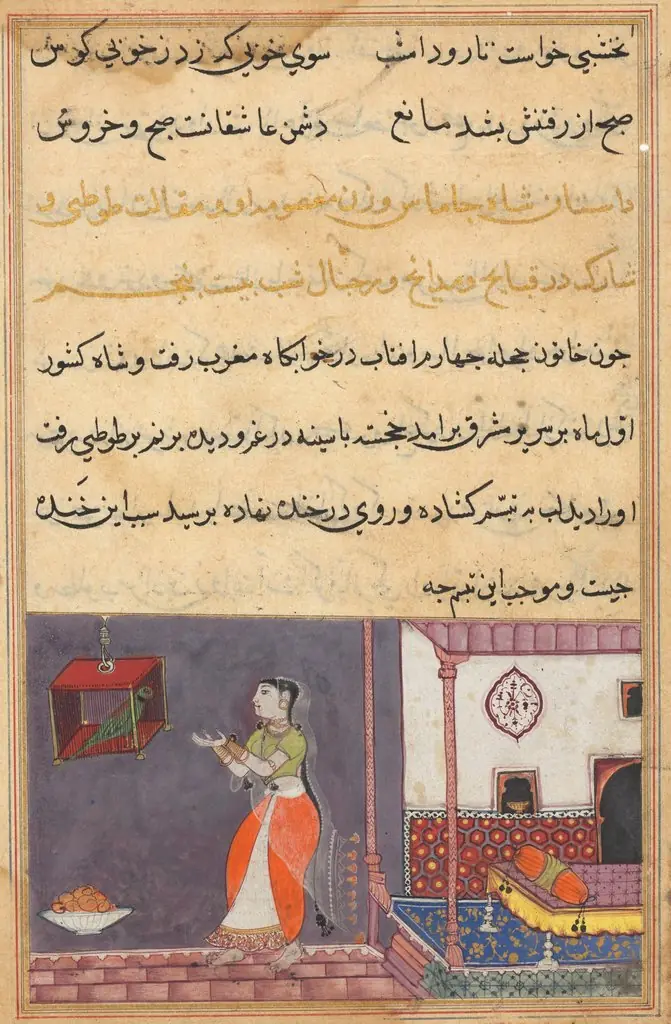 The Parrot Addresses Khujasta at the Beginning of the Twenty-fifth Night, from a Tuti-nama (Tales of a Parrot)
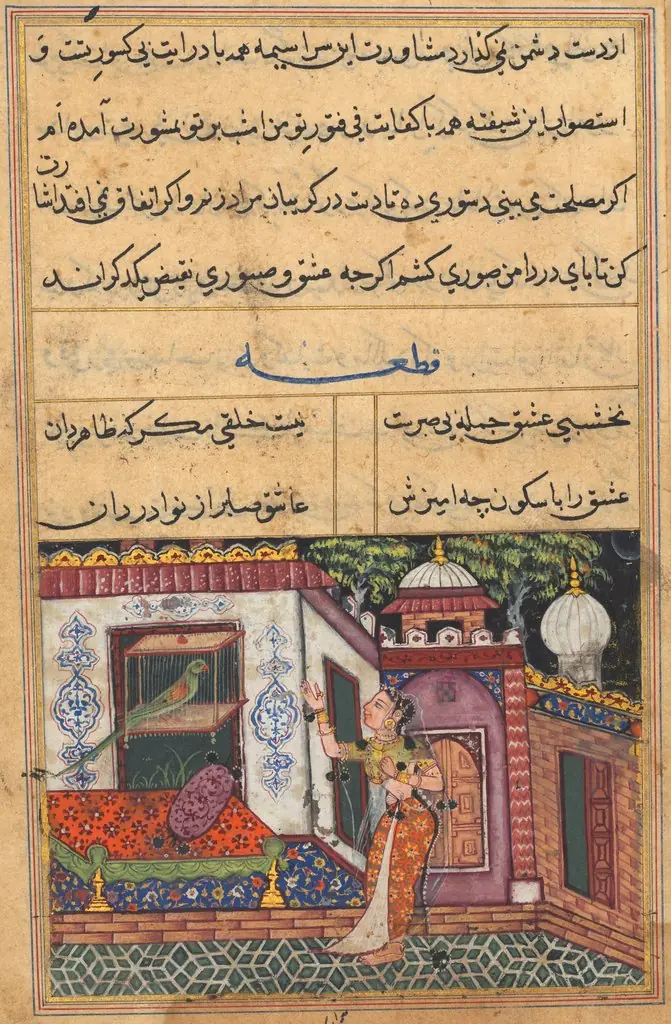 The Parrot Addresses Khujasta at the Beginning of the Eleventh Night, from a Tuti-nama (Tales of a Parrot)
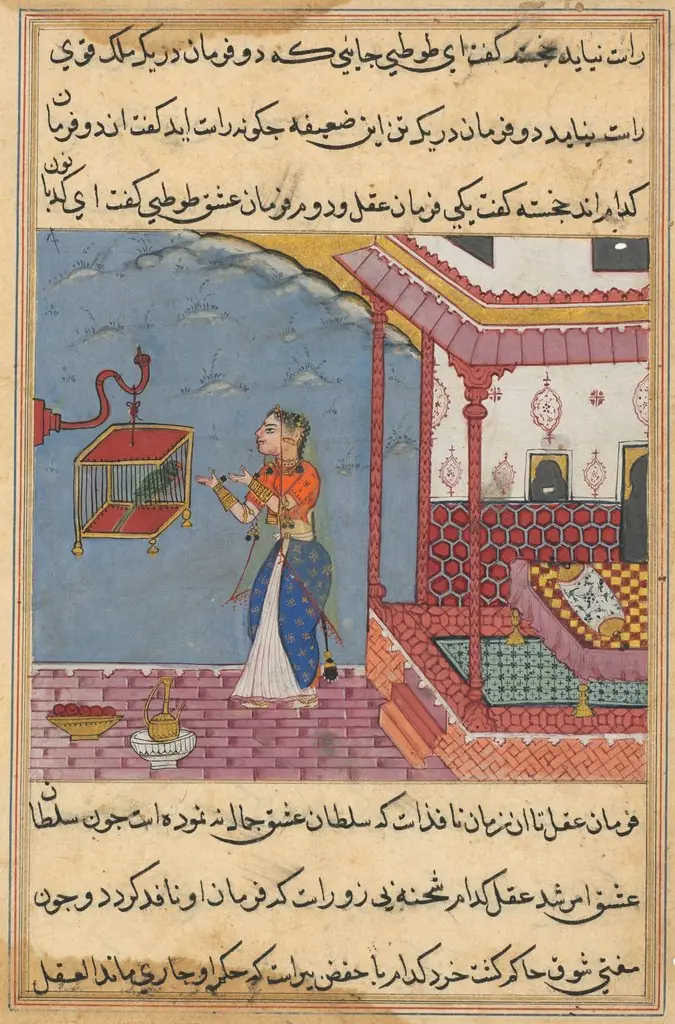 The Parrot Addresses Khujasta at the Beginning of the Twenty-Fourth Night, from a Tuti-nama (Tales of a Parrot)
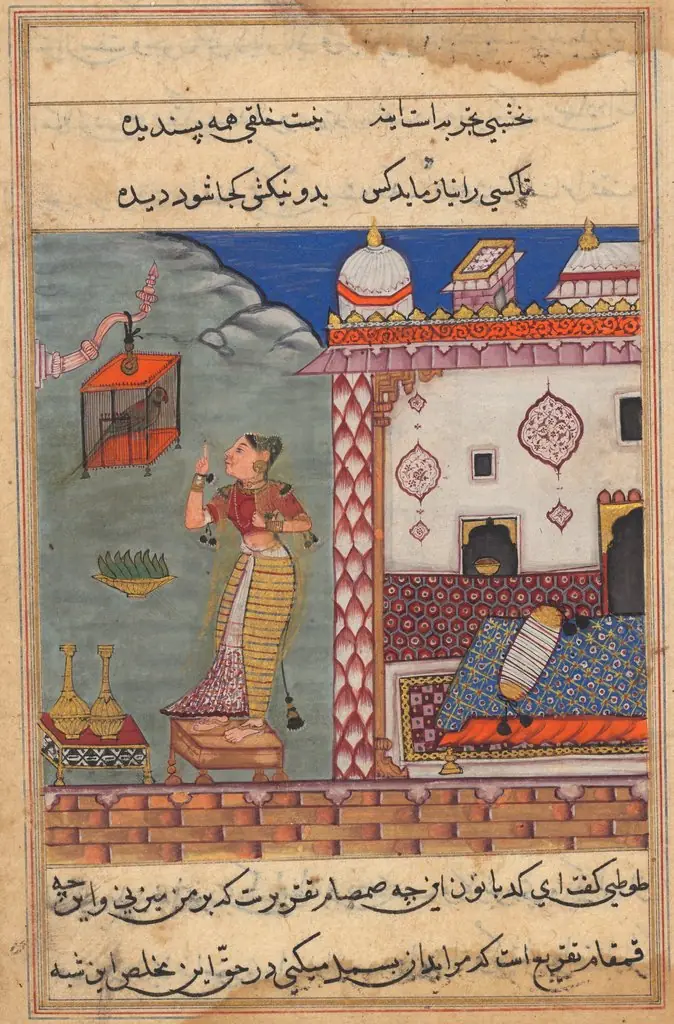 The Parrot Addresses Khujasta at the Beginning of the Twenty-seventh Night, form a Tuti-nama (Tales of a Parrot)
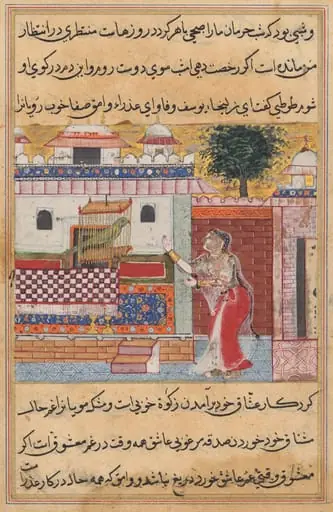 The Parrot Addresses Khujasta at the Beginning of the Twelfth Night, from a Tuti-nama (Tales of a Parrot)
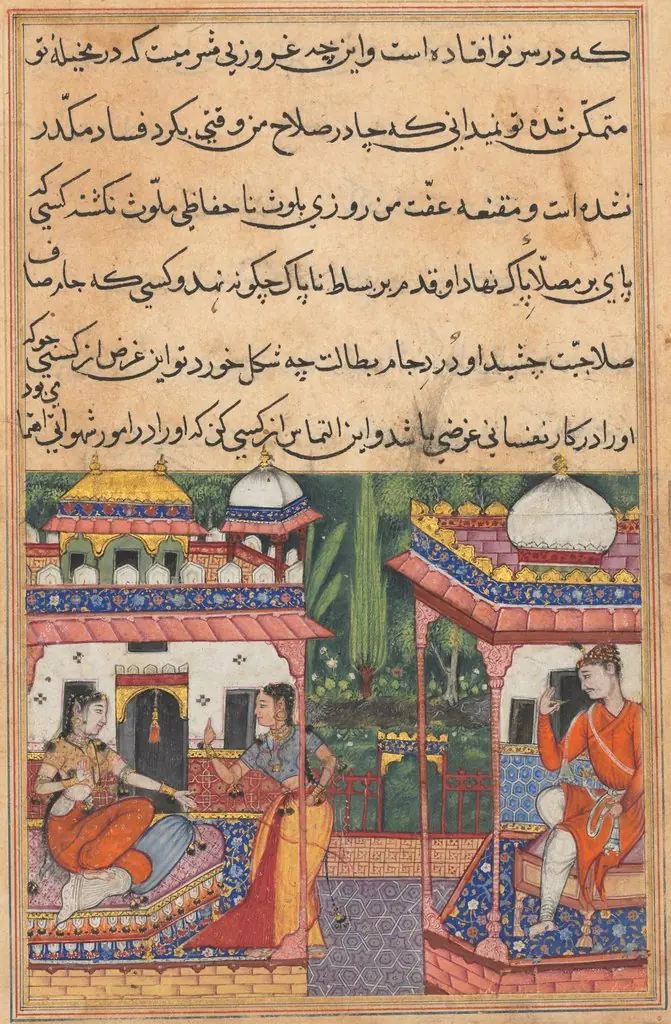 Kaiwan sends a message of love to Khurshid, wife of his brother Utarid who is away on a journey, from a Tuti-nama (Tales of a Parrot): Thirty-second Night
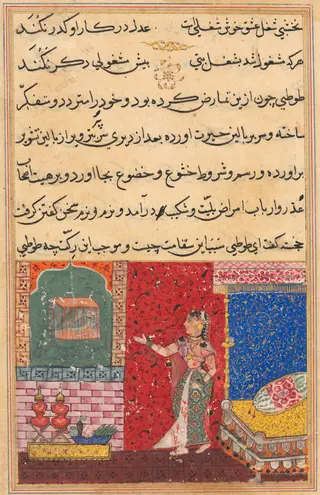 The Parrot Addresses Khujasta at the Beginning of the Fifteenth Night, from a Tuti-nama (Tales of a Parrot)
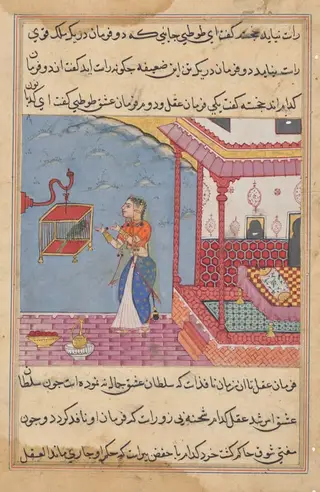 The Parrot Addresses Khujasta at the Beginning of the Twenty-Fourth Night, from a Tuti-nama (Tales of a Parrot)