Artwork
The Parrot Addresses Khujasta at the Beginning of the Thirteenth Night, from a Tuti-nama (Tales of a Parrot)
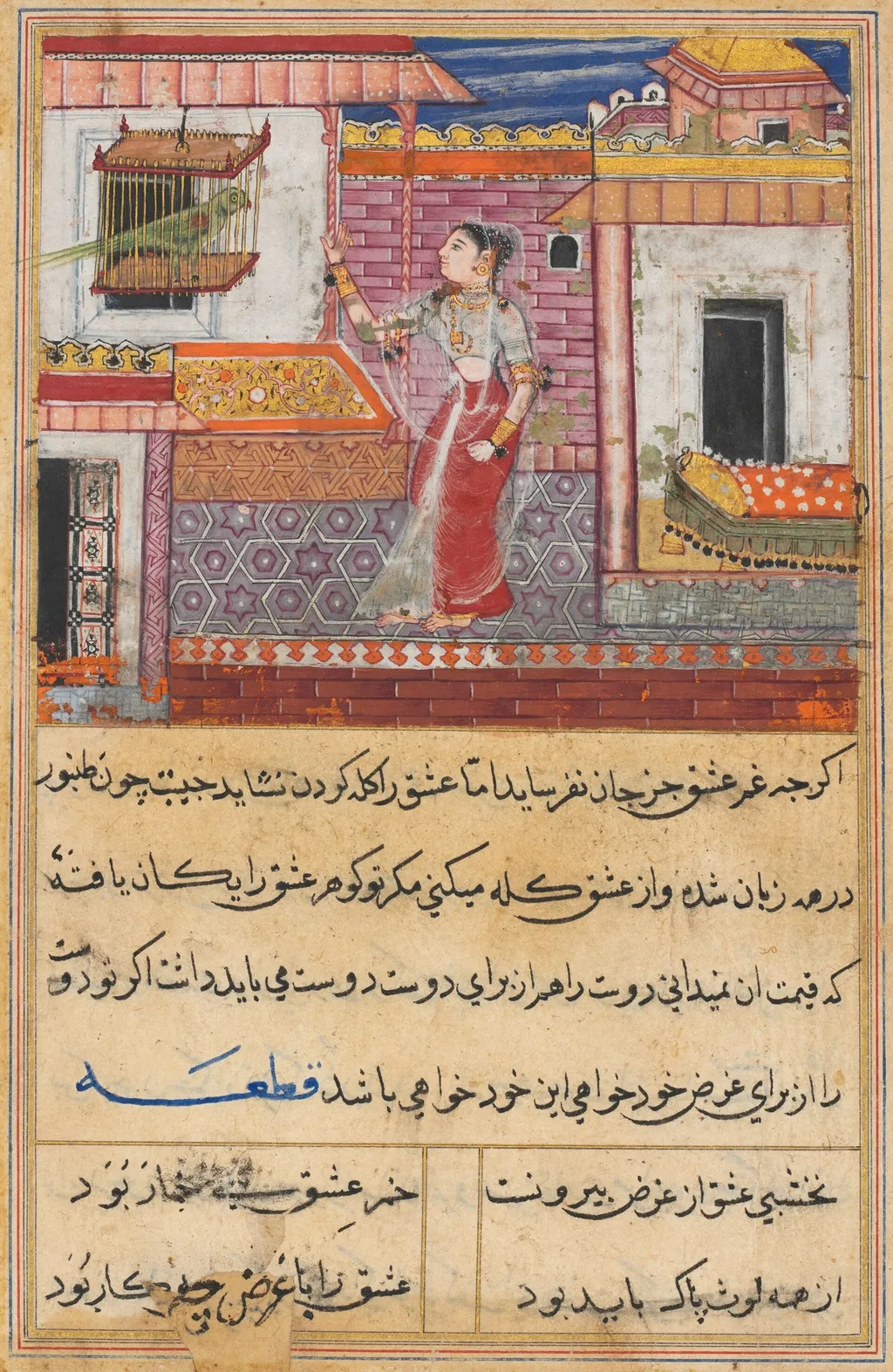
The Parrot Addresses Khujasta at the Beginning of the Thirteenth Night, from a Tuti-nama (Tales of a Parrot) is an unspecified painting. It dates from 1560 and is held in the collection of the Cleveland Museum of Art.
About this work
Technique & Style
Its composition features a parrot speaking to Khujasta beneath a night sky rendered in deep indigo, with delicate floral borders framing the scene.
The painting is executed in tempera on paper, forming part of a Mughal-era manuscript. Its composition features a parrot speaking to Khujasta beneath a night sky rendered in deep indigo, with delicate floral borders framing the scene. The figures display characteristic Mughal stylization, including elongated eyes and intricate patterning in their garments, while the spatial depth emerges through layered silhouettes against the darkened background.
History & Provenance
The Parrot Addresses Khujasta at the Beginning of the Thirteenth Night is a Mughal miniature painting dated to 1560, created as part of a Tuti-nama (Tales of a Parrot) manuscript. The artist is unknown, and no specific commission is recorded in the sources. Prior to entering a public collection, the work’s ownership history is not documented in the available material.
It is now held by the Cleveland Museum of Art, where it bears the accession number 1962.279.102.b and has been part of the museum’s holdings since its acquisition in 1962.
The painting is held in the collection of the Cleveland Museum of Art in Cleveland, United States. Its specific inventory designation within the museum is 1962.279.102.b. The work was created in the Mughal Empire around 1560. The provided sources do not list any specific exhibitions in which this artwork has appeared.
Context
The work belongs to the Mughal painting tradition of the sixteenth century, executed circa 1560 within the imperial atelier of the Mughal Empire. It forms part of a dispersed Tuti-nama manuscript, a Persianate narrative cycle that was adapted and illustrated in Mughal court circles, reflecting the syncretic artistic milieu of the period. The piece demonstrates the stylistic refinement characteristic of Mughal manuscript painting, where narrative clarity and decorative precision converge, situating it within the broader trajectory of Indian court art and its dialogue with Persianate literary forms.
Overview
The work portrays a woman dressed in a red sari, positioned before an interior space that includes a tiled floor and a decorative wall with a window and doorway. To her left a caged parrot is shown, its feathers rendered with fine detail. The woman’s right hand is raised as if speaking to the bird, and she wears gold jewelry that catches the eye.
Subject & Meaning
The scene illustrates a moment from the Persian narrative tradition of the Tuti‑nama, or "Tales of a Parrot," in which a parrot addresses a character named Khujasta on the thirteenth night. The interaction suggests a dialogue between human and animal, a common motif in literary illustrations that explores themes of communication, wisdom, and the supernatural.
Artist & collection

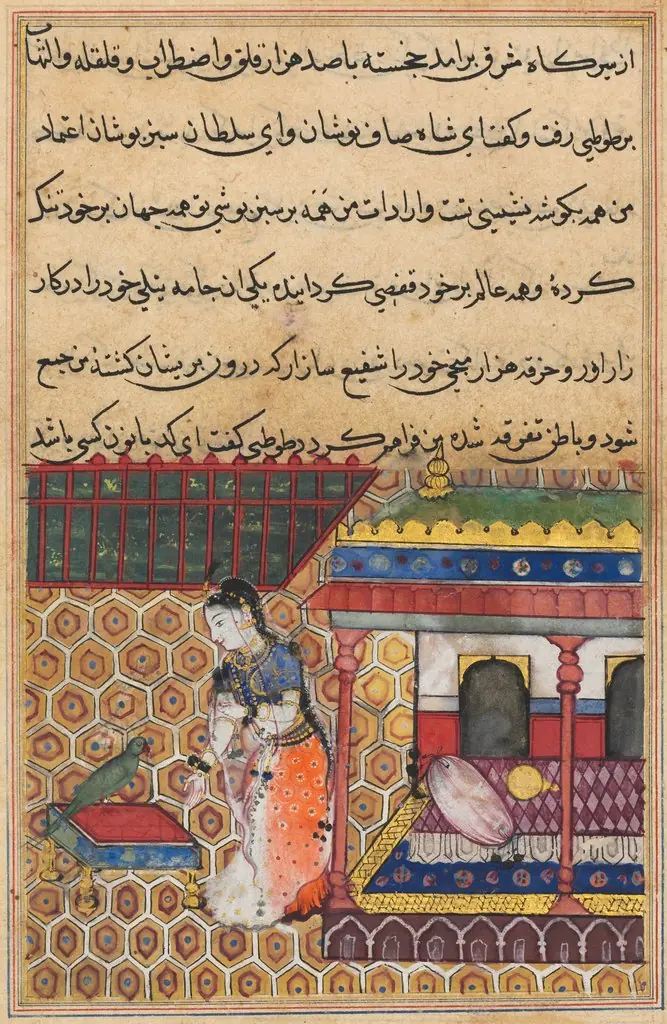
- The parrot addresses Khujasta at the beginning of the thirty-eighth night, from a Tuti-nama (Tales of a Parrot)
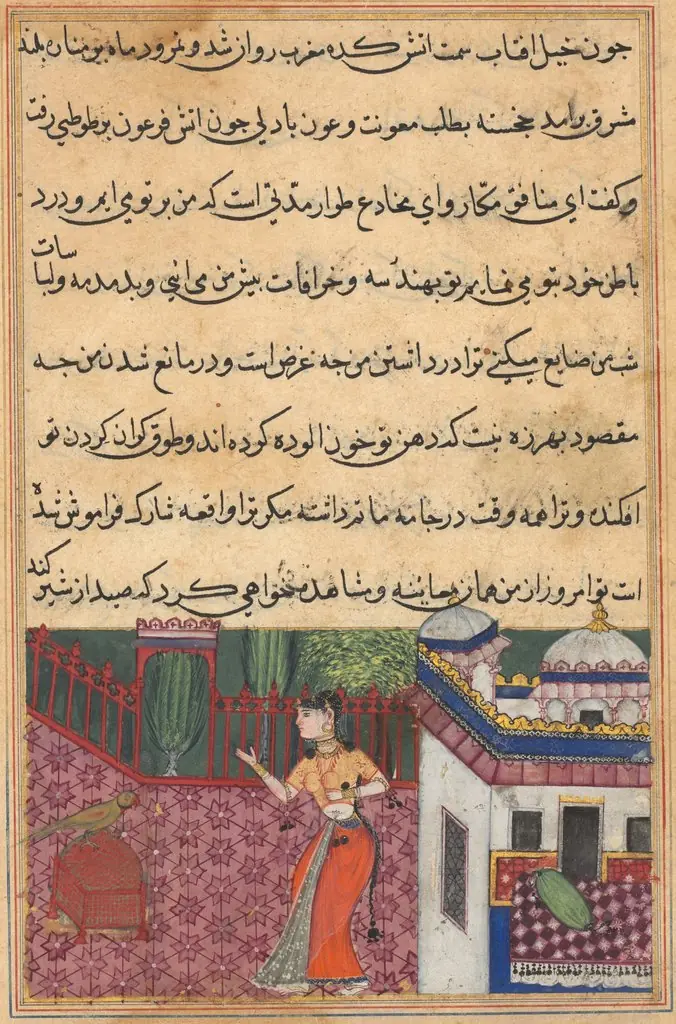 The parrot addresses Khujasta at the beginning of the thirty-third night, from a Tuti-nama (Tales of a Parrot)
 The Parrot Addresses Khujasta at the Beginning of the Thirteenth Night, from a Tuti-nama (Tales of a Parrot)
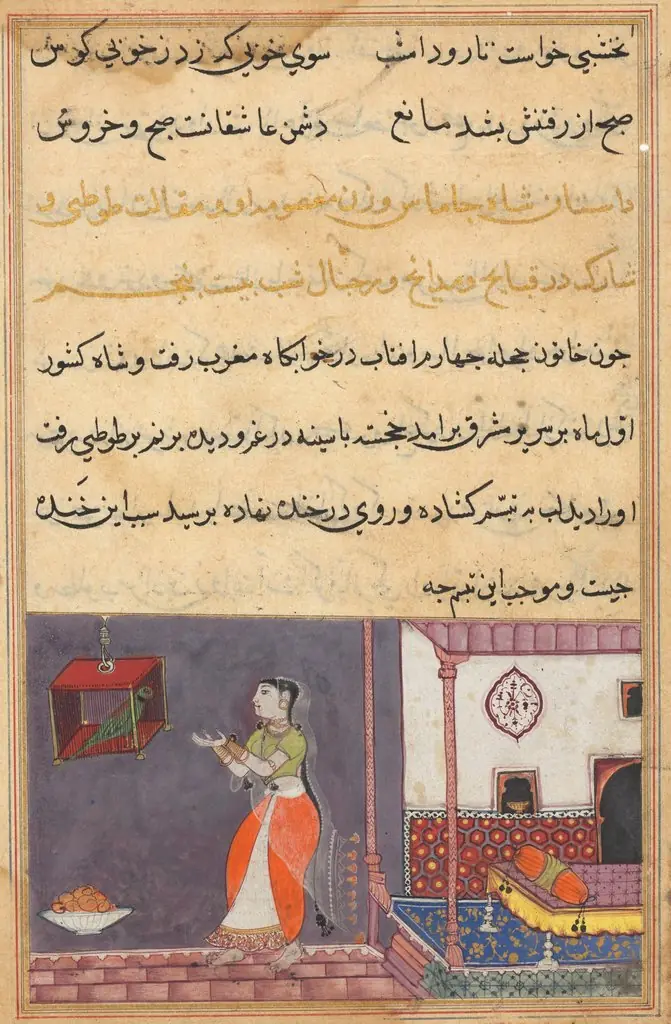 The Parrot Addresses Khujasta at the Beginning of the Twenty-fifth Night, from a Tuti-nama (Tales of a Parrot)
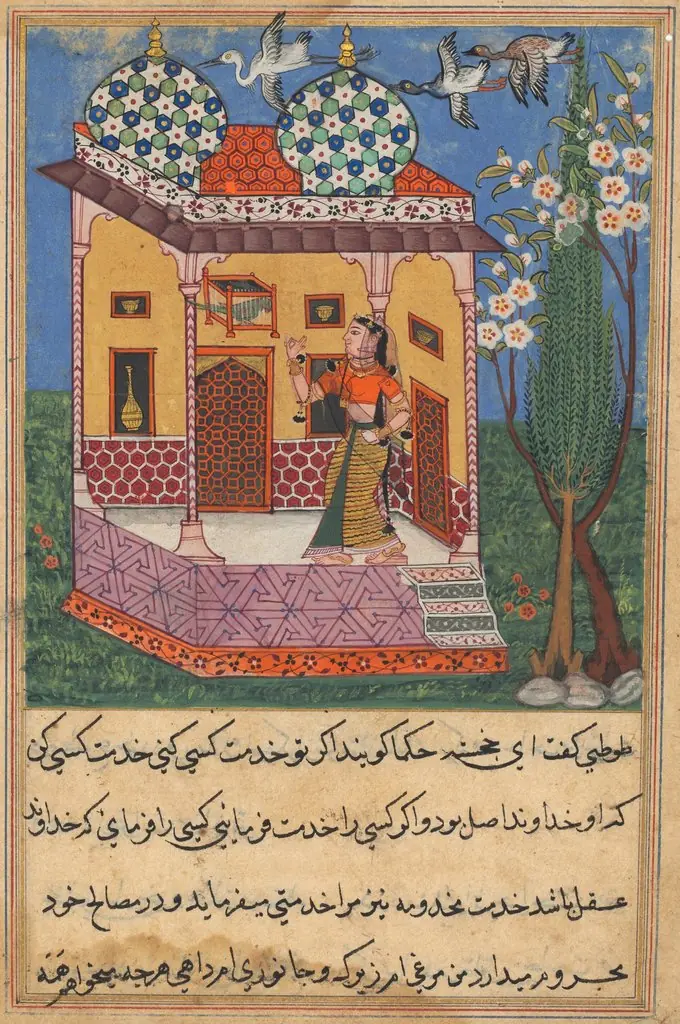 The Parrot Addresses Khujasta at the Beginning of the Twenty-sixth Night, from a Tuti-nama (Tales of a Parrot)
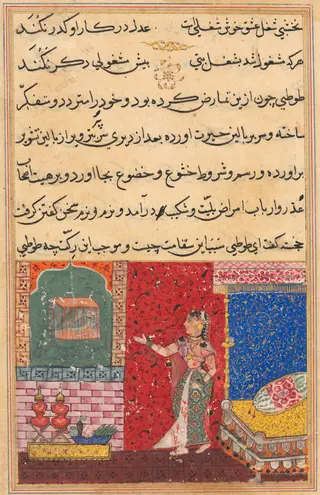 The Parrot Addresses Khujasta at the Beginning of the Fifteenth Night, from a Tuti-nama (Tales of a Parrot)
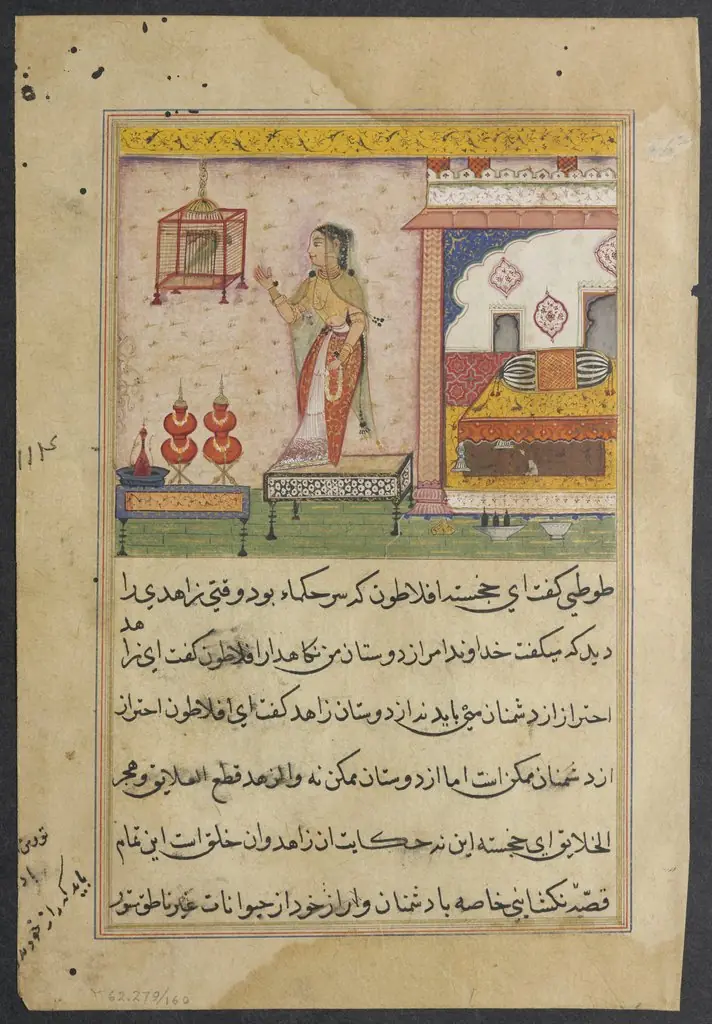 The Parrot Addresses Khujasta at the Beginning of the Twenty-third Night, from a Tuti-nama (Tales of a Parrot)
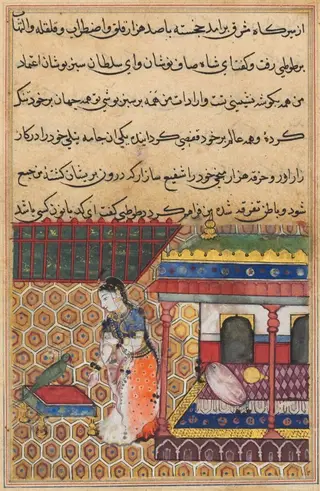 The parrot addresses Khujasta at the beginning of the thirty-eighth night, from a Tuti-nama (Tales of a Parrot)
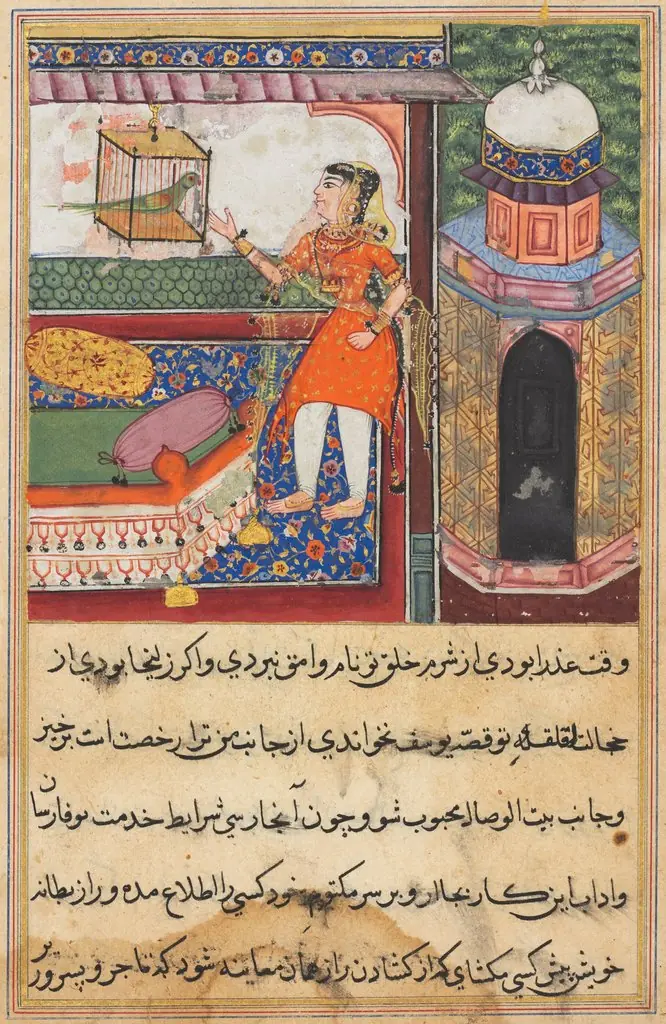 The Parrot Addresses Khujasta at the Beginning of the Tenth Night, from a Tuti-nama (Tales of a Parrot)
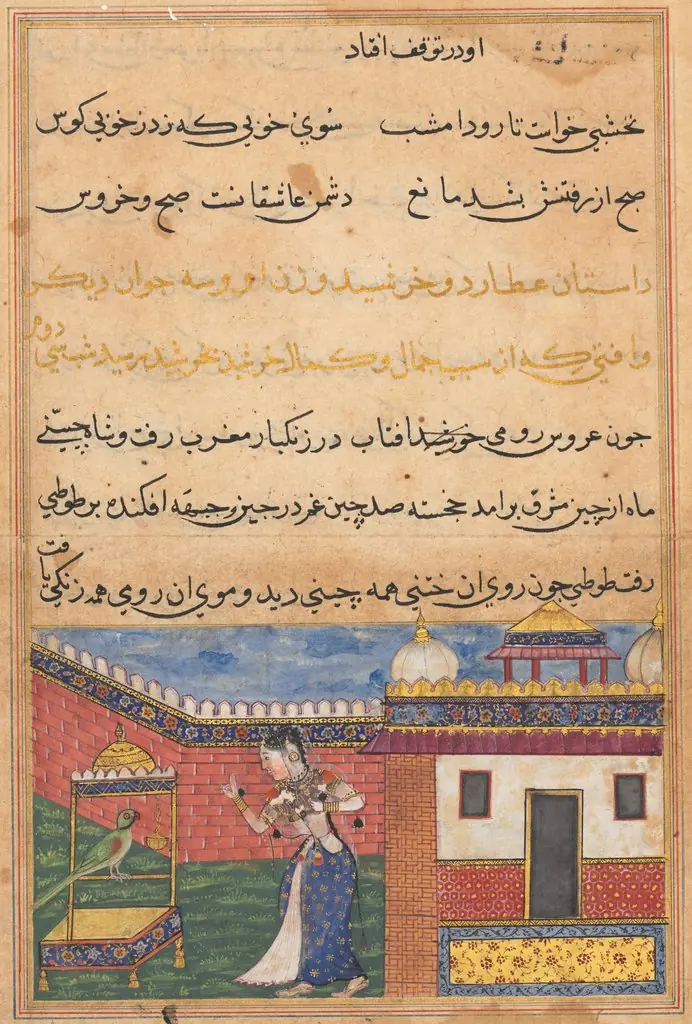 The parrot addresses Khujasta at the beginning of the thirty-second night, from a Tuti-nama (Tales of a Parrot)
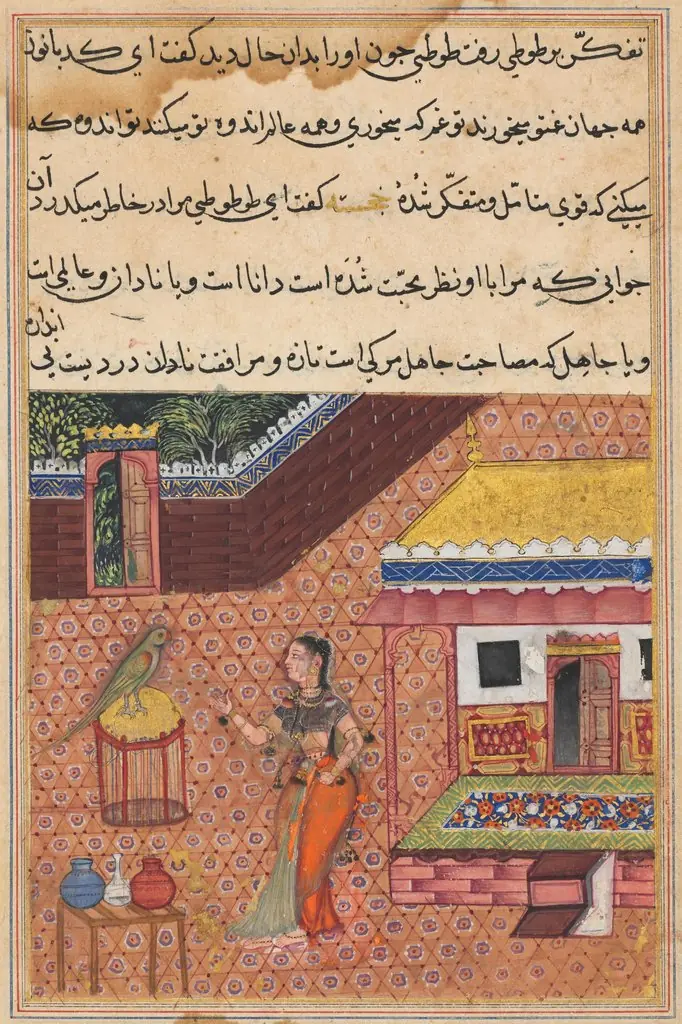 The parrot addresses Khujasta at the beginning of the thirty-fourth night, from a Tuti-nama (Tales of a Parrot)
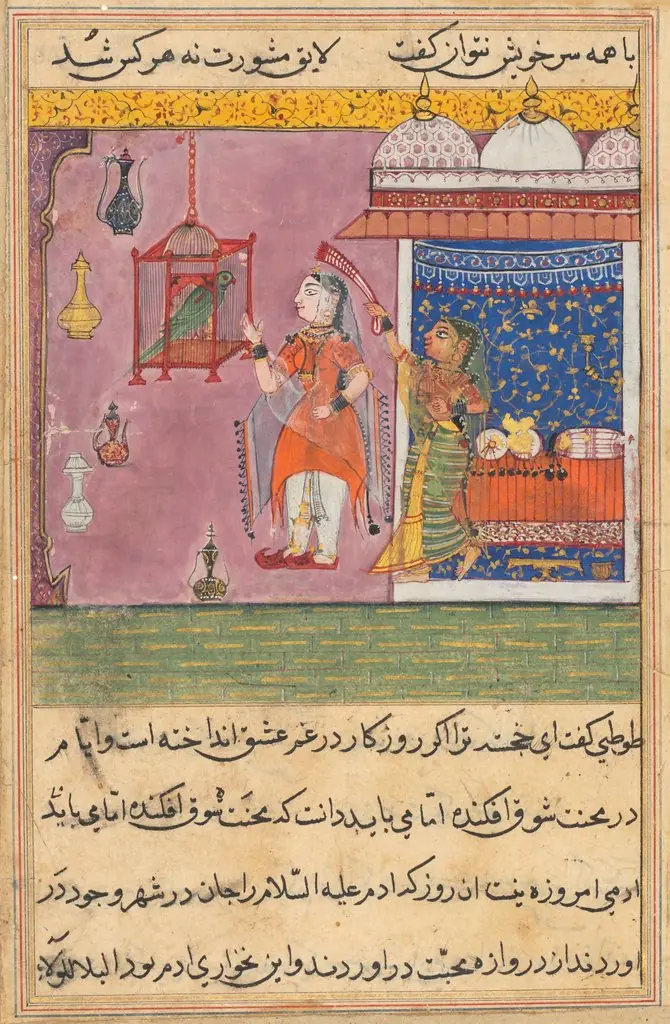 The Parrot Addresses Khujasta at the Beginning of the Nineteenth Night, from a Tuti-nama (Tales of a Parrot)
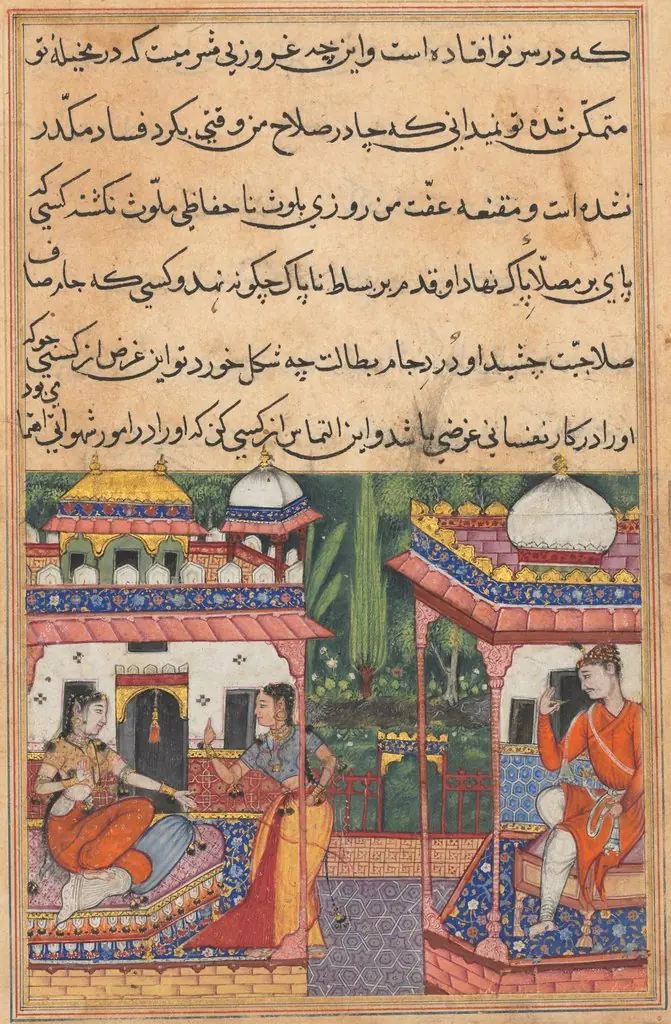 Kaiwan sends a message of love to Khurshid, wife of his brother Utarid who is away on a journey, from a Tuti-nama (Tales of a Parrot): Thirty-second Night
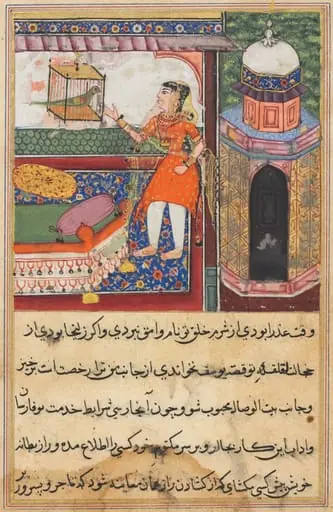 The Parrot Addresses Khujasta at the Beginning of the Tenth Night, from a Tuti-nama (Tales of a Parrot)
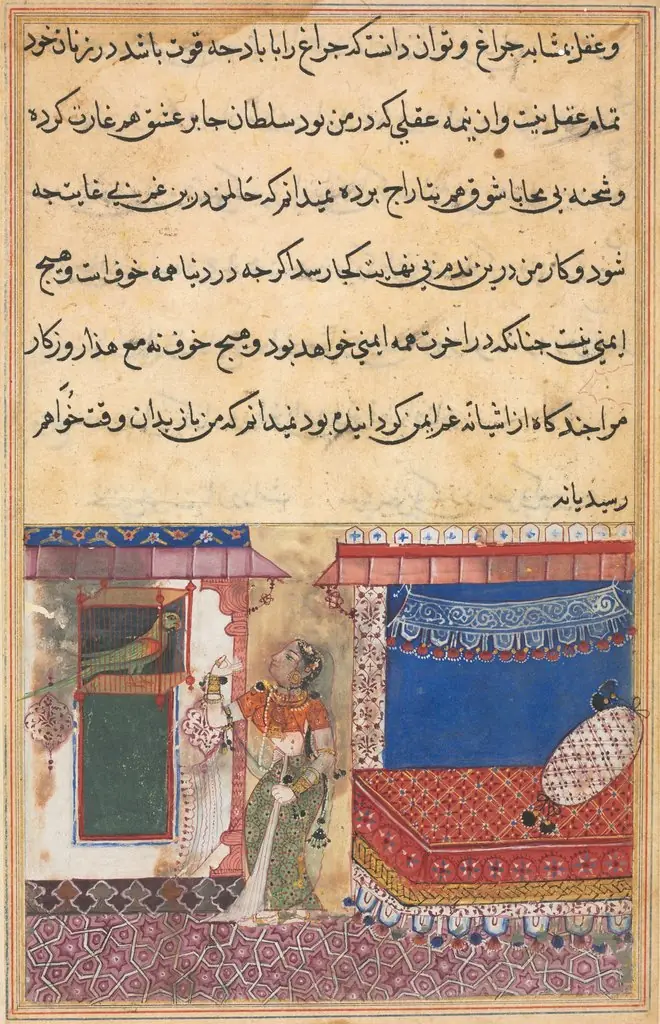 The Parrot Addresses Khujasta at the Beginning of the Eighteenth Night, from a Tuti-nama (Tales of a Parrot)