Artwork
Thisbe's Suicide by the Body Pyramus
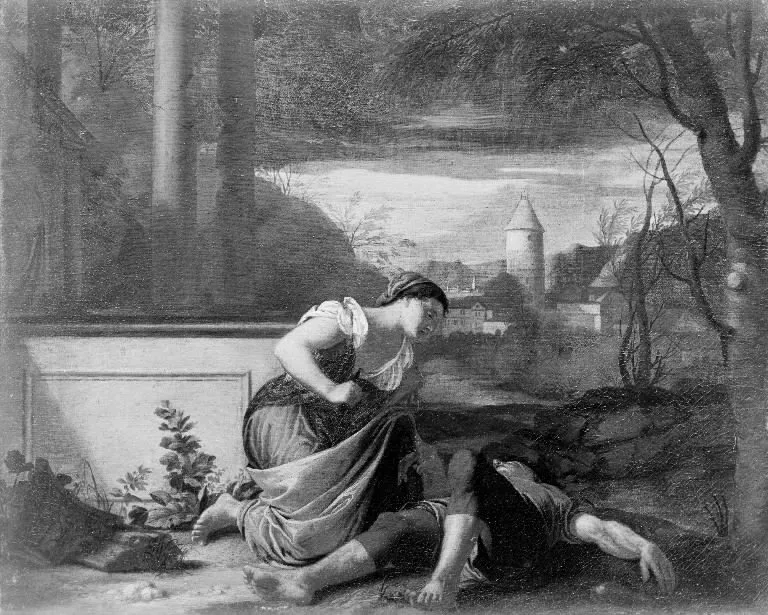
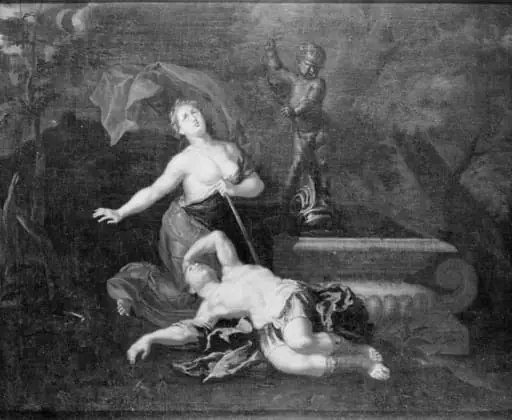
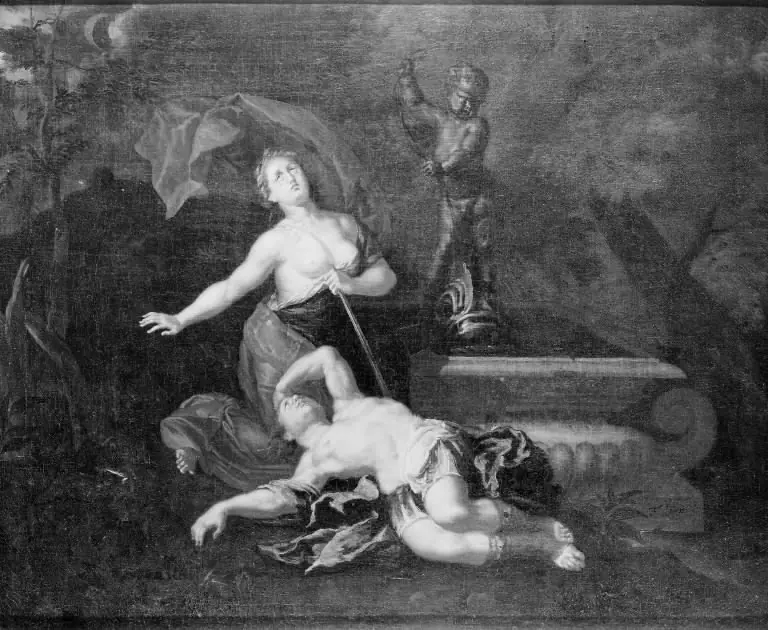
Thisbe's Suicide by the Body Pyramus is an oil painting by the High Baroque Italian artist Unknown. It dates from 1650 and is held in the collection of the Statens Museum for Kunst. The oil painting depicts a dramatic tableau in which a kneeling woman, dressed in a loosely draped garment, leans over a fallen male figure.
About this work
Subject & Meaning
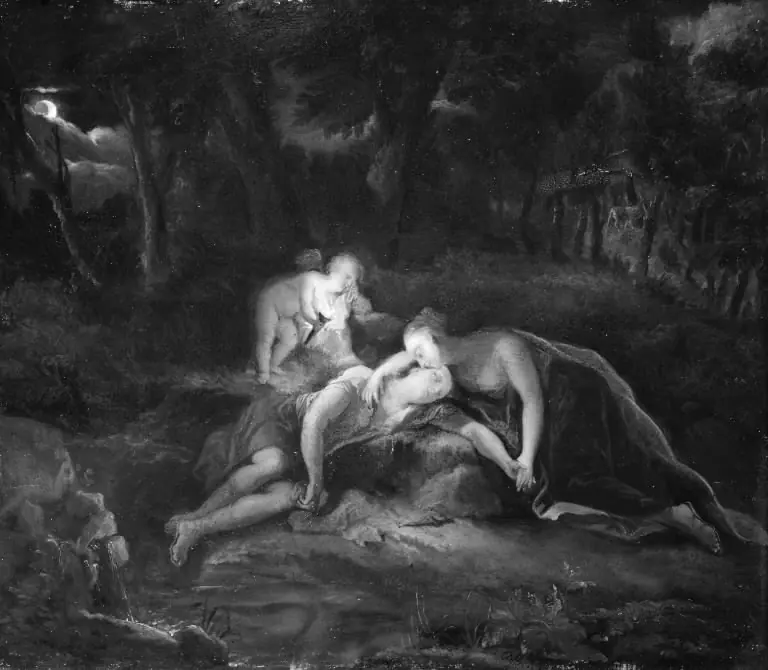
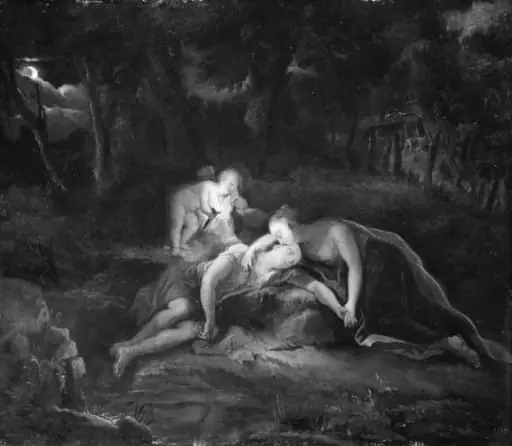
The painting depicts the tragic suicide of Thisbe beside the body of her lover Pyramus, a story drawn from classical mythology as recounted in Ovid's Metamorphoses. The two figures named in the Wikidata record, Thisbe and Pyramus, anchor the iconographic program: the dying or fallen Pyramus and the grieving Thisbe who takes her own life upon discovering him. The composition dramatizes the moment of double death that has made the Pyramus and Thisbe myth a lasting subject in Western art, symbolizing doomed love, fatal misunderstanding, and devotion unto death.
Rendered in oil on canvas at 630 by 780 cm, the large-scale format suits the operatic, emotionally charged climax of the tale, in which Thisbe's suicide transforms the lovers into a shared monument of tragic fidelity.
Technique & Style
The work was executed in oil on canvas, measuring 630 cm in height and 780 cm in width, and was painted in 1650.
The work was executed in oil on canvas, measuring 630 cm in height and 780 cm in width, and was painted in 1650. Its formal qualities reflect the stylistic conventions of 17th‑century Dutch‑German painting, with a composition that emphasizes the tragic moment of Thisbe’s suicide alongside Pyramus. The handling of pigment and the rendering of drapery demonstrate a controlled technique typical of the period.
History & Provenance
The painting titled Thisbe's Suicide by the Body Pyramus was created in 1650 as an oil on canvas work measuring 630 centimeters by 780 centimeters. It was painted by KMS Spengler, a Danish artist documented in the Statens Museum for Kunst collection. The work entered the museum's collection and has remained there since its creation, as indicated by its inclusion in the museum's holdings and descriptive records.
The composition portrays the tragic moment of Thisbe's suicide, intertwined with the story of Pyramus, drawing from classical mythological themes. Its creation is situated within the mid-17th century artistic practice of Northern Europe, reflecting the stylistic and thematic concerns of the period.
Thisbe's Suicide by the Body Pyramus is held in the collection of the Statens Museum for Kunst (the Danish national gallery) in Denmark. The painting, executed in oil on canvas and dated 1650, is documented as part of the museum's holdings through its Wikidata record.
No specific inventory or accession number is recorded in the available sources, and no exhibition history is documented for the work.
Overview
The oil painting depicts a dramatic tableau in which a kneeling woman, dressed in a loosely draped garment, leans over a fallen male figure. The man's arm is outstretched, and his body lies motionless on the ground. Behind them a window frames a quiet village scene with a tower, barren trees, and a darkening sky, creating a stark contrast between the interior tragedy and the exterior landscape.
Context
Executed in oil, the work reflects a tradition of narrative painting that visualizes literary or mythological episodes. While specific details about its creation date or the artist are not provided, the use of chiaroscuro and the emotional intensity align it with Baroque sensibilities, where theatrical lighting and dynamic compositions were employed to evoke viewer empathy for tragic subjects.
Artist & collection