Artwork
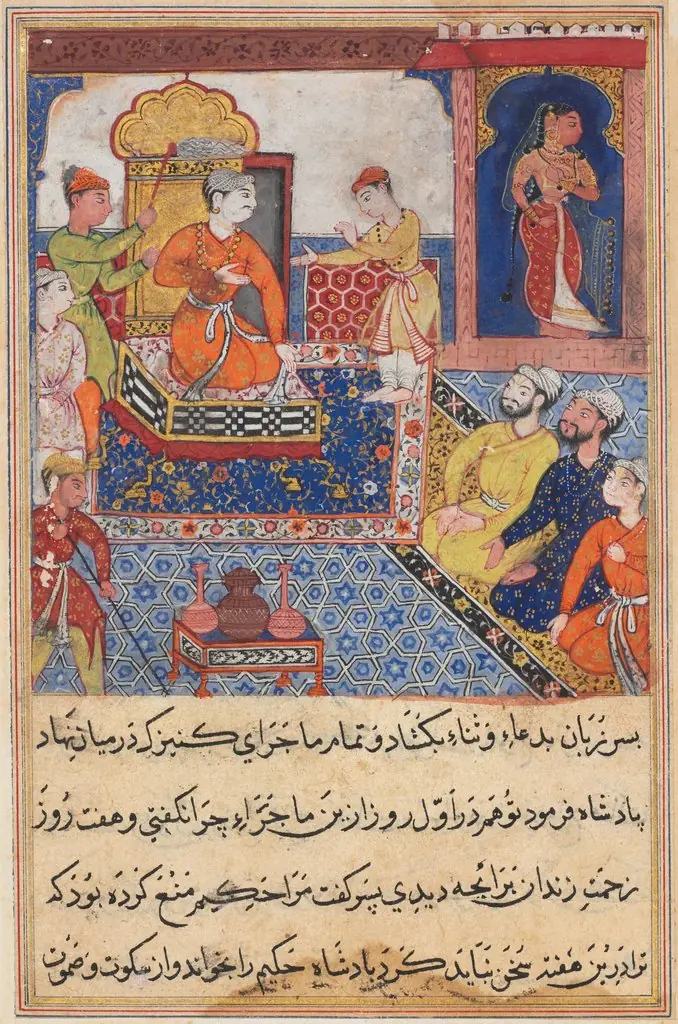
Three suitors fight amongst themselves for the hand of the devotee’s daughter, from a Tuti-nama (Tales of a Parrot): Twentieth Night
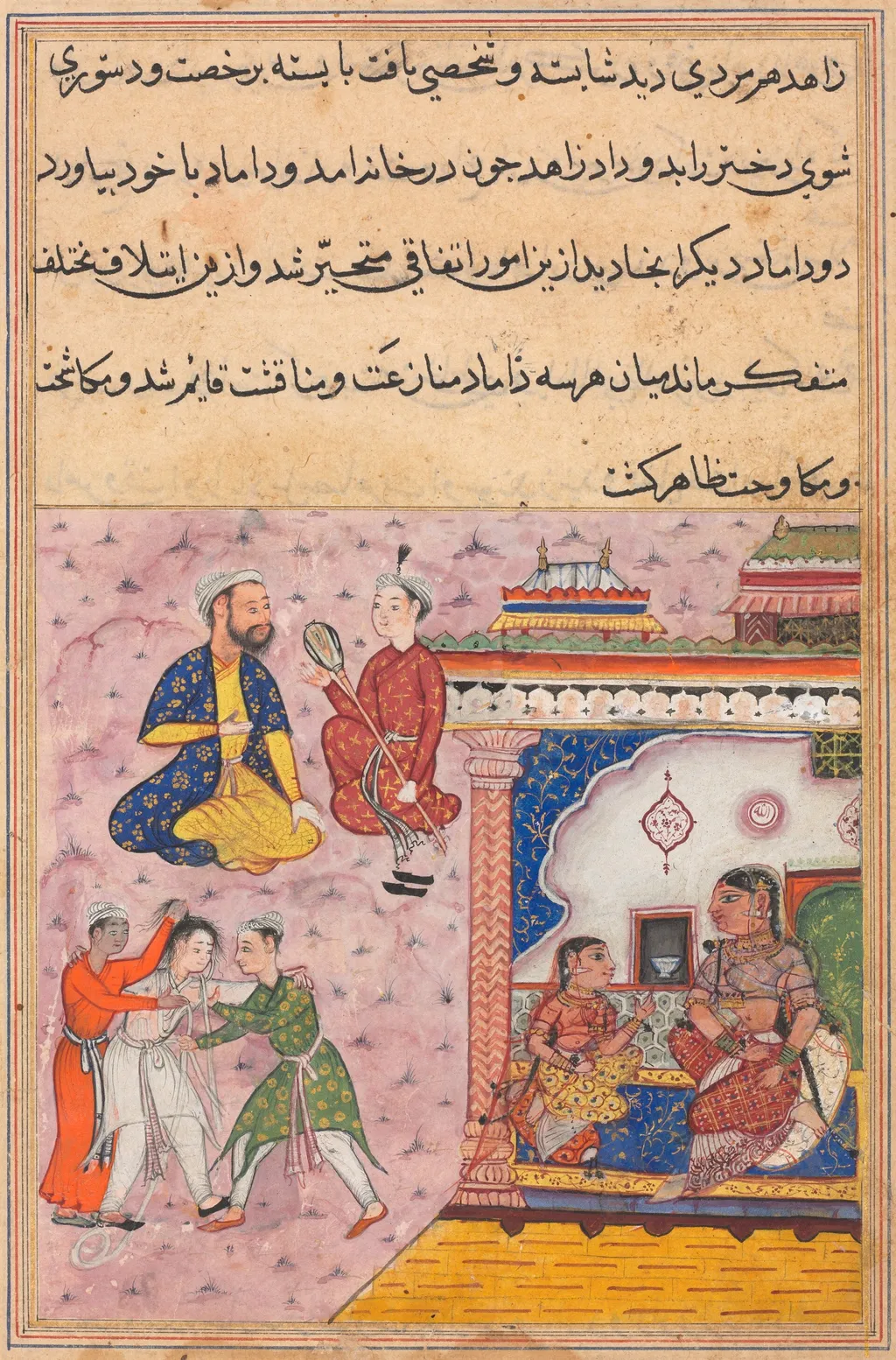
Three suitors fight amongst themselves for the hand of the devotee’s daughter, from a Tuti-nama (Tales of a Parrot): Twentieth Night is an unspecified painting. It dates from 1560 and is held in the collection of the Cleveland Museum of Art. The work depicts an interior tableau drawn from the twentieth night of the Persian Tuti‑nama (Tales of a Parrot).
About this work
History & Provenance
The work is held in the permanent collection of the Cleveland Museum of Art in Cleveland, Ohio, under accession number 1962.
The painting was created around 1560 in Mughal India, as recorded in its cataloguing data. It is a folio from a Tuti-nama (Tales of a Parrot) manuscript, specifically illustrating the Twentieth Night episode in which three suitors contend for a devotee's daughter. The work is held in the permanent collection of the Cleveland Museum of Art in Cleveland, Ohio, under accession number 1962.279.144.b. No details regarding its original commission, early ownership, or chain of custody prior to its acquisition are documented, and no exhibition history is recorded in the available sources.
Context
The painting depicting three suitors contesting a devotee's daughter is in the Cleveland Museum of Art's collection and is dated to around 1560 within the early Mughal period. Attributed to an anonymous artist working in the Mughal tradition, it forms part of the illustrated Tuti-nama manuscript produced under the emperor Akbar in the mid-sixteenth century. The work exemplifies contemporary narrative painting practices in Mughal India, reflecting evolving approaches to figural composition and storytelling in illustrated Persianate literature.
Legacy
As part of the early Mughal Tuti-nama, this composition belongs to a manuscript regarded as foundational to the development of Mughal narrative painting. Its presence in collections such as the Cleveland Museum of Art has facilitated comparative study of sixteenth-century painting techniques and the cross-cultural artistic exchange between Persian and Indian traditions in South Asia.
Overview
The work depicts an interior tableau drawn from the twentieth night of the Persian Tuti‑nama (Tales of a Parrot). A lively composition shows several figures in elaborate dress: two men recline on a couch, one grasping a mirror, while three others quarrel nearby. A seated woman quietly plays a stringed instrument in a corner, and a window with a red frame admits daylight onto patterned blue walls.
Subject & Meaning
The scene illustrates a narrative episode in which three suitors contend for the hand of a devotee’s daughter. The calm demeanor of the woman, contrasted with the aggressive postures of the three men, clad in green, red and white, highlights the tension between courtship and conflict, a common moral motif in the Tuti‑nama that warns against rivalry and promotes virtue.
Technique & Style
Executed in vivid pigments, the painting employs a flat decorative surface typical of Persian miniature tradition. Figures are rendered with fine, linear outlines and stylized gestures, while the interior architecture is suggested through patterned blue walls and a red‑framed window. The use of bright primary colors and intricate detailing of textiles emphasizes the opulent courtly setting.
Artist & collection

- Three suitors fight amongst themselves for the hand of the devotee’s daughter, from a Tuti-nama (Tales of a Parrot): Twentieth Night
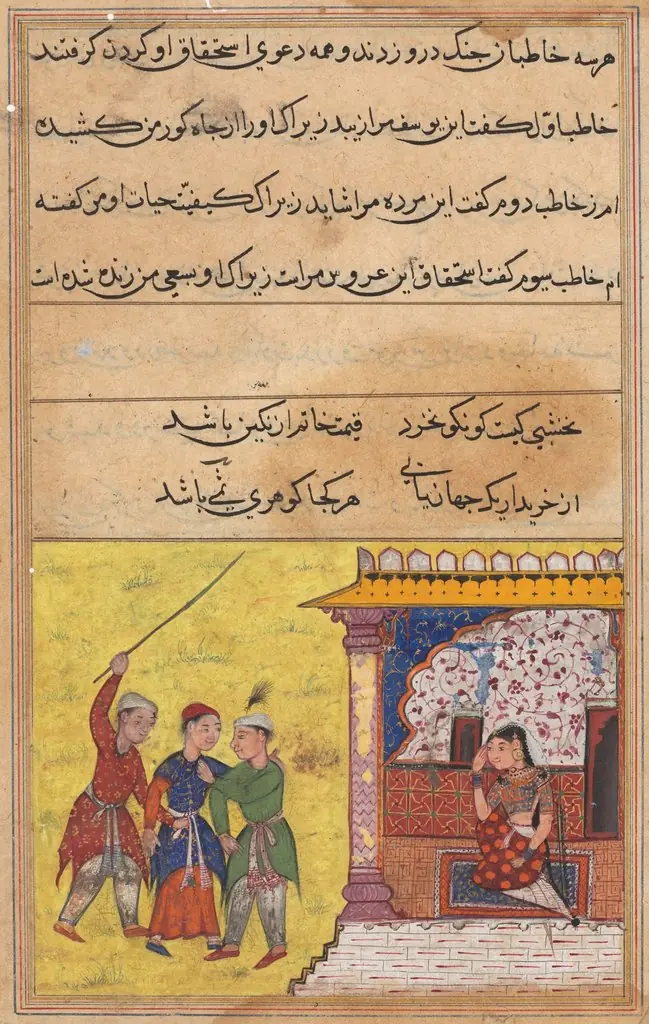 The three suitors again begin to quarrel among themselves for the hand of the devotee’s daughter, from a Tuti-nama (Tales of a Parrot): Twentieth Night
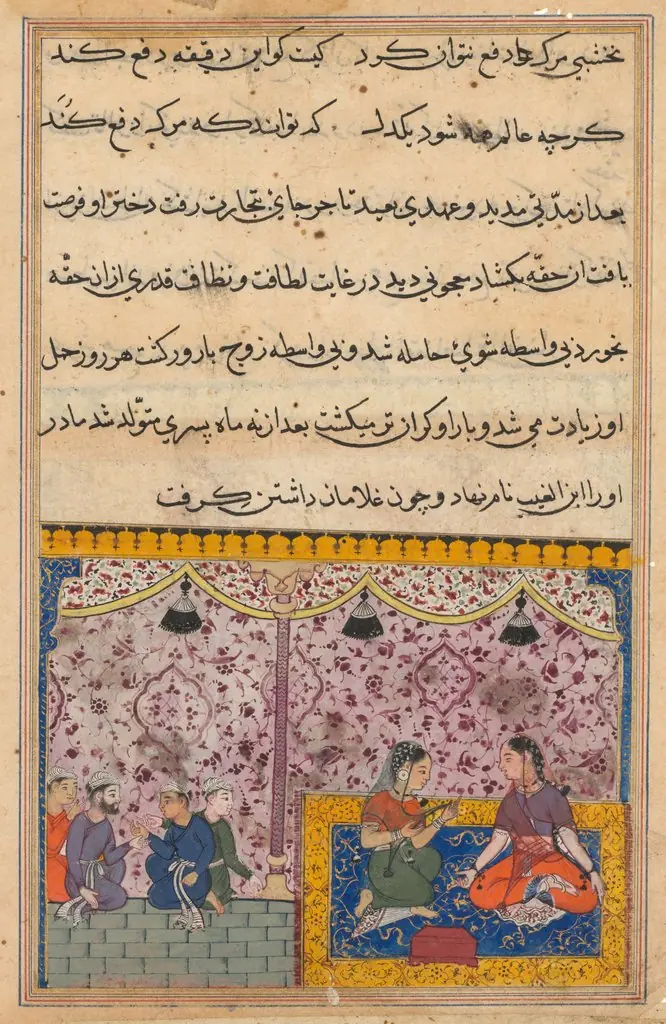 The merchant’s daughter gives birth to a son as a result of eating out of the box. The clever child recognizes the false gems from true, from a Tuti-nama (Tales of a Parrot): Twenty-third Night
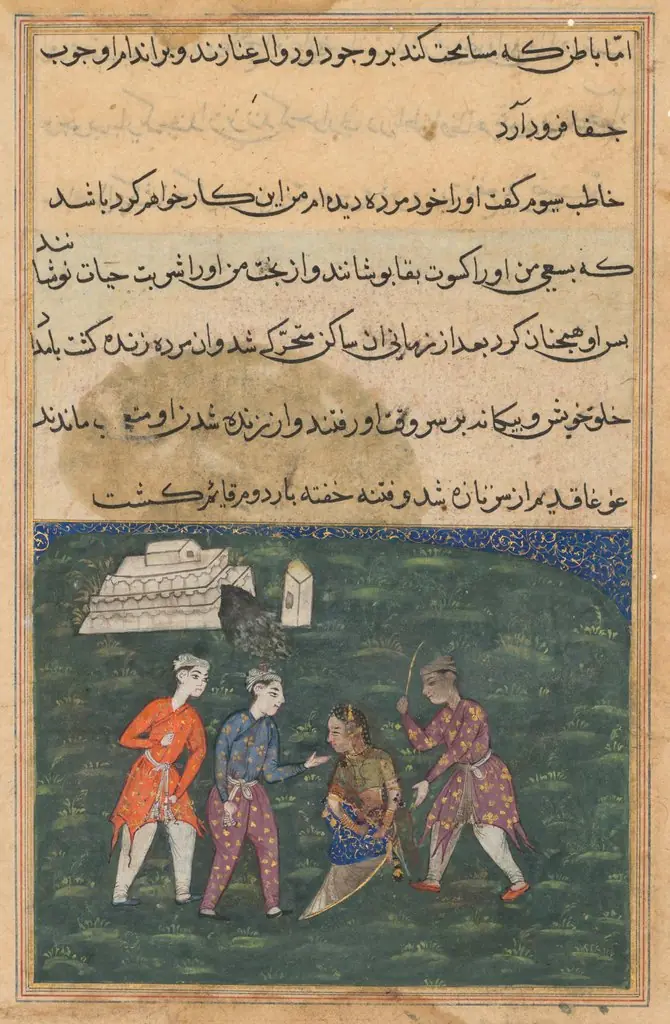 The third suitor strikes the devotee’s daughter and thus restores her to life, from a Tuti-nama (Tales of a Parrot): Twentieth Night
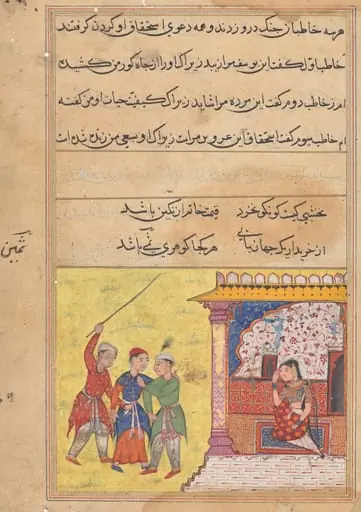 The three suitors again begin to quarrel among themselves for the hand of the devotee’s daughter, from a Tuti-nama (Tales of a Parrot): Twentieth Night
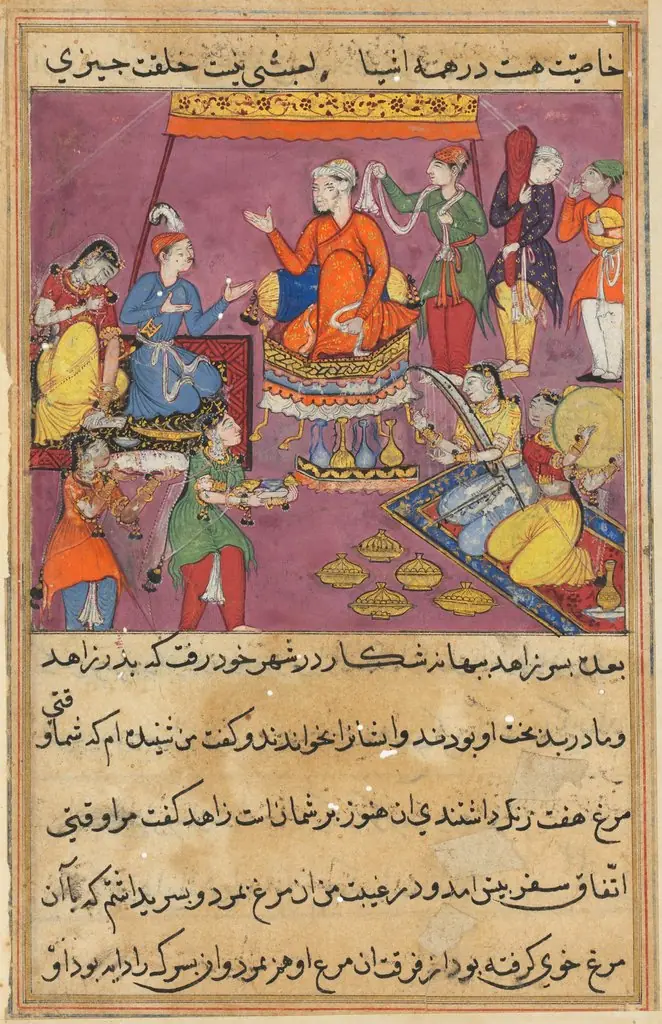 The king gives his daughter in marriage to the pious man’s son, from a Tuti-nama (Tales of a Parrot): Fifty-second Night
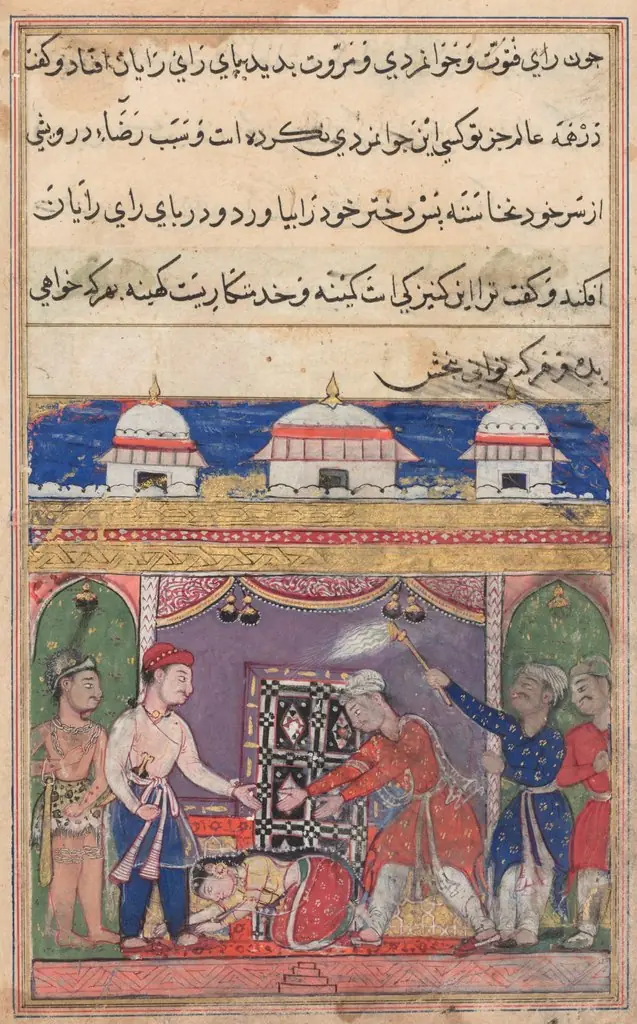 The king of Bahilistan offers his daughter to the King of Kings, from a Tuti-nama (Tales of a Parrot): Seventh Night
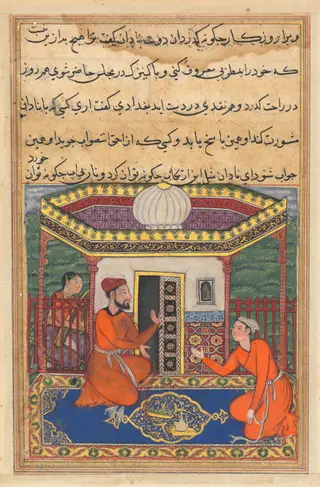 The young man of Baghdad solicits advice from a friend as his slave girl, who is adept at music, awaits, from a Tuti-nama (Tales of a Parrot): Forty-eighth Night
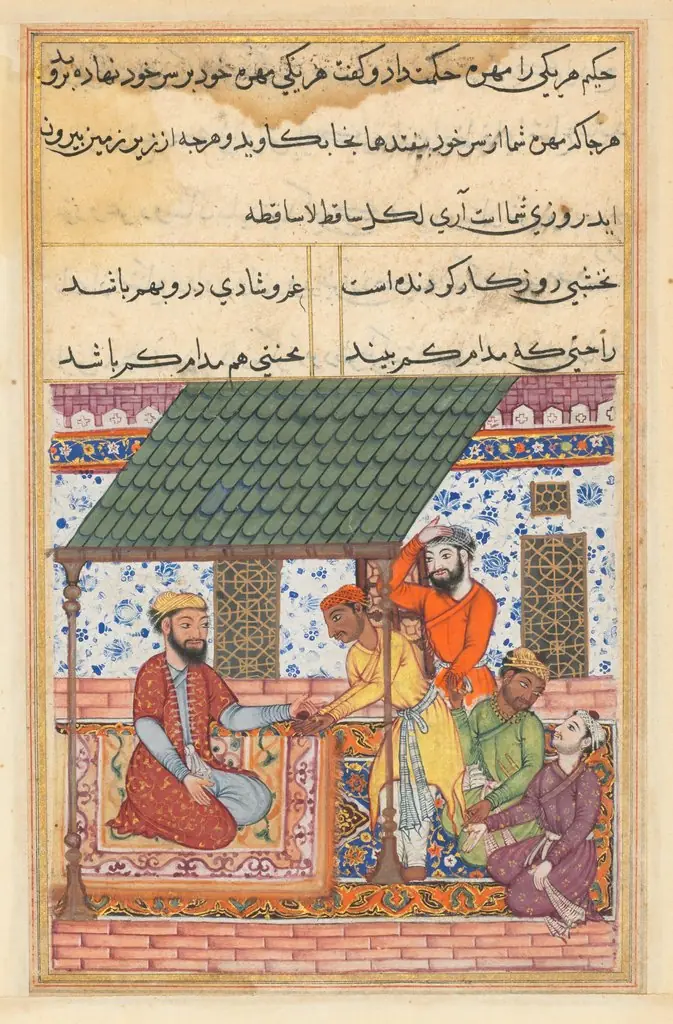 The four destitute friends go to a wise man who gives each one of them a magic shell to be placed on top of the turban, from a Tuti-nama (Tales of a Parrot): Forty-seventh Night
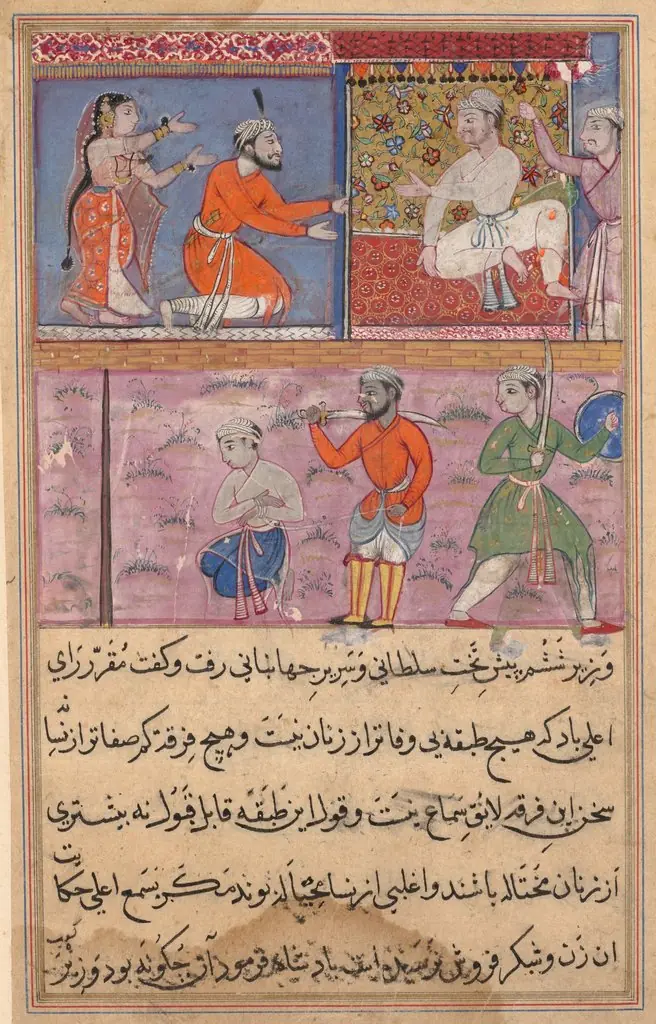 Page from Tales of a Parrot (Tuti-nama): text page
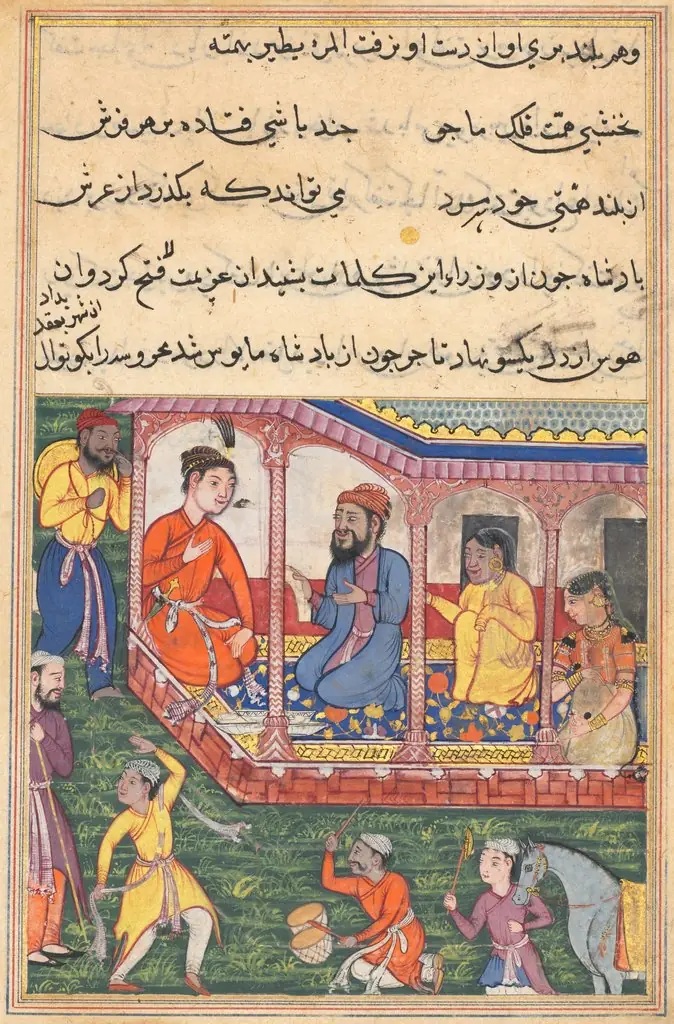 Mahrusa’s marriage to the prefect of the city, from a Tuti-nama (Tales of a Parrot): Thirty-sixth Night
 The young prince recounts his experiences to his father, the king, from a Tuti-nama (Tales of a Parrot): Eighth Night