Artwork
Untitled
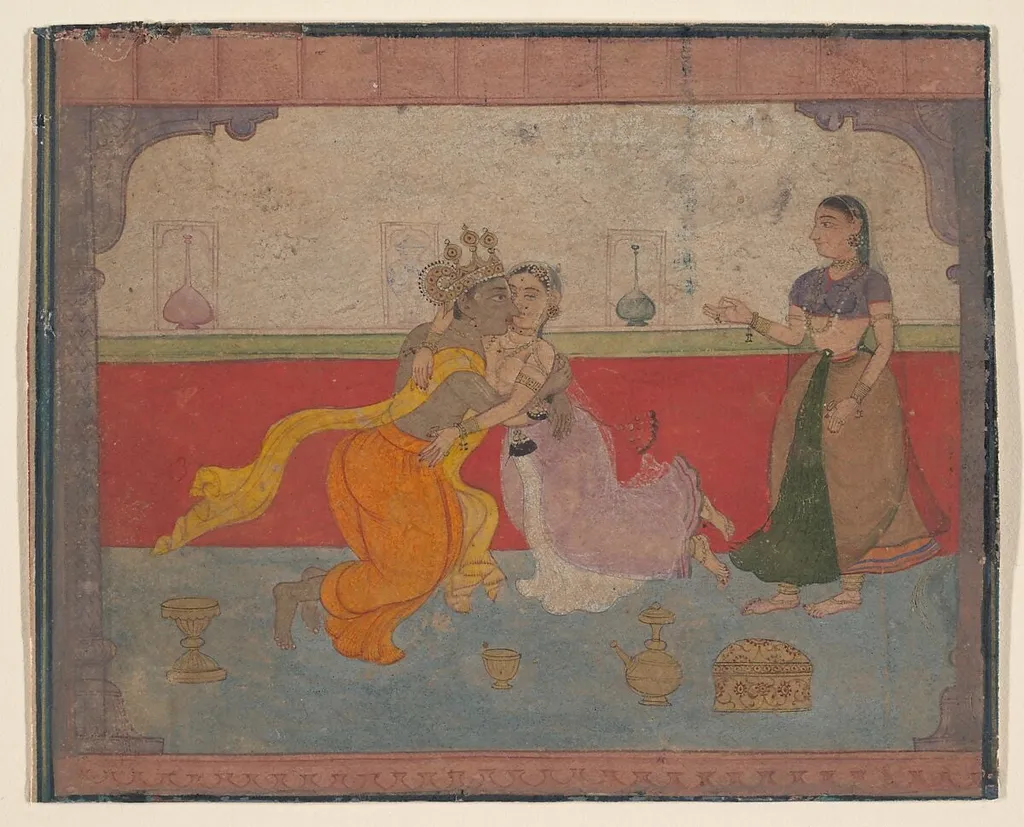
Untitled is a watercolor painting. It dates from 1610 and is held in the collection of the Metropolitan Museum of Art. Created in Rajasthan, India, around 1610, this work depicts the divine lovers Krishna and Radha standing in close proximity beneath a tree.
About this work
A man and woman stand close under a tree, bodies nearly touching: Krishna and Radha, lovers from Hindu stories. Painted in Rajasthan around 1610, with gold leaf that makes their jewelry and the leaves shimmer. The painter is unknown, but the style belonged to royal workshops.
Subject & Meaning
Untitled portrays the Hindu deities Krishna and his beloved Radha as a loving couple, a common motif in Indian miniature painting that visualizes the divine union of the god and his devotee. The presence of a woman alongside the pair reinforces the theme of romantic devotion, suggesting either an attendant or a symbolic representation of the bhakti ideal. Through the intimate pose and the use of rich pigments and gold, the work conveys spiritual love (prema) and the soul’s yearning for union with the divine, embodying the bhakti movement’s emphasis on personal, emotive devotion.
Technique & Style
As a painting in the Metropolitan Museum of Art collection, it is preserved under museum conditions, though specific conservation details are not recorded.
The work, dated 1610, is executed in ink, gold leaf and opaque watercolor on paper, a support typical of Indian miniature painting. The medium combines fine line work with metallic highlights to render the figures of Krishna and Rādhā in a devotional scene. The composition is flattened, with intricate patterning and a limited palette that emphasizes symbolic color.
As a painting in the Metropolitan Museum of Art collection, it is preserved under museum conditions, though specific conservation details are not recorded. Stylistically, the piece belongs to the anonymous workshop tradition of early 17th‑century Indian art, characterized by delicate brushstrokes and gold embellishment.
Overview
Created in Rajasthan, India, around 1610, this work depicts the divine lovers Krishna and Radha standing in close proximity beneath a tree. Executed in ink, gold, and opaque watercolor on paper, the composition emphasizes the intimacy of the figures, whose bodies nearly touch as they share a moment of connection. The artist employs gold leaf to render the jewelry and foliage, creating a shimmering effect that highlights the sacred nature of the subjects against the paper ground.
This piece reflects the distinct stylistic conventions of early 17th-century Rajput painting, where devotional narratives are rendered with a focus on emotional resonance and decorative richness. The use of gold and the specific iconography of the tree and the couple align with regional traditions illustrating episodes from Hindu mythology. Although the specific patron and the identity of the artist remain unknown, the work stands as a representative example of the devotional art produced in Rajasthan during this period, showcasing the integration of material luxury with spiritual storytelling.
History & Provenance
Originating from Rajasthan, India, around 1610, this painting's specific history is largely unrecorded. The identity of its creator remains unknown, a common circumstance for works produced within the structured environment of royal ateliers. Its stylistic attributes, however, align with the artistic conventions of such workshops, suggesting it was part of a larger tradition of courtly patronage.
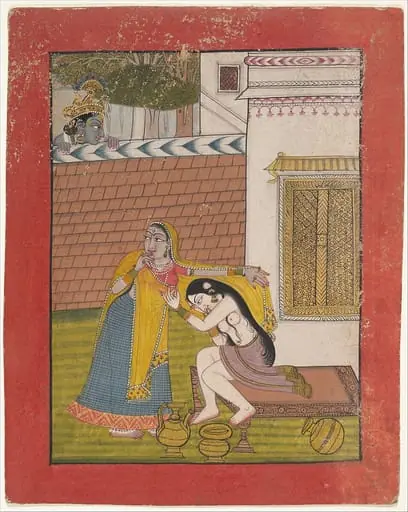
Artist & collection

- Untitled
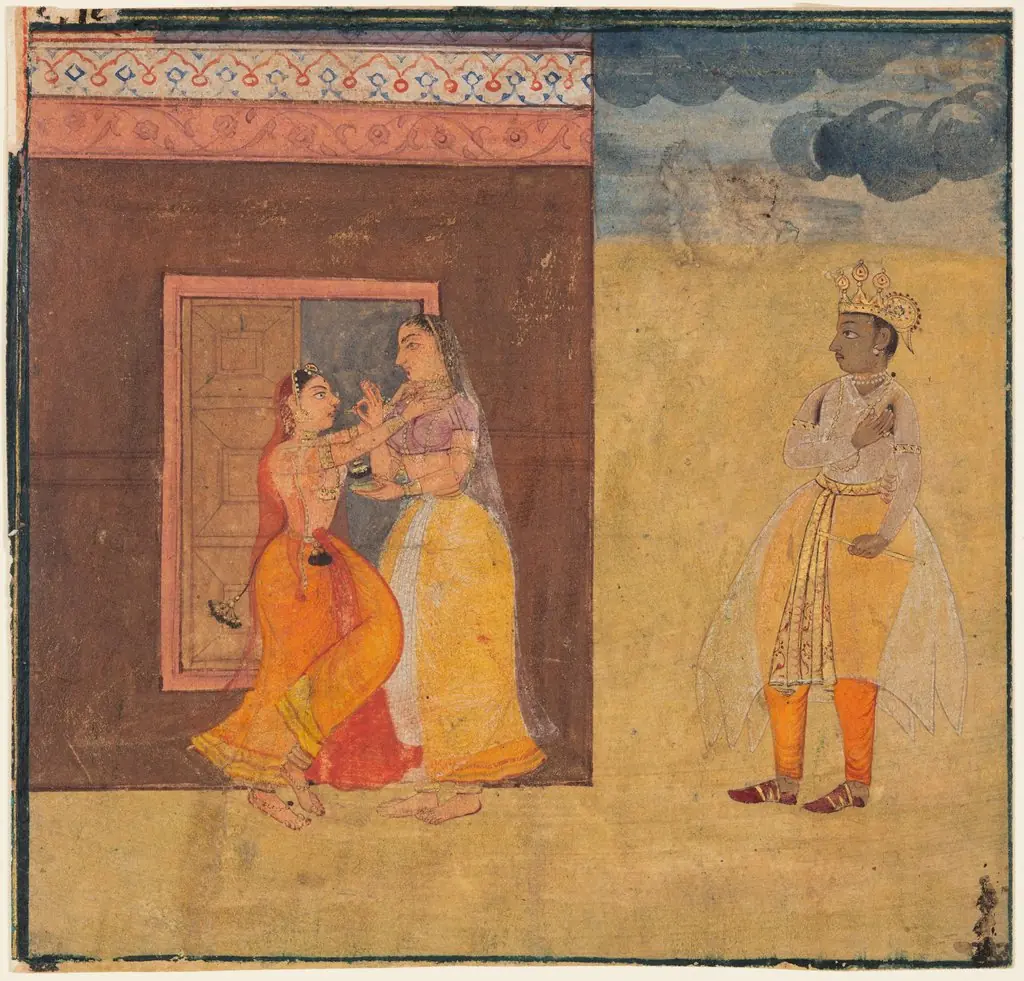 Krishna Abhisarika Nayika, from a Rasikapriya manuscript
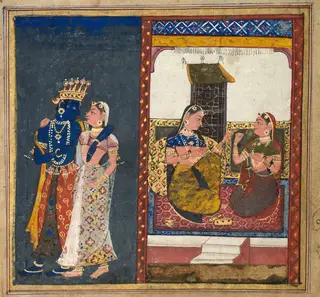 Radha and Krishna Embracing, Leaf from a Gita Govinda
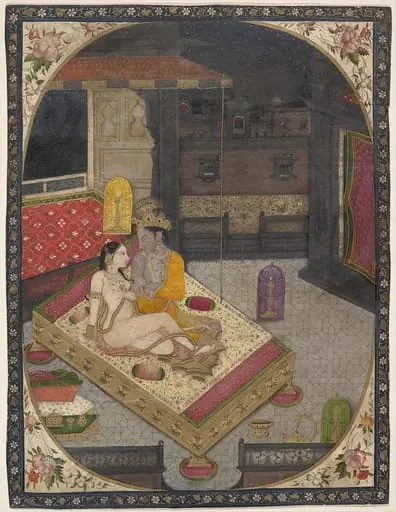 Untitled
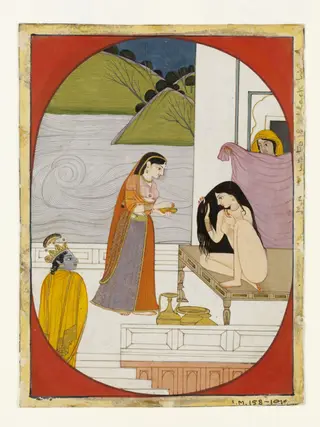 Krishna and Radha
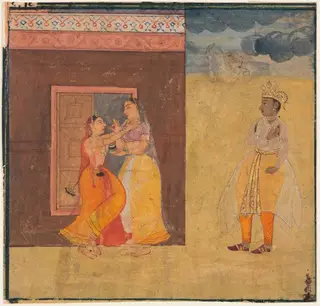 Krishna Abhisarika Nayika, from a Rasikapriya manuscript
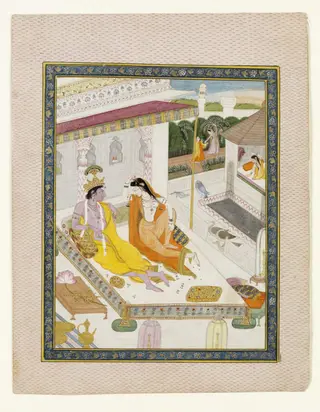 Radha and Krishna
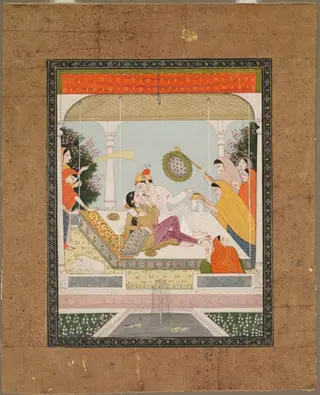 Raja with his beloved
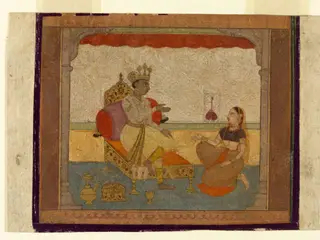 Krishna
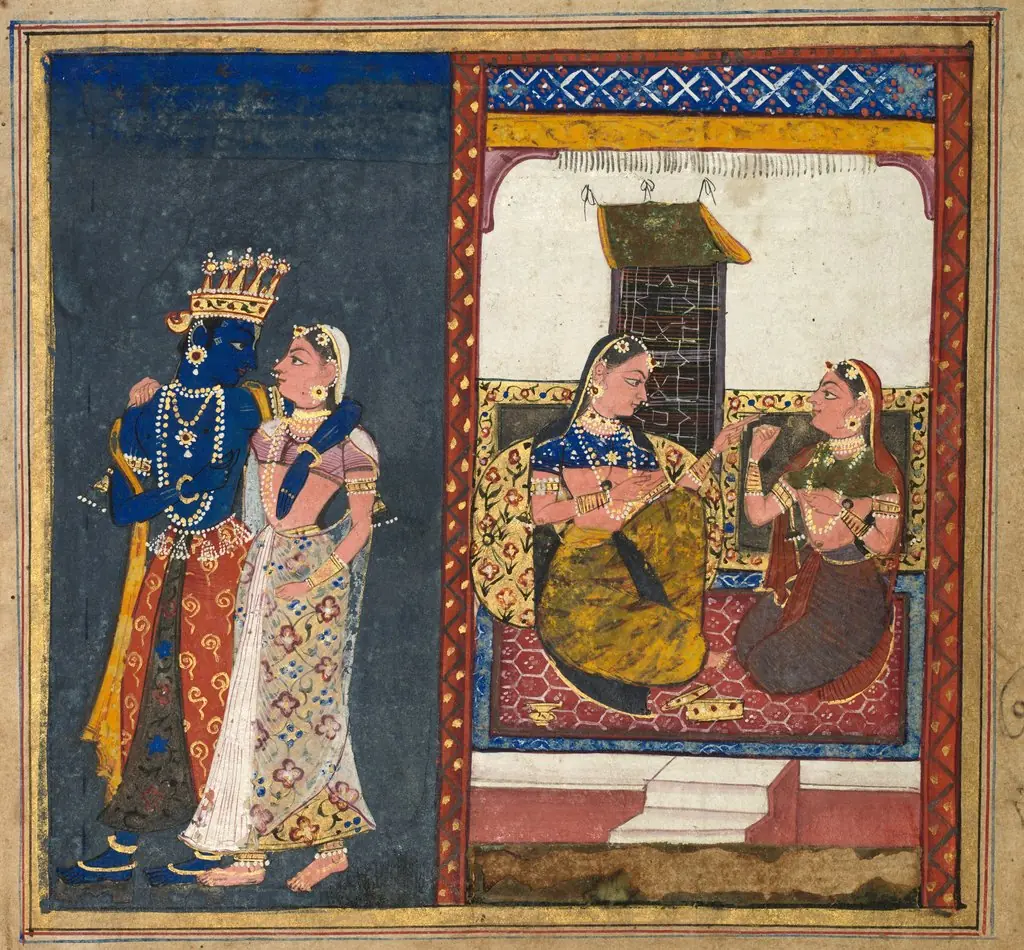 Radha and Krishna Embracing, Leaf from a Gita Govinda
 Vilaval Ragini
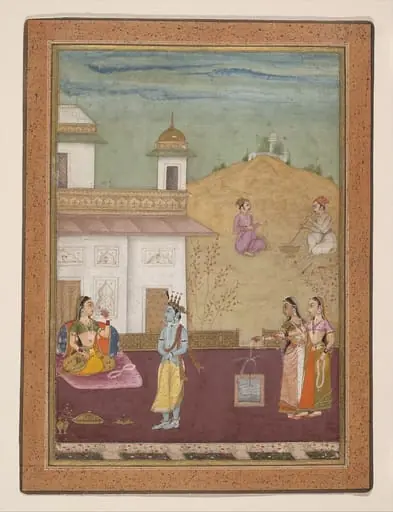 Untitled