Artwork
Untitled
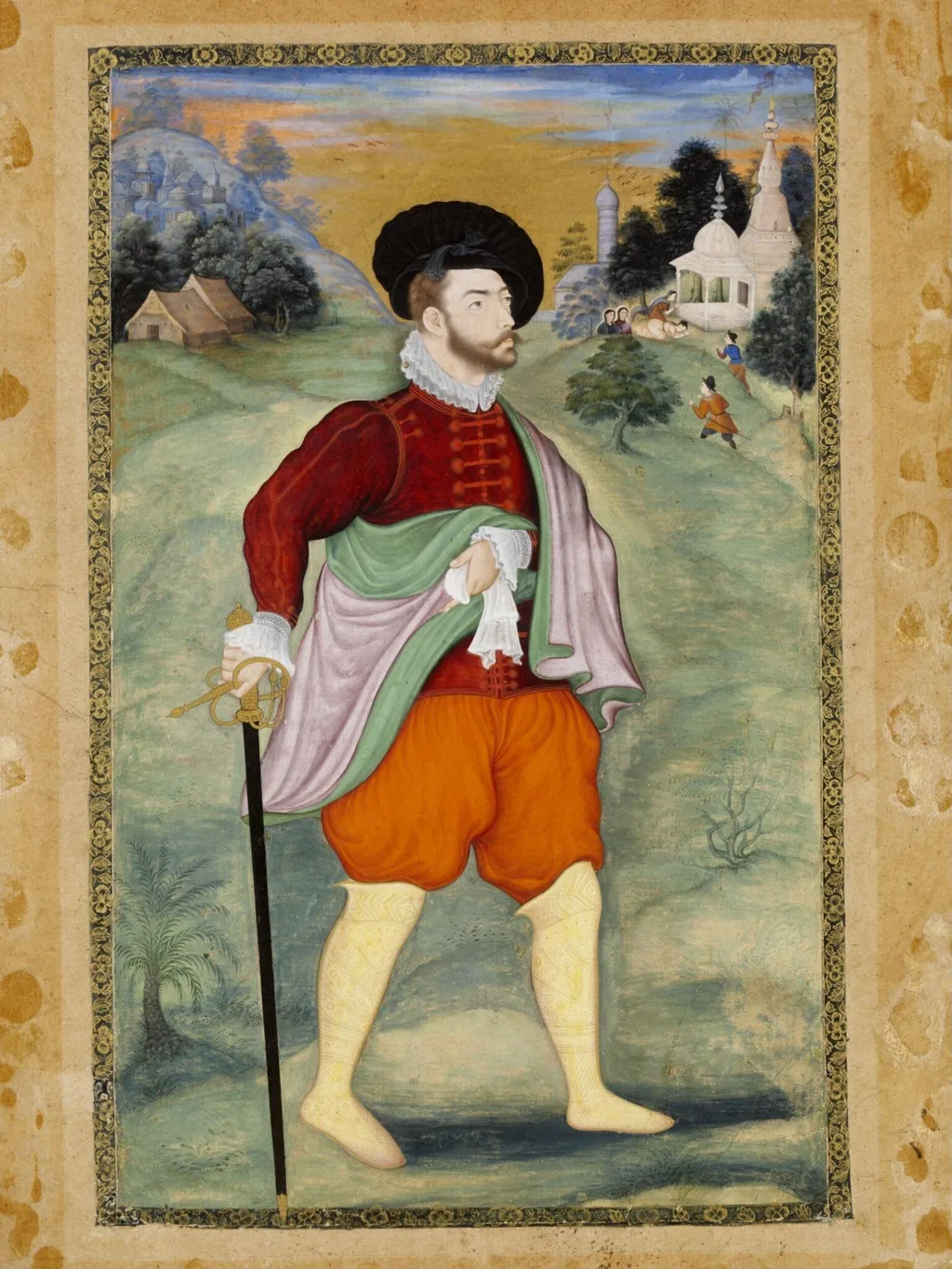
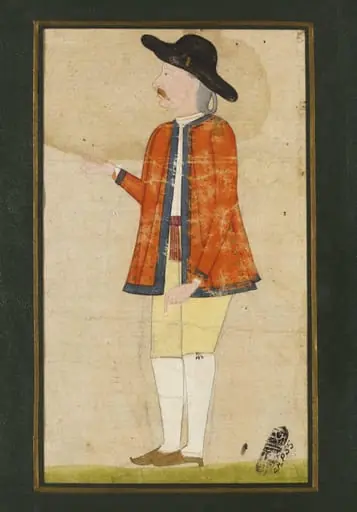
Untitled is a paint painting by the Mughal Painting artist Unknown. It dates from 1556 and is held in the collection of the Victoria and Albert Museum. This painting, dated to approximately 1610, depicts a European figure within a Mughal artistic context.
About this work
Overview
Instead, it reflects the artist’s use of an earlier European visual source, likely a printed image or painting from decades prior.
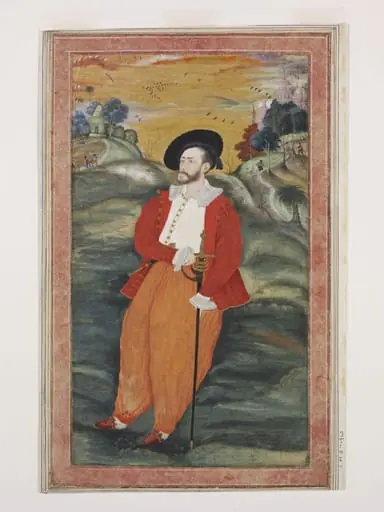
This painting, dated to approximately 1610, depicts a European figure within a Mughal artistic context. Though Europeans had begun appearing in Mughal court art due to increasing contact with Portuguese traders and residents in Goa, this image does not appear to portray a specific contemporary visitor. Instead, it reflects the artist’s use of an earlier European visual source, likely a printed image or painting from decades prior.
Subject & Meaning
The figure is rendered in attire characteristic of late 16th-century Europe, pinked boots and an open-fronted ruff, elements no longer in fashion by 1610. The rapier’s hilt suggests an even earlier date, possibly the 1560s. These anachronisms indicate the Mughal artist was working from a pre-existing model rather than observing a living subject, revealing how visual knowledge traveled across cultures through copied images rather than direct encounter.
Technique & Style
The painting adheres to the refined naturalism typical of early Mughal portraiture, with delicate brushwork and attention to textile detail. While European influences are evident in the figure’s pose and costume, the execution remains rooted in Indo-Persian traditions. There is no use of sfumato or chiaroscuro; instead, the artist relies on flat planes of color and precise line to define form, consistent with local aesthetic priorities.
History & Provenance
The work originates from the Mughal atelier during the reign of Jahangir, a period marked by heightened interest in foreign imagery. Though its exact provenance is unrecorded, it likely belonged to a royal manuscript or album collection. Its survival suggests it was valued not for its accuracy but as an example of exotic representation, preserved within a broader corpus of courtly visual culture.
Context
European presence in the Mughal court was limited but notable, with Jesuit missionaries and merchants occasionally granted access. Their visual appearance entered Mughal art not through direct observation alone, but via imported engravings, textiles, or paintings. This work exemplifies how foreign motifs were absorbed, reinterpreted, and detached from their original context, becoming decorative or symbolic elements within an imperial visual language.
Legacy
This painting stands as evidence of early cross-cultural visual exchange in early modern Asia. It illustrates how Mughal artists engaged with European imagery not as documentary records but as stylistic resources. Such works contributed to a broader trend of hybridization in South Asian art, where foreign elements were selectively adopted and reshaped to fit indigenous conventions of representation.
Artist & collection