Artwork
誰が袖図屏風|Whose Sleeves? (Tagasode)
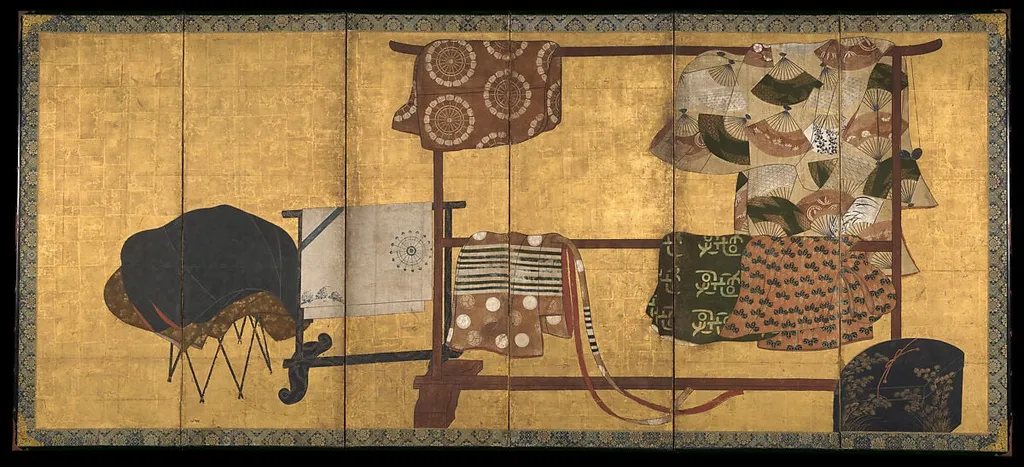
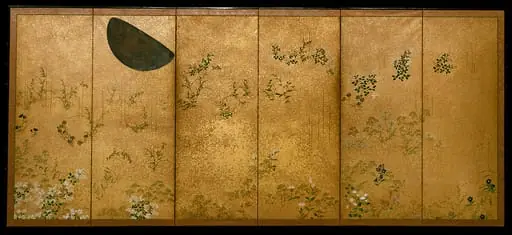
誰が袖図屏風|Whose Sleeves? (Tagasode) is an ink painting by the Nanga artist Unknown. It dates from 1618 and is held in the collection of the Metropolitan Museum of Art. This pair of six-panel folding screens, titled Whose Sleeves?
About this work
Overview
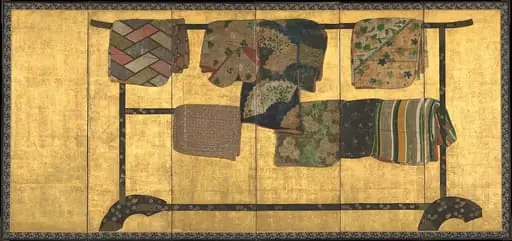
Each screen displays a curated selection of fabric swatches, some patterned, others solid, arranged with deliberate asymmetry.
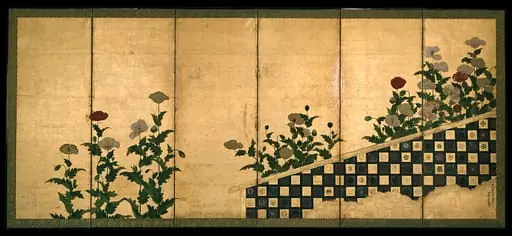
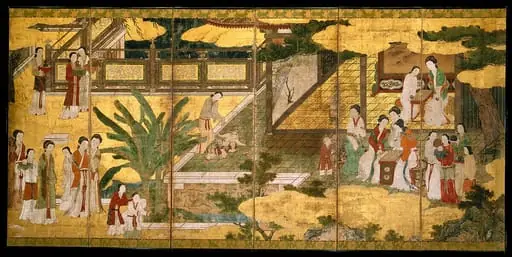
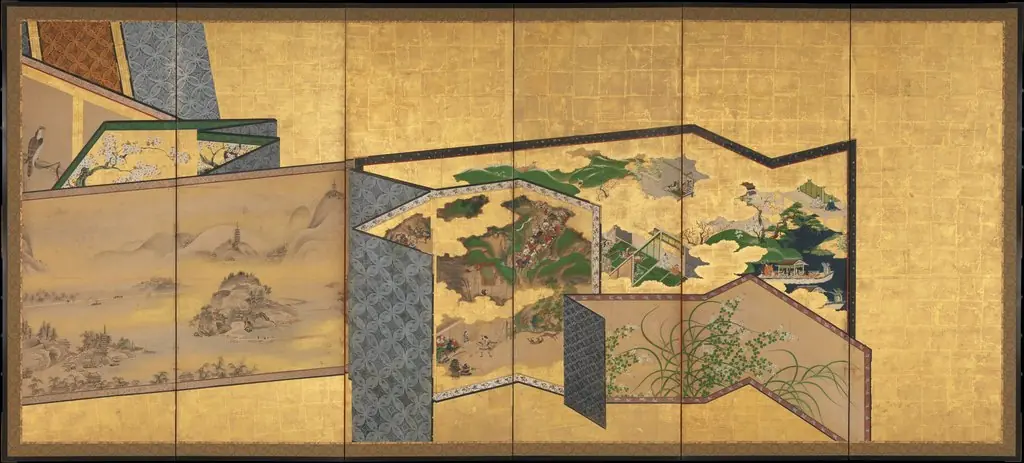
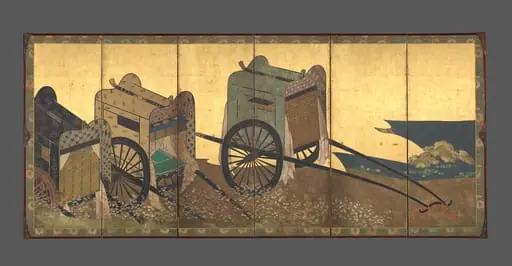
This pair of six-panel folding screens, titled Whose Sleeves?, presents an arrangement of textile fragments rendered in ink, color, and gold on gilt paper. Each screen displays a curated selection of fabric swatches, some patterned, others solid, arranged with deliberate asymmetry. The surfaces shimmer with gold leaf, enhancing the sense of refined elegance. Though presented as detached pieces, their composition suggests a deliberate visual dialogue between texture, color, and form.
Subject & Meaning
The screens depict fragments of clothing and fabric, likely representing sleeves or garment edges, without depicting human figures. This abstraction invites contemplation of identity and social status through material culture. The inclusion of specific patterns and colors may allude to seasonal wear, aristocratic taste, or poetic allusions to impermanence, common in Japanese aesthetic traditions. The title’s question underscores the absence of the wearer, focusing attention on the trace of presence.
Technique & Style
Artists employed fine ink outlines, translucent washes of color, and extensive gold leaf applied to a gilt paper ground to simulate luxury. Textures are suggested through precise rendering of patterns, polka dots, floral motifs, leaf veins, rather than physical relief. The composition avoids perspective, instead arranging elements in a shallow, decorative plane characteristic of Edo-period decorative arts. Gold background enhances luminosity and separates each fragment as a discrete object of contemplation.
History & Provenance
Created during the Edo period in Japan, likely in the 17th or early 18th century, the screens reflect the growing interest in material culture among urban elites. Such works were often commissioned for private interiors, serving as both decorative objects and subtle indicators of connoisseurship. Their survival suggests they were carefully preserved, possibly within aristocratic or merchant households, though their exact early provenance remains undocumented.
Context
These screens belong to a genre of Japanese art that elevates everyday textiles to the status of aesthetic objects, paralleling the rise of ukiyo-e and the appreciation of transient beauty. While European Renaissance art emphasized humanism and perspective, Japanese artists of this era focused on surface, pattern, and the poetic resonance of fragments. The work aligns with tea ceremony aesthetics and the cultural value placed on subtle, refined detail over grand narrative.
Legacy
Whose Sleeves? exemplifies a tradition in Japanese art that finds meaning in the overlooked, fabric, texture, and absence. It influenced later modernist interest in abstraction and materiality, particularly in 20th-century Japanese design. Today, it stands as a quiet testament to how cultural identity can be encoded in the smallest details of dress, preserved not through representation but through suggestion.
Artist & collection