Artwork
The Disobedient Prophet
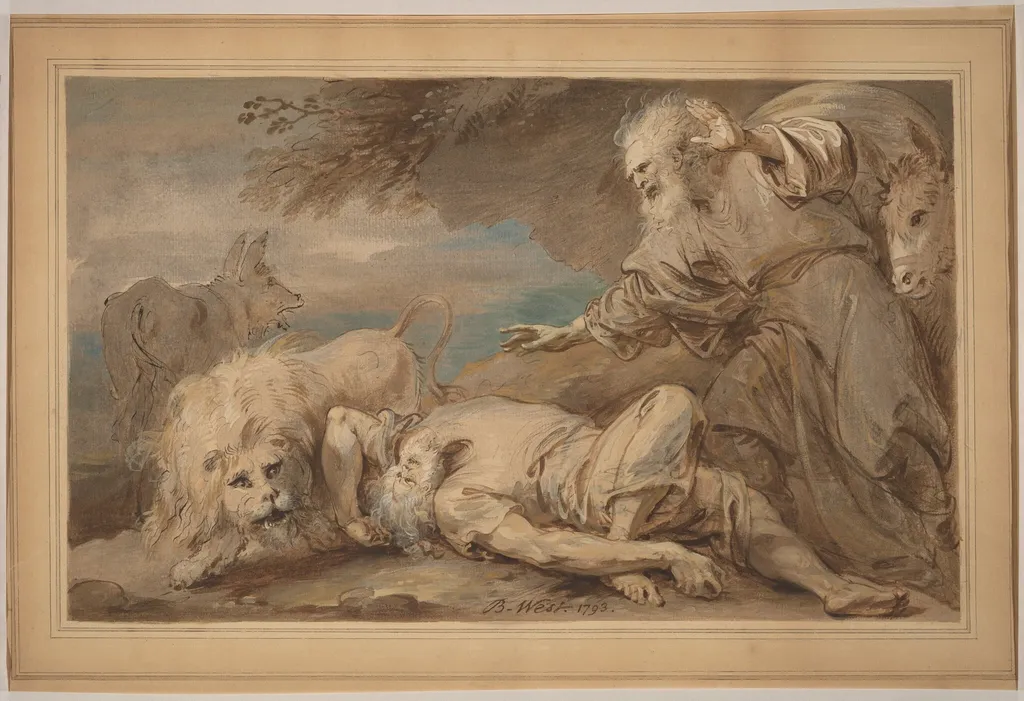
The Disobedient Prophet is an ink drawing by the Romanticist artist Benjamin West. It dates from 1793 and is held in the collection of the National Gallery of Art.
- Inscription
- Inscribed:lower center: B. West. 1793
About this work
The man sits on a rock, looking out at the water, while the lion lies dead on the ground.
This drawing shows a wild scene with a man, a bull, a sheep, and a lion. The man sits on a rock, looking out at the water, while the lion lies dead on the ground. The bull stands nearby, and the sheep is tangled in the lion’s legs. The artist used soft browns, blues, and whites to show light and shadow.
The signature says "B. West, 1793," which means this is an early work by the artist. The loose, sketchy lines and light washes give it a rough, dramatic feel.
Next, look up West, Benjamin to see how his style changed over time.
Overview
Created in 1793, this drawing by Benjamin West is executed in pen and black ink with wash, enhanced by subtle touches of blue and cream oil paint over chalk. It depicts a dramatic, untamed scene featuring a lone figure, a dead lion, a standing bull, and a sheep entangled in the lion’s limbs. The composition conveys quiet tension rather than action, with the central figure gazing toward distant water, suggesting contemplation amid chaos.
Subject & Meaning
The scene alludes to the biblical story of Jonah, who defied divine command and was swallowed by a great fish. Here, the dead lion may symbolize the tamed forces of nature or divine retribution, while the sheep caught in its legs hints at vulnerability and unintended consequence. The figure’s withdrawn posture suggests moral reckoning, not triumph, emphasizing inner turmoil over external victory.
Technique & Style
West employed loose, expressive ink lines and diluted washes to create atmospheric depth, with delicate highlights in cream and blue oil paint adding luminosity to the rock and water. The chalk underdrawing remains partially visible, lending the work a spontaneous, unfinished quality. The restrained palette and textured surface reflect an interest in emotional immediacy over polished finish, characteristic of his early explorations in graphic media.
History & Provenance
Signed and dated 1793, this work originates from West’s formative period as an artist, before his later prominence as a historical painter in London. It was likely a private study, not intended for public display, and reflects his engagement with biblical narratives during a time of personal and artistic transition. Its survival suggests it was valued by contemporaries for its expressive power rather than its finish.
Context
In the 1790s, West was transitioning from the grand historical style of his Royal Academy commissions toward more intimate, emotionally charged subjects. This drawing aligns with a broader European interest in biblical allegory as psychological study, influenced by Romantic sensibilities and the growing emphasis on individual conscience over institutional authority.
Legacy
Though overshadowed by West’s large-scale historical paintings, this drawing reveals his capacity for nuanced emotional expression through minimal means. It stands as an early example of his willingness to explore ambiguity and quiet drama, foreshadowing later shifts in his approach to narrative and composition that would influence generations of American and British artists.
Own this work as a print
Artist & collection

Artist
Benjamin West (October 10, 1738 – March 11, 1820) was an American-born British painter who specialised in history painting, creating such works as The Death of Nelson, The Death of General Wolfe, the Treaty of Paris,…

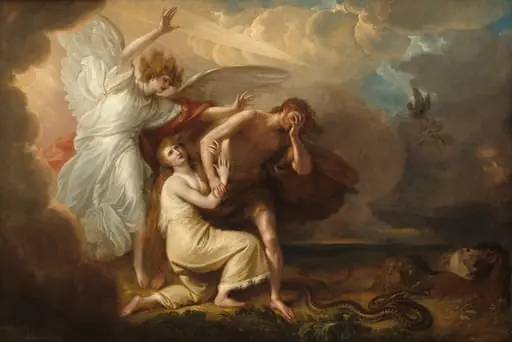 The Expulsion of Adam and Eve from Paradise
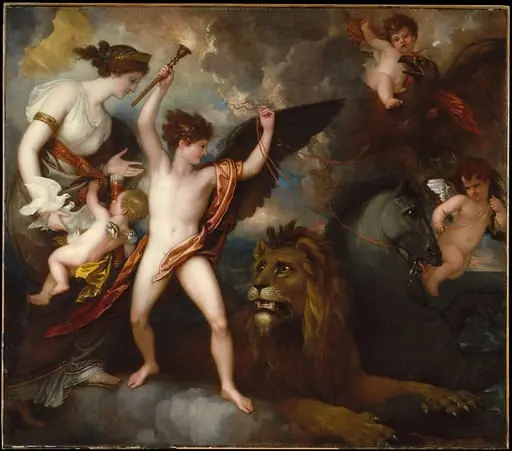 Omnia Vincit Amor, or The Power of Love in the Three Elements
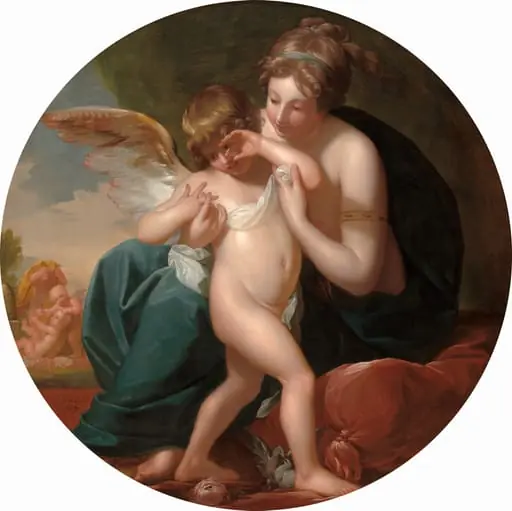 Cupid, Stung by a Bee, Is Cherished by his Mother
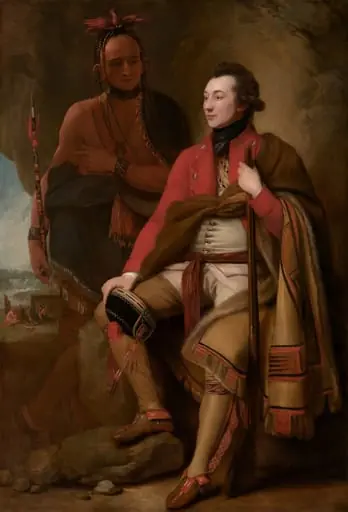 Colonel Guy Johnson and Karonghyontye (Captain David Hill)
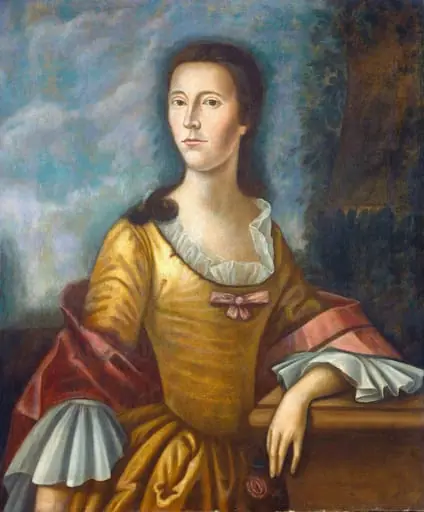 Mary Bethel Boude (Mrs. Samuel Boude)
 Dr. Samuel Boude
 Moses Shown the Promised Land
 Hagar and Ishmael
![Jacob and Rebecca before Isaac [recto], by French 18th Century](https://artifactworldgallery.com/img/french-18th-century--jacob-and-rebecca-before-isaac-recto--5393ee8d0dceb48c-w320.webp)