Artwork
Arrangement in Black - No.3
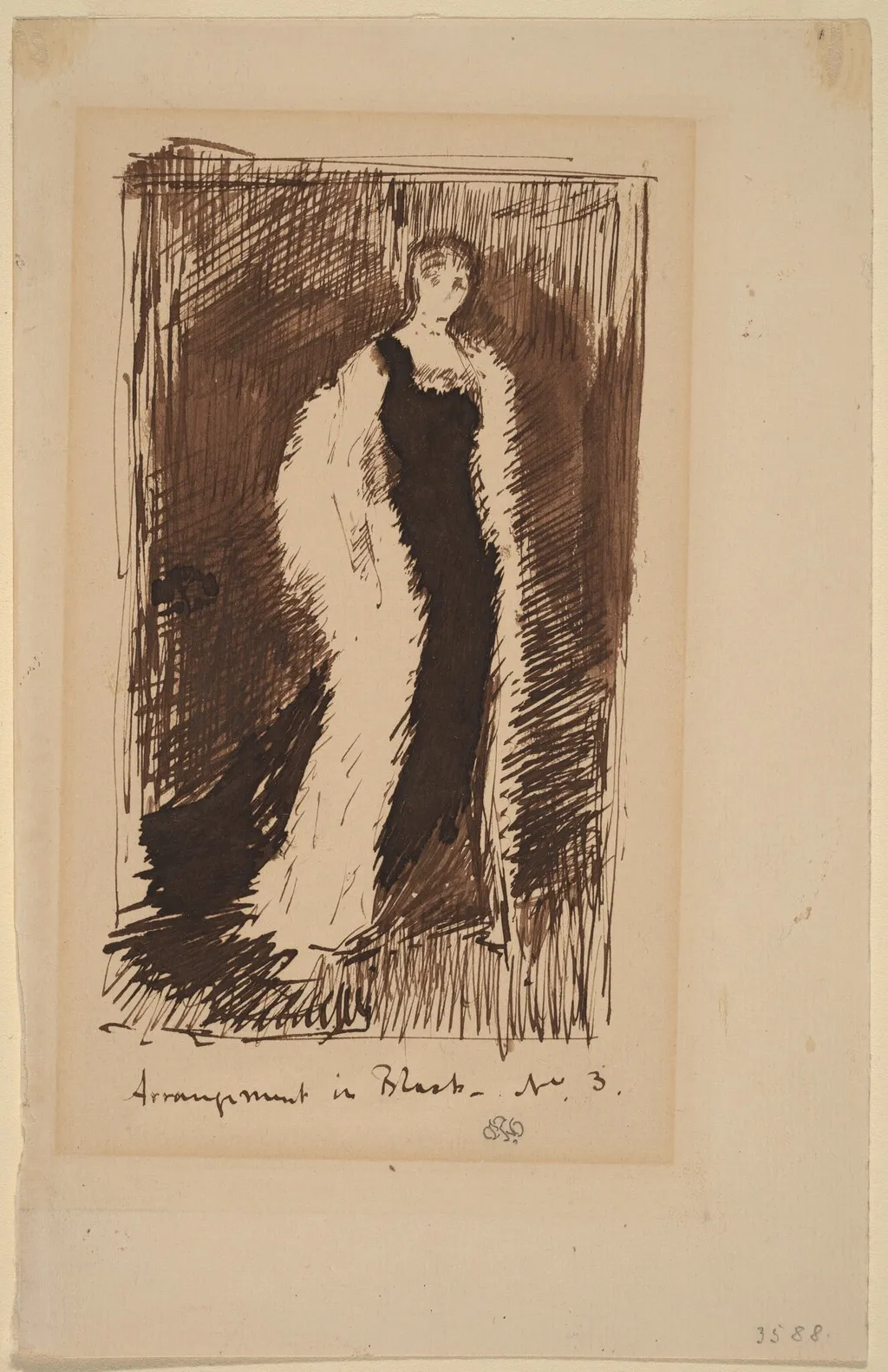
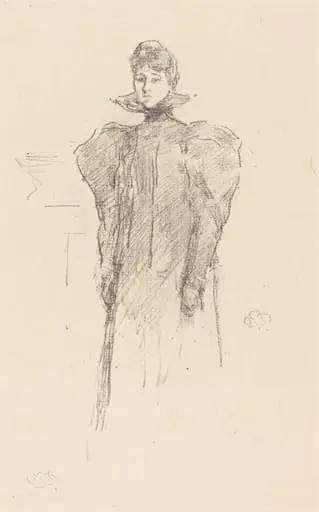
Arrangement in Black - No.3 is an ink drawing by the Impressionist artist James McNeill Whistler. It dates from 1881 and is held in the collection of the National Gallery of Art. Created in 1881, Arrangement in Black – No.
- Inscription
- Inscribed:center left in brown ink: butterfly signature; across bottom in pen and brown ink: Arrangement in Black- No. 3; lower right in graphite: butterfly signature added later (c.1890); lower right in graphite by unknown hand: 3588.; lower left verso in graphite by unkown hand: a61268
- Markings
- Marked:center left verso in black ink: Lessing J. Rosenwald stamp; center verso in blue ink: NGA/LJR stamp
About this work
Overview
As part of a series exploring tonal harmony, the work exemplifies Whistler’s interest in formal composition over narrative content.
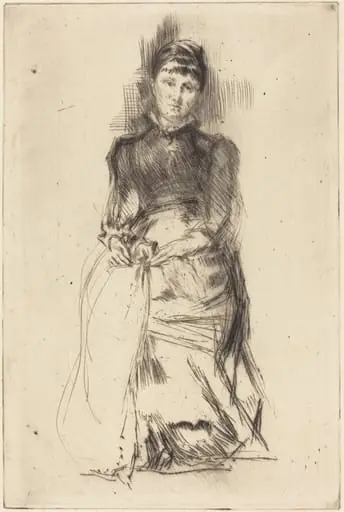
Created in 1881, Arrangement in Black – No. 3 is a small-scale drawing by James McNeill Whistler, executed in graphite, pen, and brown ink on off-white laid paper. As part of a series exploring tonal harmony, the work exemplifies Whistler’s interest in formal composition over narrative content. Its restrained palette and delicate line work reflect his broader aesthetic philosophy, which prioritized visual balance and subtle gradations over literal representation.
Subject & Meaning
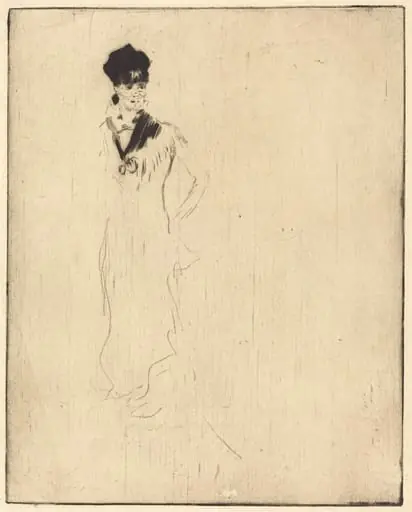
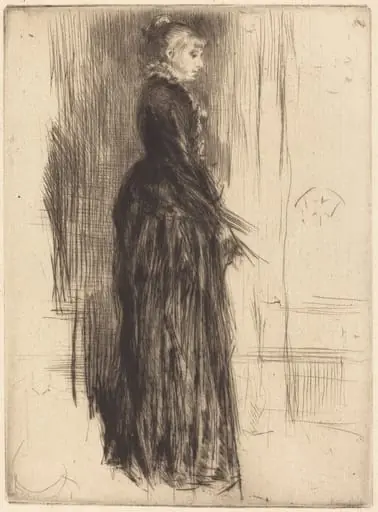
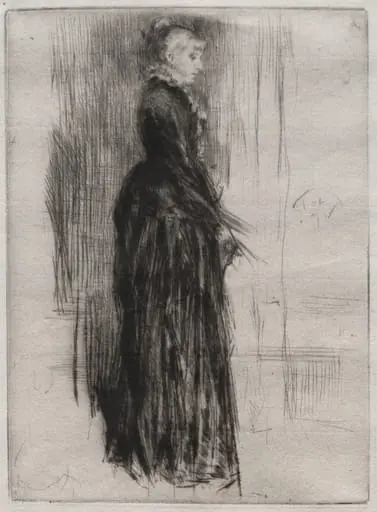
The drawing depicts a solitary female figure standing in a shadowed interior, clad in a long black dress with a high collar. Her face is rendered with minimal detail, suggesting anonymity or emotional distance. The lack of contextual clues, no furniture, no clear light source, shifts focus to the figure’s silhouette and the interplay of light and dark.
The subject is not identified, reinforcing Whistler’s intent to treat the figure as a formal element rather than a portrait.
Technique & Style
Whistler employed fine parallel lines and cross-hatching to build depth and texture in the dark areas, particularly in the dress and background. The use of graphite allowed for soft, smudged tones, while pen and brown ink provided crisp, controlled outlines. The background is suggested through rapid, scratchy strokes, evoking fabric or drapery without defining it explicitly. This method emphasizes atmosphere over detail, aligning with his pursuit of tonal harmony.
History & Provenance
The drawing was produced during Whistler’s mature period in London, following his growing influence in the British art scene. It belongs to a group of works from the early 1880s where he increasingly turned to monochromatic drawings as studies in form. While its early ownership is undocumented, it entered a public collection in the 20th century, where it has been preserved as a representative example of his graphic work.
Context
Whistler created this piece amid a broader movement rejecting moral or literary themes in art. Influenced by Japanese prints and French Realism, he sought to elevate visual arrangement above storytelling. His use of 'arrangement' in the title signals a musical analogy, color and line as notes in a visual composition.
This drawing reflects his alignment with aestheticism, a philosophy that valued beauty and formal precision above didactic content.
Legacy
Though less known than his paintings, Whistler’s drawings like this one reveal his mastery of line and tone. They influenced later generations of printmakers and modernist artists interested in abstraction and minimalism. The work’s quiet intensity and emphasis on mood over narrative helped redefine drawing as a medium capable of conveying complex aesthetic experiences without overt subject matter.
Own this work as a print
Artist & collection
Artist
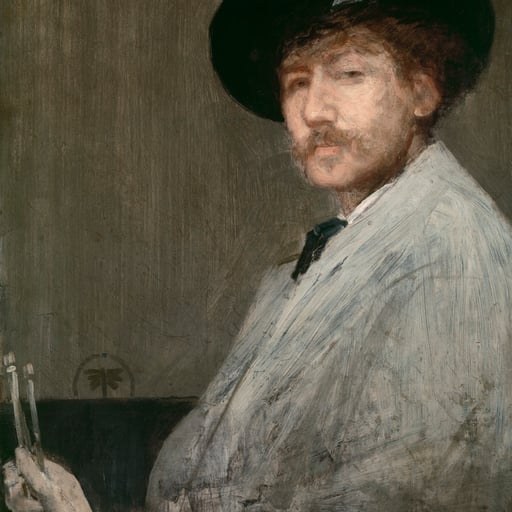
James Abbott McNeill Whistler (; July 10, 1834 – July 17, 1903) was an American painter in oils and watercolor, and printmaker, active during the American Gilded Age and based primarily in the United Kingdom.

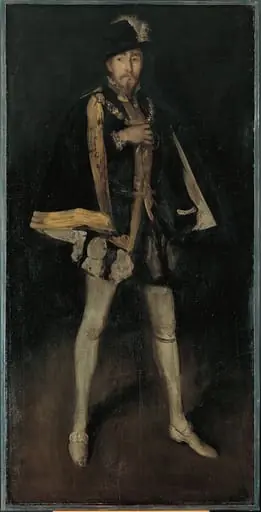 Arrangement in Black, No. 3: Sir Henry Irving as Philip II of Spain
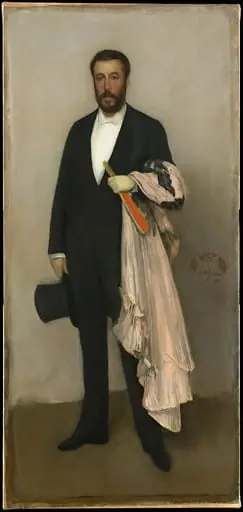 Arrangement in Flesh Colour and Black: Portrait of Theodore Duret
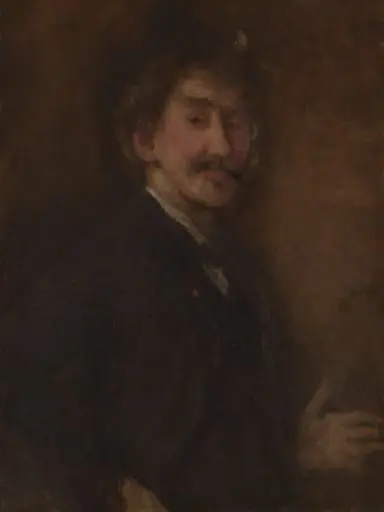 Gold and Brown: Self-Portrait
 Edward Guthrie Kennedy
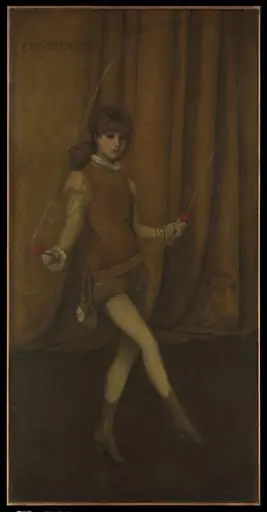 Harmony in Yellow and Gold: The Gold Girl—Connie Gilchrist
 George W. Vanderbilt
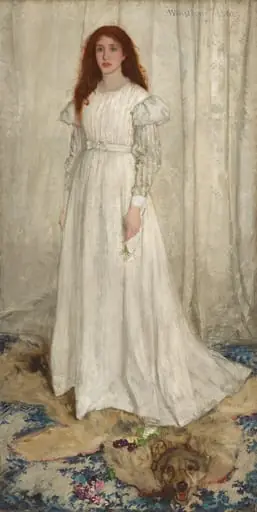 Symphony in White, No. 1: The White Girl
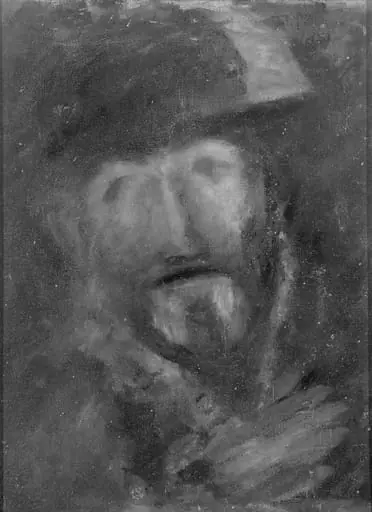 Henry Irving as Philip II of Spain