Artwork
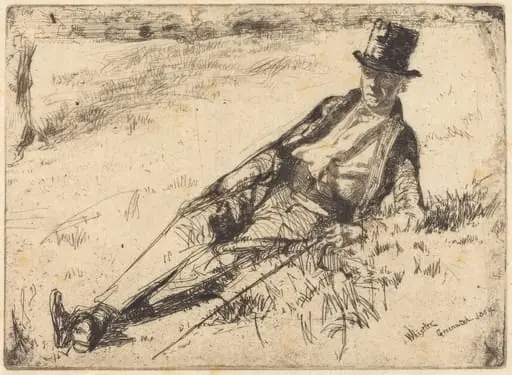
En Plein Soleil
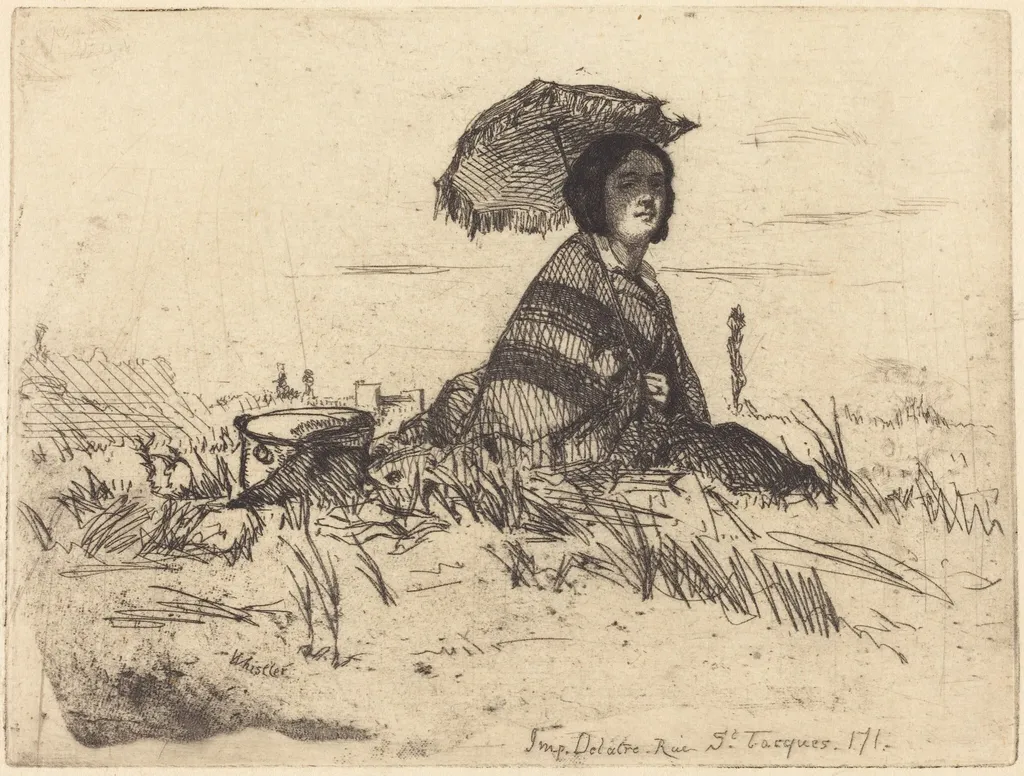
En Plein Soleil is an ink print by the Impressionist artist James McNeill Whistler. It dates from 1858 and is held in the collection of the National Gallery of Art.
- Inscription
- Inscribed:"Whistler" lower left composition, in plate, artist's hand. Not dated. "Imp. Delatre. Rue. St. Jacques.171." lower right composition, in plate, artist's hand. "18" lower left margin, graphite, unknown hand. "252" (stricken in graphite) lower right margin, brown ink, unknown hand. "4" lower right margin, graphite, unknown hand. Verso: none.
- Markings
- Marked:"LRJ" verso, black stamped ink. "National Gallery of Art" verso, black stamped ink. (Howard Mansfield collector's stamp) verso, blue stamped ink, (Lugt 1342). (Harris Whittemore collector's stamp) verso, black stamped ink, (Lugt 1384a).
About this work
It is an example of Impressionism and Realism, and is held at the National Gallery of Art in Washington.
This image shows a woman sitting on the ground, holding an umbrella above her head. She is dressed in a striped shawl and appears to be in a grassy area. The scene is depicted in a sketchy style, with visible lines and shading.
The woman's face is turned slightly to the right, and her body is angled in the same direction. The umbrella provides shade for her, and the grassy area suggests a natural setting.
The image is an etching on laid paper, created by James McNeill Whistler in 1858. It is an example of Impressionism and Realism, and is held at the National Gallery of Art in Washington. You might also want to look into the technique of etching, which was used to create this piece.
Overview
Created in 1858, En Plein Soleil is an etching on laid paper by James McNeill Whistler, made during his early years in London. The work belongs to a period when Whistler was deeply engaged with printmaking, exploring its capacity for subtle tonal variation and linear precision. Though executed in a relatively spontaneous manner, the piece reflects his growing interest in capturing transient moments of light and posture, distinct from the grand narratives favored by academic traditions of the time.
Subject & Meaning
The image depicts a woman seated on grass, shielding herself with an open umbrella, her body angled slightly to the right. Dressed in a patterned shawl, she appears absorbed in her surroundings, her face turned away from the viewer. There is no overt narrative, no story or moral, only a quiet, unposed moment of repose.
Whistler’s focus on this ordinary scene aligns with his rejection of didactic art, favoring instead the aesthetic experience of form, light, and composition.
Technique & Style
Whistler employed etching to achieve fine, controlled lines and delicate gradations of tone. The sketchy quality of the grass and the soft shadows under the umbrella suggest immediacy, while the restrained use of ink preserves the paper’s texture. His linework avoids heavy outlines, instead building form through subtle hatching and cross-contouring.
The result is a sense of atmospheric presence, where light and air feel as tangible as the figure herself.
History & Provenance
The print was made during Whistler’s formative years in Britain, shortly after his move from the United States. It entered the collection of the National Gallery of Art in Washington, D.C., through the Chester Dale Collection in 1963. While not widely exhibited during his lifetime, it was later recognized as representative of his early printmaking experiments, which laid groundwork for his mature aesthetic and technical innovations in the medium.
Context
In the late 1850s, Whistler was part of a circle of artists and writers challenging academic norms, embracing everyday subjects and personal expression. Though often associated with Impressionism, his approach was more deliberate and structured, rooted in Japanese prints and French Realism. En Plein Soleil reflects this synthesis: a quiet observation of nature, rendered with precision rather than spontaneity, anticipating his later emphasis on tonal harmony over narrative.
Legacy
The work exemplifies Whistler’s early commitment to aesthetic autonomy and technical refinement. His butterfly signature, subtly integrated into the composition, signals both personal identity and artistic independence. Though modest in scale, En Plein Soleil contributed to a broader redefinition of printmaking as a serious artistic medium, influencing later generations who valued subtlety, restraint, and the expressive potential of line and tone.
Own this work as a print
Artist & collection
Artist
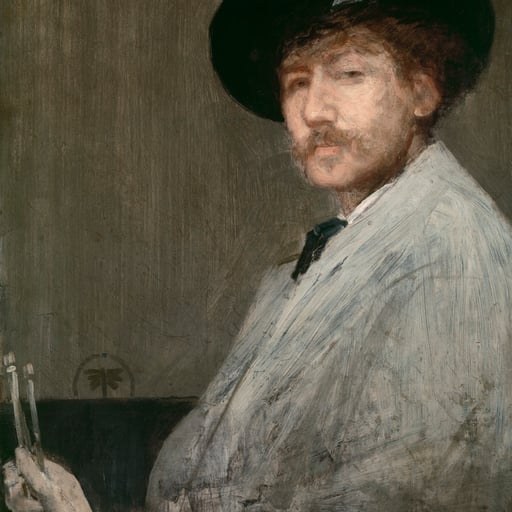
James Abbott McNeill Whistler (; July 10, 1834 – July 17, 1903) was an American painter in oils and watercolor, and printmaker, active during the American Gilded Age and based primarily in the United Kingdom.

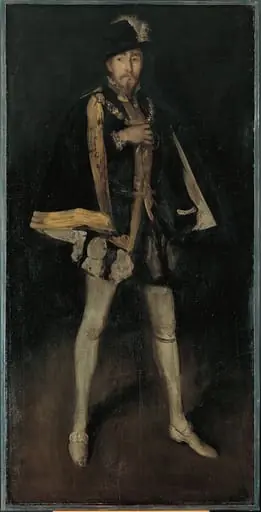 Arrangement in Black, No. 3: Sir Henry Irving as Philip II of Spain
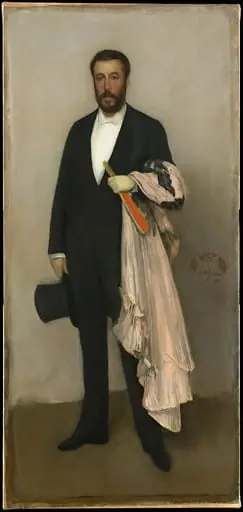 Arrangement in Flesh Colour and Black: Portrait of Theodore Duret
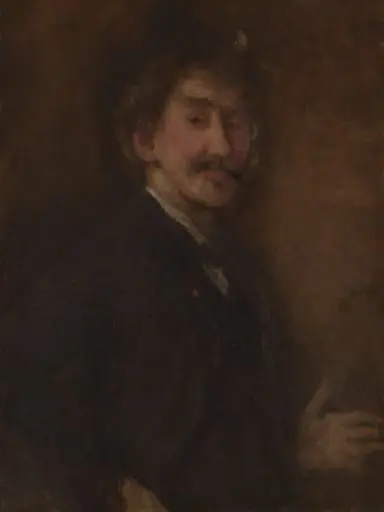 Gold and Brown: Self-Portrait
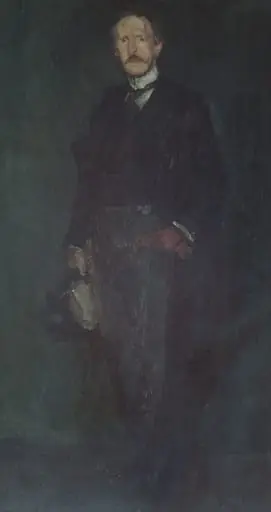 Edward Guthrie Kennedy
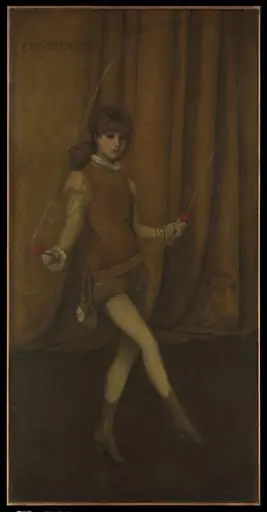 Harmony in Yellow and Gold: The Gold Girl—Connie Gilchrist
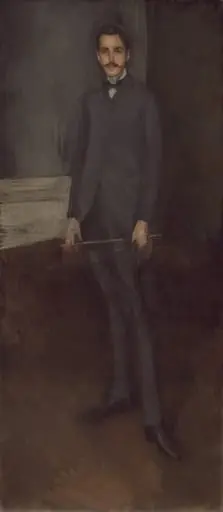 George W. Vanderbilt
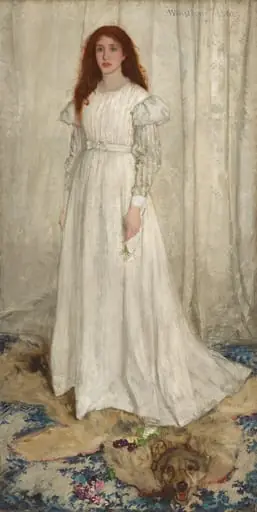 Symphony in White, No. 1: The White Girl
 Henry Irving as Philip II of Spain
- Twelve Etchings from Nature: En Plein Soleil
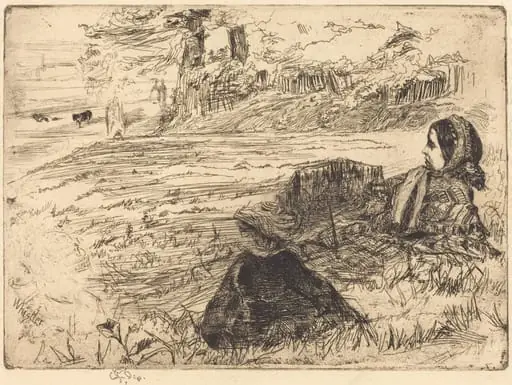 Nursemaid and Child
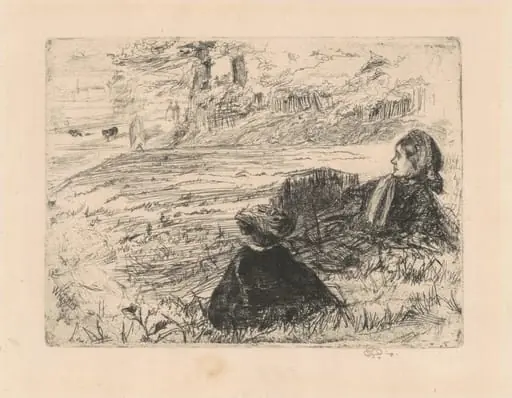 Nursemaid and Child
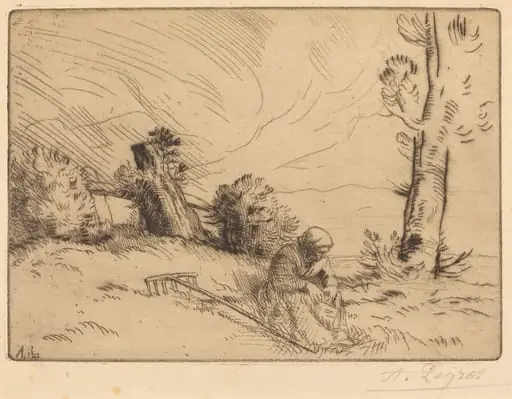 Peasant Woman Seated near a Hedge (Paysanne assise pres d'une haie)
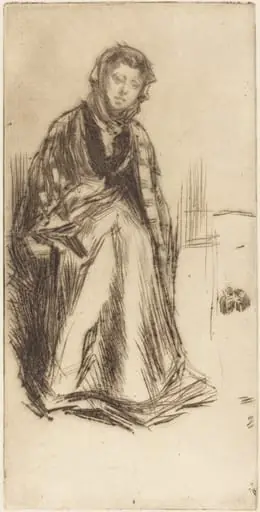 The Scotch Widow
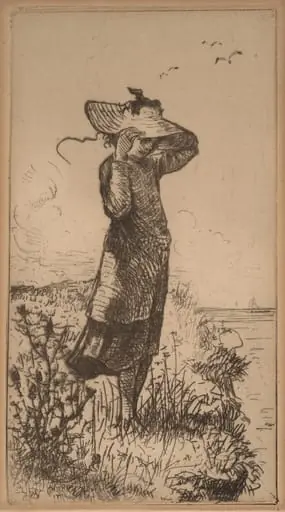 A Fresh Breeze from the Sea
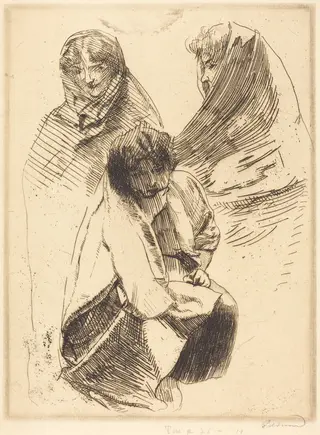 Three Veiled Women (Trois femmes voilées)
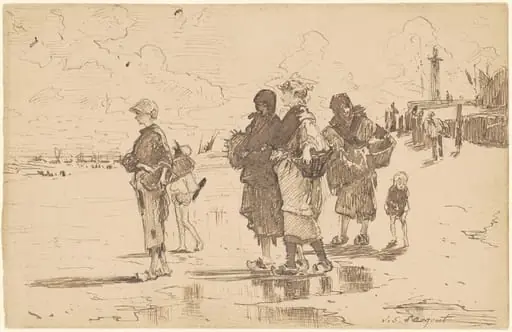 En route pour la pêche (Setting Out to Fish)
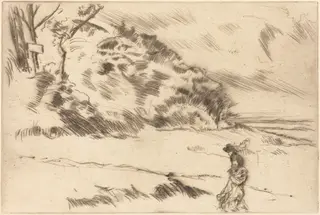 Speke Shore
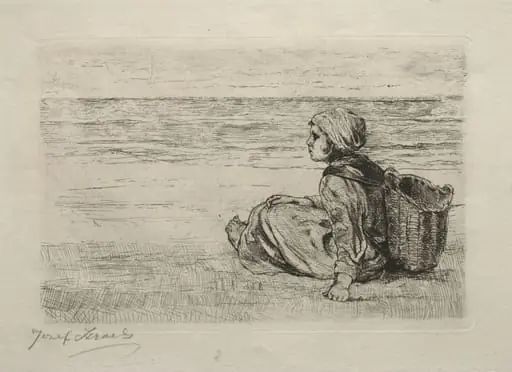 Girl with basket seated on the shore
 The Actress Ellen Andrée
 Greenwich Pensioner