Artwork
The Holy Family (Christ in the Lap of Truth)
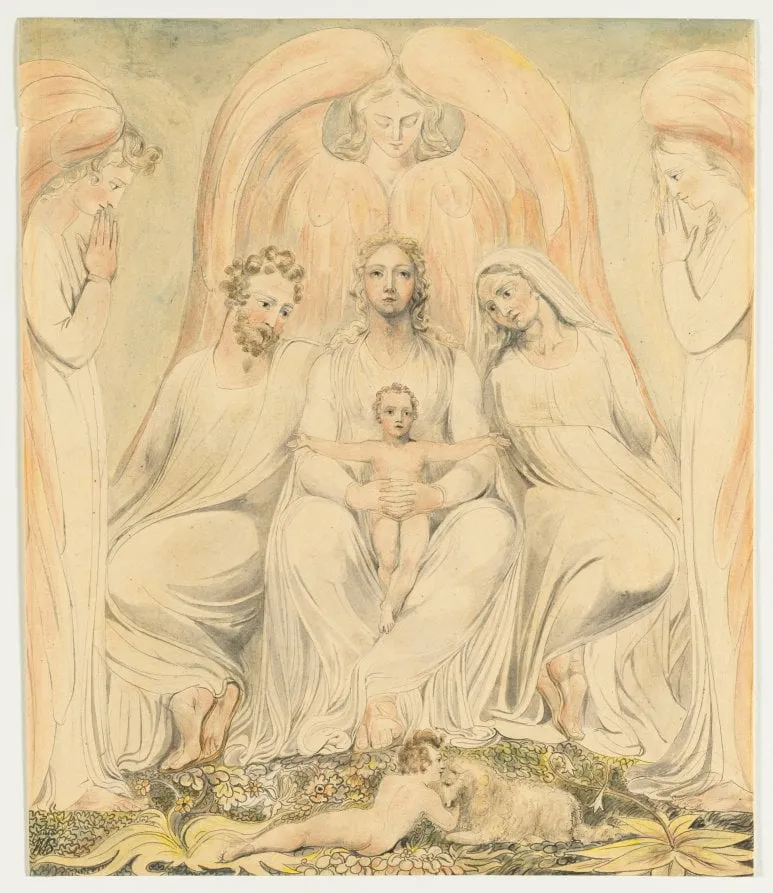
The Holy Family (Christ in the Lap of Truth) is a drawing by the Romanticist artist William Blake. It dates from 1805 and is held in the collection of the Cleveland Museum of Art. This drawing presents a compact, stylized grouping of figures drawn from Christian tradition.
- Accession no.
- 1950.239
- Credit line
- John L. Severance Fund
About this work
To see more of Blake’s strange, dreamlike work, look up William Blake (British, 1757–1827).
A woman in a blue robe holds a baby whose arms stretch wide like a cross. An older man and woman stand close, watching. The figures float against a dark, swirling background.
Blake painted this scene from the Bible, but he didn’t follow the usual rules. The shapes are sharp and flat, almost like cut paper. He believed art should show visions, not real life. The baby’s pose hints at his future death, but the mood feels calm, not sad.
To see more of Blake’s strange, dreamlike work, look up William Blake (British, 1757–1827).
Overview
This drawing presents a compact, stylized grouping of figures drawn from Christian tradition. At its centre, a woman in a blue robe cradles an infant whose arms are spread wide, evoking the shape of a cross. Flanking them are an older man and woman, while a child below interacts with a lamb, all set against a dark, swirling background.
Subject & Meaning
The central pair represents the Virgin Mary and the infant Jesus, with the child's outstretched arms alluding to his future crucifixion. To the left stands Saint Joseph, and to the right, Saint Anne, the Virgin’s mother. The child below is identified as John the Baptist, whose play with a lamb anticipates his role as the forerunner of Christ’s sacrifice.
Technique & Style
Blake renders the scene with sharp, flattened forms that resemble cut‑paper silhouettes, abandoning naturalistic modeling for a more visionary approach. The composition relies on stark contrasts and a limited palette, emphasizing symbolic gesture over realistic detail.
History & Provenance
Created by William Blake (1757–1827), the work reflects his personal, non‑institutional spirituality and his engagement with biblical narratives and literary sources such as Milton’s Paradise Lost. The drawing remains within collections that document Blake’s oeuvre of visionary religious imagery.
Context
Although Blake rejected organized religion, his art frequently explored biblical themes through a highly individual lens. This piece exemplifies his belief that art should convey inner visions rather than depict external reality, situating the holy family within a dreamlike, otherworldly space.
Artist & collection
Artist
William Blake (28 November 1757 – 12 August 1827) was an English poet, painter and printmaker.

 The Third Temptation
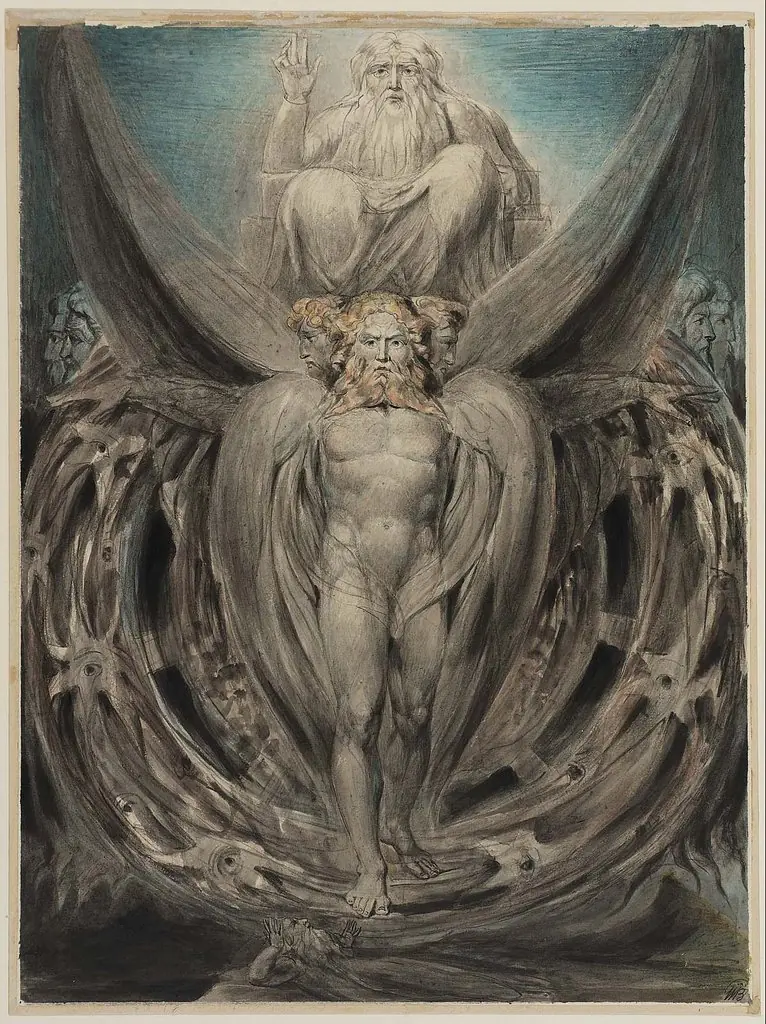 Ezekiel's Wheels
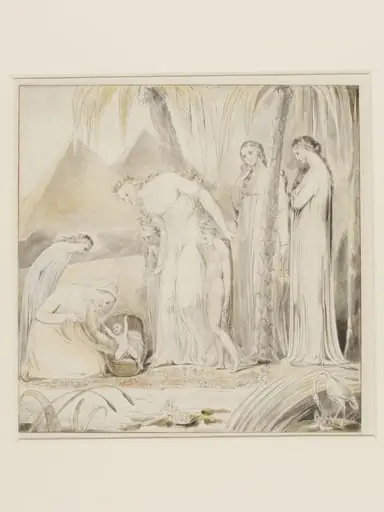 The Compassion of Pharoah's Daughter
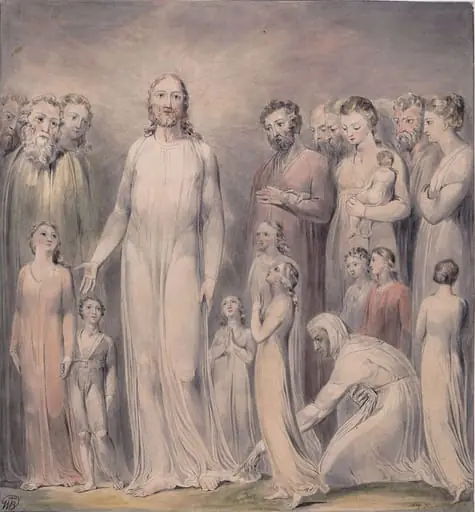 The healing of the woman with an issue of blood
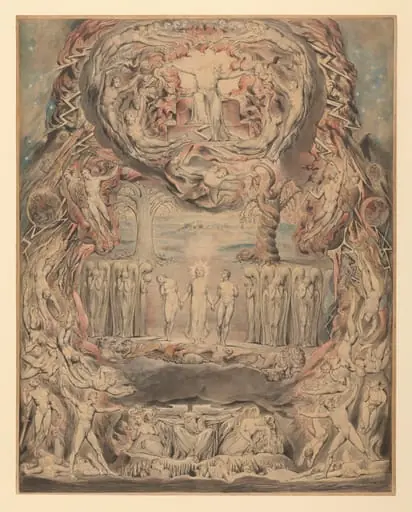 The Fall of Man
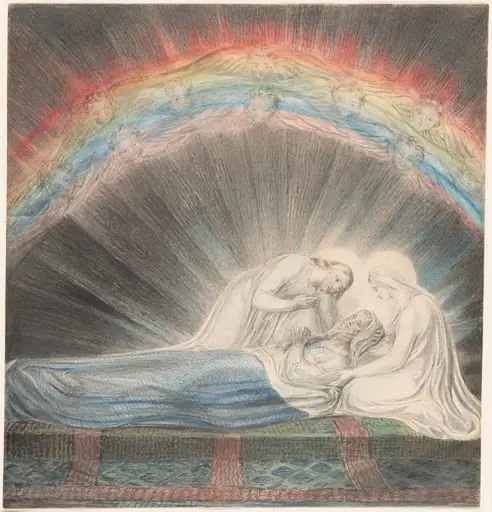 The Death of Saint Joseph
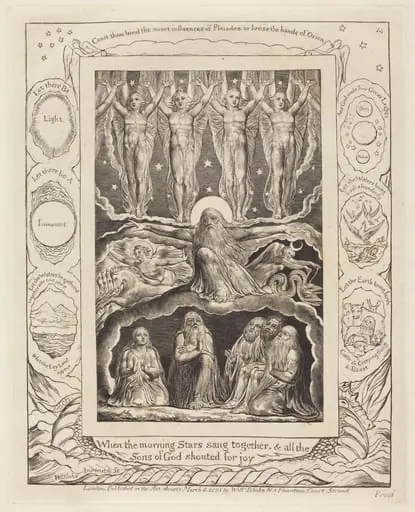 The Creation
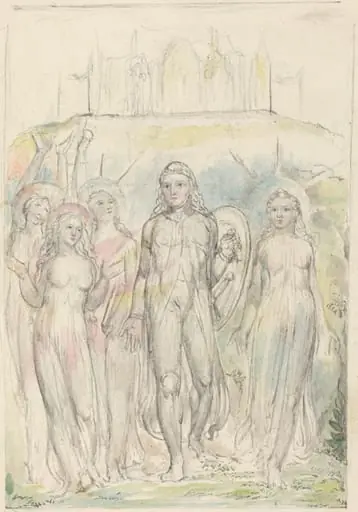 Christian with the Shield of Faith, Taking Leave of His Companions
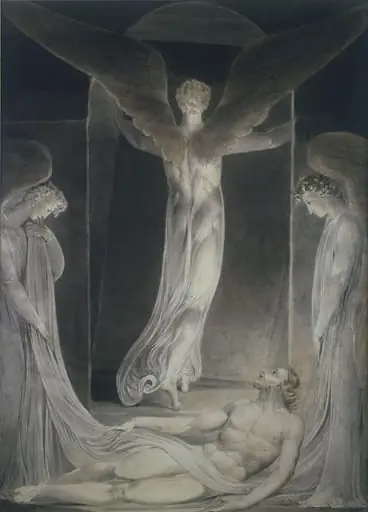 The Resurrection: The angel rolling away the stone from the sepulchre