Artwork
Boy with Anchor
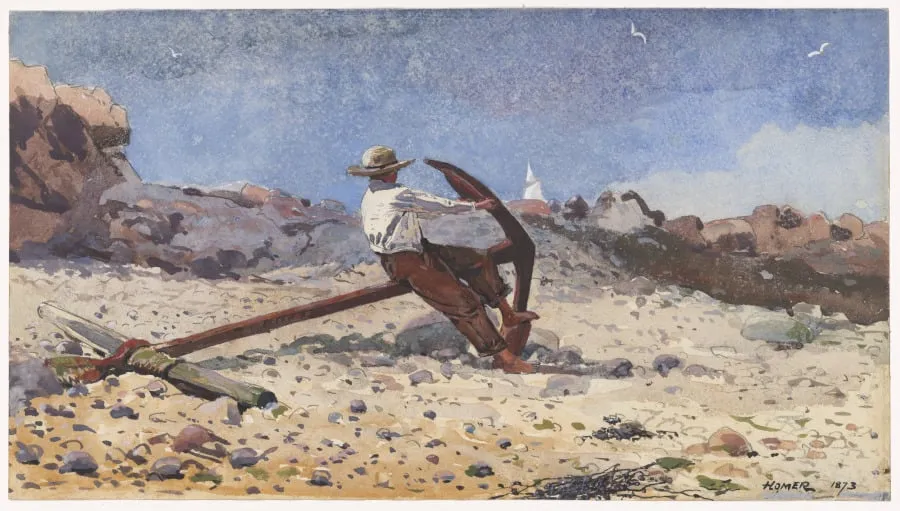
Boy with Anchor is a drawing by the Impressionist artist Winslow Homer. It dates from 1873 and is held in the collection of the Cleveland Museum of Art.
- Accession no.
- 1954.128
About this work
Overview
Boy with Anchor is a drawing by Winslow Homer, created in 1873 in Gloucester, Massachusetts. It depicts a boy on a dock holding a large anchor.
Subject & Meaning
The work focuses on the children left behind by the local fishing industry, evoking the emotional weight of their maritime destiny. The massive anchor and the boy's interaction with it suggest a sense of foreboding and responsibility.
Technique & Style
Homer used a combination of graphite, transparent watercolor, and gouache to achieve a range of textures and atmospheric effects. The layering of washes and the use of blotting to create cloud patterns demonstrate his technical variety and interest in expressive brushwork.
Context
The drawing is part of a series of watercolors Homer produced in Gloucester during the summer of 1873, a time when the local fishing industry was fraught with danger and uncertainty.
Artist & collection
Artist
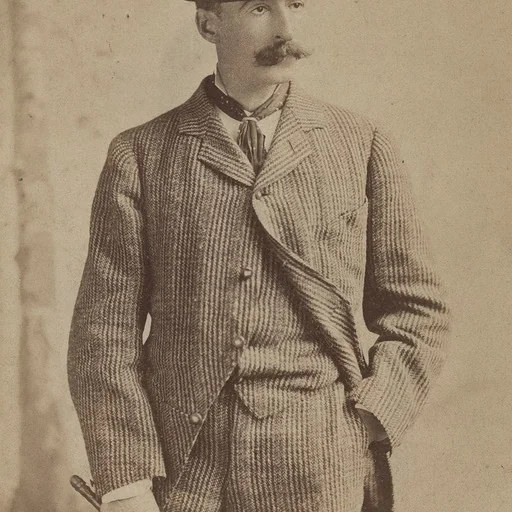
Winslow Homer (February 24, 1836 – September 29, 1910) was an American landscape painter and illustrator, best known for his marine subjects.


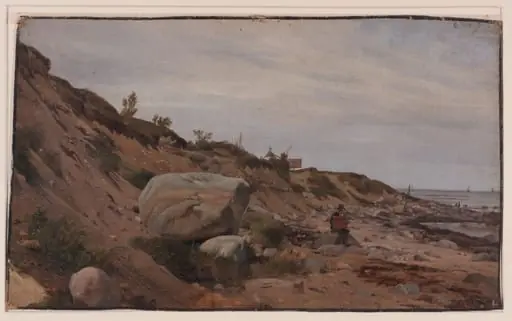 Maler in steinigen Sanddünen
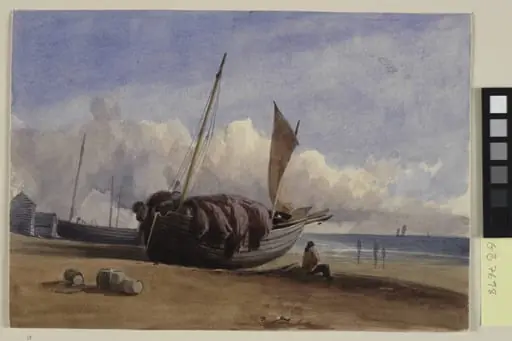 Beached fishing boat with seated fisherman
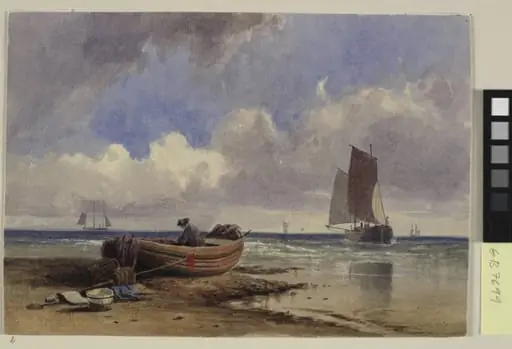 Fishing boat on the shore at Hastings
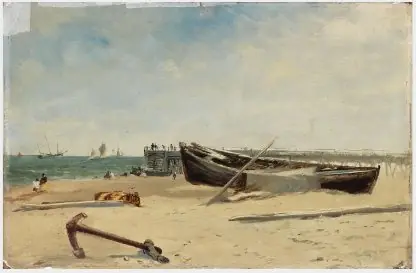 A Coast Scene
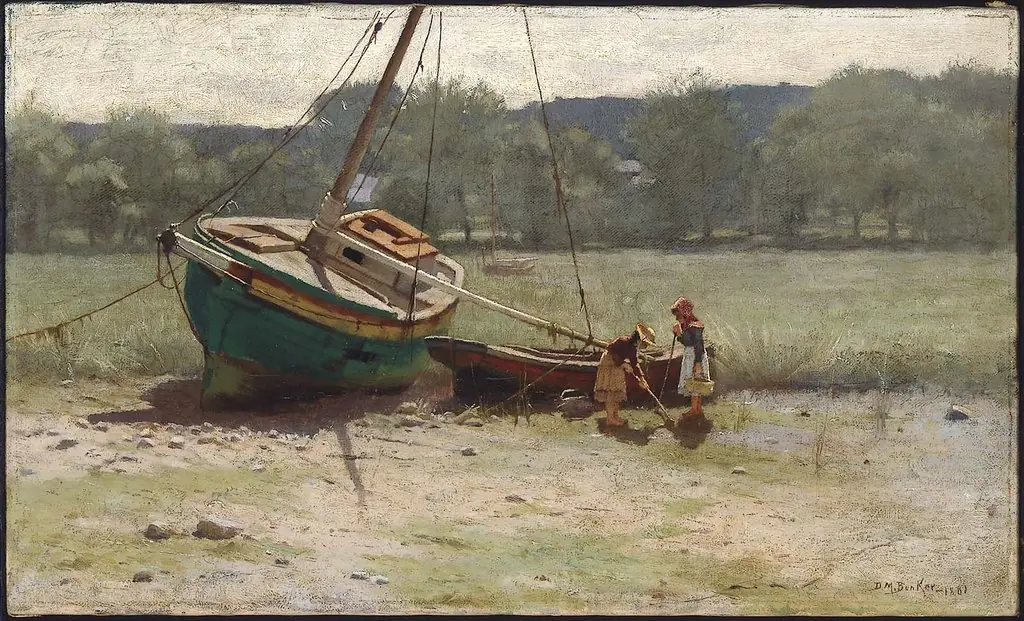 Salt Marsh Landscape with Two Children near a Beached Sailboat and Dory
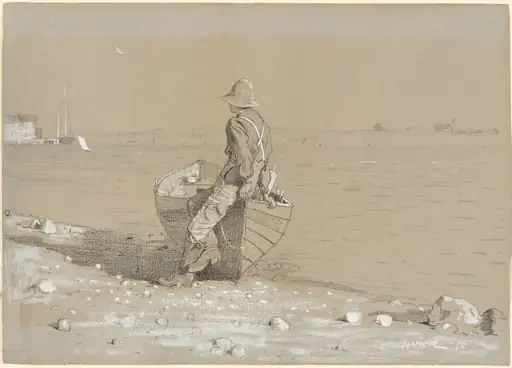 Looking Out
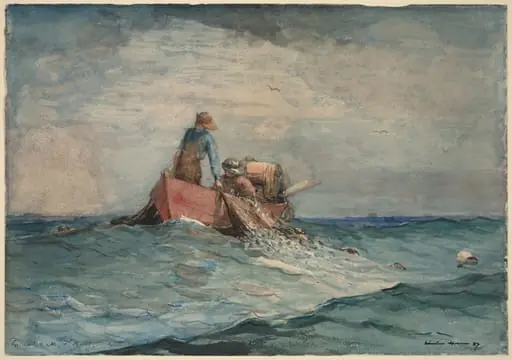 Hauling in the Nets
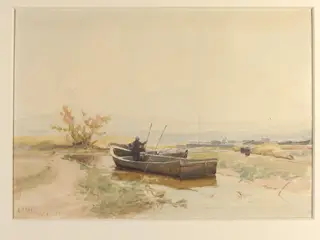 Lake Biwa, Japan
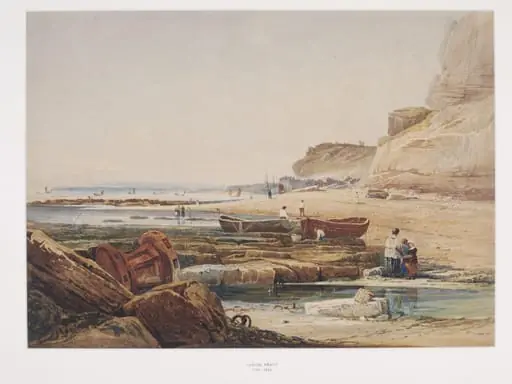 The Beach, Hastings
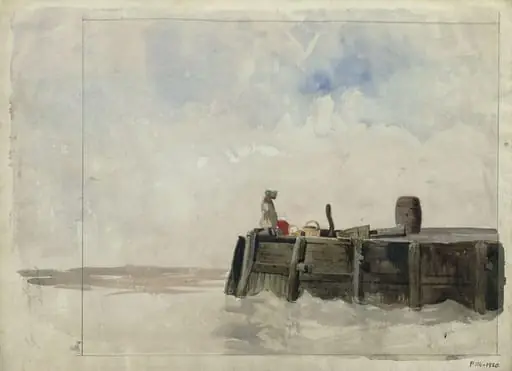 Woman on a Jetty at Gravesend
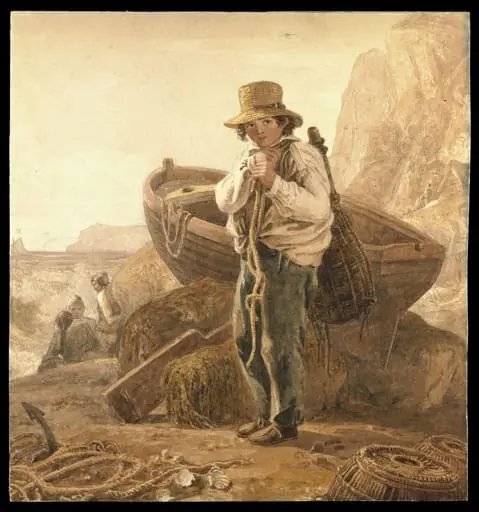 The Young Fisher Boy
- A Clam-Bake