Artwork
明 傳謝環 杏園雅集圖 卷|Elegant Gathering in the Apricot Garden
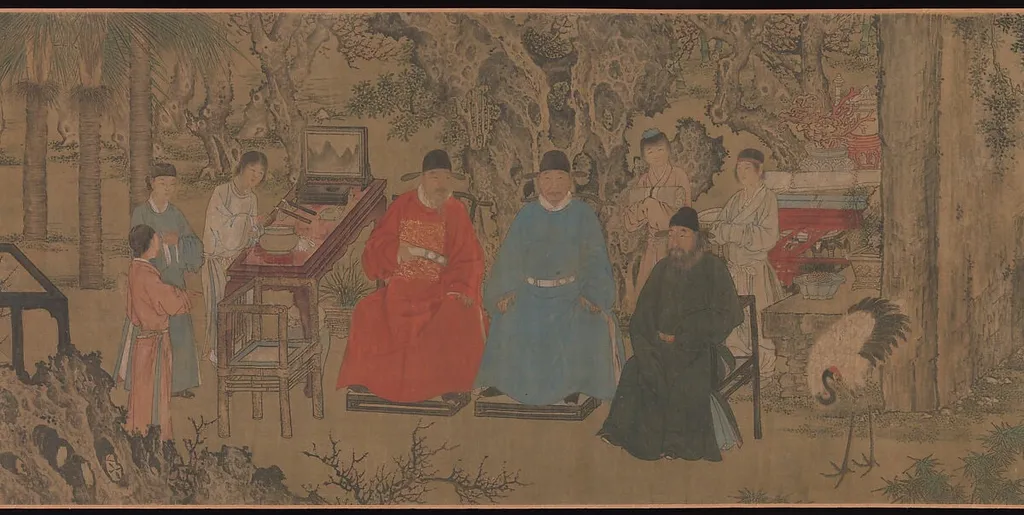
明 傳謝環 杏園雅集圖 卷|Elegant Gathering in the Apricot Garden is an ink painting by the Ming dynasty painting artist Xie Huan. It dates from 1437 and is held in the collection of the Metropolitan Museum of Art. This handscroll, titled Elegant Gathering in the Apricot Garden, is rendered with ink and color on silk.
About this work
A long handscroll shows scholars in silk robes seated at low tables beneath blossoming apricot trees, cranes stepping between them. It records a real party from 1437, the guests actual Ming court officials, each face drawn so friends would know them. The cranes stand for long life.
Subject & Meaning
The work serves as a visual record of the social and intellectual networks of the early Ming court, celebrating the harmony and erudition of its participants.
Created in 1437, the handscroll depicts a genre scene of seven scholars and officials gathered in a garden setting, identified as the Apricot Garden. The composition centers on a group of men seated around a table, engaged in conversation and scholarly leisure, reflecting the cultural ideal of the literati gathering. A crane is prominently included within the landscape, a traditional symbol of longevity and immortality in Chinese iconography that elevates the gathering from a mere social event to a representation of refined, auspicious life.
While the primary figures are men, the depiction also includes women in the scene, contributing to the domestic and social atmosphere of the courtyard. The work serves as a visual record of the social and intellectual networks of the early Ming court, celebrating the harmony and erudition of its participants.
Technique & Style
The work is executed as a handscroll on silk, employing ink with subtle polychrome washes to render a convivial scene of scholars and a crane beneath blossoming apricot trees. Xie Huan’s brushwork combines delicate line work with layered washes, creating a sense of spatial depth and rhythmic movement across the elongated support. The composition balances figural detail, such as the seated man at a table and a woman beside him, with decorative motifs of crane and foliage, reflecting the genre’s emphasis on elegant gathering.
The scroll’s silk support suggests careful handling, as it is designed to be unrolled gradually, preserving its condition within the Metropolitan Museum of Art’s collection.
History & Provenance
The handscroll Elegant Gathering in the Apricot Garden was created in 1437 by the Chinese artist Xie Huan, who lived approximately from 1370 to 1450. Executed in ink and color on silk, the work depicts a genre scene featuring men, women, tables, and cranes. While the painting is historically attributed to Xie Huan, the title indicates a tradition of transmission or attribution that may involve later interpretations of his authorship.
The artwork was produced in China during the Ming dynasty. It is currently held in the collection of the Metropolitan Museum of Art, which serves as its primary known institutional home. The specific commissioning details and the immediate chain of ownership prior to its arrival at the museum are not detailed in the available records, though the work's creation date is firmly established as 1437.
Overview
This handscroll, titled Elegant Gathering in the Apricot Garden, is rendered with ink and color on silk. It portrays a scene of scholarly leisure, featuring figures in traditional robes seated at low tables amidst a garden of blossoming apricot trees. Cranes are depicted moving gracefully among the attendees, contributing to the tranquil atmosphere of the composition.
Artist & collection
Artist
Xie Huan was a Chinese painter of the early Ming Dynasty. He is best known for his painting of domestic settings, story-theme artwork, and landscape paintings.

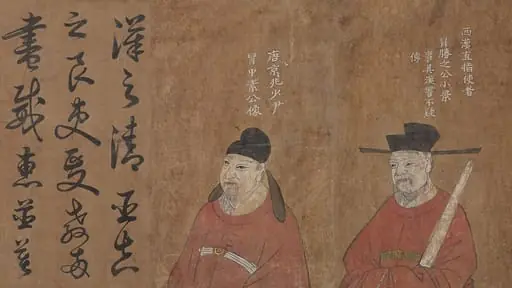 明/清 佚名 冒氏先人小像二幅 卷|Two Ancestors of the Mao Family
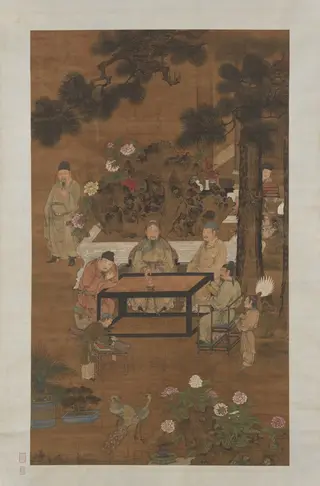 The Eighteen Scholars (zither)
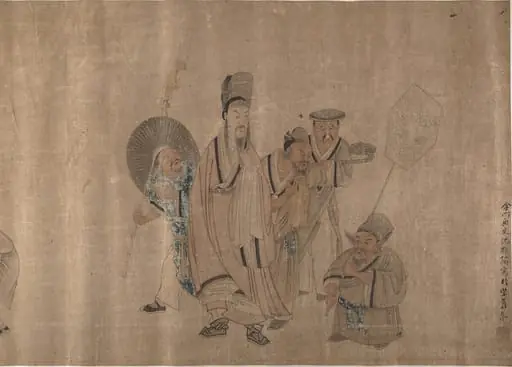 Untitled
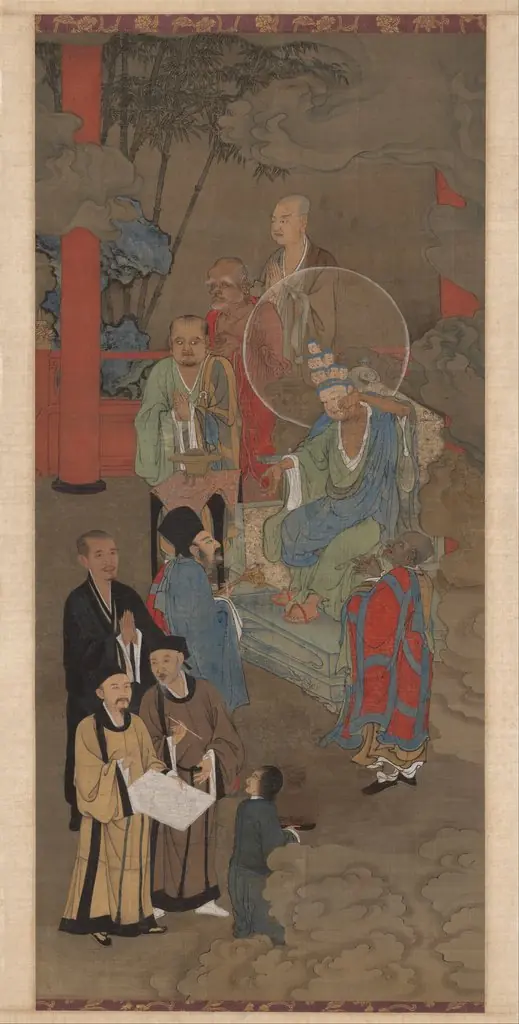 Lohan manifesting himself as an eleven-headed Guanyin
 明 佚名 李公麟 偽款 白蓮社圖 卷|White Lotus Society
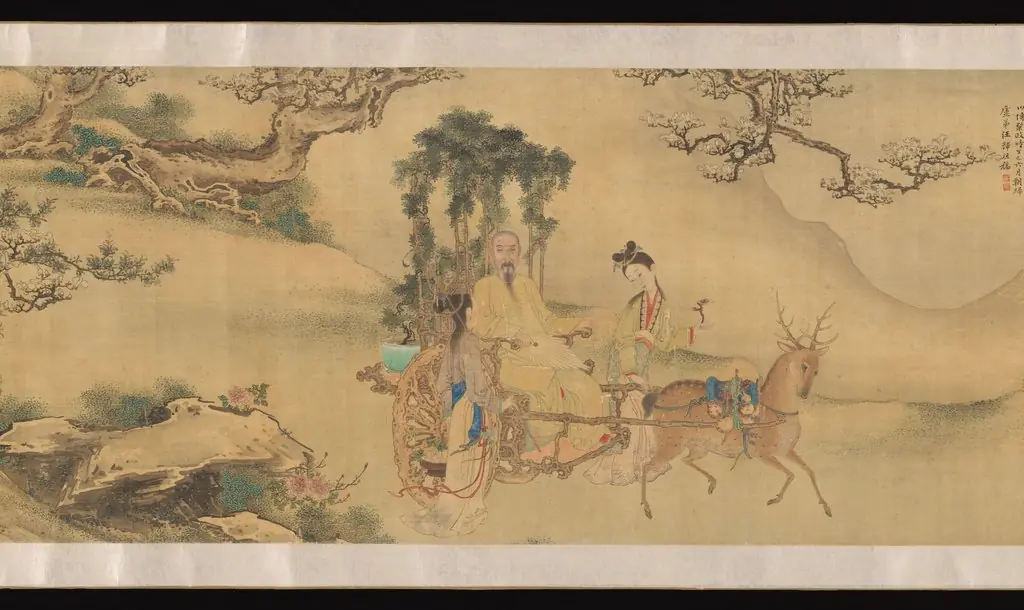 Portrait of Shaoyu in the guise of Liu Ling
 Untitled
 明/清 佚名 舊傳王振鵬 養正圖 卷|Family Training
 Calligraphy, probably from the set "The Four Accomplishments"
 The Eighteen Scholars