Artwork
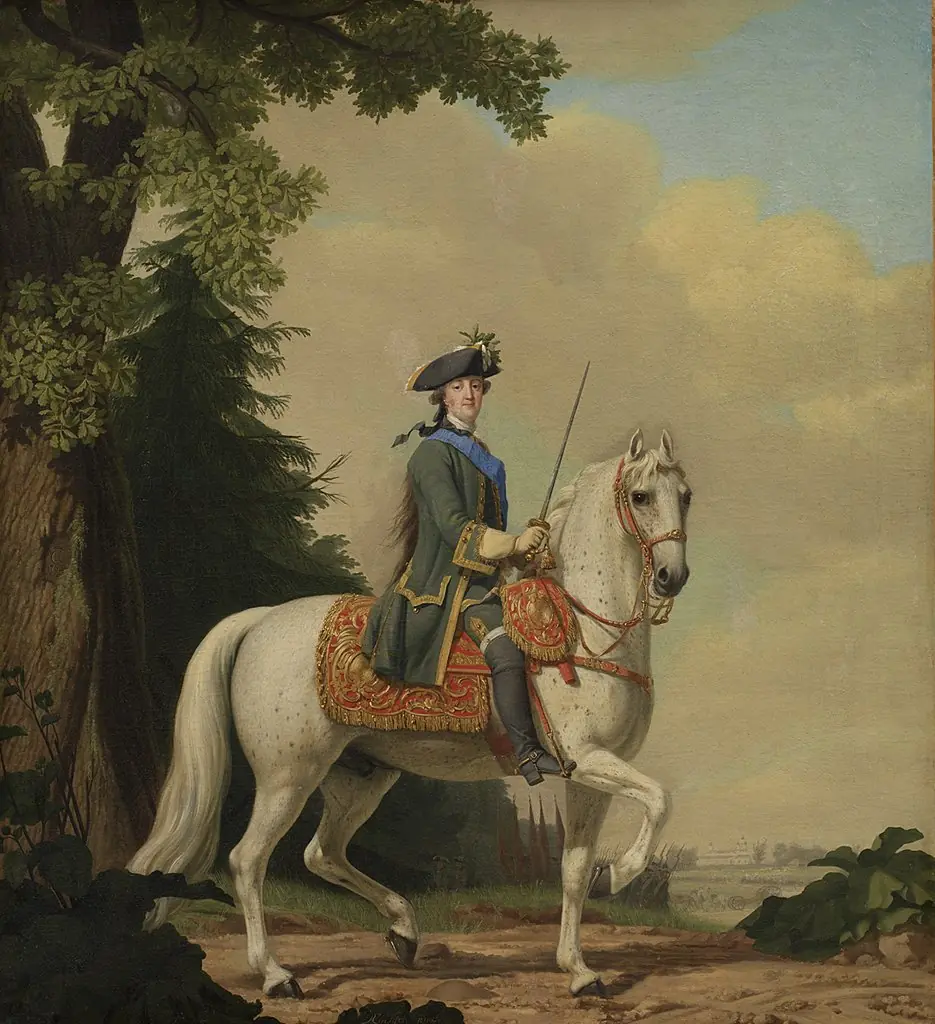
Catharina II of Russia in Life Guard Uniform on the horse "Brillante"
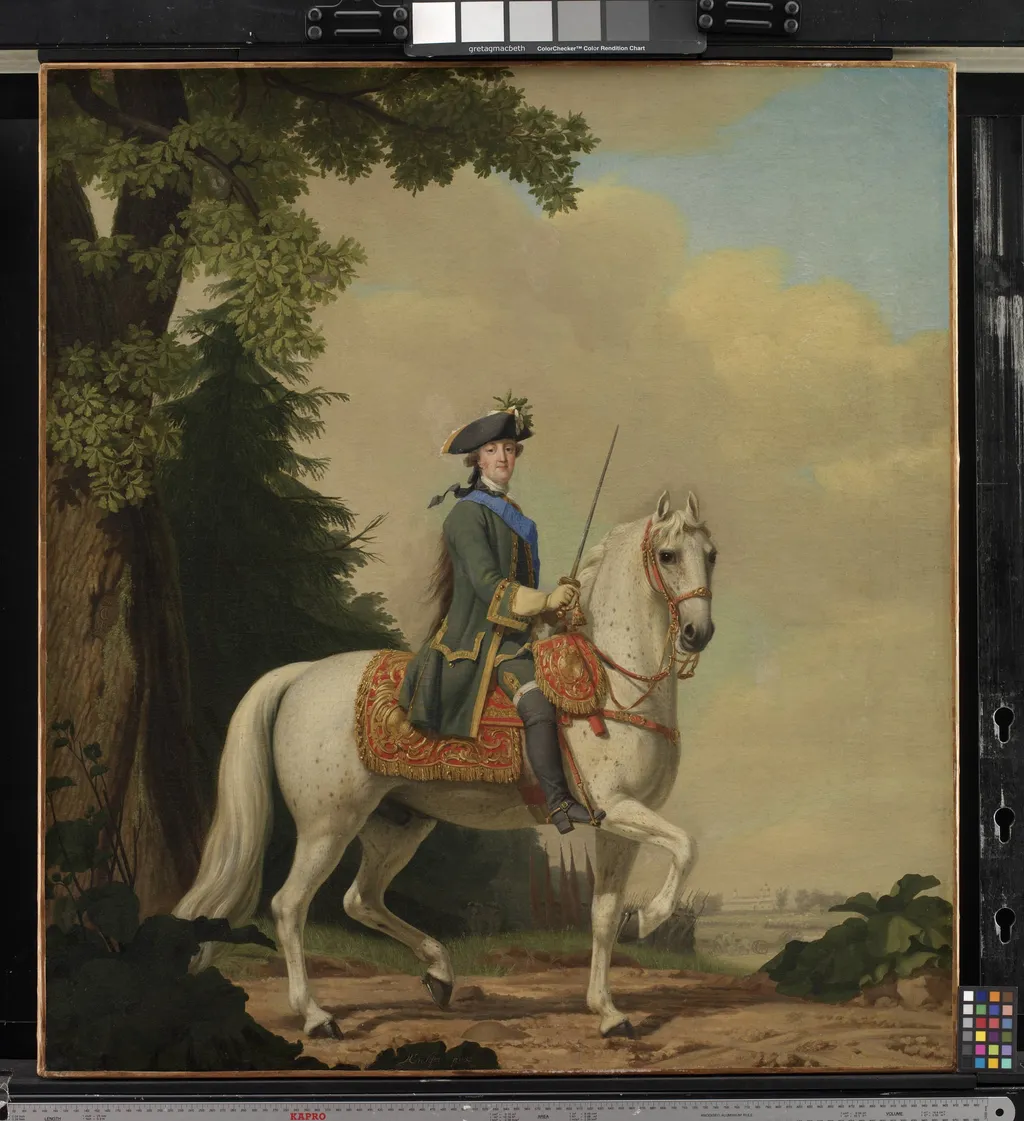
Catharina II of Russia in Life Guard Uniform on the horse "Brillante" is a photography by the Romanticist artist Unknown. It dates from 1782 and is held in the collection of the Statens Museum for Kunst.
About this work
Overview
This 1782 portrait portrays Empress Catherine II of Russia mounted on her horse Brillante, dressed in the uniform of the Life Guard regiment.
This 1782 portrait portrays Empress Catherine II of Russia mounted on her horse Brillante, dressed in the uniform of the Life Guard regiment. The image captures her in a formal equestrian pose, surrounded by subtle natural elements. It is held in the collection of the Museum of Ethnography, though its origins lie in imperial portraiture rather than ethnographic study. The composition emphasizes dignity and control, aligning with the political image Catherine cultivated.
Subject & Meaning
Catherine II is depicted not as a conventional monarch in royal robes, but as a military leader, deliberately aligning herself with the elite guard units that secured her power. The choice of uniform, the proud stance, and the well-bred horse convey authority and personal command. The imagery reinforces her role as a ruler who wielded power with strategic precision, blending traditional femininity with masculine symbols of leadership to assert legitimacy in a male-dominated political sphere.
Technique & Style
The painting employs a restrained palette of green, gold, blue, and white, with careful attention to textile detail and metallic accents. The horse’s harness and saddle blanket are rendered with precision, suggesting the artist’s familiarity with equestrian equipment. Soft modeling of light and shadow defines form without dramatic contrast, favoring clarity and poise over theatricality. The background remains muted, directing focus to the figure and her steed.
History & Provenance
Commissioned during Catherine’s reign, the portrait was likely intended for public display or diplomatic exchange to project imperial strength. It entered the Museum of Ethnography at an unknown date, possibly through state collection transfers or acquisitions in the 19th century. Its presence in an ethnographic institution reflects later reinterpretations of imperial imagery as cultural artifact rather than political statement.
Context
In late 18th-century Russia, visual culture was instrumental in shaping the ruler’s public persona. Catherine, who seized power in a coup, used portraiture to legitimize her rule by associating herself with military discipline and Enlightenment ideals. Equestrian portraits, traditionally reserved for male sovereigns, were rare for women, making this image a calculated assertion of her sovereignty and physical presence in the political arena.
Legacy
The portrait remains a documented example of how female rulers navigated gendered expectations through visual symbolism. While not widely exhibited today, it contributes to scholarly understanding of imperial self-representation in early modern Europe. Its placement in an ethnographic museum underscores shifting perceptions of power imagery, from political tool to historical record.
Artist & collection









 Na het gevecht
 Kongelig hestegarde
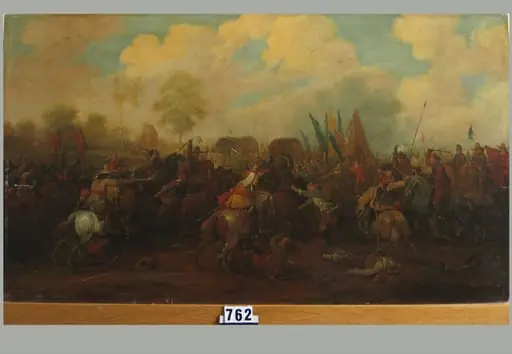 Luptă de cavalerie lângă o capelă. Pandant: Luptă de cavalerie lângă un oraș
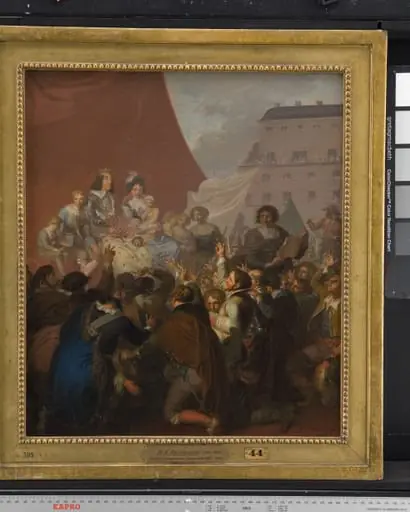 The Oath of Fealty in 1660
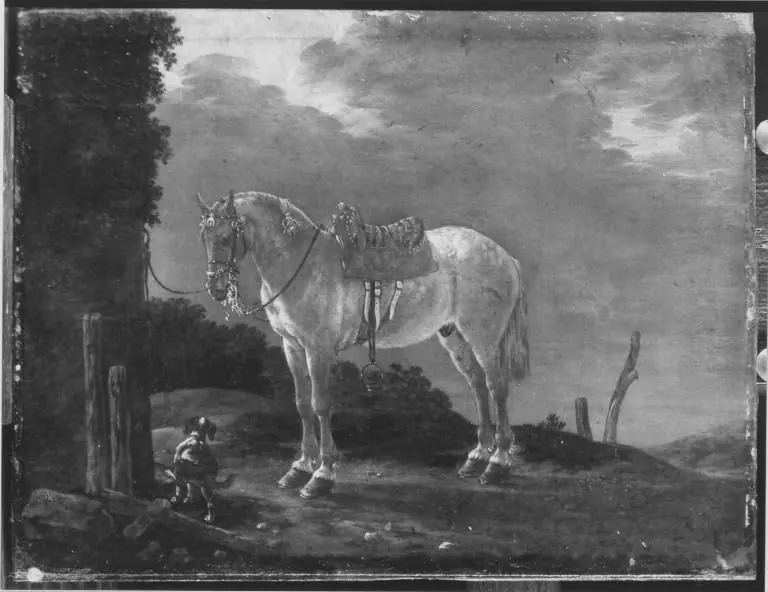 Ein gesatteltes Pferd
 Boslandschap
 Frederik V on Horseback
 Kongelig stafet
 Mountain Canyon with Staffage
 König Philipp IV. von Spanien
 Dorp in een dal
- Catharina II of Russia and her stallion Brillante