Artwork
The Last Supper
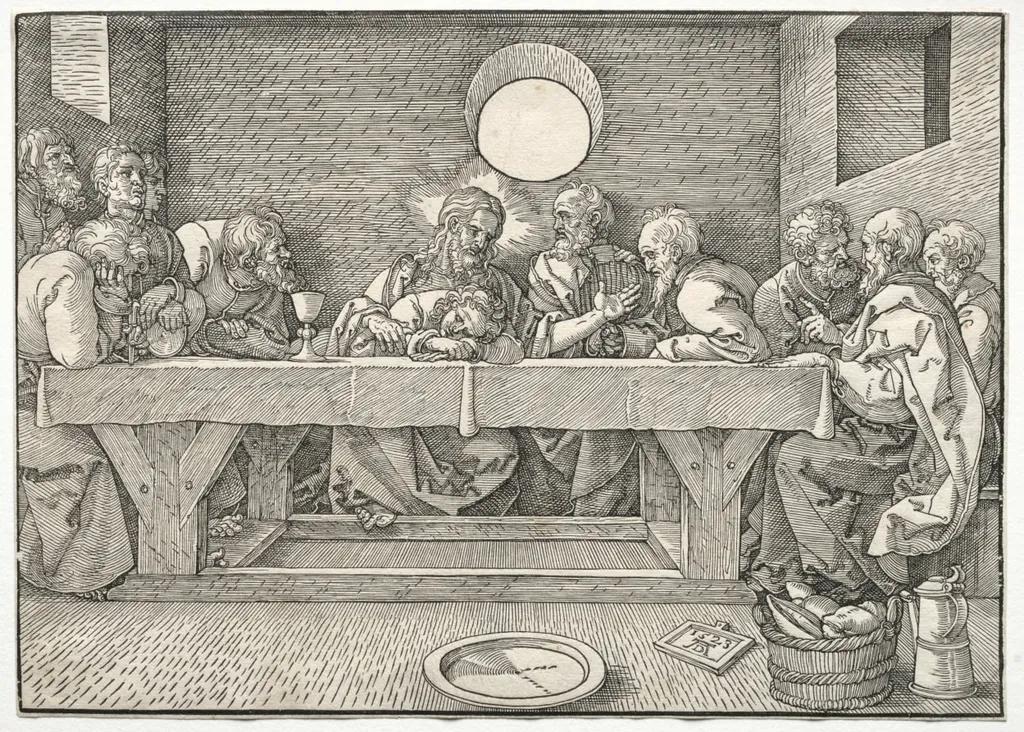
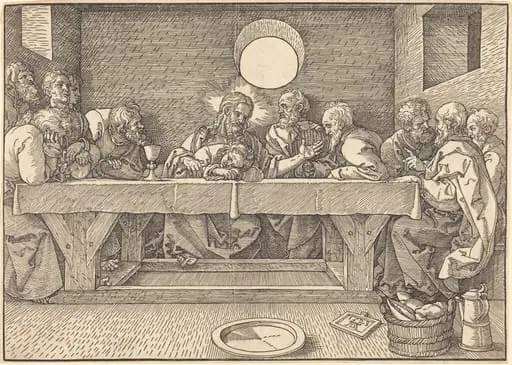
The Last Supper is a print by the Renaissance artist Albrecht Dürer. It dates from 1523 and is held in the collection of the Cleveland Museum of Art.
- Accession no.
- 1966.9
About this work
Overview
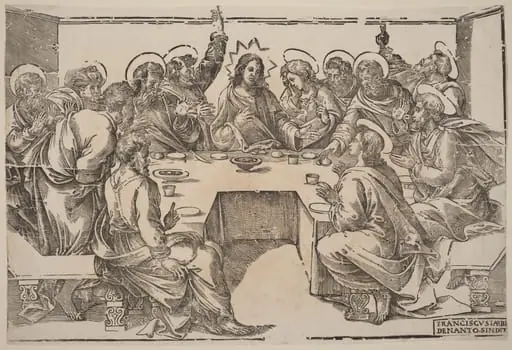
This print, The Last Supper, is a work by Albrecht Dürer, created after his return from Venice. It is characterized by a horizontal format and a depiction of thirteen figures seated at a long table.
Subject & Meaning
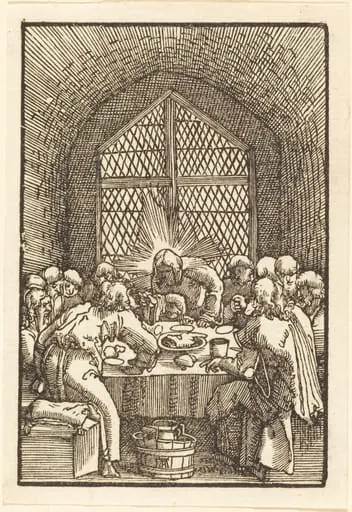
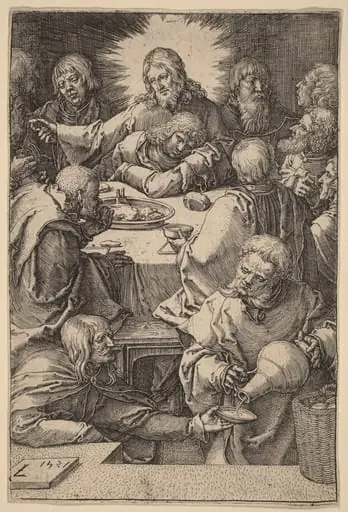
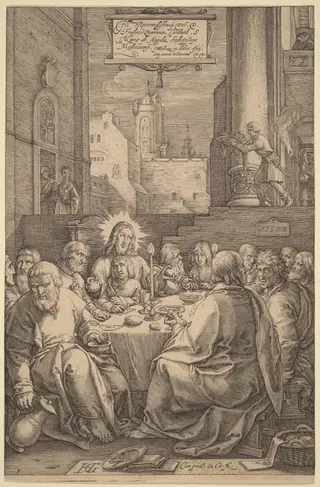
The scene omits Judas, the disciple who betrayed Jesus, and features a largely cleared table with a chalice, bread basket, and wine decanter, referencing the Eucharist. The moment may represent Christ's exhortation to his disciples to love one another, a theme significant to Protestant reformers.
Technique & Style
Dürer's composition is marked by a calm, serene atmosphere, achieved through the empty table and the figures' tranquil poses. The print's style reflects Italian influences, evident in its format and the arrangement of the figures.
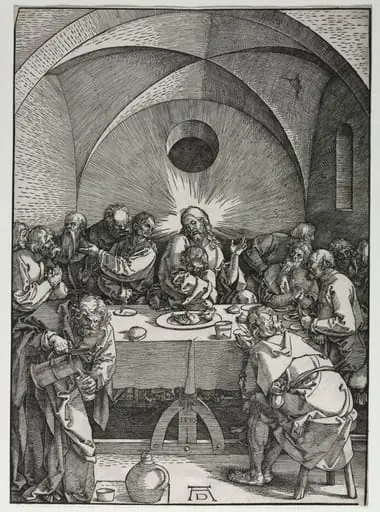
Artist & collection
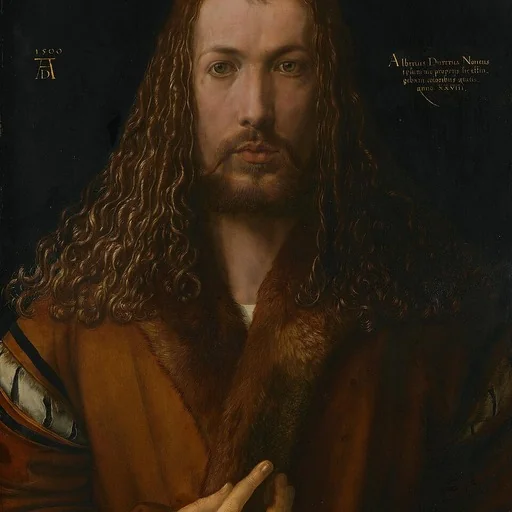
Artist
Albrecht Dürer spent his life in Nuremberg, a busy German city where artists traded prints like currency.

![Madonna and Child [obverse], by Albrecht Dürer](https://artifactworldgallery.com/img/albrecht-durer--madonna-and-child-obverse--d7b8ebf05d22ebe5-w320.webp)
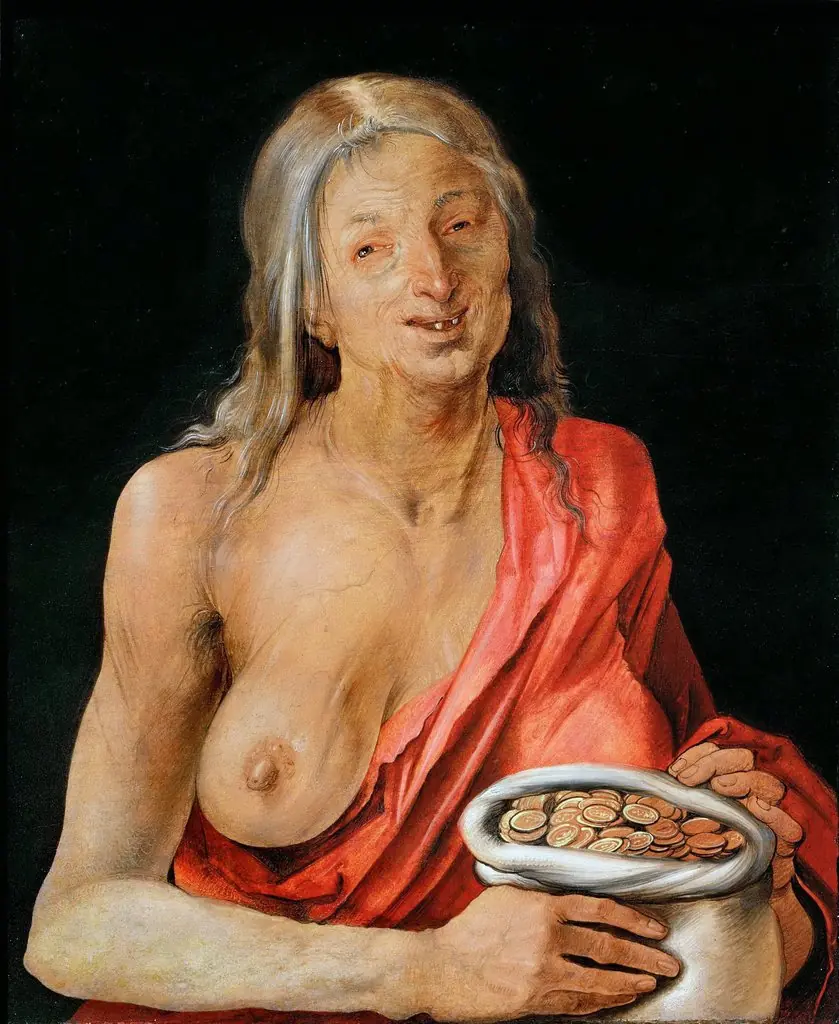
![Lot and His Daughters [reverse], by Albrecht Dürer](https://artifactworldgallery.com/img/albrecht-durer--lot-and-his-daughters-reverse--b4ebf9b282faa17a-w320.webp)