Artwork
Holy Family with St. Elizabeth and St. John the Baptist as a Child
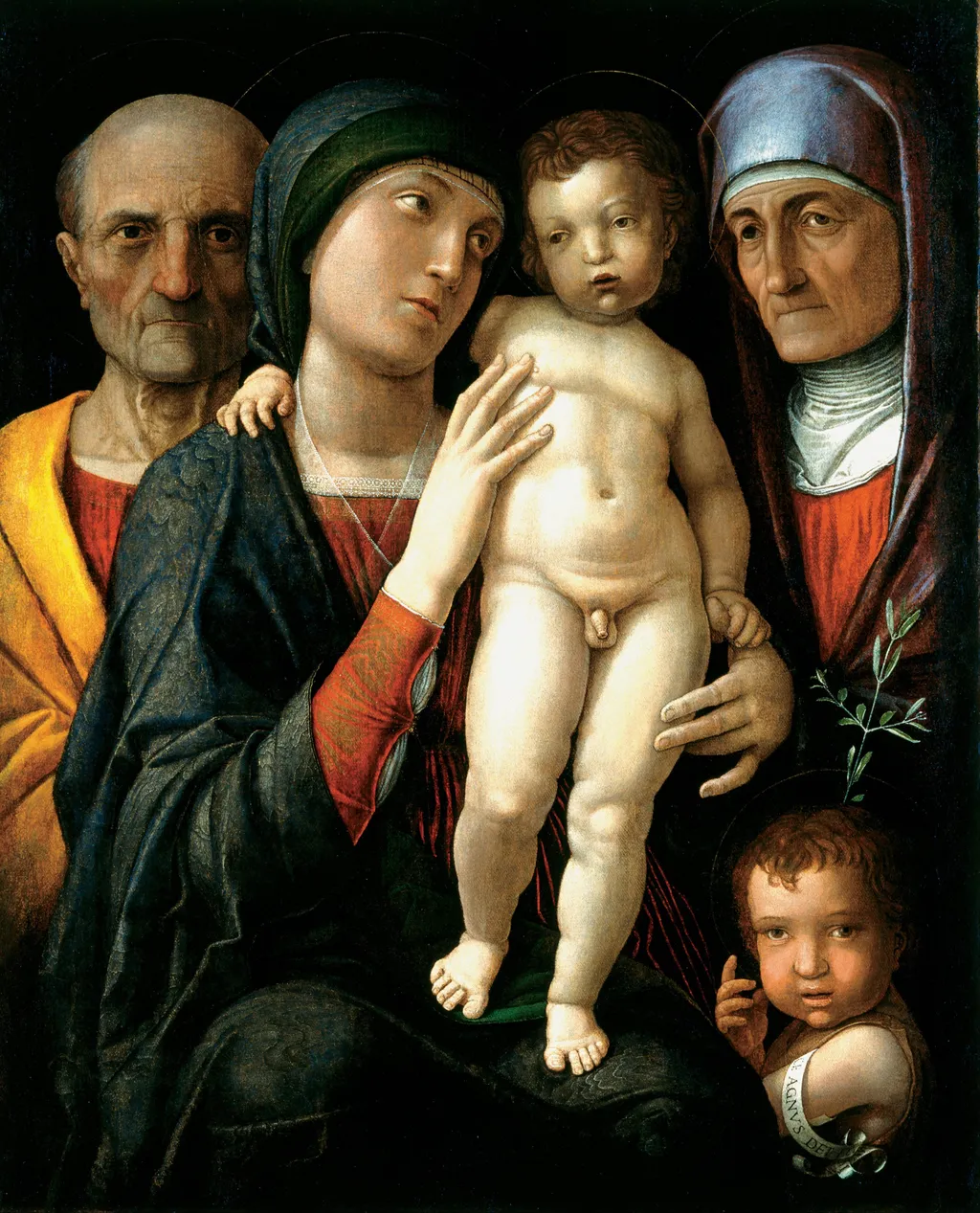
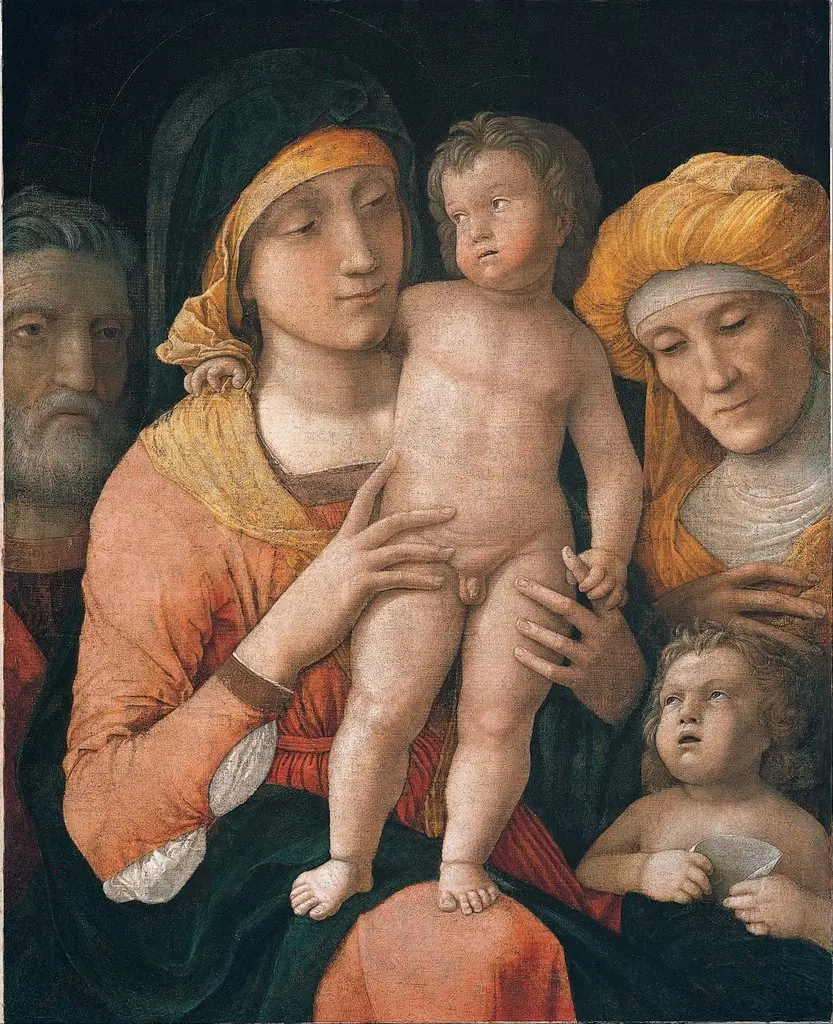
Holy Family with St. Elizabeth and St. John the Baptist as a Child is an oil painting by the High Renaissance artist Andrea Mantegna. It dates from 1498 and is held in the collection of the Staatliche Kunstsammlungen Dresden. This oil painting, created between 1495 and 1500, depicts the Holy Family alongside Saint Elizabeth and the young John the Baptist.
About this work
Overview
John the Baptist as a Child is a religious painting by the Italian Renaissance master Andrea Mantegna, created around 1495.
Holy Family with St. Elizabeth and St. John the Baptist as a Child is a religious painting by the Italian Renaissance master Andrea Mantegna, created around 1495. Executed in tempera and oil on canvas, the work measures 75.5 by 61.5 centimeters. It is held in the Gemaldegalerie Alte Meister in Dresden, part of the Staatliche Kunstsammlungen Dresden. The painting is a devotional work that compresses a larger biblical scene into an intimate format intended for private contemplation, representing a significant aspect of Mantegna's late career.
Subject & Meaning
The composition features five figures tightly grouped against a dark, undefined background. At the center, the Virgin Mary, wearing a dark blue mantle over a red dress, holds the Christ Child on her lap. To her left stands an older bald man, identified as Saint Joseph, wearing a yellow cloak over red garments. To her right, an older woman in a blue headdress and red drapery holds the infant's arm. This female figure is identified as either Saint Anne or Saint Elizabeth depending on the source, though the iconography generally aligns with the Holy Family and the Baptist's kin. In the lower right corner, the young Saint John the Baptist holds a scroll and looks upward, accompanied by a small green plant. Joseph and the young John the Baptist look directly at the viewer, engaging them in the sacred scene and inviting private devotion.
Technique & Style
Mantegna employed oil and tempera on canvas to achieve a highly polished surface. The composition is notably compressed, with the figures pushed to the foreground and occupying almost the entire pictorial space, leaving little depth behind them. This spatial concentration eliminates architectural or anecdotal distractions, focusing the viewer entirely on the sacred figures. The palette is dominated by deep blues, reds, and golden yellows set against the dark ground. Strong light falls from the left, illuminating the pale flesh of the Christ Child and casting sharp shadows. The brushwork is smooth and polished, with careful modeling that highlights intricate details, such as the brocade pattern on the blue mantle and the delicate lace at Mary's neckline. Thin golden halos adorn the four adult figures.
History & Provenance
Created in the late fifteenth century, the painting adapts the figural arrangement of Mantegna's earlier Presentation at the Temple, concentrating those characters into a smaller space suitable for private devotion. The work entered the collection of the Gemaldegalerie Alte Meister in Dresden, where it remains today. Mantegna returned to this compositional theme multiple times, producing several copies and variants. Notable surviving versions are located at the Museo di Castelvecchio in Verona, the Musee Jacquemart-Andre in Paris, and the Galleria Sabauda in Turin.
Context
The painting belongs to Mantegna's late devotional output, a period characterized by the reduction of spatial depth and the elimination of background details to foster uninterrupted spiritual focus. By reworking the figures from his Presentation at the Temple into this intimate format, Mantegna adapted a public biblical narrative into a personal object of veneration. The serene static nature of the scene proved highly successful, prompting the artist and his workshop to revisit the composition. The multiple existing replicas and variants attest to the popularity of this devotional formula in Mantegna's later career.
Legacy
The immediate legacy of the work is evident in the numerous replicas and variants that Mantegna produced, which circulated among private collectors and reinforced the devotional iconography of the tightly grouped Holy Family. These subsequent versions, such as those in Verona, Paris, and Turin, demonstrate the lasting appeal of the composition and its effectiveness as a private devotional tool. The painting remains a key example of Mantegna's late style, illustrating his shift toward compressed, intimate formats that influenced the broader tradition of small-scale devotional art in the Renaissance.
Own this work as a print
Artist & collection
Artist
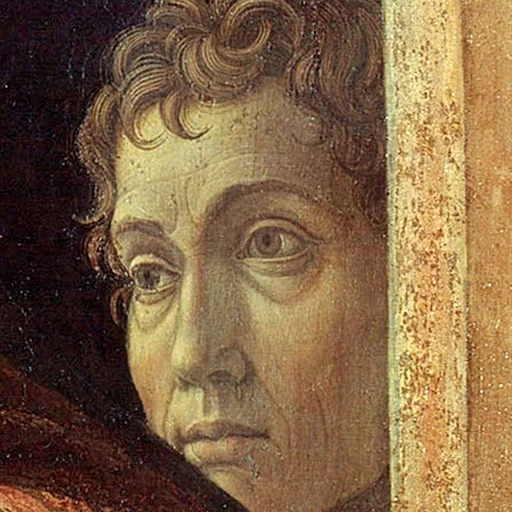
Andrea Mantegna (UK: US:; Italian:; c. 1431 – September 13, 1506) was an Italian Renaissance painter, a student of Roman archaeology, and the son-in-law of Jacopo Bellini. Like other artists of the time, Mantegna…

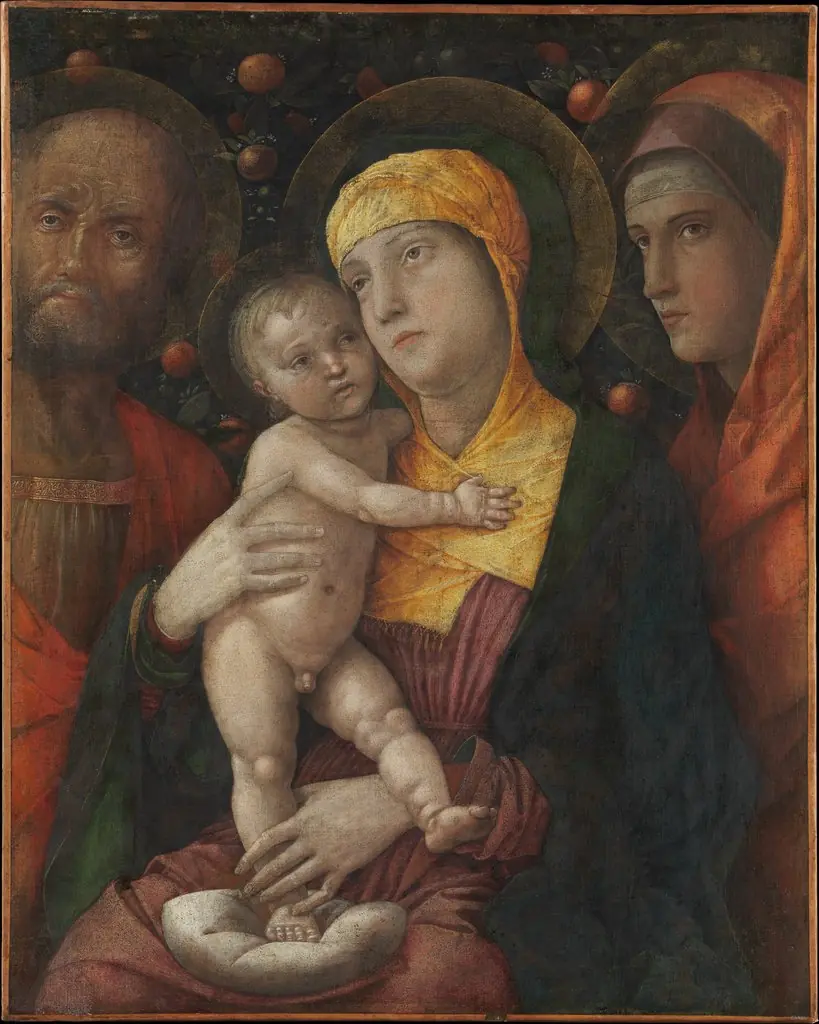
 The Madonna and Child with Saints Joseph, Elizabeth, and John the Baptist
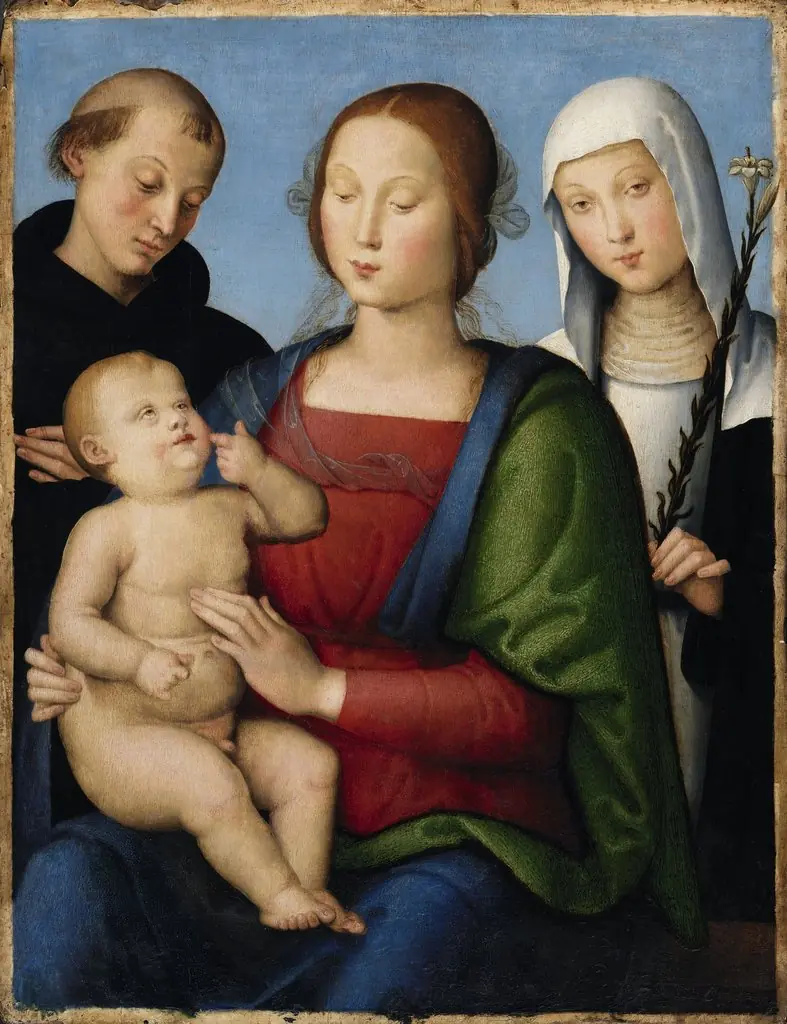 The Virgin and Child with Saints Nicholas of Tolentino and Catherine of Siena
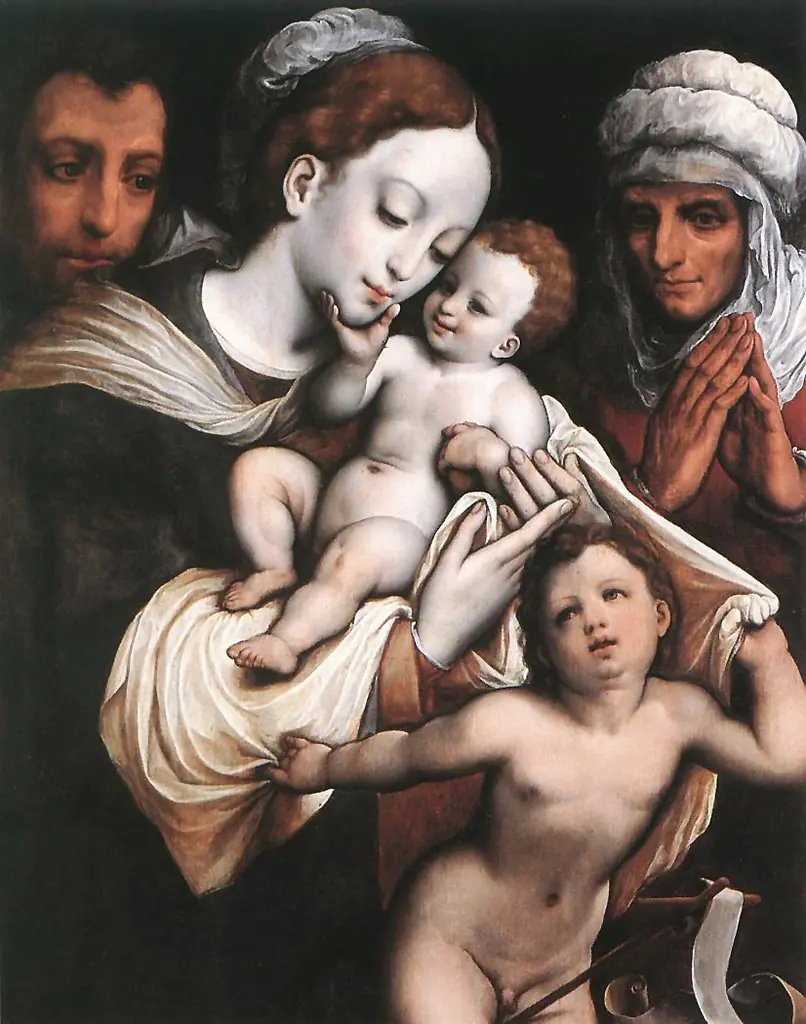 Holy Family with Elisabeth and John the Baptist
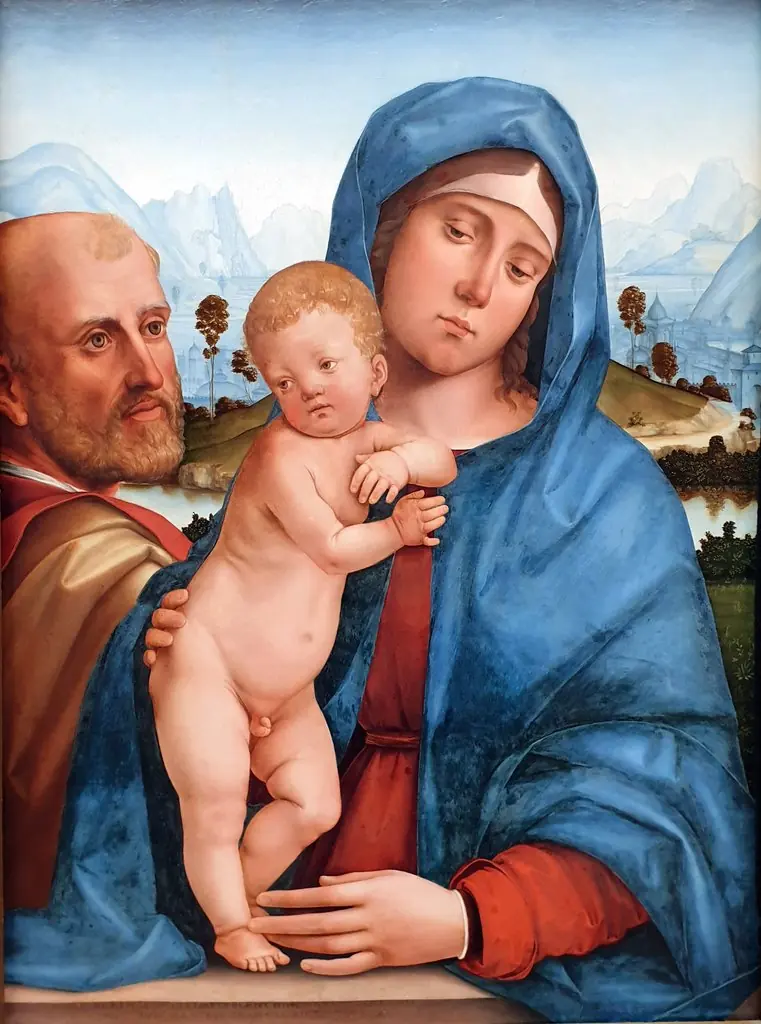 Holy Family
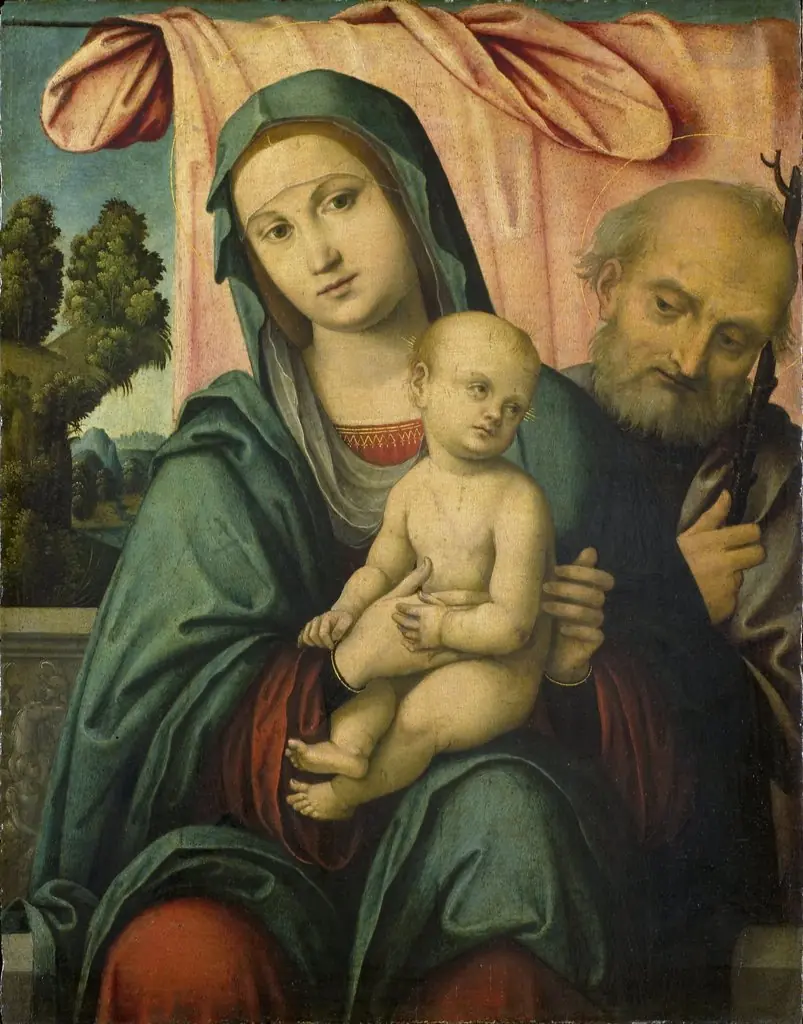 Holy Family
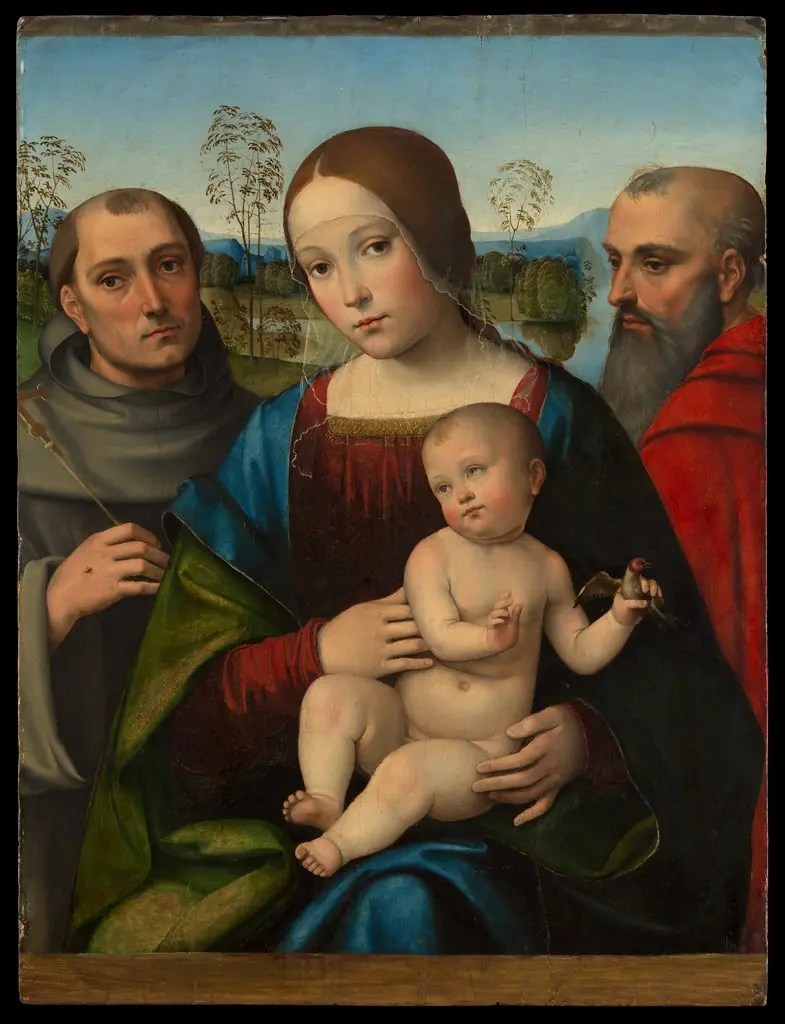 Madonna and Child with Saints Francis and Jerome
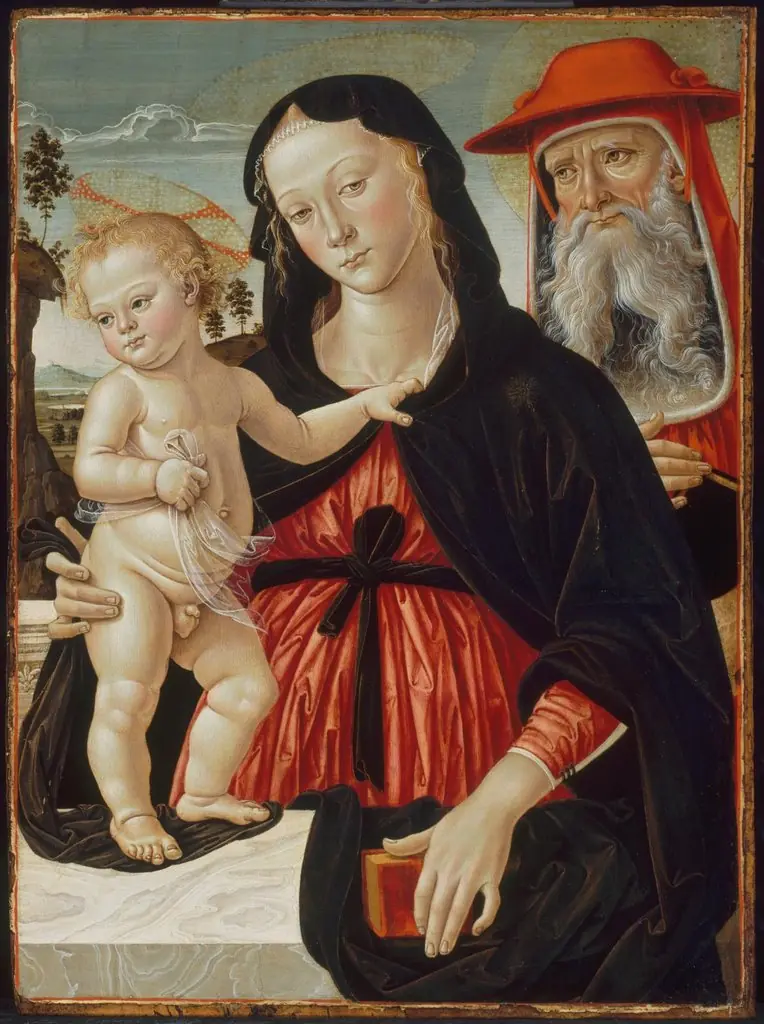 Virgin and Child with Saint Jerome
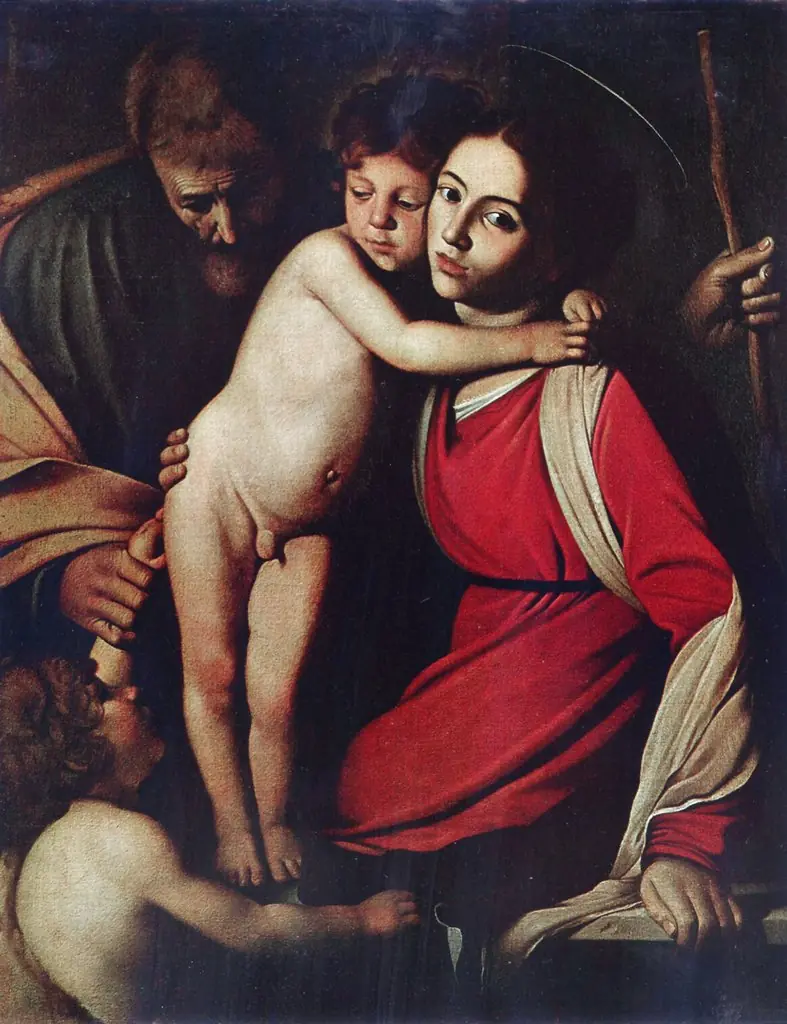 The Holy Family with Child Saint John
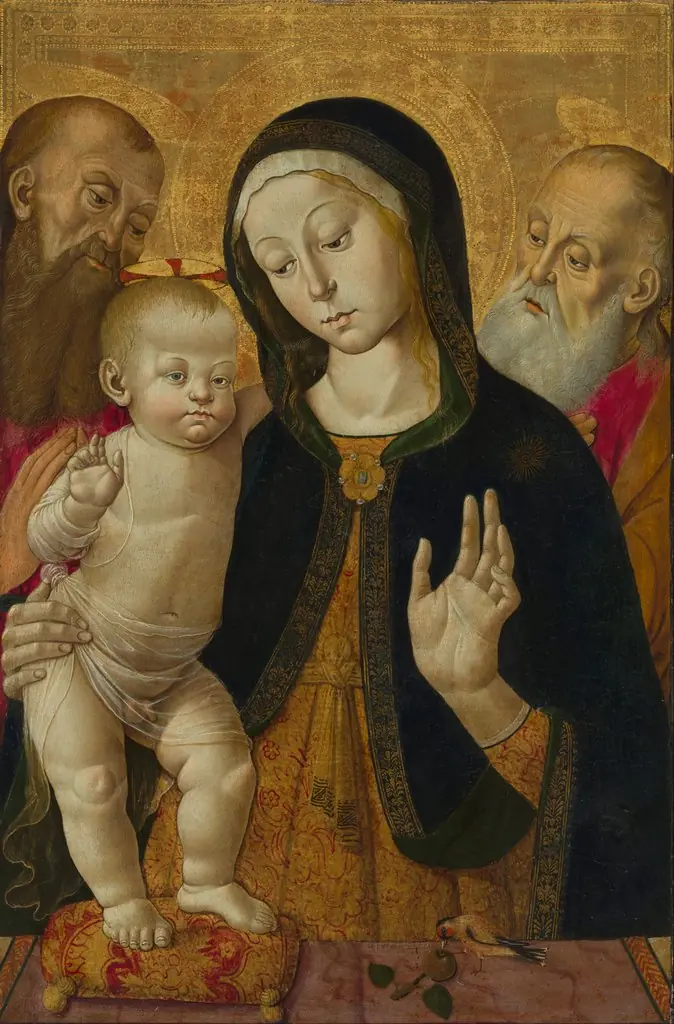 Madonna and Child with Two Hermit Saints