Artwork
Băiat cu vas de aramă
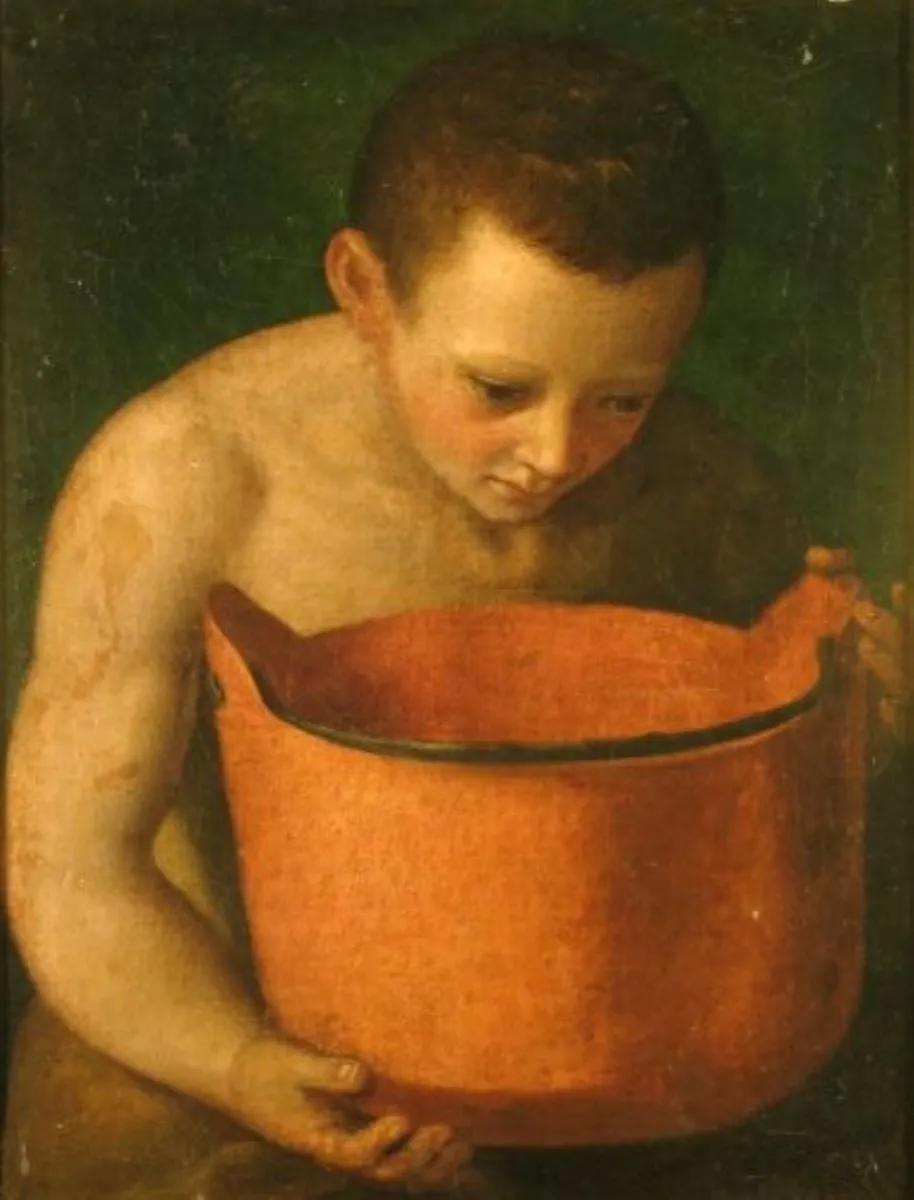
Băiat cu vas de aramă is an unspecified painting by Annibale Carracci. It is held in the collection of the Brukenthal National Museum.
About this work
Overview
The boy’s posture and expression convey a sense of stillness, drawing attention to the physicality of the moment rather than narrative context.
Băiat cu vas de aramă is a small-scale oil painting attributed to Annibale Carracci, dated around 1650. It portrays a bare-chested boy holding a large copper vessel, rendered with quiet intensity. The composition isolates the figure against a deep, unmodulated background, emphasizing the weight and texture of the object he holds.
The boy’s posture and expression convey a sense of stillness, drawing attention to the physicality of the moment rather than narrative context.
Subject & Meaning
The figure is a young laborer, likely engaged in domestic or artisanal work, depicted without idealization. His downward gaze and the way he cradles the copper pot suggest a moment of quiet concentration or fatigue. The absence of context or symbolic elements shifts focus to the dignity of ordinary labor, reflecting Carracci’s interest in naturalistic observation over allegory or mythological themes.
Technique & Style
Carracci employs a restrained palette dominated by warm skin tones and the muted gleam of copper against a near-black background. Brushwork is precise yet unobtrusive, with subtle modeling to define form without theatrical lighting. The contrast between the boy’s pale skin and the dark surroundings enhances the tactile presence of the vessel, demonstrating Carracci’s mastery of chiaroscuro and his commitment to observed reality.
History & Provenance
The painting’s early ownership is undocumented, and it entered public collections in the 20th century. While Carracci’s major works are well recorded, this piece remains among his lesser-known studies, possibly created as a preparatory sketch or independent genre scene. Its attribution has been consistently supported by stylistic analysis, though its original purpose remains speculative.
Context
Created during the later phase of Carracci’s career, the work aligns with his shift toward intimate, secular subjects following his fresco commissions in Rome. While his Bolognese peers often favored mythological grandeur, Carracci increasingly turned to quiet depictions of everyday life, influenced by Northern European realism and the emerging Baroque emphasis on emotional immediacy.
Legacy
Though not widely exhibited, Băiat cu vas de aramă exemplifies Carracci’s contribution to the development of genre painting in Italy. Its unadorned portrayal of a working child anticipates later realist traditions, offering a counterpoint to the dominant religious and heroic themes of the period. The painting remains a quiet testament to his commitment to observing human experience with empathy and precision.
Artist & collection
Artist
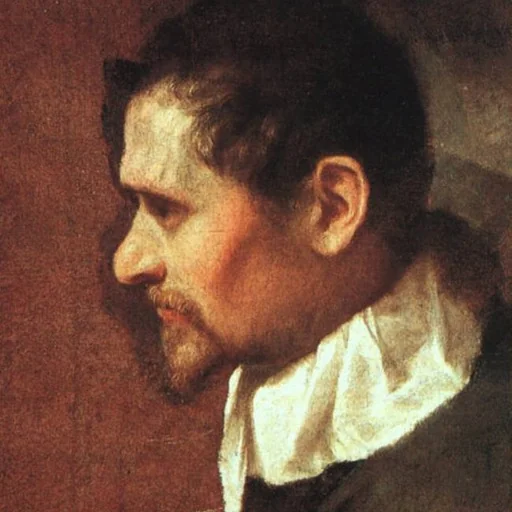
Annibale Carracci ( kə-RAH-chee, UK also kə-RATCH-ee, Italian:; November 3, 1560 – July 15, 1609) was an Italian painter and instructor, active in Bologna and later in Rome.


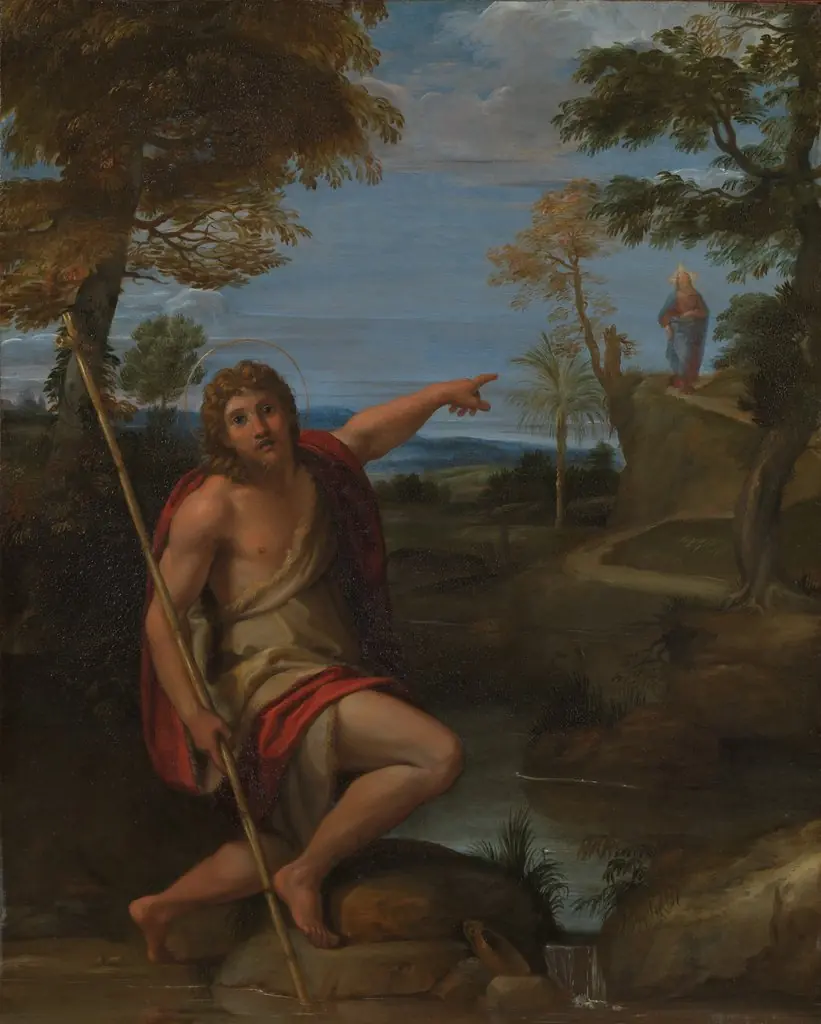
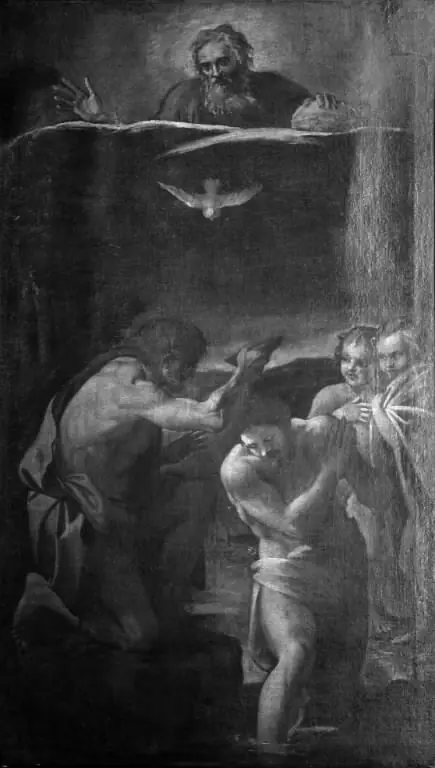
- Infant Christ
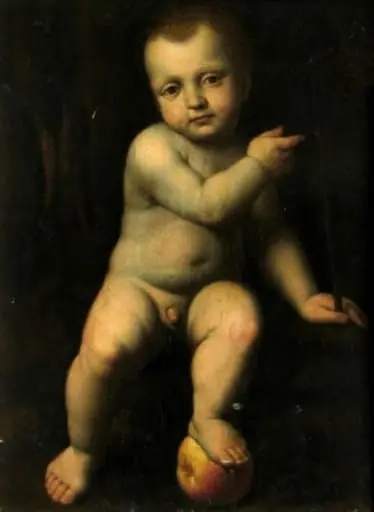 Salvator mundi (în registrul inventar: Micul Isus)
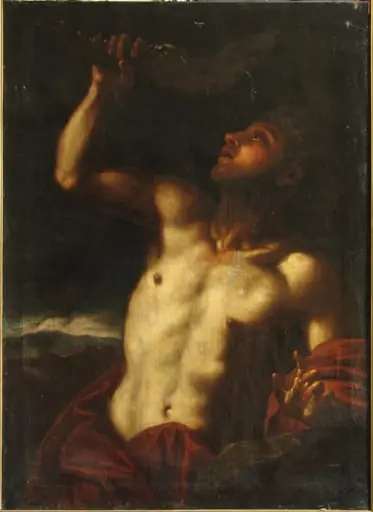 Samson bând din falca asinului
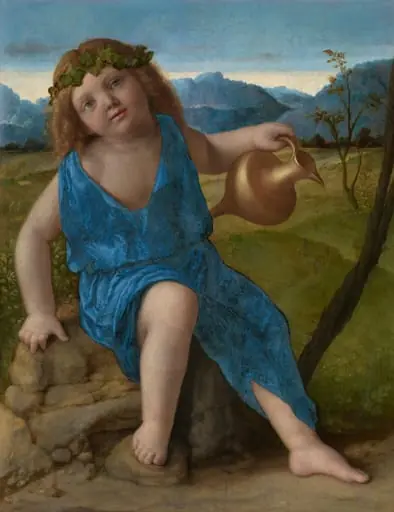 The Infant Bacchus
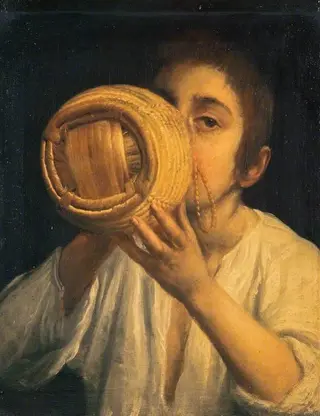 A Boy Drinking from a Flask
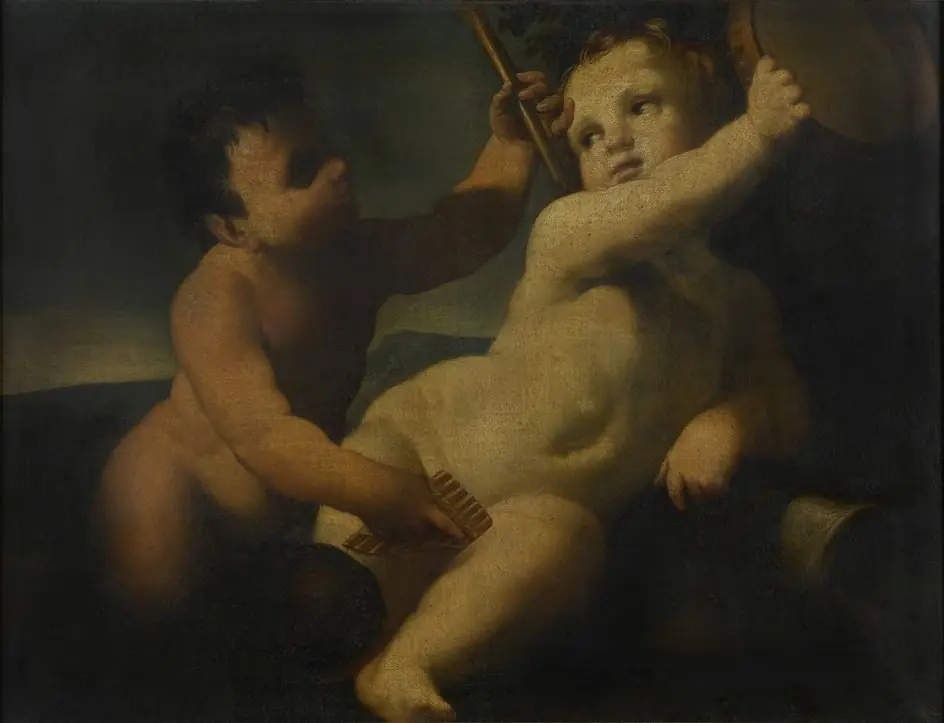 A Putto with a Tambourine and an Infant Satyr with a Panpipe
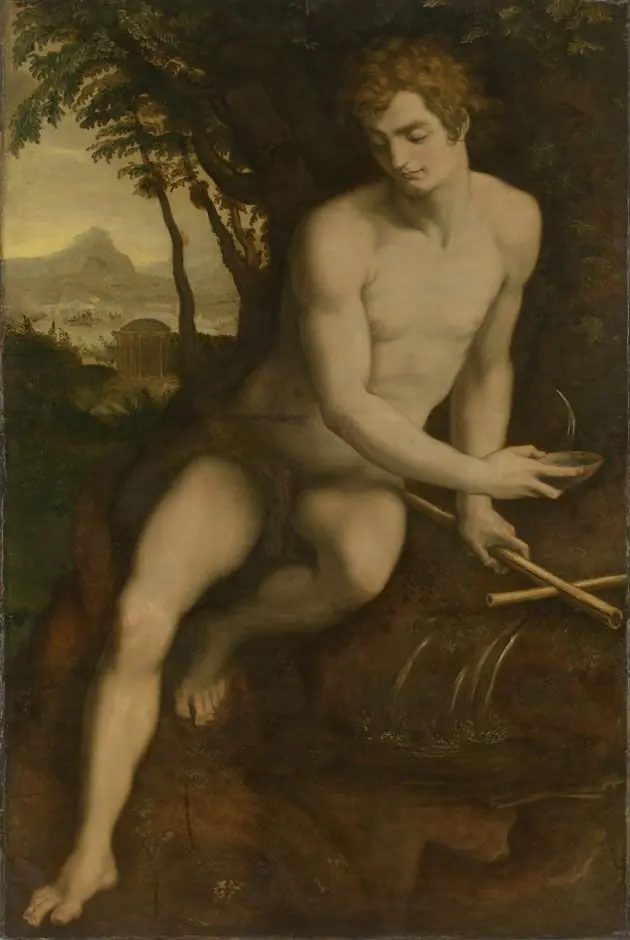 Johannes der Täufer
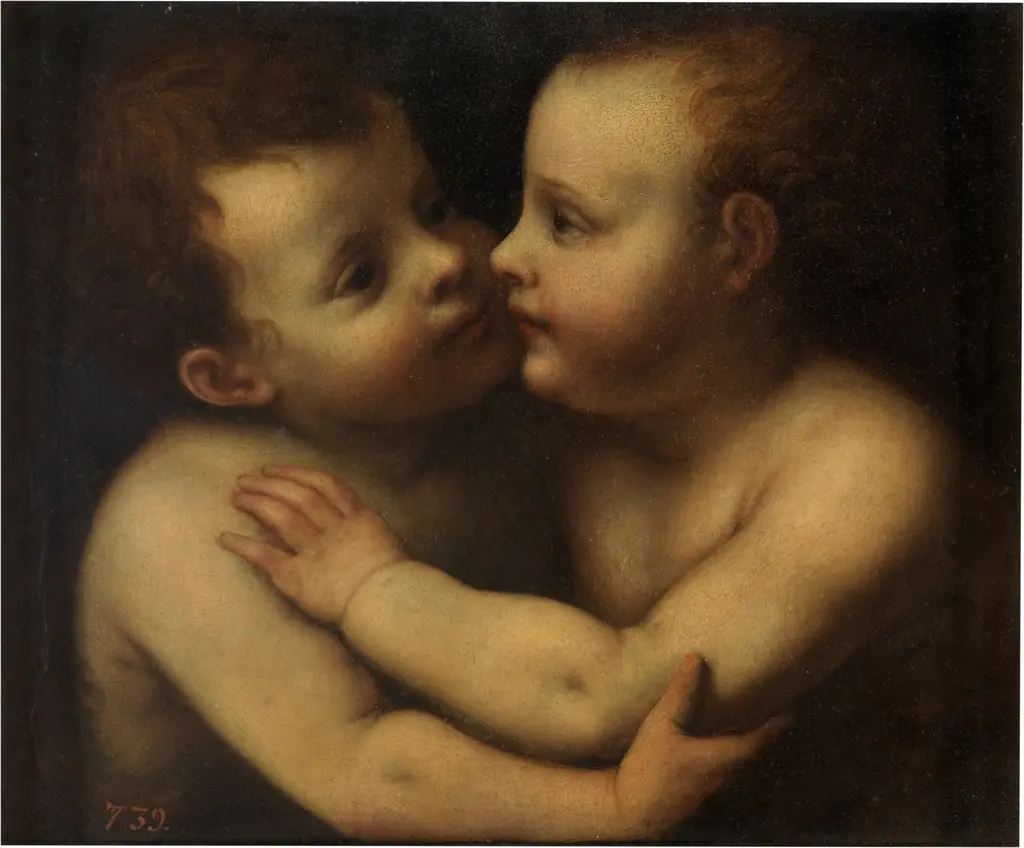 The Infant Christ and St John the Baptist
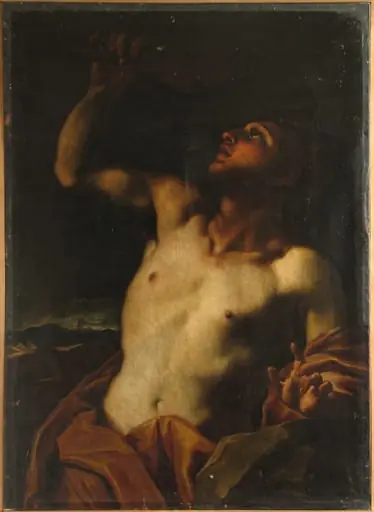 Samson bând din falca asinului
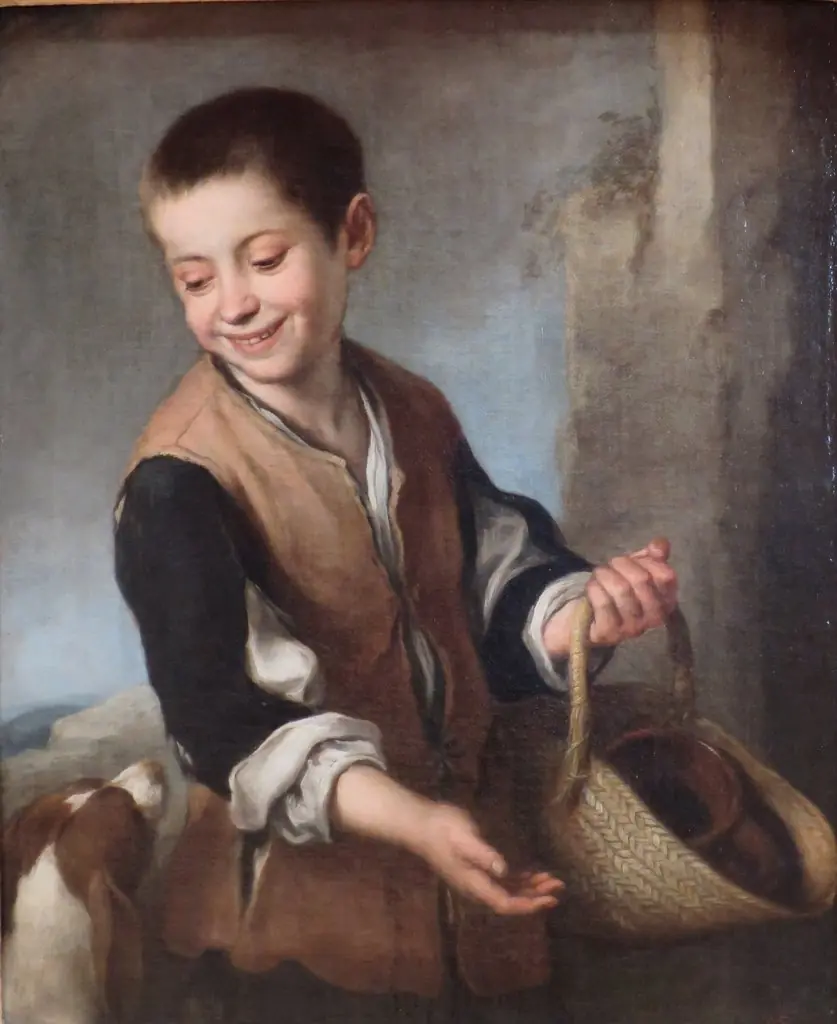 Boy with a dog
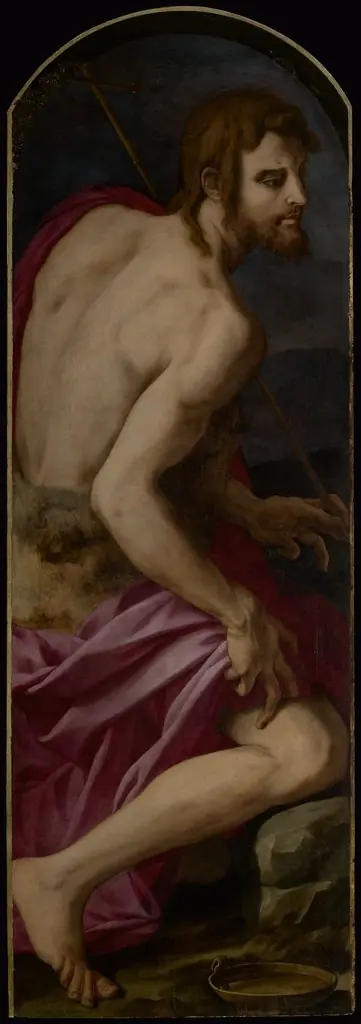 St. John the Baptist
 The Fall of Man: Adam