Artwork
Diana and a Nymph Surprised by a Satyr
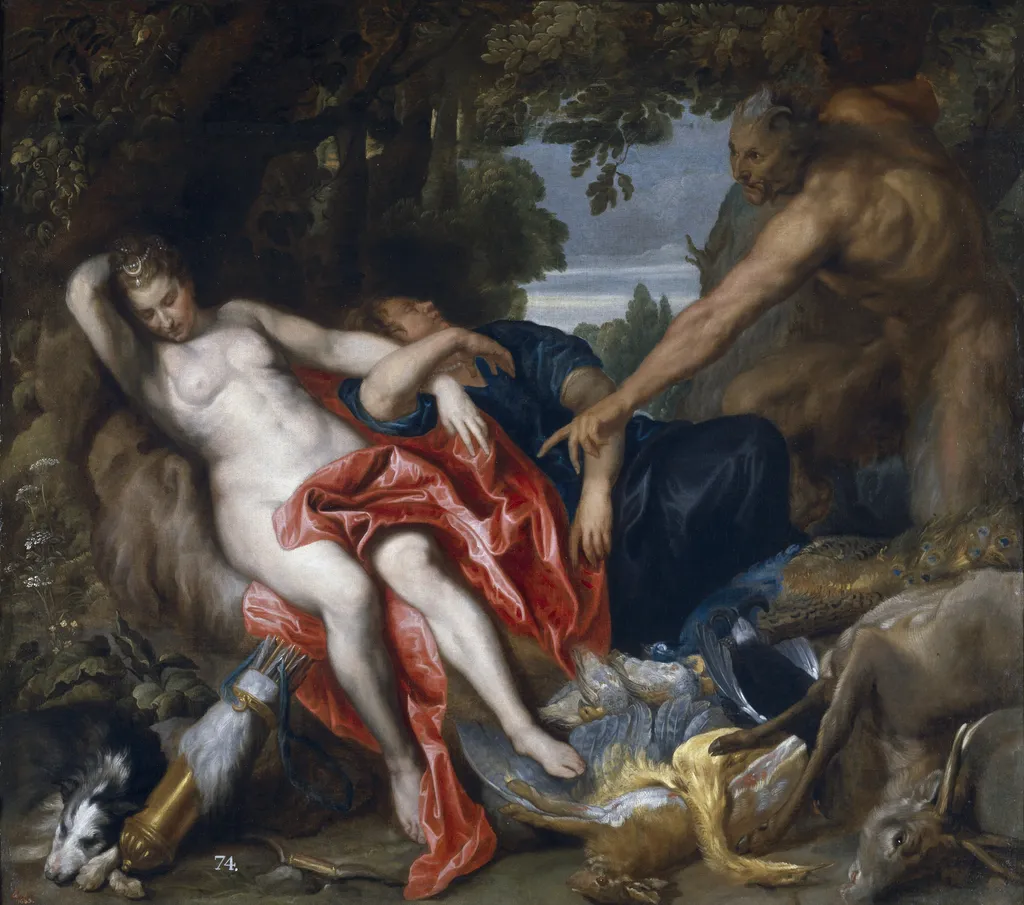
Diana and a Nymph Surprised by a Satyr is an oil painting by the Flemish Baroque painting artist Anthony van Dyck. It dates from 1622 and is held in the collection of the Museo del Prado.
About this work
Subject & Meaning
This composition explores themes of voyeurism and the violation of chastity, contrasting the innocence of the sleeping figures with the satyr's overt sexuality.
The painting depicts the Roman goddess Diana and a nymph asleep in a woodland setting following a hunt, interrupted by a lustful satyr. Diana lies nearly nude on a fur pelt with her hunting attributes, a bow, quiver, and arrows, placed near her feet alongside a sleeping dog, while game from the chase rests nearby. The satyr, positioned to the right, gazes at the goddess with a lecherous expression, his tongue protruding and one hand reaching toward the crimson drapery covering her lower body. His pointing finger directs the viewer's attention to Diana's exposed form, emphasizing her vulnerability and the intruder's desire. This composition explores themes of voyeurism and the violation of chastity, contrasting the innocence of the sleeping figures with the satyr's overt sexuality. The work was historically misidentified as depicting Endymion due to an 1857 cataloging error, but re-examination in 2002 confirmed the second figure is female, restoring the correct mythological narrative of Diana surprised by a satyr.
Technique & Style
Created between 1622 and 1627, this work is an oil painting on canvas measuring 144 by 163 cm. The composition is horizontal and depicts a mythological scene where a satyr interrupts the sleep of Diana and her nymph following a hunt. Stylistically, the artist utilized Italian references, particularly from the Venetian School, drawing inspiration from masters such as Titian and Tintoretto. The visual narrative centers on the satyr's extended index finger, which directs the viewer's gaze toward the nude figure of Diana, thereby emphasizing both the predator's lust and the women's vulnerability. The arrangement places the sleeping goddess and her attributes, including a bow and quiver, on the left, while the satyr approaches from the right, creating a dynamic interaction between the figures and the viewer.
History & Provenance
The painting was created between 1622 and 1627 by Anthony van Dyck, likely in collaboration with Frans Snyders, as noted in the Wikipedia entry. It entered the Spanish royal collection and was first documented in the Palacio Real de Madrid, later moving to the Palacio del Buen Retiro under Infante Don Luis in 1747, then to the Casón del Buen Retiro until 1794, before being acquired by the Museo del Prado in 1794, where it remains. Prior to 2002, the work was misidentified as depicting Endymion, but stylistic analysis confirmed the sleeping figure beside Diana to be a nymph, correcting the title and understanding of the composition.
Diana and a Nymph Surprised by a Satyr is currently held in the Museo del Prado in Madrid, Spain. The work entered the Spanish royal collections and was first recorded at the new Palacio Real de Madrid near the Guardajoyas, where it remained until 1747. It subsequently moved to the Palacio del Buen Retiro in the room of Infante Don Luis before being transferred to the Casón del Buen Retiro in 1772. The painting officially became part of the Museo del Prado collection in 1794, where it has remained since. No specific inventory or accession number is provided in the available records. The work was misidentified in an 1857 Prado catalogue as Diana and Endymion Surprised by a Satyr; this error was corrected in 2002 when the sleeping figure was reidentified as a nymph rather than Endymion.
Context
Diana and a Nymph Surprised by a Satyr has been studied in art-historical scholarship for its complex authorship and iconographic reinterpretation. Early records place the painting in the Spanish royal collection at the Palacio Real de Madrid in 1747 before its transfer to the Palacio del Buen Retiro and later to the Museo del Prado in 1794 (sources 2, 3). A misidentification as Diana and Endymion Surprised by a Satyr in an 1857 Prado catalogue persisted until 2002, when stylistic and figural analysis confirmed the sleeping figure as a nymph, correcting the longstanding error (sources 3, 5). The work’s horizontal format, dynamic composition, and sensual portrayal of the satyr’s gaze reflect Baroque experimentation with mythological narrative and the influence of Venetian masters such as Titian and Tintoretto, situating it within van Dyck’s broader synthesis of Flemish technique and Italianate grandeur (sources 3, 5).
Legacy
The painting Diana and a Nymph Surprised by a Satyr became part of the Spanish royal collection and entered the Museo del Prado in 1794, where it remains on display. Its provenance includes an early appearance in the Palacio Real de Madrid, a move to the Palacio del Buen Retiro in 1747, and a final relocation to the Casón del Buen Retiro in 1772 before accession to the Prado. A misidentification as Diana and Endymion Surprised by a Satyr in a 1857 Prado catalogue persisted until 2002, when reexamination confirmed the sleeping figure as a nymph, correcting the title and confirming its mythological subject. The work influenced later scholarship on Baroque mythological painting, particularly regarding the collaboration between van Dyck and Snyders and the depiction of satyr figures in Flemish art.
The composition, showing Diana and a nymph asleep in a woodland after a hunt while a lecherous satyr reaches toward them, shaped subsequent Baroque depictions of mythological nudes and satyrs, reinforcing the genre’s sensual tension. Its stylistic influence appears in later works that adopt Van Dyck’s dramatic finger gesture and chiaroscuro modeling of the female form, as noted in art historical surveys of 17th-century mythological painting.
Own this work as a print
Artist & collection
Artist
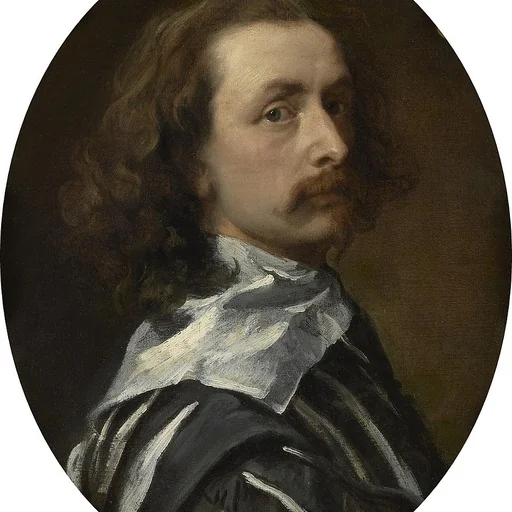
Sir Anthony van Dyck (; Dutch: Antoon van Dijck; 22 March 1599 – 9 December 1641) was a Flemish Baroque artist, who became the leading court painter in England after success in the Spanish Netherlands and Italy.