Artwork
The Crown of Thorns
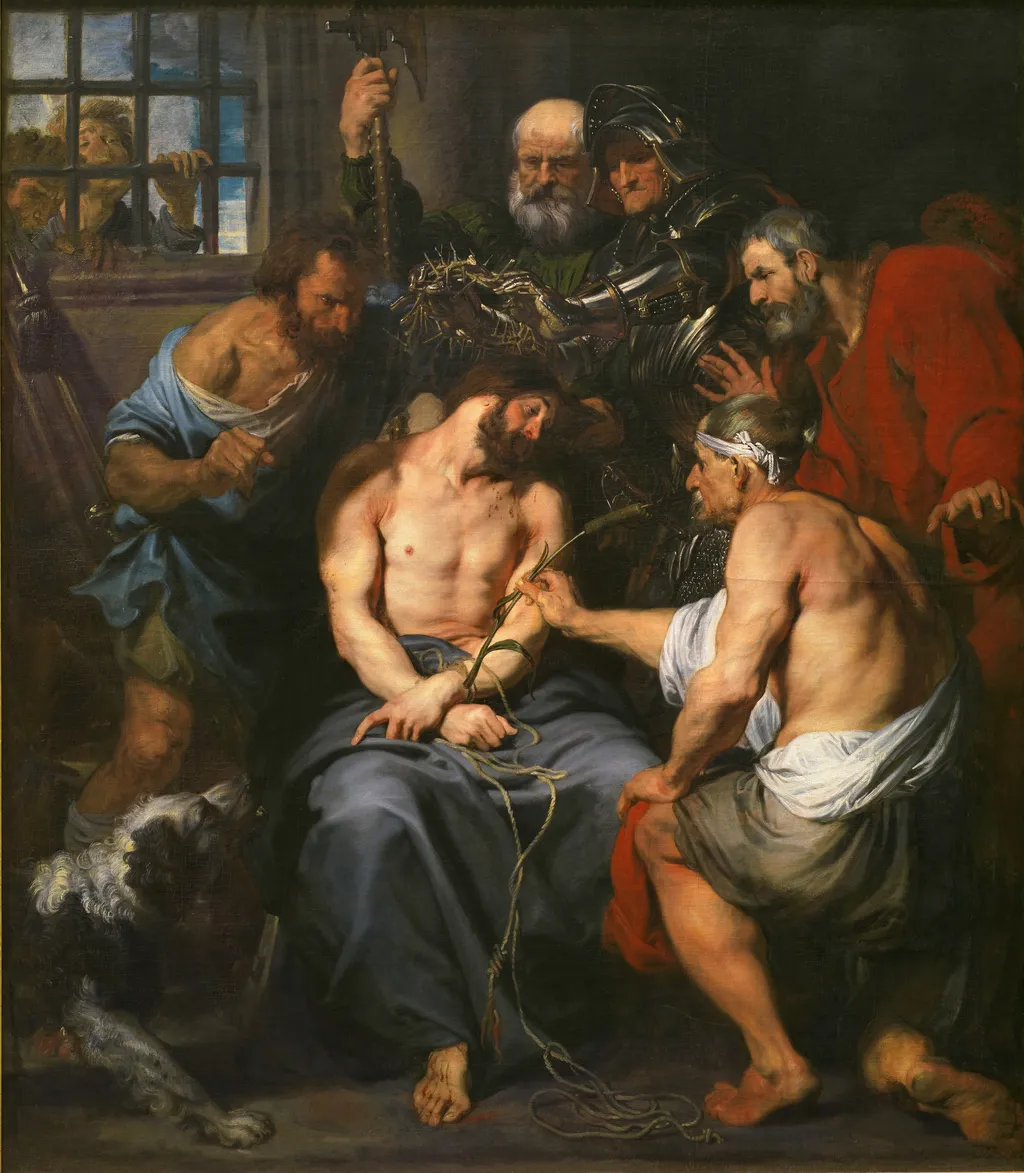
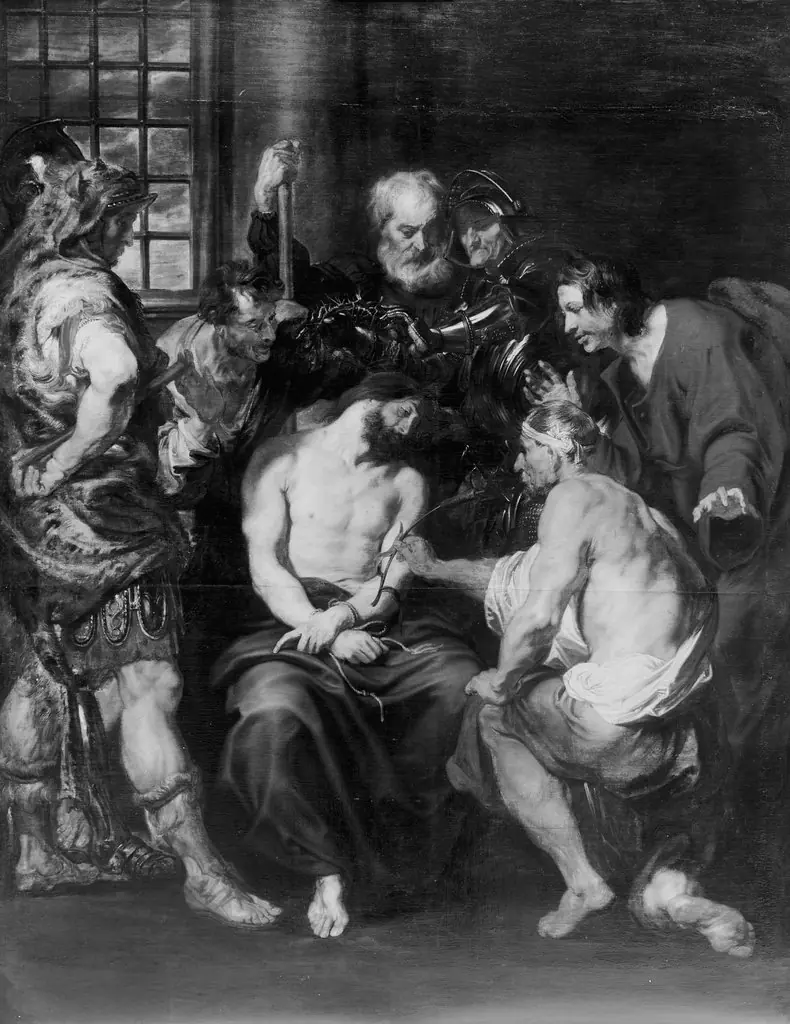
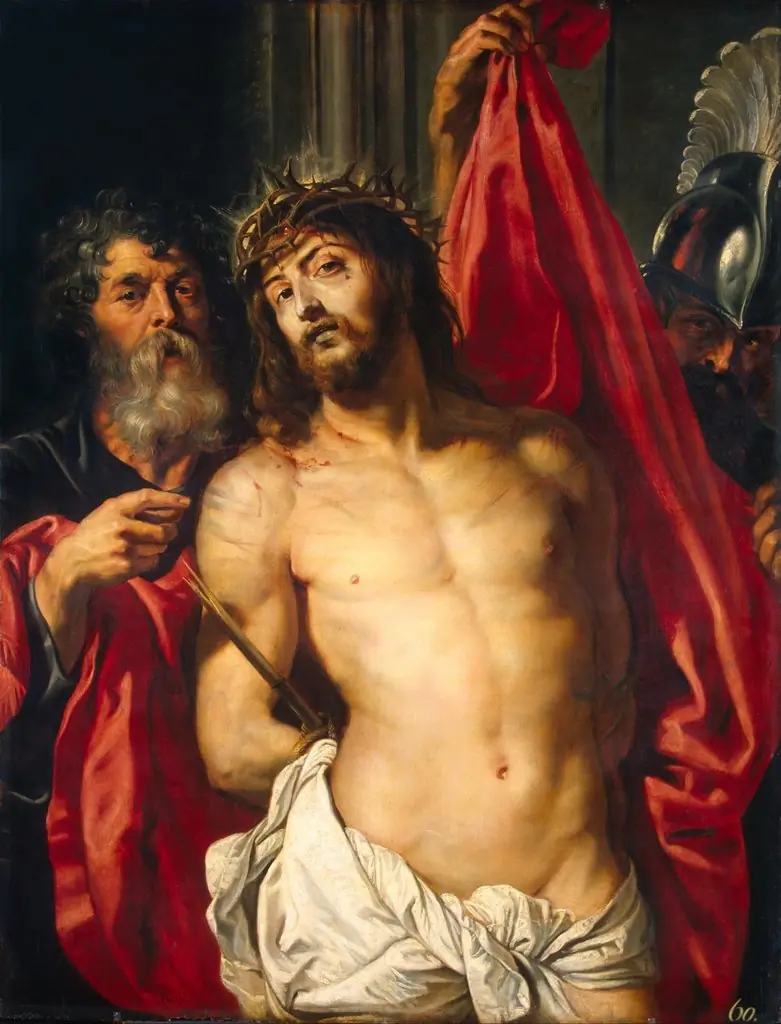
The Crown of Thorns is an oil painting by the Flemish Baroque painting artist Anthony van Dyck. It dates from 1618 and is held in the collection of the Museo del Prado.
About this work
Subject & Meaning
The painting depicts the biblical episode of the Crowning with Thorns, an event from the Passion of Christ described in the Gospels of Matthew and Mark.
The painting depicts the biblical episode of the Crowning with Thorns, an event from the Passion of Christ described in the Gospels of Matthew and Mark. Following his condemnation by Pontius Pilate and prior to crucifixion, Jesus is shown subjected to mockery by soldiers who deride his claim to kingship. Central to the composition is Jesus, bound and bowing his head in silent suffering, while a soldier places a woven crown of thorns upon him and another offers a reed as a mock scepter.
The scene includes figures observing through a window and an aggressive dog at the protagonist's feet. Van Dyck emphasizes the contrast between the serenity of Jesus and the cruelty of his tormentors. One soldier wears contemporary armor, bridging the historical narrative with the artist's own time, while the work collectively symbolizes the humiliation and physical torment endured by Christ.
Technique & Style
The Crown of Thorns is an oil painting on canvas, measuring 225 × 197 cm. The work displays a relatively sombre palette with pronounced chiaroscuro, reflecting Peter Paul Rubens's influence during van Dyck's early Antwerp period. The highly realistic portrayal of musculature characterizes its Baroque handling. The composition also reveals Venetian influence, particularly from Titian, in the treatment of Christ's face, suggesting the painting may have been completed early during van Dyck's Italian sojourn.
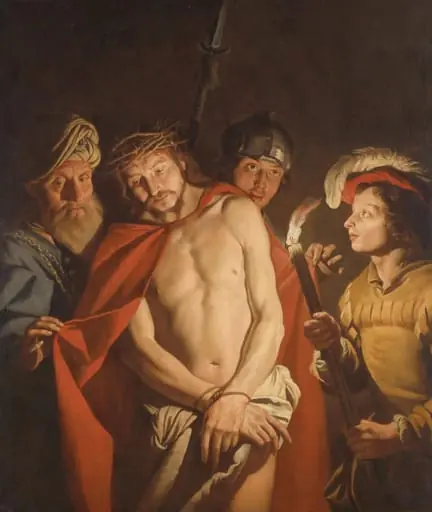
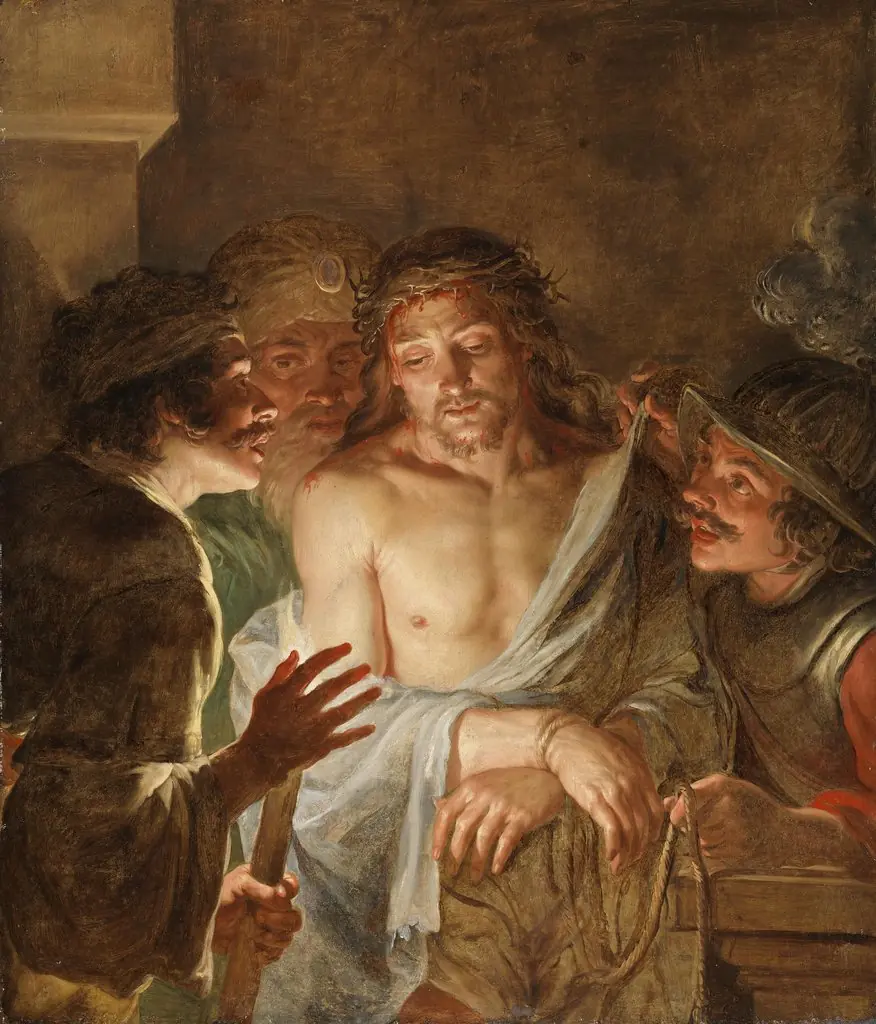
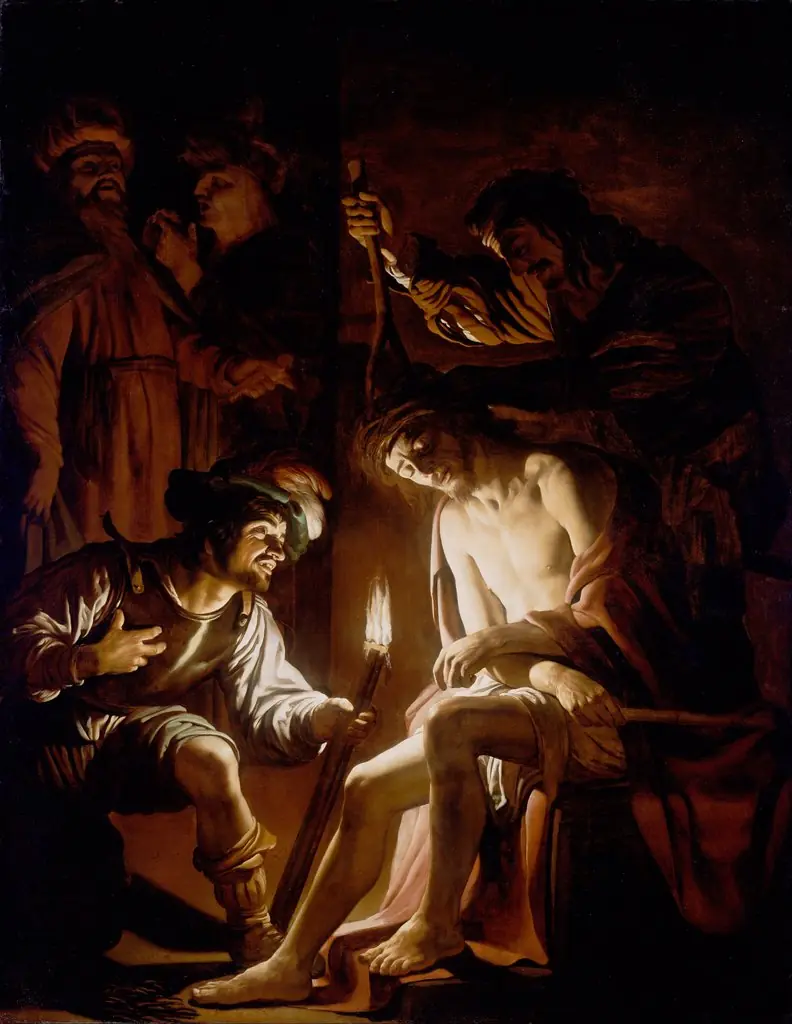
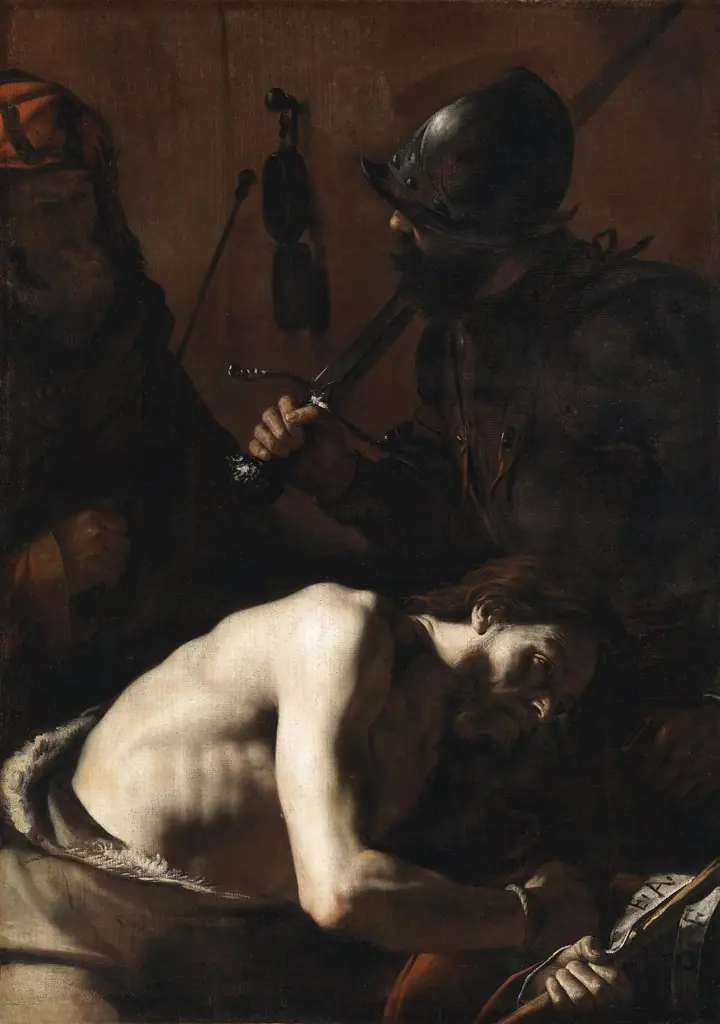
The central figure of Jesus, hands bound and head bowed, is set against the mocking soldiers surrounding him, creating a dramatic tension between serenity and aggression.
History & Provenance
Anthony van Dyck painted The Crown of Thorns during his first Antwerp period, when he was about twenty years old and serving as the principal studio assistant to Peter Paul Rubens. The work is dated to about 1618, with some sources placing its completion early in his subsequent stay in Italy, which began in 1620.
After finishing the painting, van Dyck offered it to Rubens, who declined the gift. The work later entered the Spanish royal collection and was housed at the Escorial monastery. It remained there until 1839, when it was transferred to the Museo del Prado in Madrid, where it is still held and displayed among the museum's Flemish Baroque paintings.
Context
Created in his early Antwerp period, Anthony van Dyck's The Crowning with Thorns is a significant work produced when the artist was about twenty and serving as the primary studio assistant to Peter Paul Rubens. The painting reflects a synthesis of influences, displaying Rubens's impact through its sombre palette, chiaroscuro, and realistic musculature, while also revealing the emerging influence of Titian and the Venetian masters in the treatment of Christ's face, likely shaped during van Dyck's subsequent Italian journey. Historically, the work was first offered to Rubens, who declined it, before entering the collection of the Spanish crown and ultimately the Museo del Prado.
The piece is frequently cited as a key example of how van Dyck integrated Flemish Baroque traditions with Italian Renaissance sensibilities early in his career.
Legacy
The work entered the Spanish royal collection after van Dyck offered it to Rubens, who declined; it was kept at the Escorial before being installed in the Museo del Prado in 1839, where it remains on public view. Its early date, youthful execution, and the blend of Rubens's sombre palette with Venetian colouristic influence have made it a frequently cited example of van Dyck's formative period, shaping scholarly assessments of his development and of Baroque religious imagery. The composition, Christ bound, crowned with thorns, surrounded by mocking soldiers, has been reproduced in later treatments of the Passion, reinforcing its reputation as a memorable visualization of the subject.
Overview
Anthony van Dyck's oil on canvas painting, The Crown of Thorns, created around 1618–1620, portrays the biblical episode of Christ's torment. This work, executed when the artist was approximately twenty years old, exemplifies his early mastery. It captures the moment before the crucifixion, focusing on the suffering of Jesus as he receives the thorny crown. The composition draws the viewer into the dramatic narrative through its intense depiction of the figures.
Own this work as a print
Artist & collection
Artist
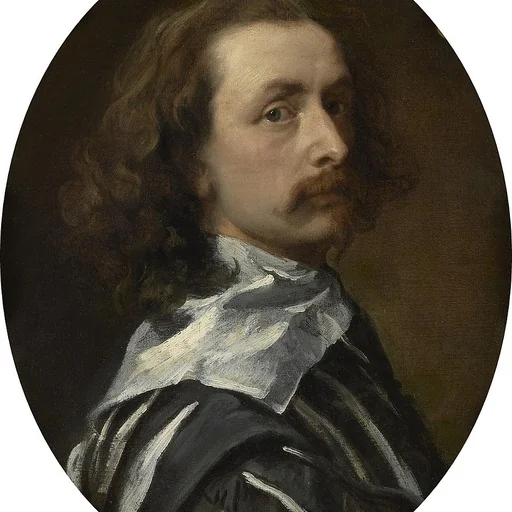
Sir Anthony van Dyck (; Dutch: Antoon van Dijck; 22 March 1599 – 9 December 1641) was a Flemish Baroque artist, who became the leading court painter in England after success in the Spanish Netherlands and Italy.