Artwork
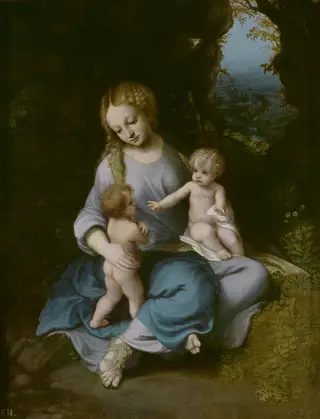
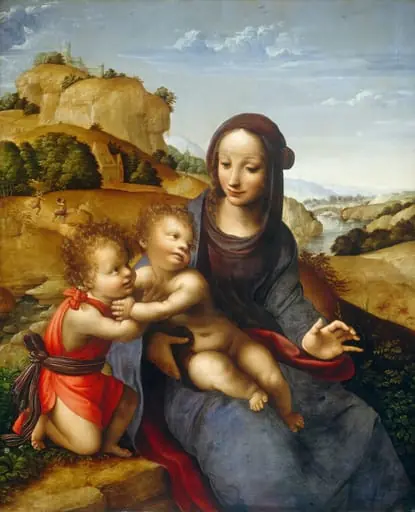
Virgin and Child with the Young Saint John the Baptist
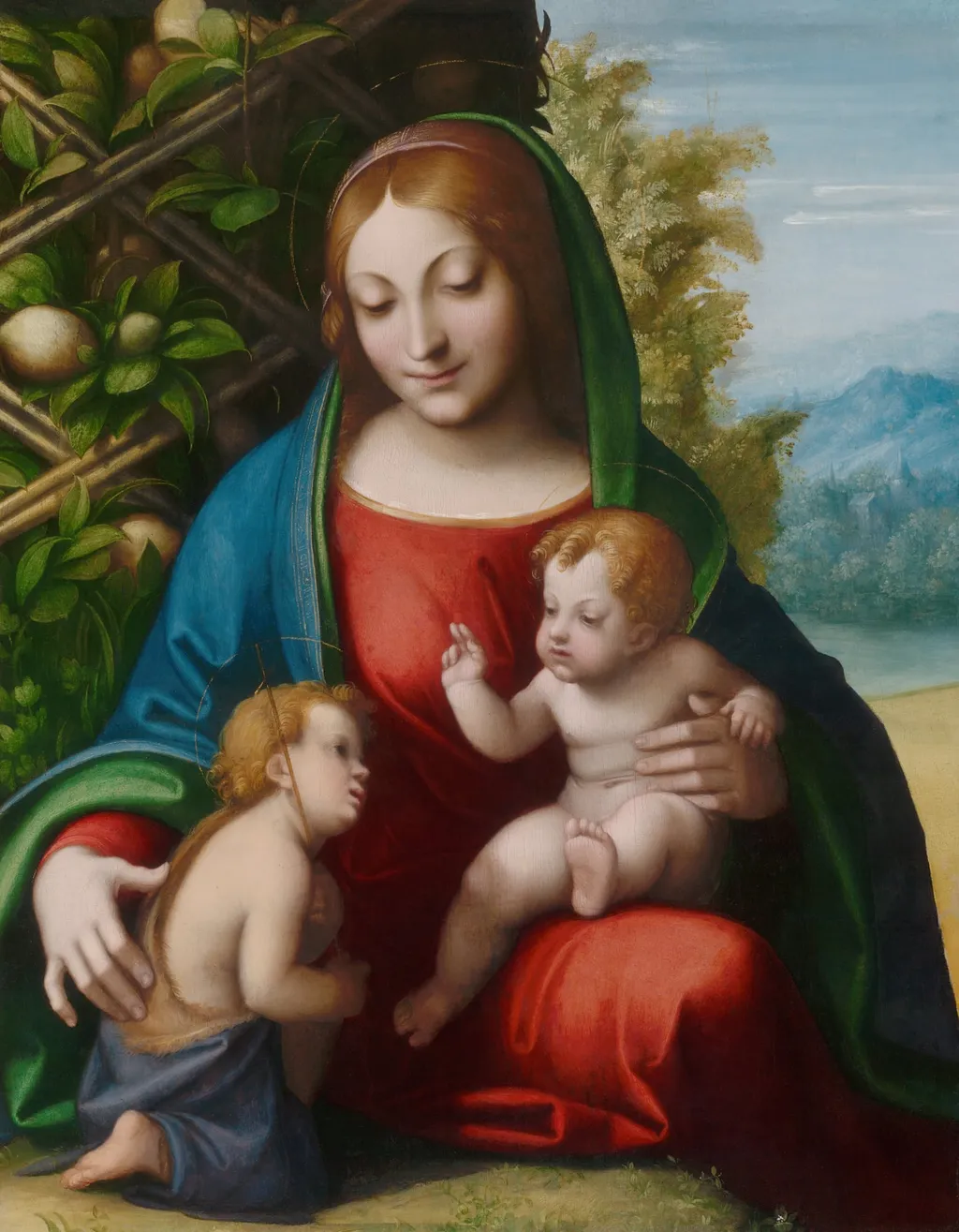
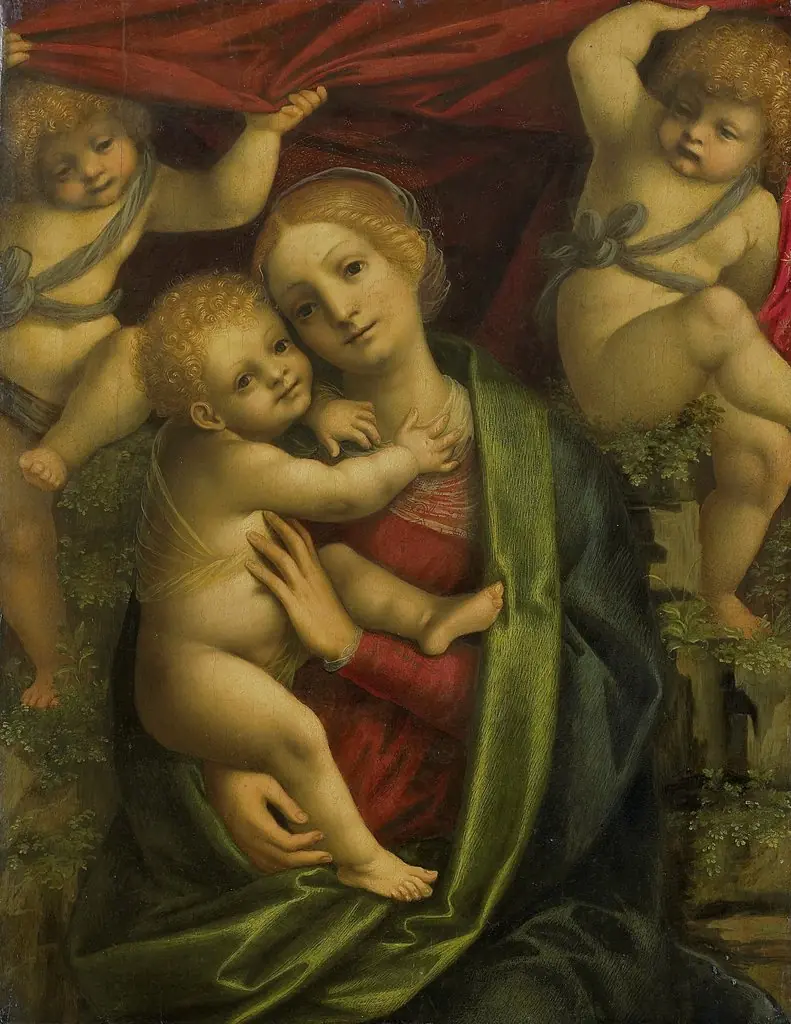
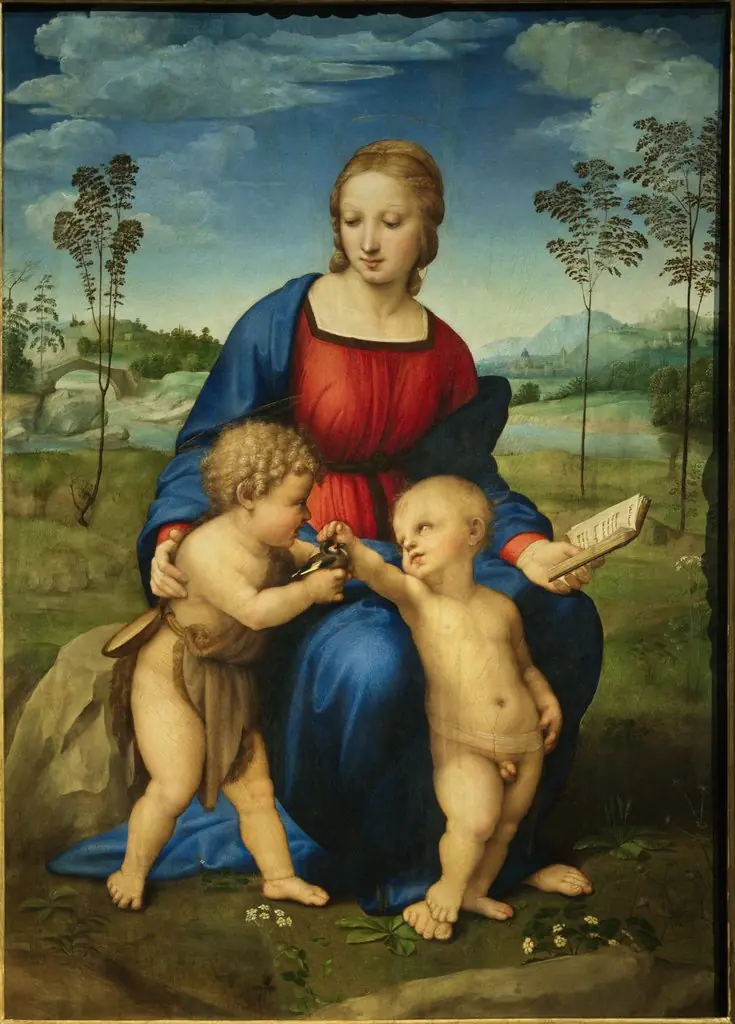
Virgin and Child with the Young Saint John the Baptist is an oil painting by the Renaissance artist Antonio da Correggio. It dates from 1515 and is held in the collection of the Art Institute of Chicago.
- Accession no.
- 23972
- Credit line
- Clyde M. Carr Fund
About this work
Overview
This oil on panel painting depicts an intimate scene of the Virgin, Child, and young Saint John the Baptist, showcasing Correggio's early style, which blends influences from prominent contemporaries with unique sensibilities.
Subject & Meaning
The painting's subject is a devotional grouping of the Virgin, Child Jesus, and Saint John the Baptist, emphasizing tender interactions and serene ambiance, typical of religious devotional art of the period.
Technique & Style
Correggio employed soft outlines, a pyramidal composition (reminiscent of Raphael), and enigmatic expressions (echoing Leonardo da Vinci). He achieved a velvety texture and gentle glow through meticulous use of color, light, and shadow, possibly incorporating glazing techniques.
History & Provenance
Created in Correggio's early career, while based in Parma, away from Italy's main artistic hubs. This work predates his acclaimed ceiling frescoes in Parma's cathedral (1526–30), yet shares a nascent idyllic and radiant quality with those later works.
Context
Reflects the artistic cross-currents of early 16th-century Italy, with Northern European landscape elements and Southern Renaissance figural influences. Executed in a regional center, it highlights Correggio's ability to innovate from afar.
Legacy
This panel, with its gentle sensuousness and harmonious composition, contributes to Correggio's reputation for inventiveness and sophistication, foreshadowing the acclaimed luminosity of his mature works.
Own this work as a print
Artist & collection

Artist
Antonio Allegri da Correggio, usually known as just Correggio, was an Italian Renaissance painter who was the foremost painter of the Parma school of the High Renaissance, who was responsible for some of the most…