Artwork
The Good Shepherd
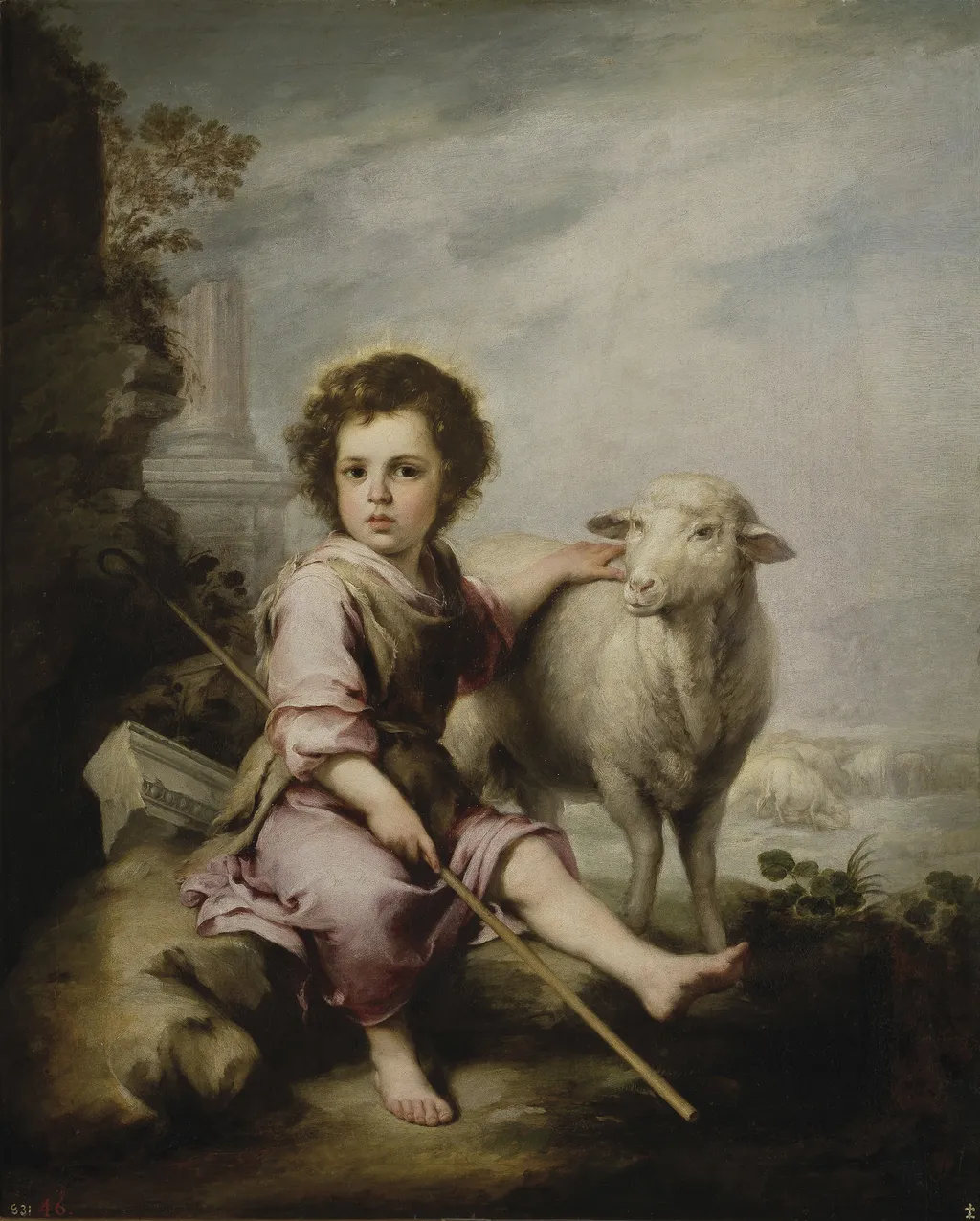
The Good Shepherd is an oil painting by the Baroque artist Bartolomé Esteban Murillo. It dates from 1664 and is held in the collection of the Museo del Prado.
About this work
Subject & Meaning
The scene is set against a bucolic landscape featuring classical ruins, creating a gentle, devotional image rather than a dramatic one.
The painting depicts the Christ Child as the Good Shepherd, a figure rooted in early Christian art representing Jesus as the savior who cares for his flock and serves as an allegory for the Eucharist. Murillo’s interpretation draws directly from the Gospel of John, where Christ states he lays down his life for his sheep. In this specific version, the Child stands with one hand resting on a lost sheep, a detail some scholars link to the Parable of the Lost Sheep from the Gospel of Matthew. The scene is set against a bucolic landscape featuring classical ruins, creating a gentle, devotional image rather than a dramatic one. This approach aligns with the Counter-Reformation mindset of mid-17th century Spain, emphasizing a sweet, accessible, and delicate religious theme suitable for popular veneration.
Technique & Style
The Good Shepherd is an oil on canvas work measuring 123 × 101 cm, painted around 1660 by Bartolomé Esteban Murillo. Executed in oil paint on canvas, the piece exemplifies Baroque religious art with a pyramidal composition that places Jesus and the central sheep in bright light, while vertical and horizontal lines are disrupted by the shepherd’s staff and the figure’s left leg, breaking symmetry and creating a subtle grid. The background landscape reveals orderly architecture, and the distant flock fades into vaporous sky; a fleur‑de‑lis in the lower right corner marks its provenance from the collection of Élisabeth Farnese. Murillo’s handling of light, his delicate tonal palette, and the gentle, non‑dramatic treatment of the infantile theme reflect Counter‑Reformation sensibilities, and the work’s popularity was amplified through numerous devotional prints and engravings.
History & Provenance
The Good Shepherd was painted by Bartolomé Esteban Murillo around 1660, probably the earliest of three known versions of the subject. The Prado canvas was enlarged to pair with a companion Saint John the Baptist as a Child and was acquired in 1744 by Elisabeth Farnese from the heirs of Cardinal Gaspar de Molina y Oviedo, then president of the Council of Castile.
In 1746 the painting was sent to the Royal Palace of La Granja de San Ildefonso, and it subsequently appears in two Aranjuez palace inventories of 1747 and 1774. It was transferred to the Royal Palace of Madrid, where it remained between 1814 and 1818, before entering the Museo del Prado in 1819, where it continues to be displayed as a pair with the Saint John the Baptist Child. A fleur-de-lis in the lower right corner marks its former ownership by Elisabeth Farnese. Later Spanish monarchs Charles III and Ferdinand VII are also recorded among its owners.
The Good Shepherd is held by the Museo del Prado in Madrid under inventory number P00962. It entered the Spanish royal collection in 1744 when Queen Elisabeth Farnese purchased it from the heirs of Cardinal Gaspar de Molina y Oviedo, and it remained in royal palaces until its transfer to the Prado in 1819. The work has been displayed as part of a pair with The Little Saint John Baptist since the 19th century.
Context
Scholars locate Murillo’s Good Shepherd within the mid-17th-century Sevillian Baroque’s devotional taste for gentle, legible religious imagery aligned with Counter-Reformation ideals. The work’s quiet, pyramidal composition and luminous handling exemplify Murillo’s mature accessibility, a quality that fueled its broad dissemination through prints and engravings. Early commentators such as Ceán Bermúdez traced the motif to Stefano della Bella’s Ovidian engravings, underscoring how print culture mediated the painting’s iconography and reception. Later art-historical surveys, including Valdivieso’s catalogue raisonné, position the canvas among Murillo’s serial treatments of the theme, noting its distinctively childlike, non-dramatic tone suited to popular devotion. The Prado’s pairing with Saint John the Baptist Niño further embeds the work in courtly collecting and 18th-century display strategies, reinforcing its status as an emblem of Spanish Baroque religious painting.
Legacy
Murillo's *The Good Shepherd* achieved enduring popularity due to its accessible, devotional style, which was widely disseminated through numerous engravings, prints, and lithographs. This mass reproduction cemented the work's status as a beloved religious image in the public consciousness. The painting's composition and emotional tone also influenced other artists; notably, the London version of the theme (paired with *Saint John the Baptist*) reportedly attracted the attention of Thomas Gainsborough. Gainsborough may have owned a copy and drew inspiration from it for his own work, *Boy with a Dog*. The Prado's version remains a key example of Murillo's late-career focus on sweet, delicate religious imagery that aligned with Counter-Reformation sensibilities.
Own this work as a print
Artist & collection
Artist
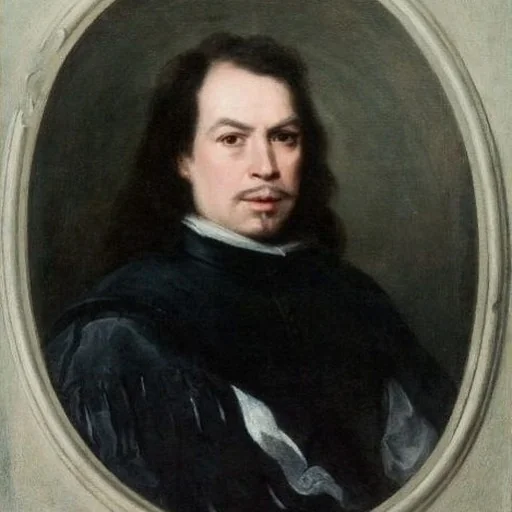
Bartolomé Esteban Murillo ( mure-IL-oh, m(y)uu-REE-oh, Spanish:; late December 1617, baptised 1 January 1618 – 3 April 1682) was a Spanish Baroque painter.

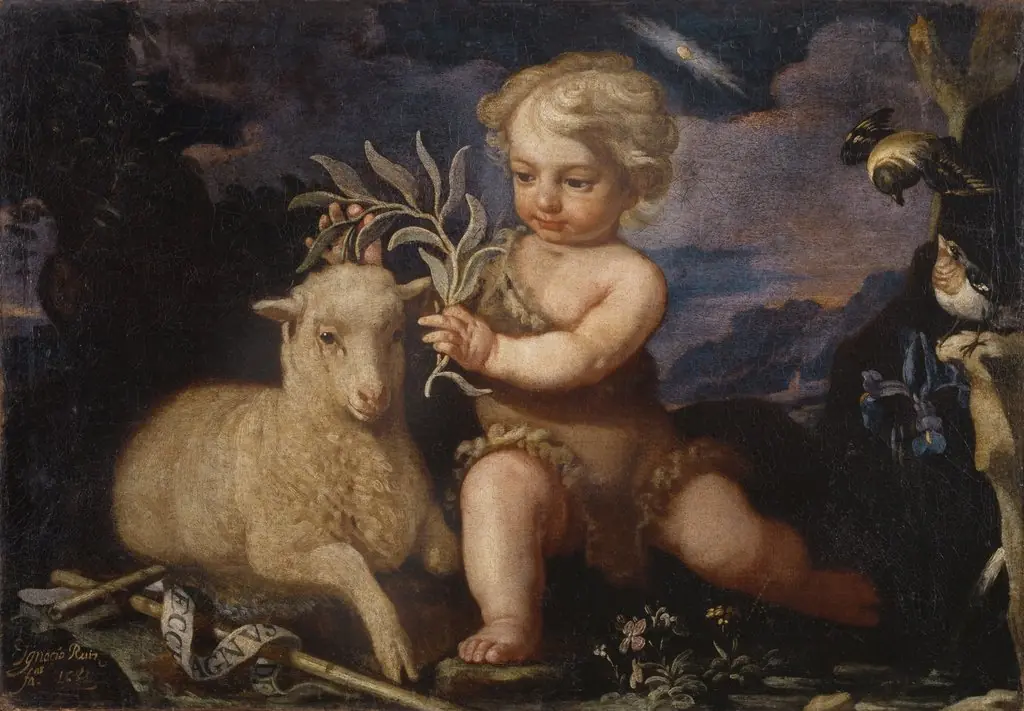 The Infant Saint John the Baptist with the Lamb
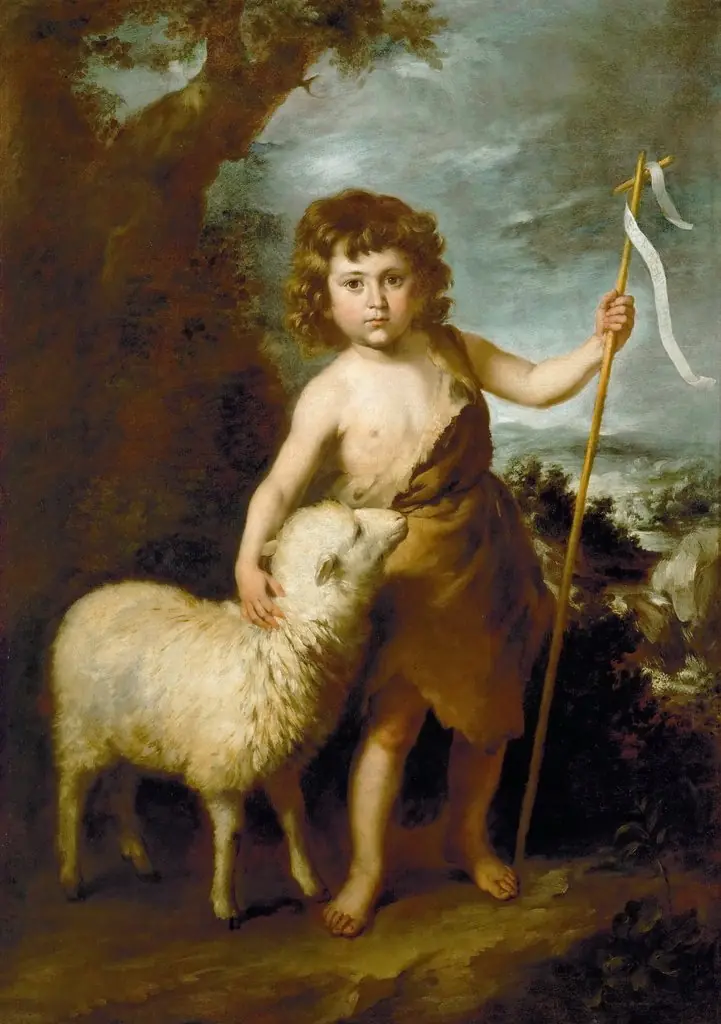 John the Baptist as a child
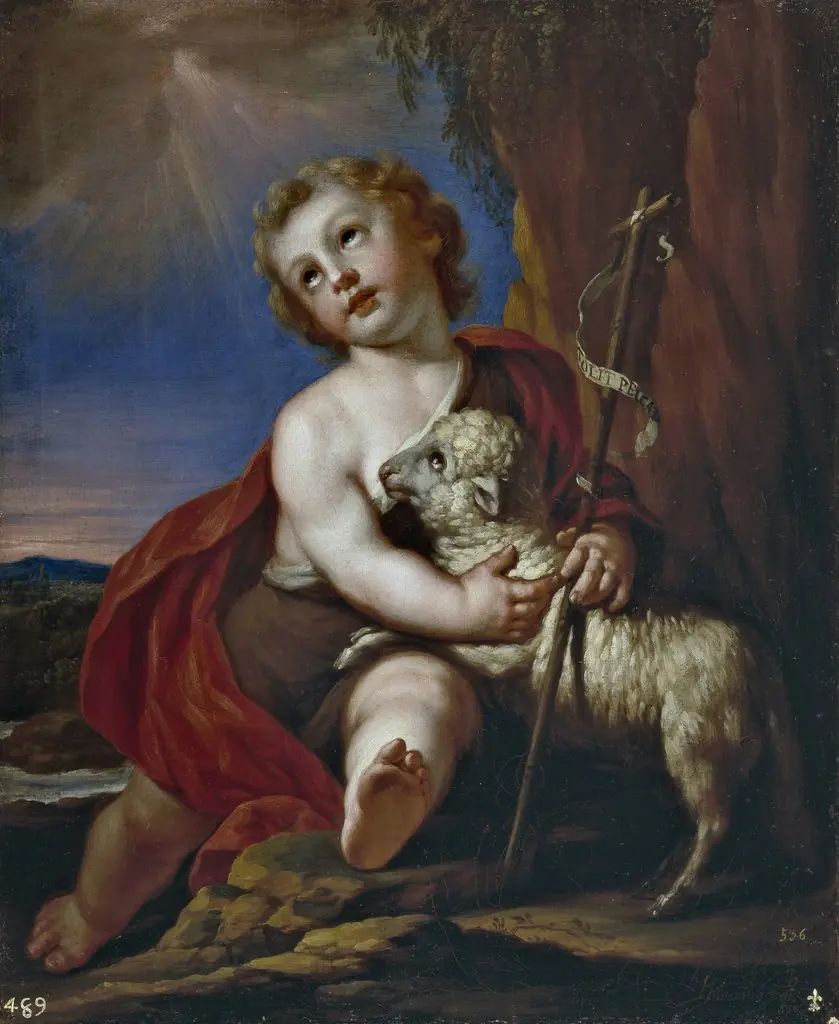 The Infant Saint John the Baptist
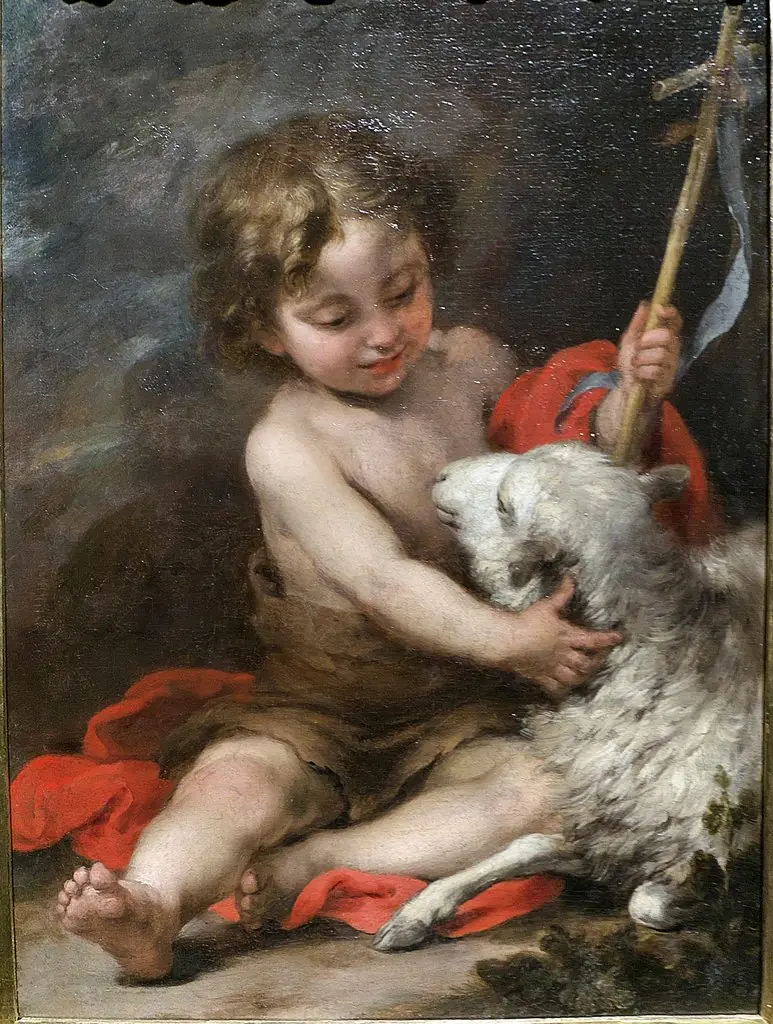 The Infant Saint John Playing with a Lamb
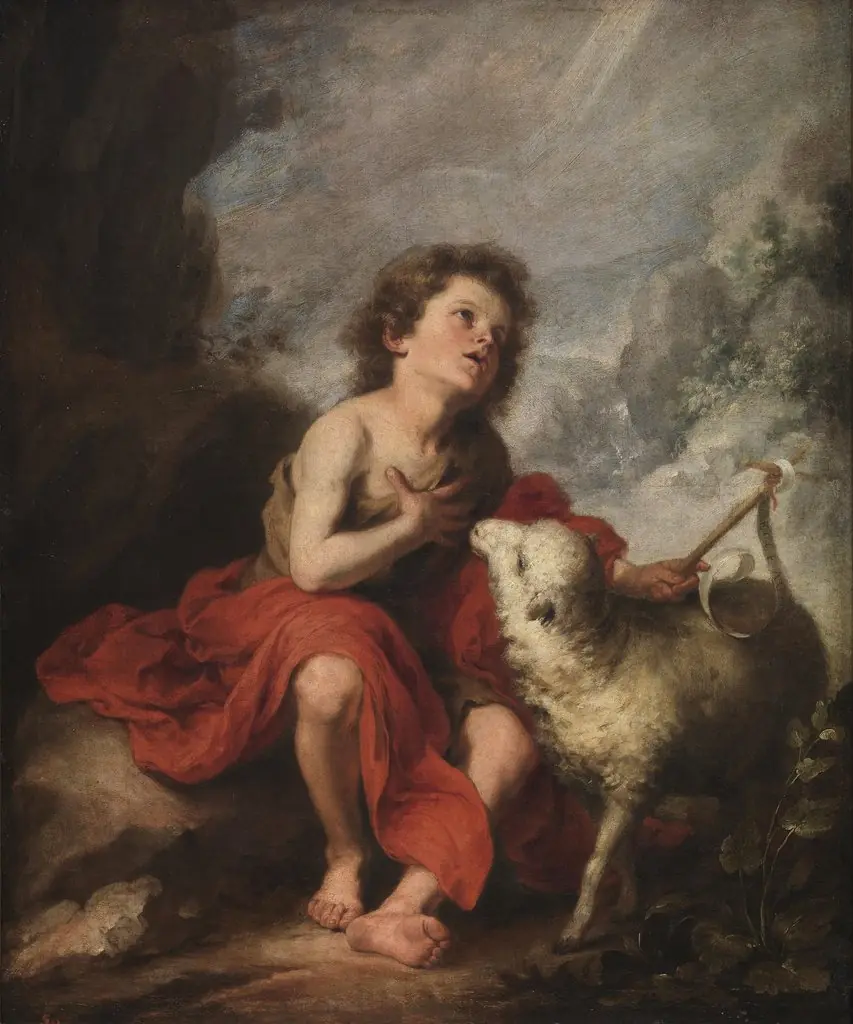 The Infant Saint John the Baptist
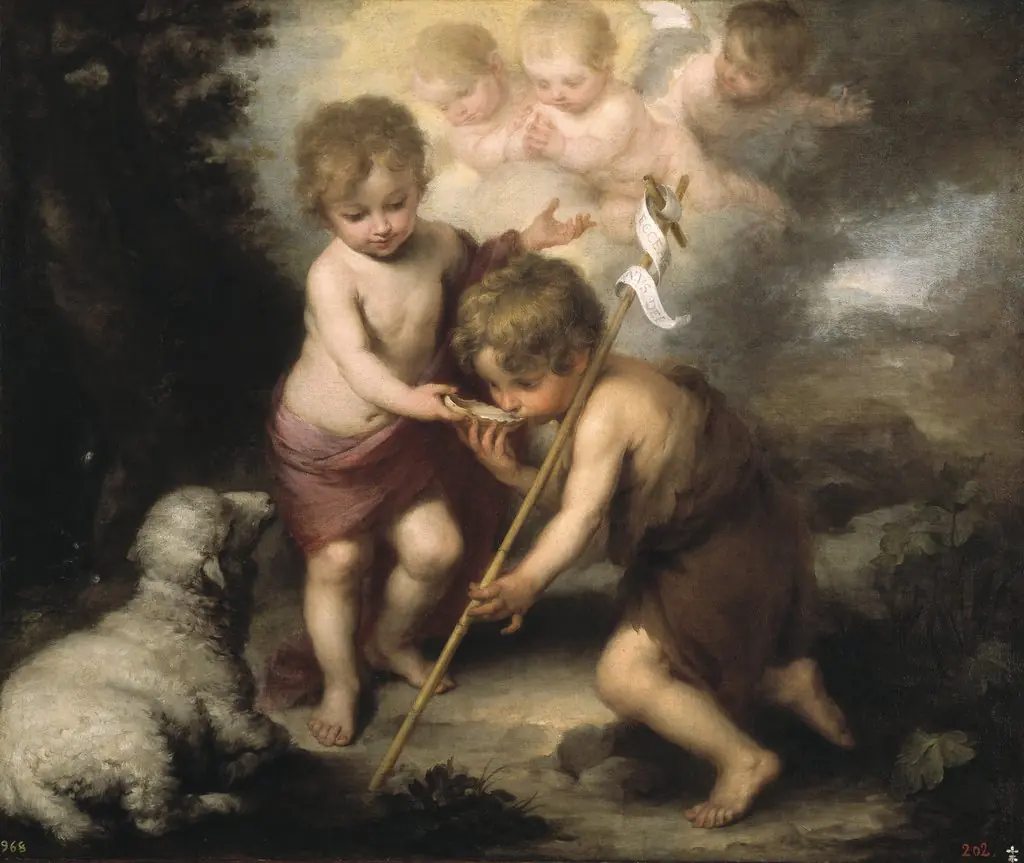 The Holy Children with a Shell
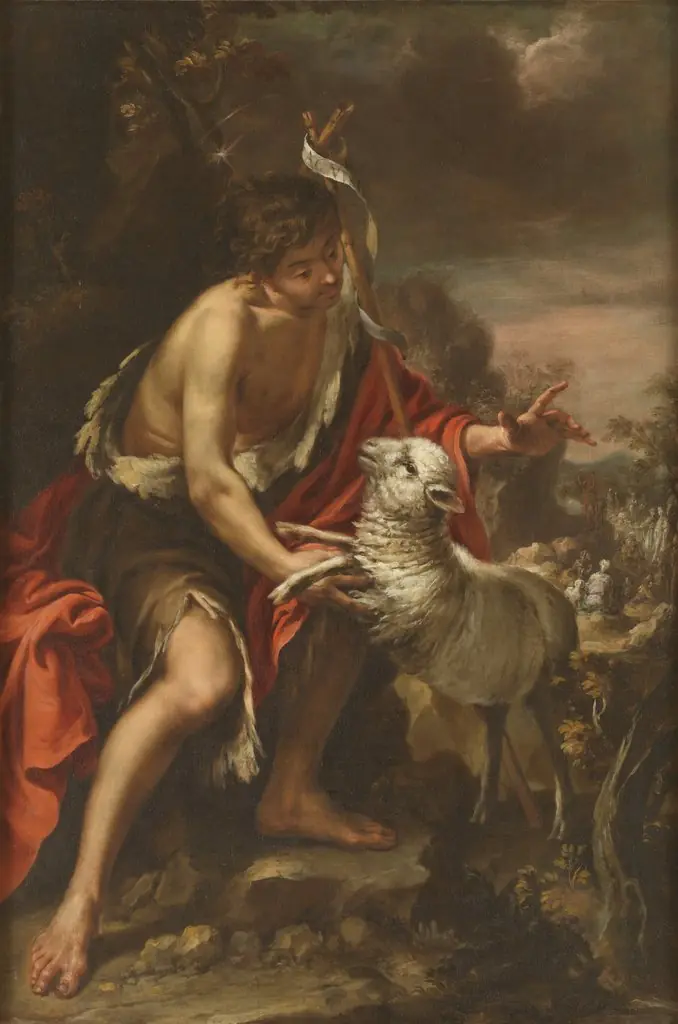 Saint John the Baptist
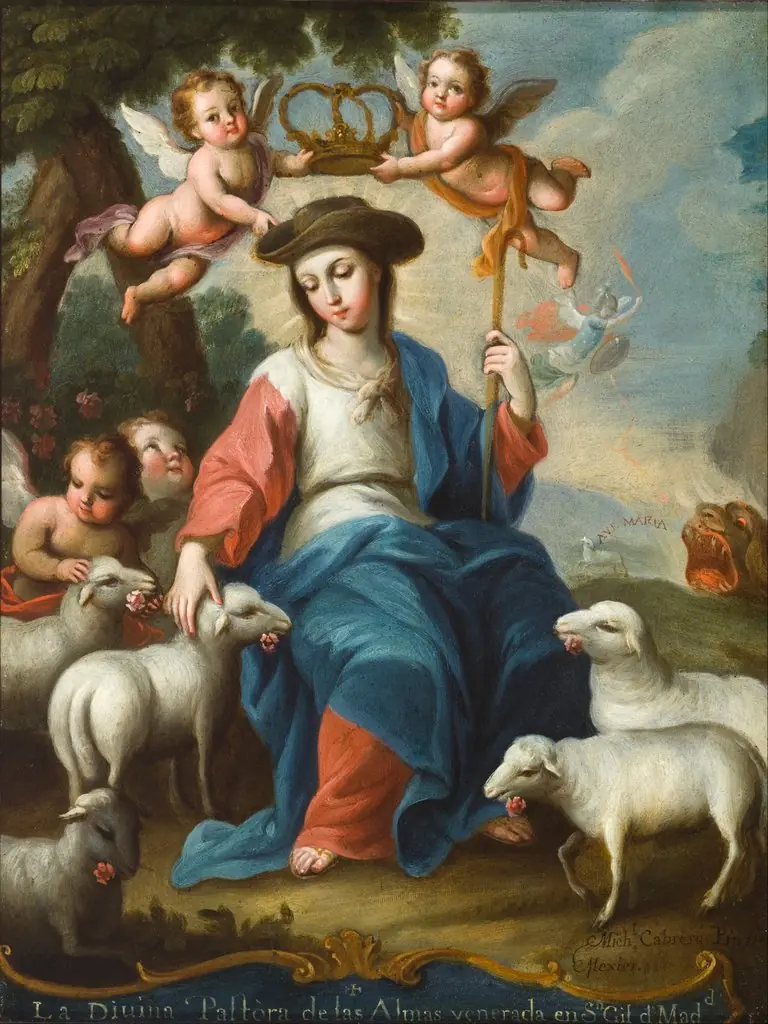 The Divine Shepherdess (La divina pastora)
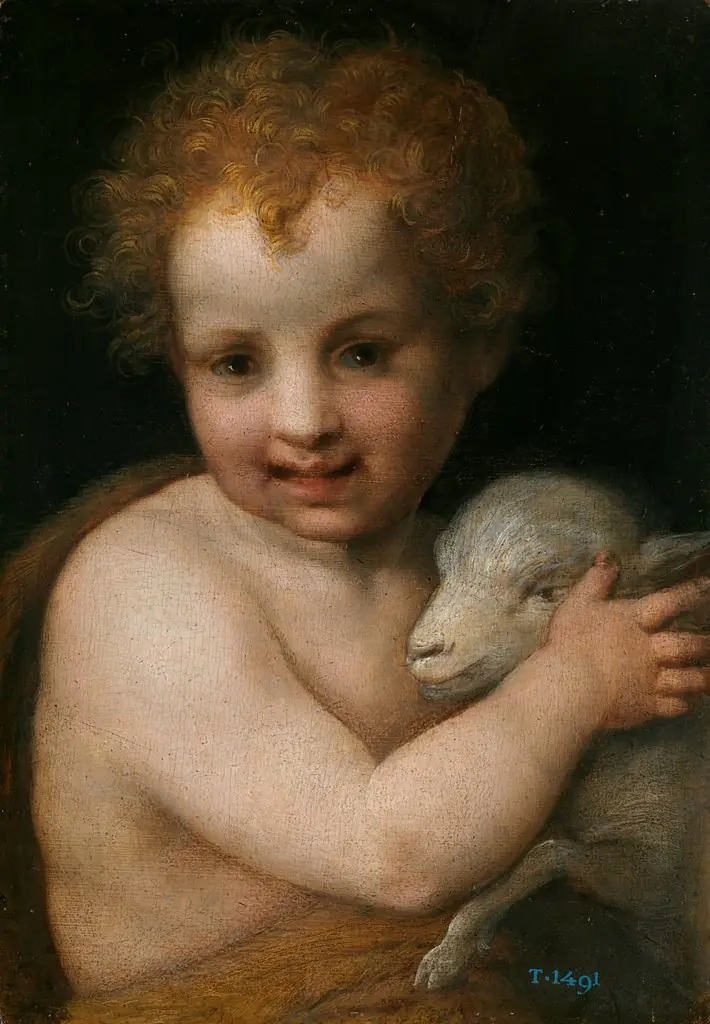 Saint John the Baptist with the Lamb