Artwork
The Holy Children with a Shell
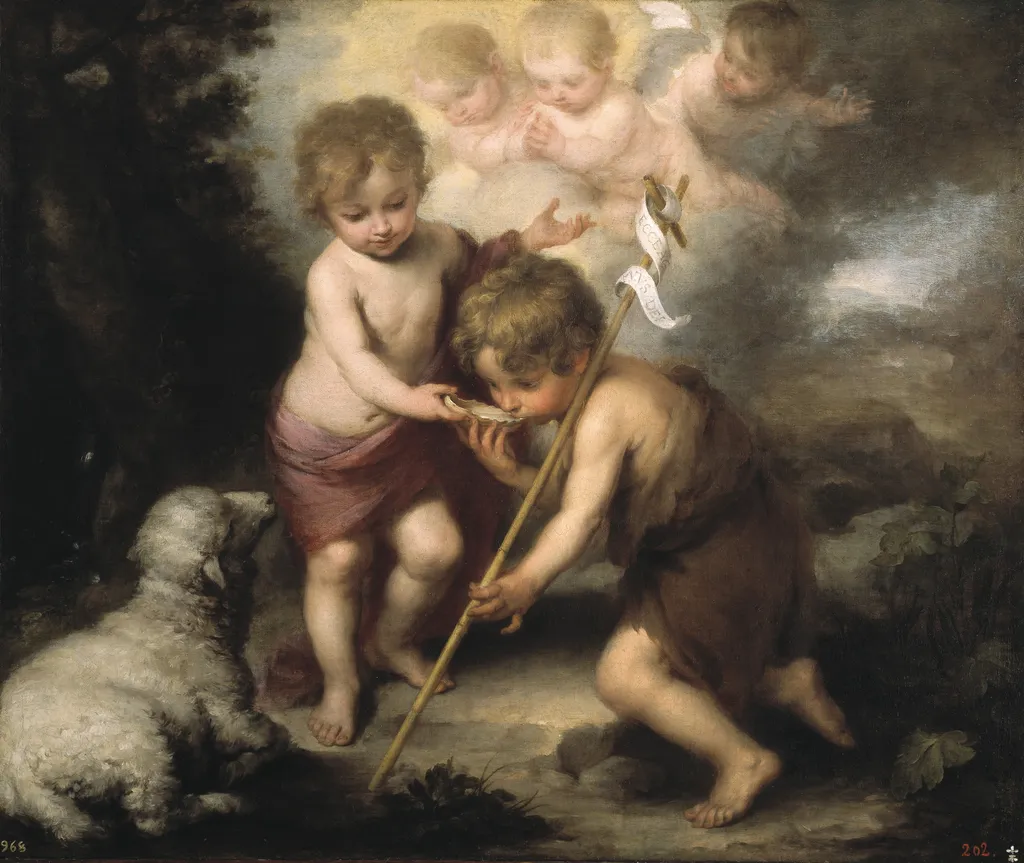
The Holy Children with a Shell is an oil painting by the Early Baroque Italian artist Bartolomé Esteban Murillo. It dates from 1670 and is held in the collection of the Museo del Prado.
About this work
The Holy Children with a Shell is a painting by Spanish artist Bartolomé Esteban Murillo.
The Holy Children with a Shell is a painting by Spanish artist Bartolomé Esteban Murillo. It was created around 1670 using oil paint on canvas.
The work shows the Christ Child together with the infant John the Baptist, and it is sometimes called The Christ Child and the Infant John the Baptist with a Shell. It dates from the early 1670s and now hangs in Madrid’s Prado Museum. The painting reflects Murillo’s gentle style.
If you’re curious, check out the museum: Museo del Prado.
Subject & Meaning
The painting depicts the infant Christ offering water held in a scallop shell to his cousin the infant John the Baptist, who kneels on rocky ground to receive it. John supports the shell with one hand while resting a cross against his shoulder with the other, and he exchanges a gaze with a Paschal lamb seated beside a spring in the lower left corner. The cross bears the inscription "Ecce Agnus Dei." John is wrapped in camel skin as a sign of his future asceticism, while Christ is draped in red cloth and raises his left hand toward the sky, where three putti observe the scene from the clouds, the central one with hands joined in prayer. The composition unites the principal symbols of John's future ministry, the lamb, the baptismal waters, and the cross of his martyrdom, with Christ's divinity, presenting the tender encounter as a prefiguration of Christ's own baptism and sacrificial role.
Technique & Style
The painting is executed in oil on canvas, measuring 104 cm by 124 cm. It depicts a religious scene in which the Christ Child offers water from a shell to the infant John the Baptist, who holds a cross. The composition includes three cherubs in the heavens, one of whom prays with hands clasped, while a lamb rests in the lower left. The work shows careful handling of light and gesture, typical of Murillo's Baroque style, with rich color and delicate modeling of figures.
History & Provenance
Bartolomé Esteban Murillo created The Holy Children with a Shell around 1670-1675 as an oil on canvas painting. Measuring 104 by 124 cm, the work first appears in the written record in 1746, when it was documented in Elisabeth Farnese's collection at the Royal Palace of La Granja de San Ildefonso in Segovia. By 1766, it had been moved to infante Luis's bedroom within the same palace. The painting was subsequently recorded in the kings' bedroom at the Palacio de Aranjuez in Madrid in 1794, and later at the Palacio Real in Madrid between 1814 and 1818. Historically, the artwork was also owned by Charles III of Spain and Ferdinand VII of Spain. It is currently held by the Museo del Prado in Madrid.
Context
The Holy Children with a Shell is one of Murillo’s most frequently reproduced works, circulating widely in prints and decorative plates from the late seventeenth century onward. Its popularity is reflected in the early documentary trail: first recorded in 1746 in the collection of Elisabeth Farnese at the Royal Palace of La Granja de San Ildefonso, it later moved to infante Luis’s apartments by 1766, and was documented in royal bedrooms at Aranjuez in 1794 and the Royal Palace of Madrid between 1814 and 1818. The painting’s horizontal format and tender figural arrangement, centering on the Christ Child offering water from a shell to the Infant John the Baptist, became a touchstone of Murillo’s devotional style, blending naturalistic detail with a gentle, sentimental mood that resonated in reproductive media. Within Murillo’s oeuvre, the composition exemplifies his mature religious narratives, marked by quiet intimacy and the integration of putti and symbolic animals such as the lamb, reinforcing its place in the broader canon of Baroque Spanish religious painting.
Legacy
The work became one of Murillo’s most widely circulated images, reproduced extensively in prints and on decorative plates during the eighteenth and nineteenth centuries.
Its popularity is attested by its early presence in royal collections: after first recorded in 1746 in Elisabeth Farnese’s holdings at La Granja, it was displayed in the infante Luis bedroom by 1766, moved to Aranjuez in 1794, and installed at the Royal Palace in Madrid from 1814 to 1818.
Own this work as a print
Artist & collection
Artist
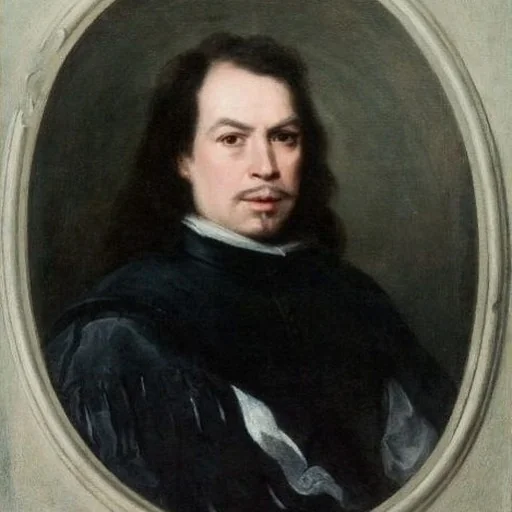
Bartolomé Esteban Murillo ( mure-IL-oh, m(y)uu-REE-oh, Spanish:; late December 1617, baptised 1 January 1618 – 3 April 1682) was a Spanish Baroque painter.

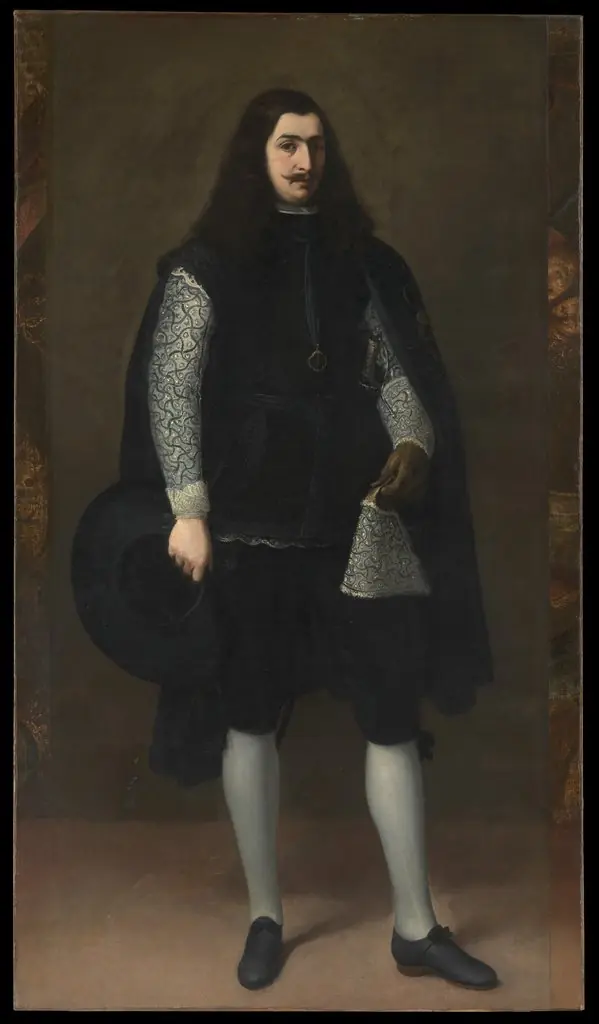
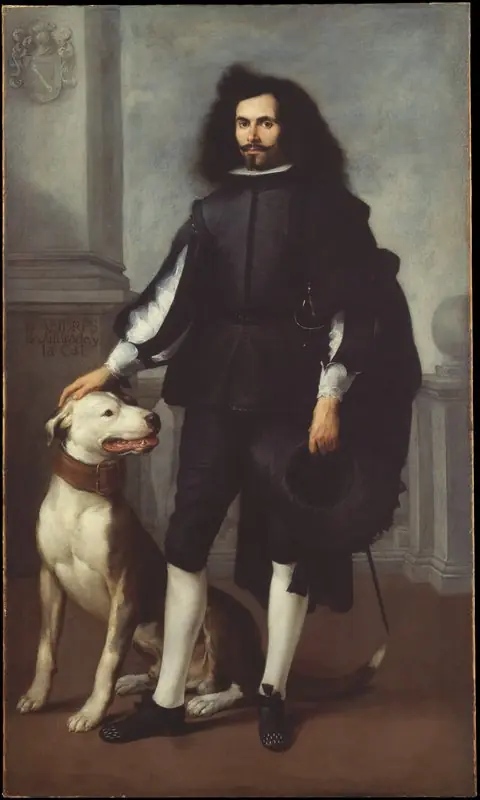
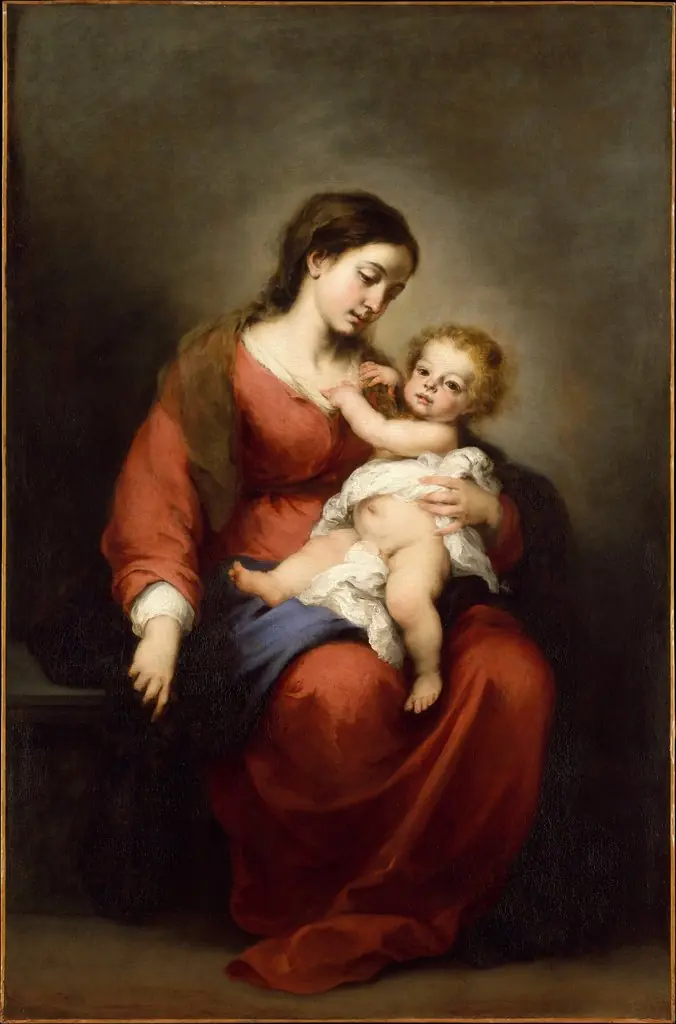
- The Infant Saint John the Baptist with the Lamb
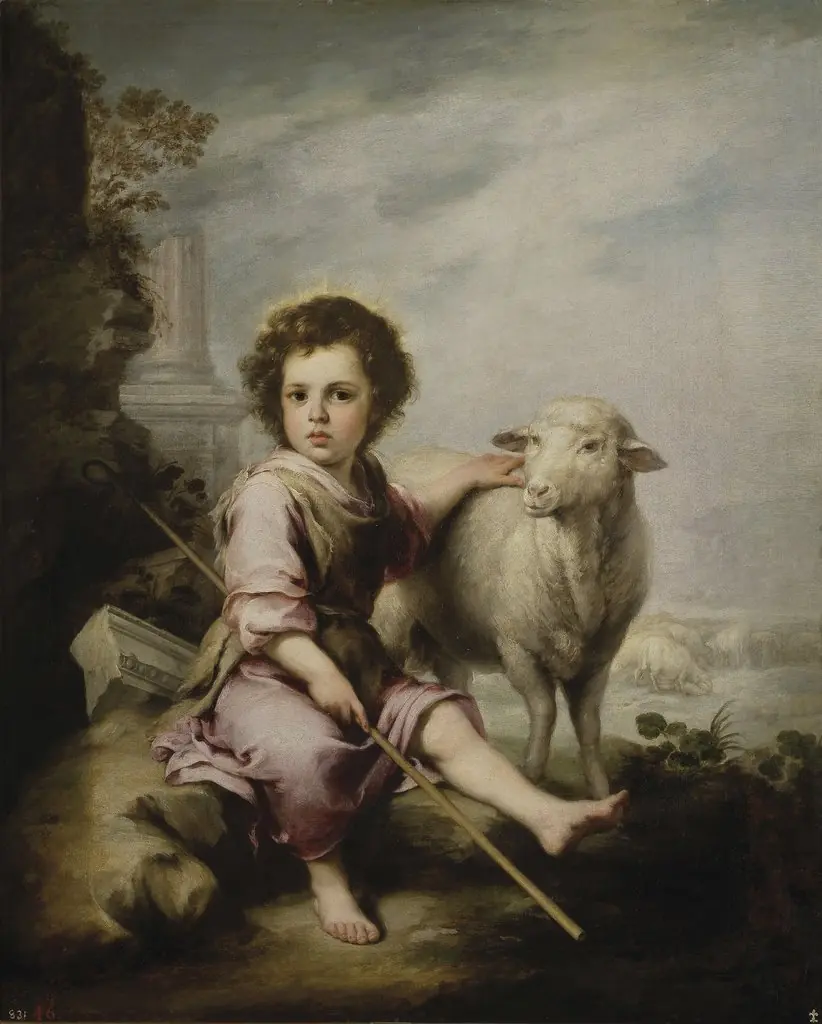 The Good Shepherd
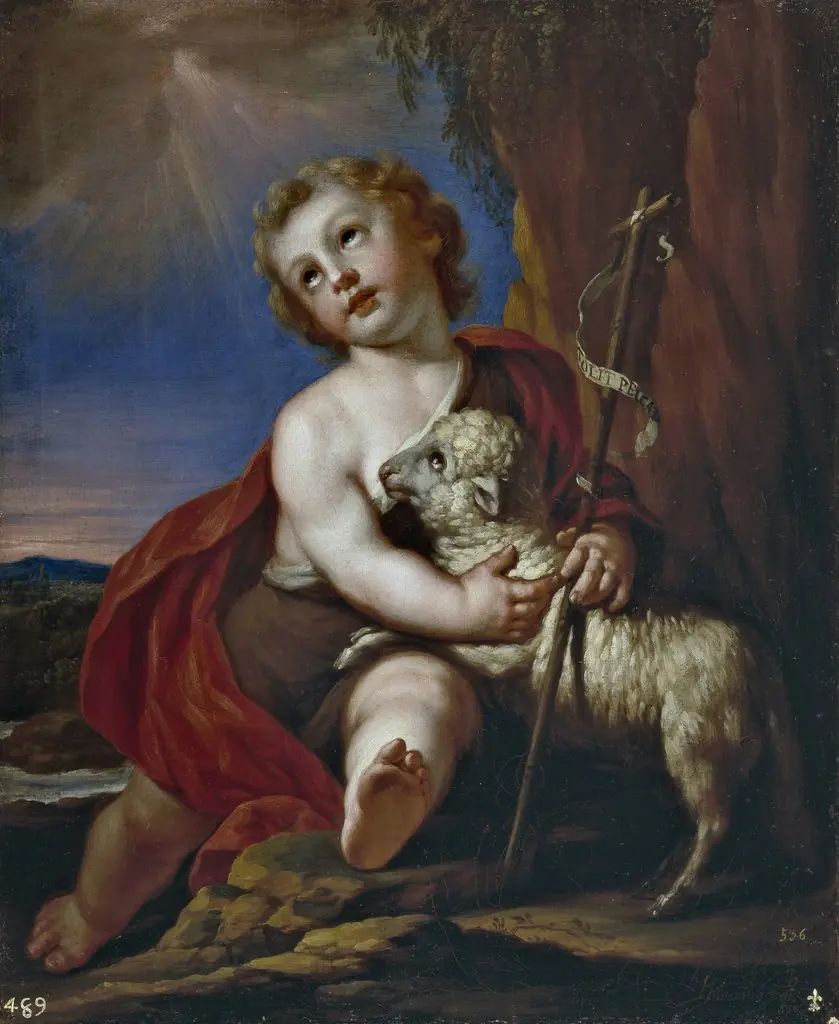 The Infant Saint John the Baptist
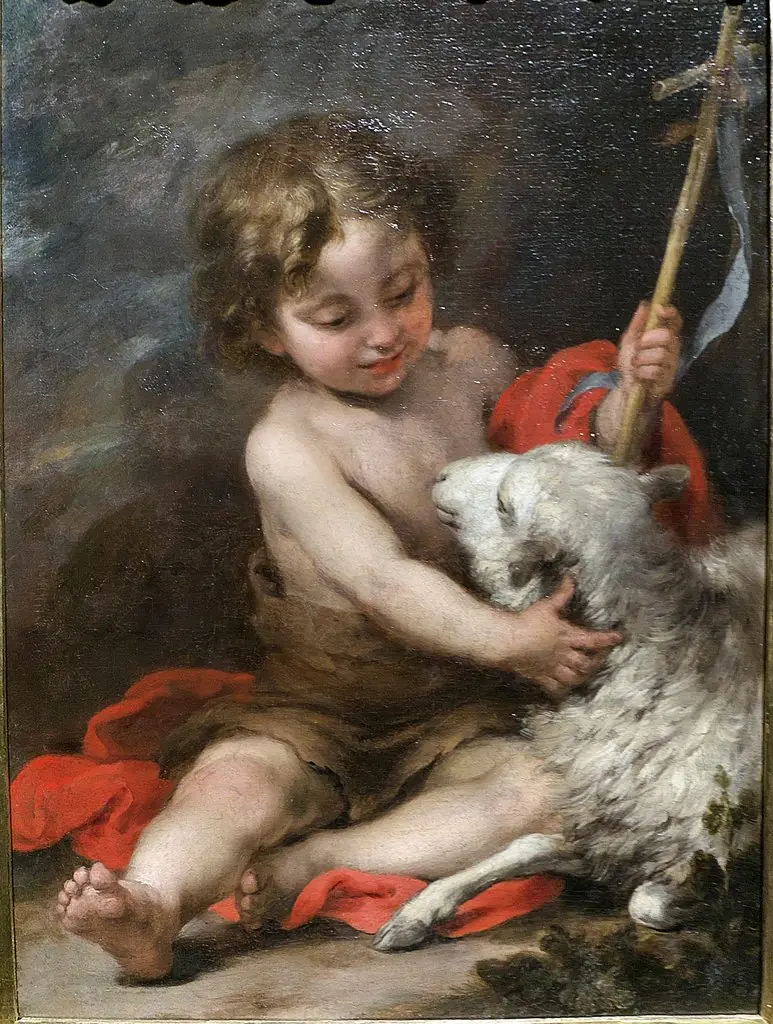 The Infant Saint John Playing with a Lamb
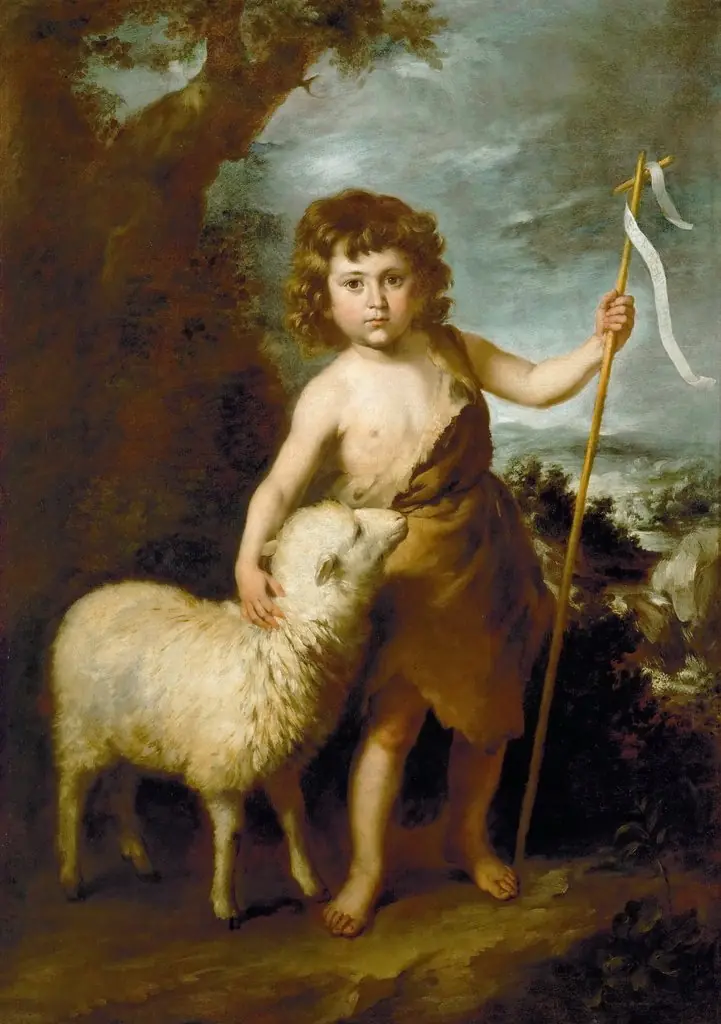 John the Baptist as a child
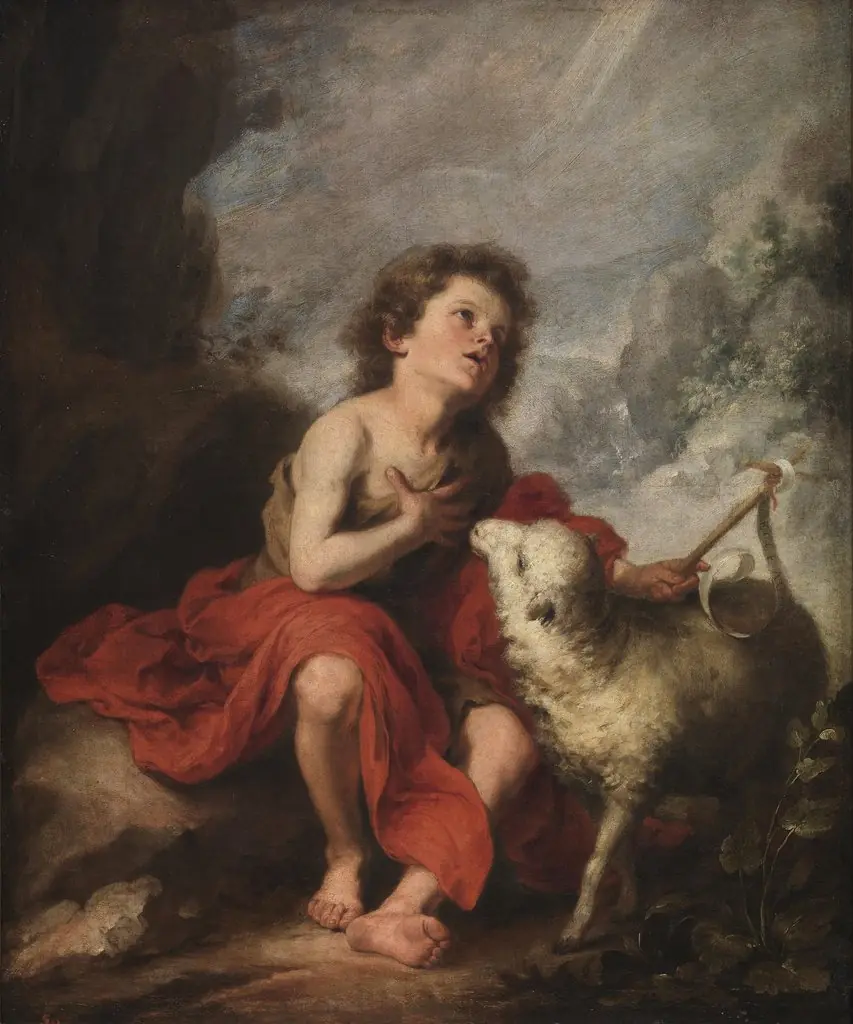 The Infant Saint John the Baptist
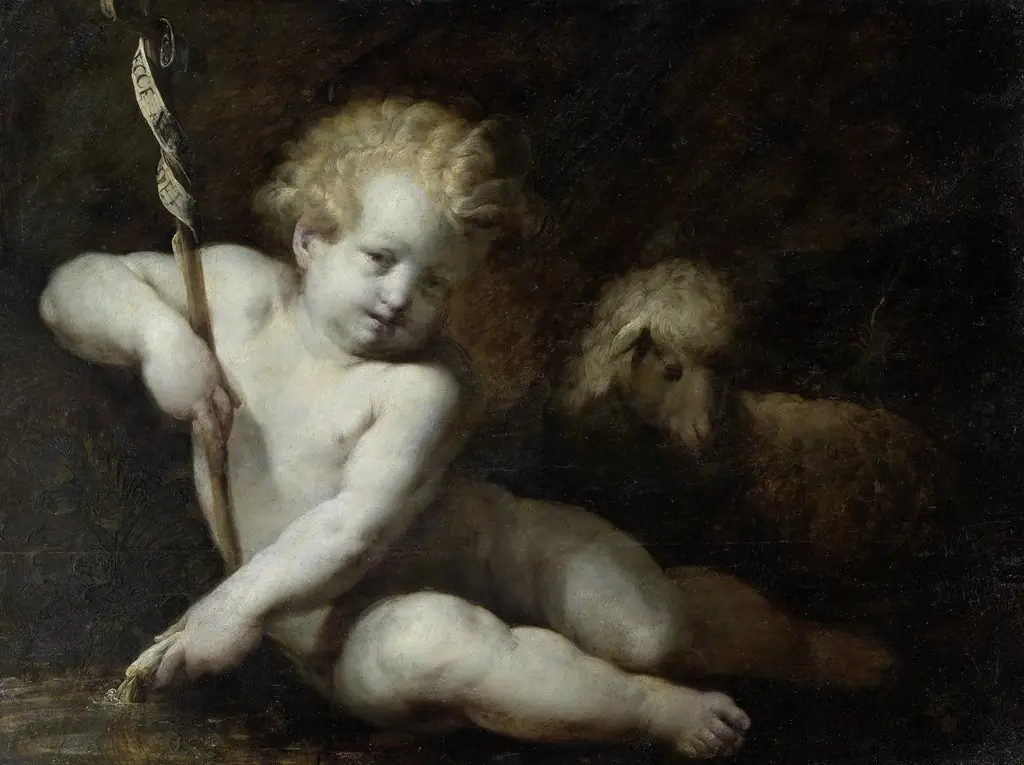 Young St. John
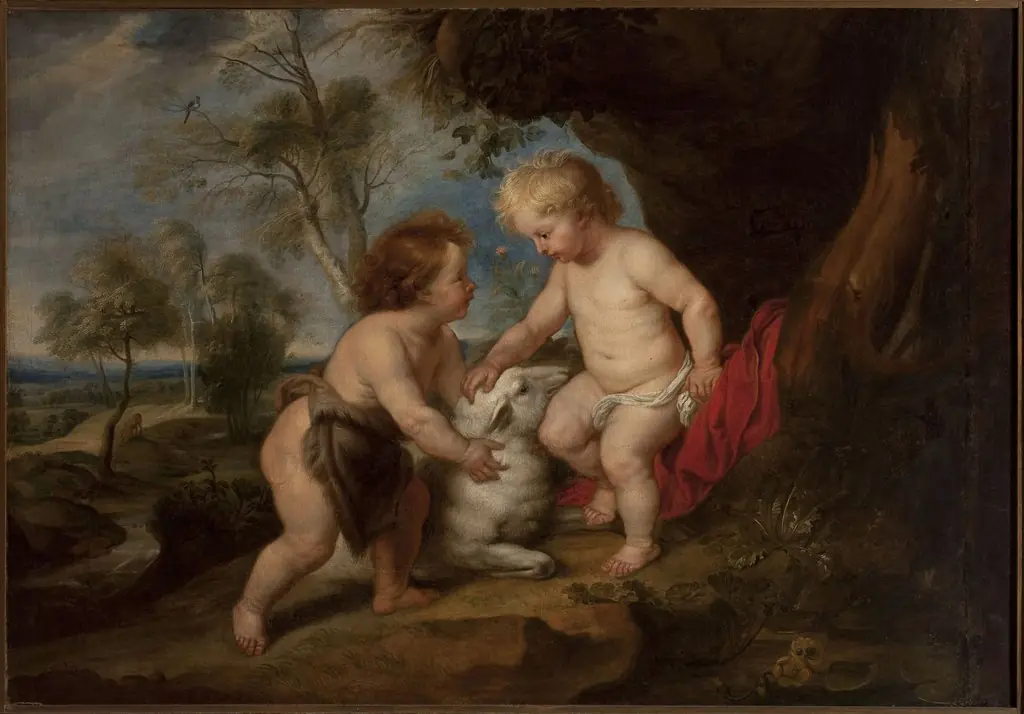 Child Jesus and St. John the Baptist
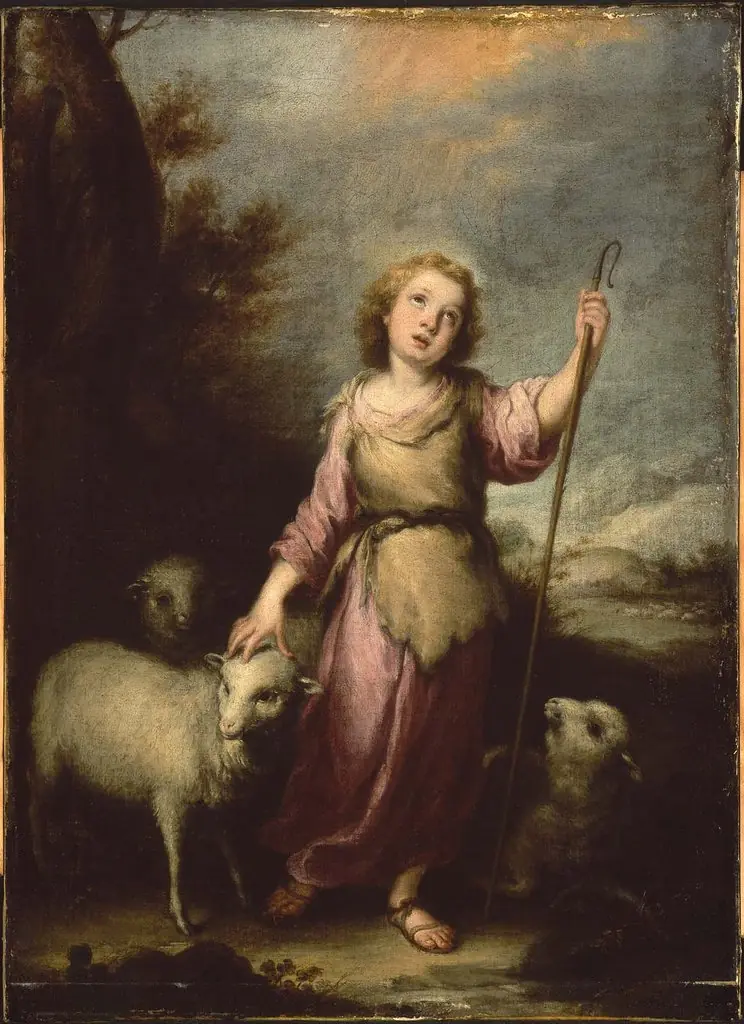 The Young Christ as the Good Shepherd
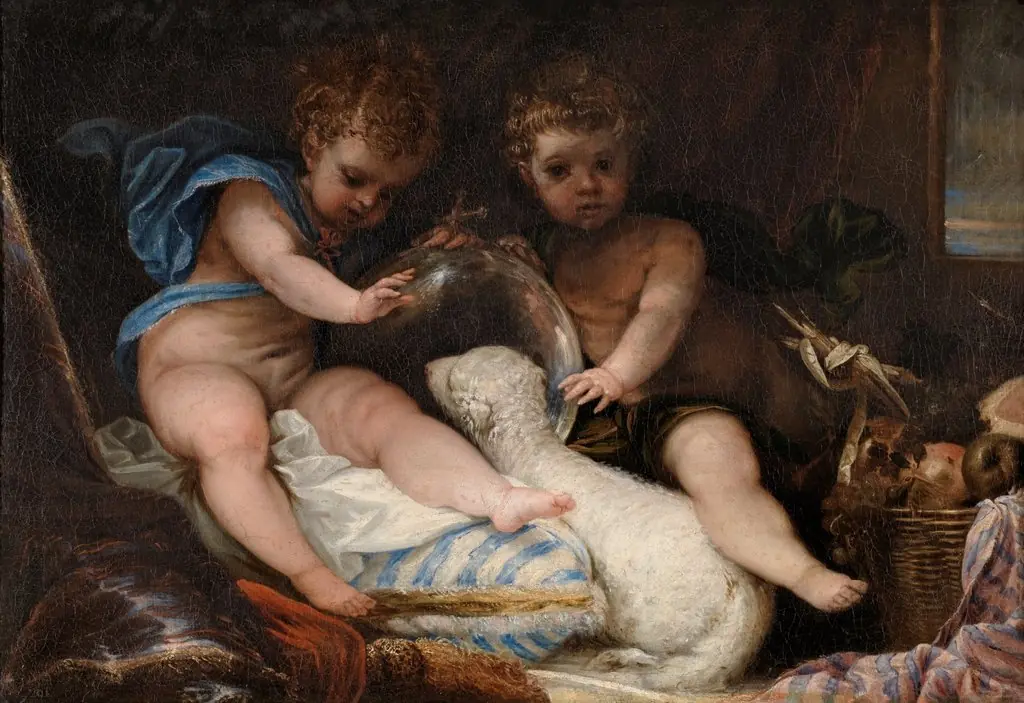 El Niño Jesús y San Juan
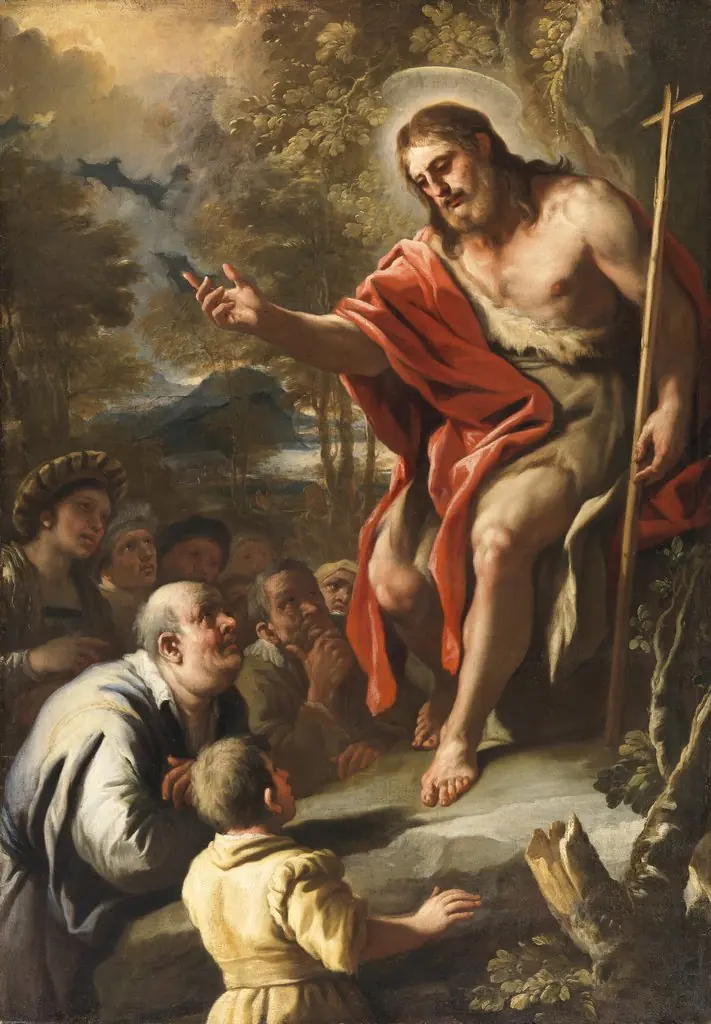 Saint John Preaching in the Wilderness
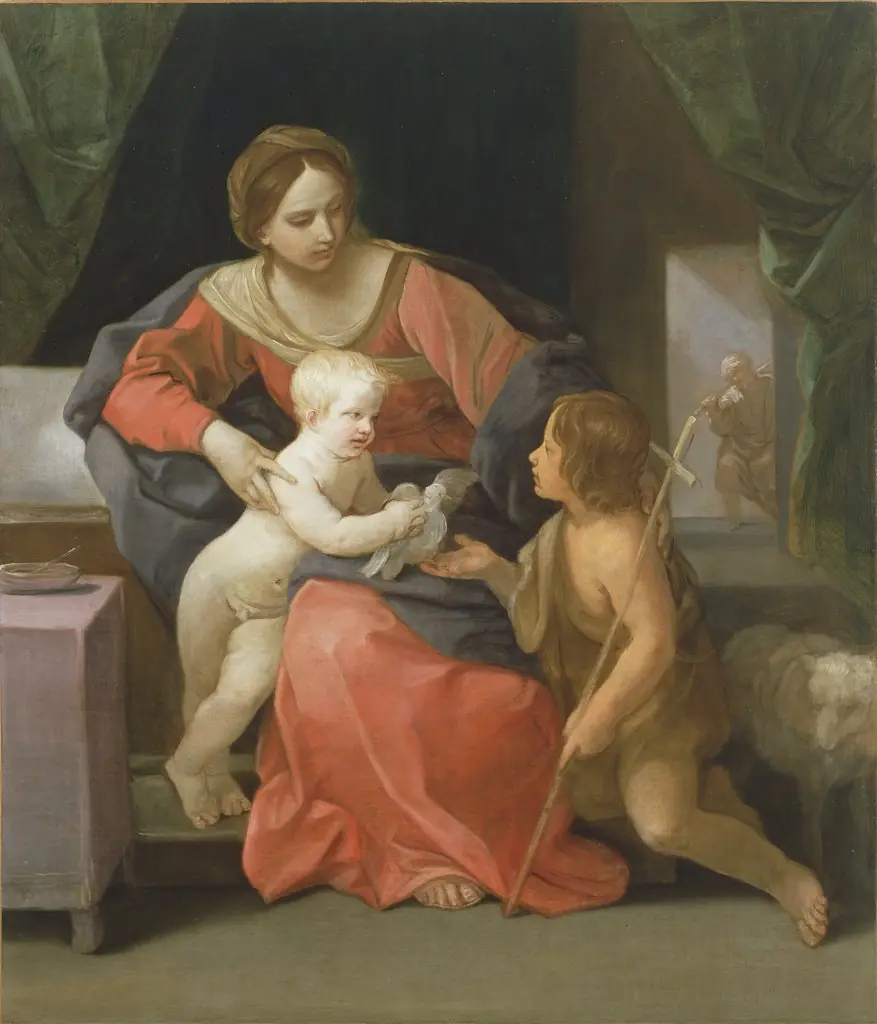 Virgin and Child with Saint John the Baptist