Artwork
The Money Counter
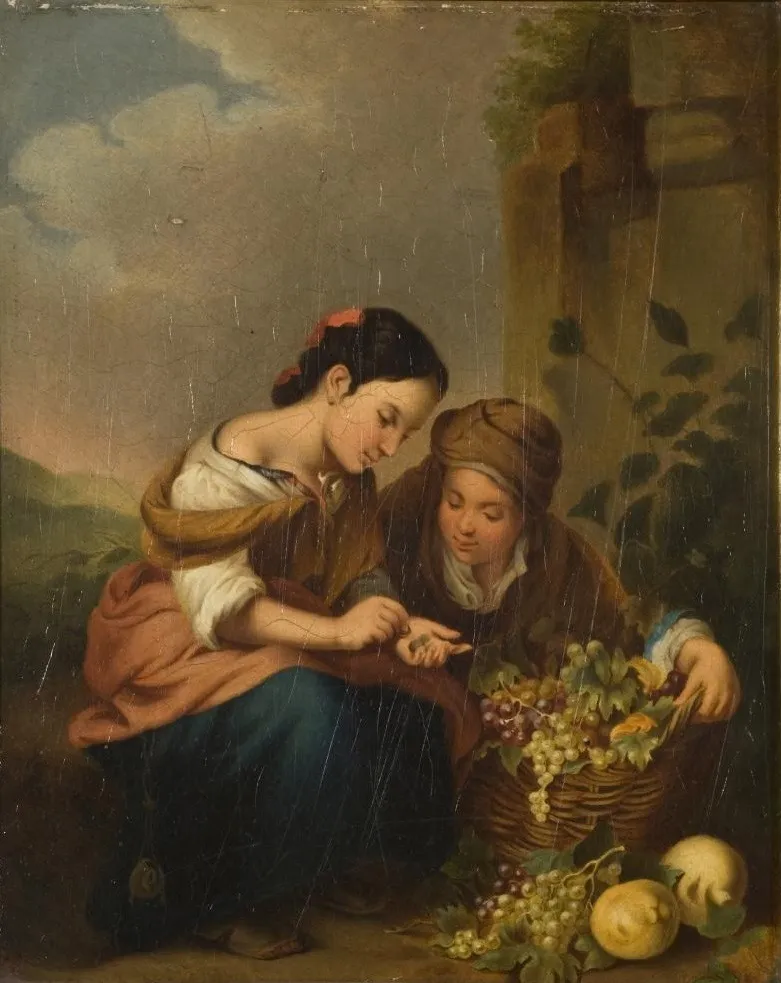
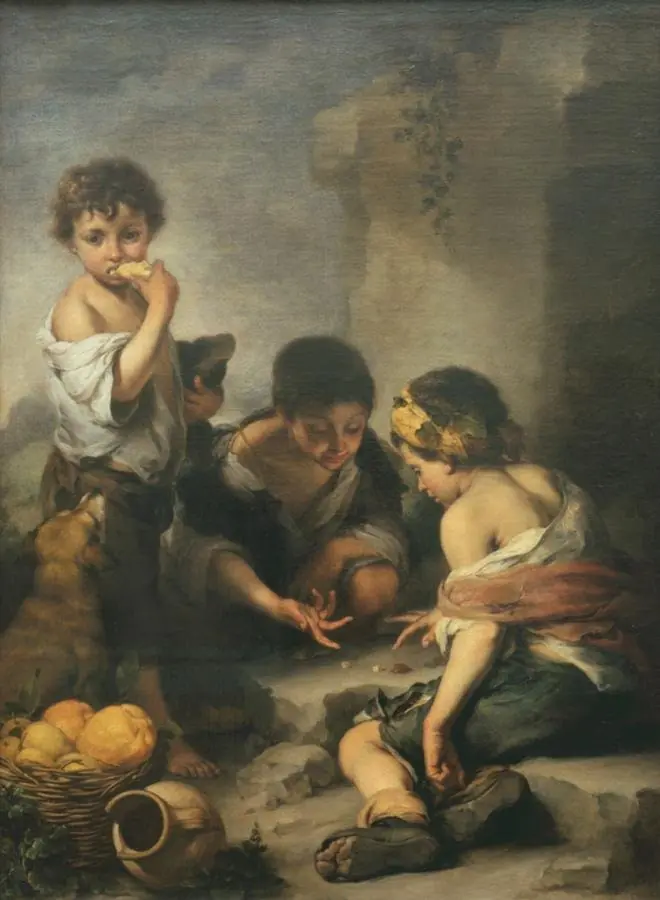
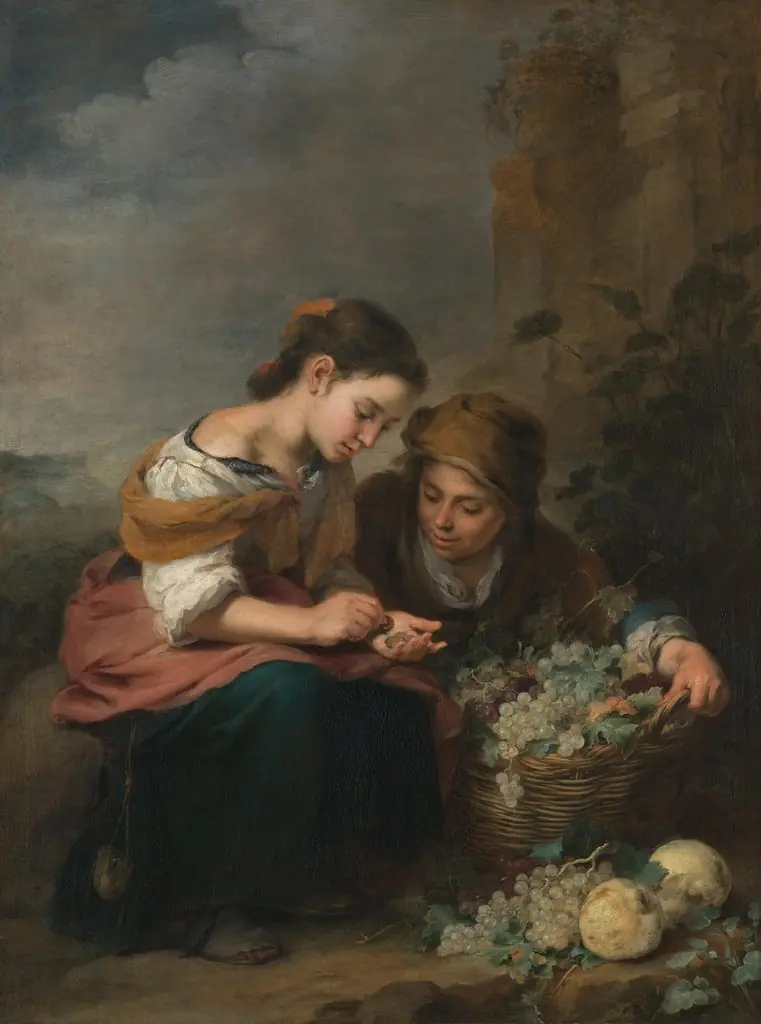
The Money Counter is an oil painting by the Baroque artist Bartolomé Esteban Murillo. It dates from 1670 and is held in the collection of the Alte Pinakothek.
About this work
Subject & Meaning
The Money Counter depicts an intimate scene of a merchant seated at a table piled with coins, scales, and ledgers, embodying the moral anxieties surrounding material wealth in the Baroque period. Murillo’s careful rendering of the coins and measuring implements functions as visual symbols of greed, honesty, and the transience of material gain, inviting viewers to contemplate the spiritual consequences of avarice. The work thus serves as a didactic commentary on the perils of avarice and the pursuit of profit, resonating with contemporary religious admonitions against the love of money.
Technique & Style
The composition is built around a tightly observed interior vignette, with attention directed to the sitter's hands and the coins being counted on the table.
The Money Counter is executed in oil paint on canvas, a standard support for seventeenth-century Spanish easel painting. The work measures 148 cm in height by 113 cm in width, a vertical format that suits the close, half-length focus on the seated figure.
Stylistically, the painting belongs to the Baroque movement, consistent with Murillo's mature genre scenes of the 1670s. The composition is built around a tightly observed interior vignette, with attention directed to the sitter's hands and the coins being counted on the table. The handling is characteristic of Murillo's genre production of this period, employing soft tonal transitions and a restrained palette to model the figure and surrounding objects with quiet naturalism.
History & Provenance
The painting entered the Alte Pinakothek in Munich by 1836, when it was recorded in the Royal Pinakothek’s holdings as Der Geldwechsler (The Money Changer). The work’s early provenance before the nineteenth century is not documented in the cited sources. Technical records at the Alte Pinakothek give the painting’s dimensions as 148 cm in height and 113 cm in width and confirm its execution in oil on canvas, dated to 1670.
The painting is held at the Alte Pinakothek in Munich. It is inventoried as Alte Pinakothek, inv. no. 1132.
The work was included in the exhibition "Murillo und sein Jahrhundert in Sevilla" held at the Kunsthalle Hamburg from 21 September to 24 November 1967.
Legacy
The Money Counter has been recognized as a pivotal example of Baroque genre painting, influencing later artists who explored themes of material wealth and domestic interiority. Its presence in the Alte Pinakothek has cemented its reputation as a key work within Murillo’s oeuvre and the broader European tradition of genre scenes.
Overview
Bartolomé Esteban Murillo painted The Money Counter in 1670, an oil work that exemplifies the tenebrist tendencies of Spanish Baroque. Though Murillo is chiefly remembered for his devotional images, this piece belongs to his series of genre scenes that capture everyday activity in Seville, and it is currently housed in the Alte Pinakothek.
Artist & collection
Artist
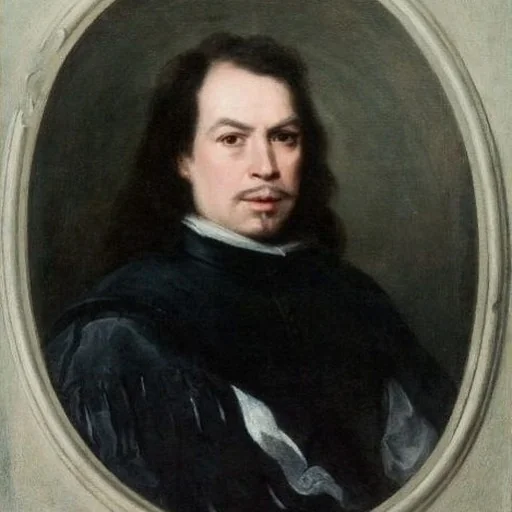
Bartolomé Esteban Murillo ( mure-IL-oh, m(y)uu-REE-oh, Spanish:; late December 1617, baptised 1 January 1618 – 3 April 1682) was a Spanish Baroque painter.