Artwork
Madonna and Child
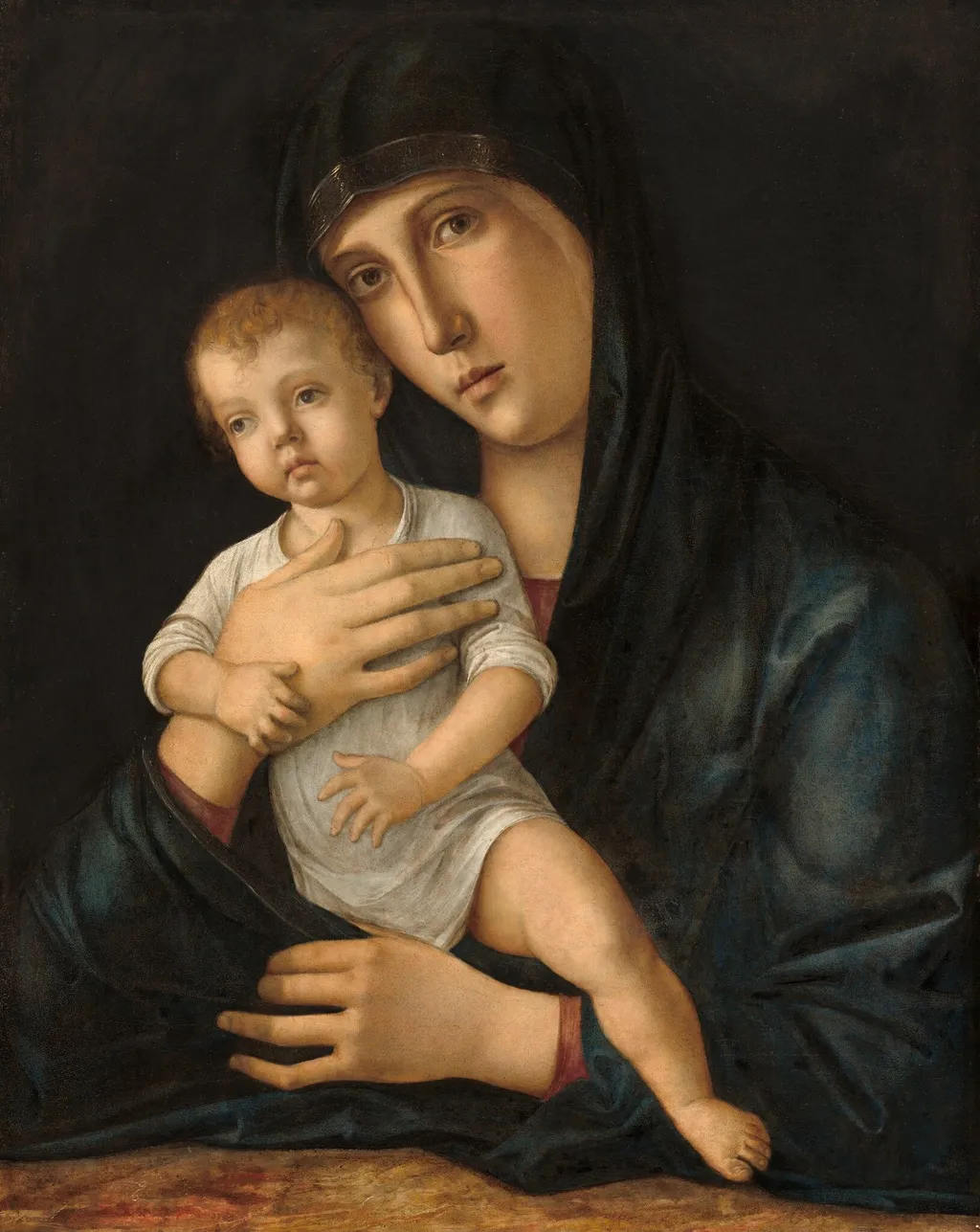
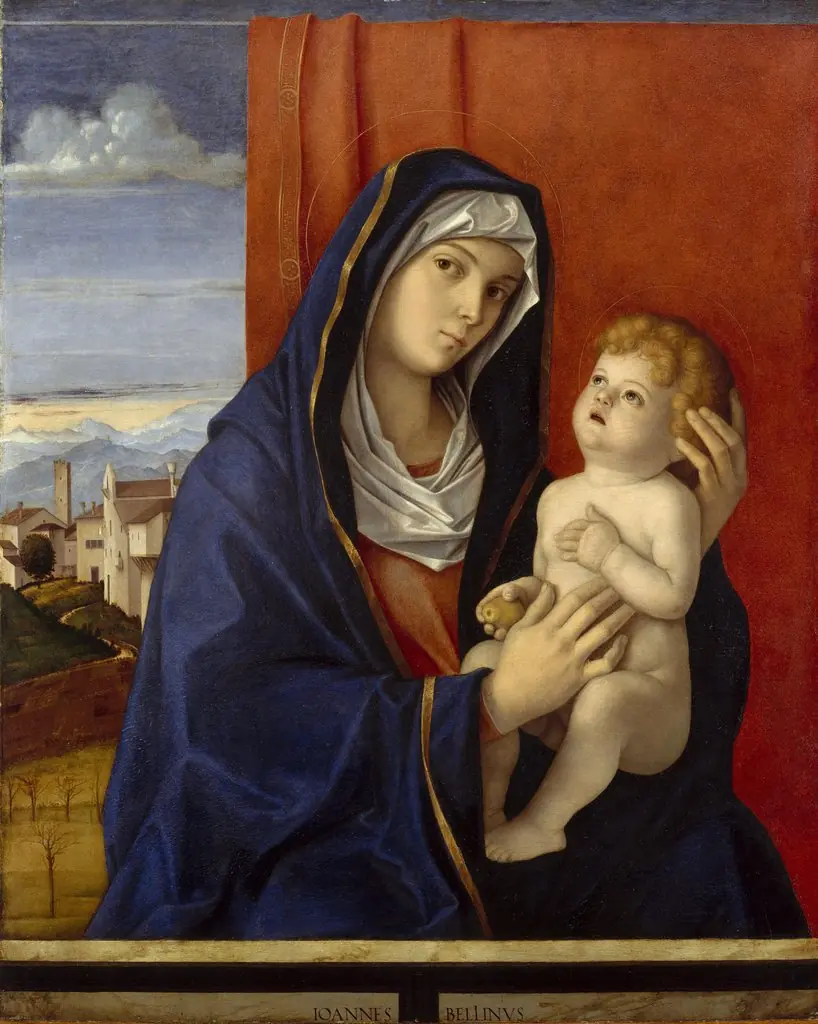
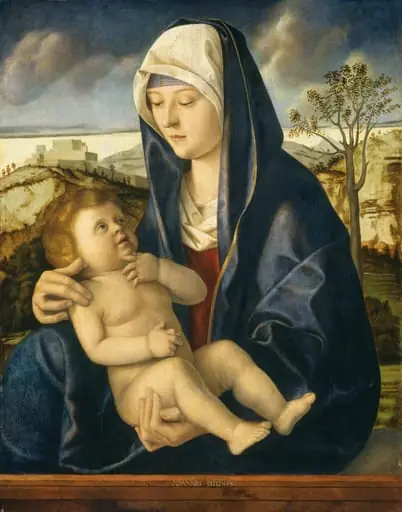
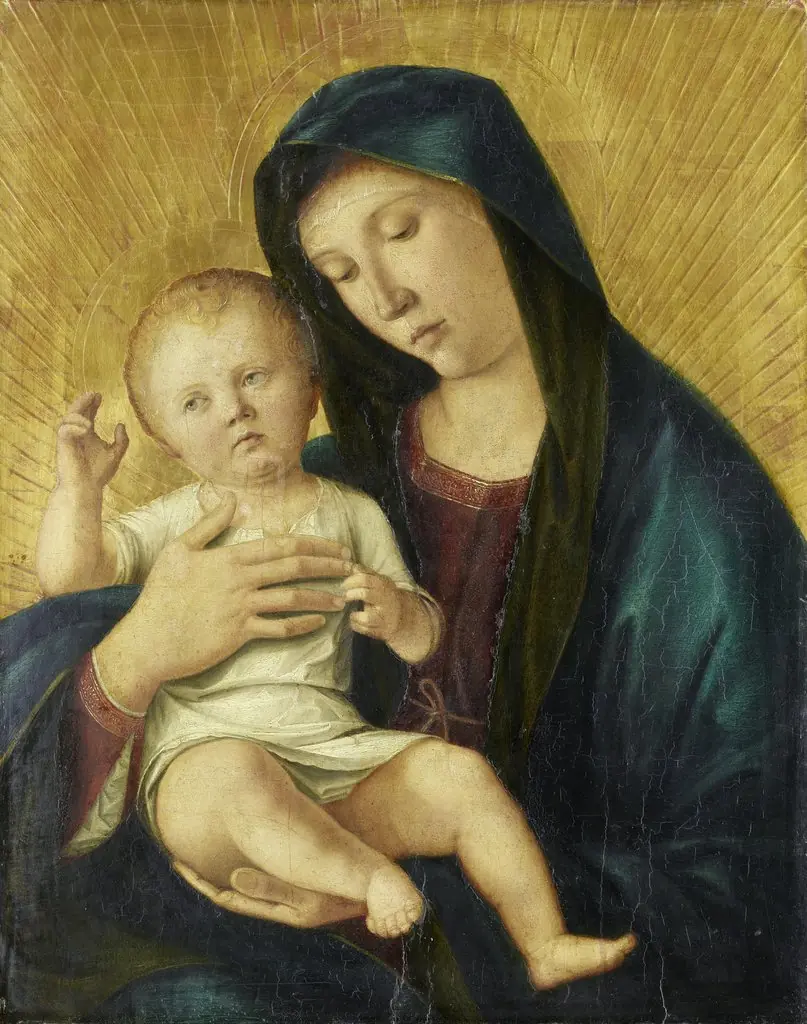
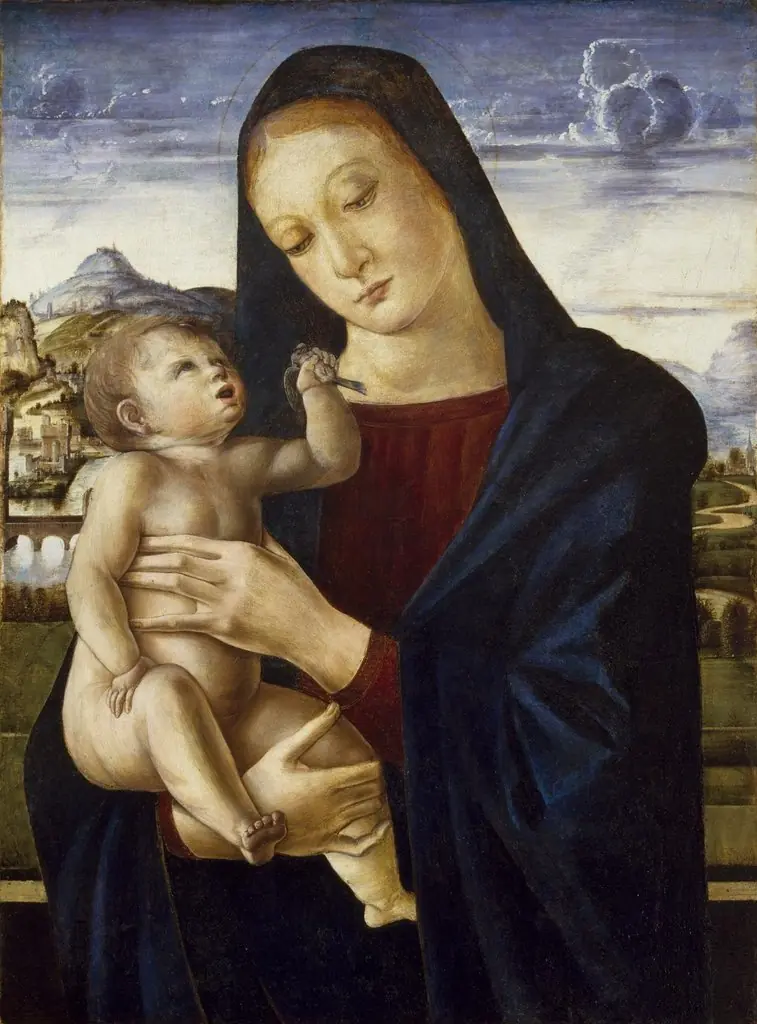
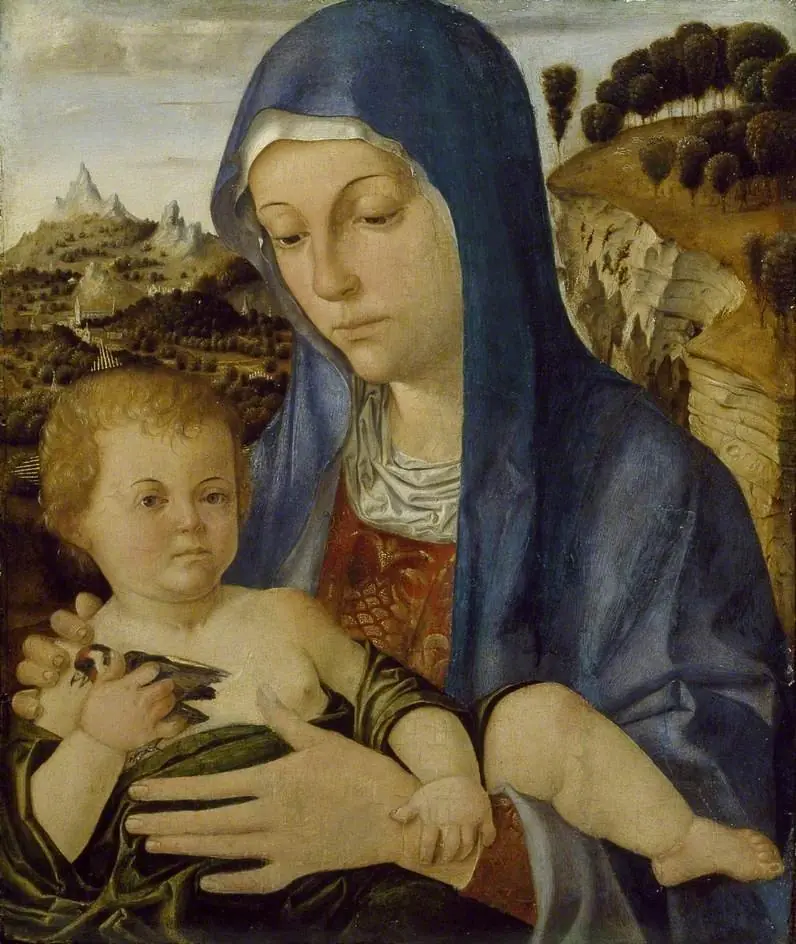
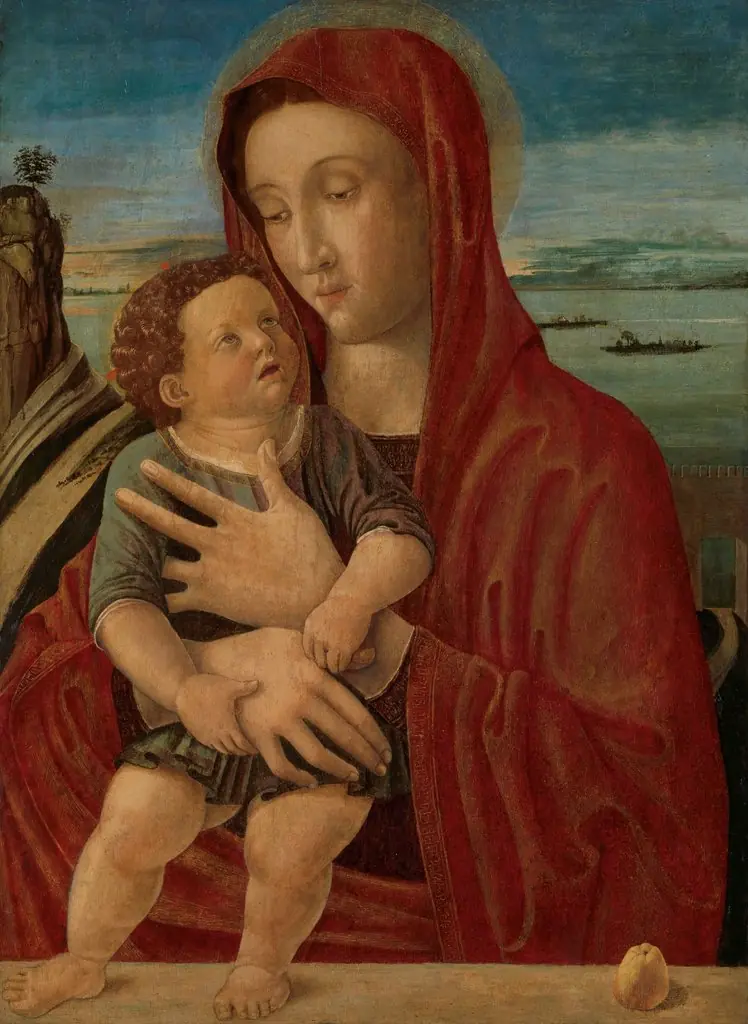
Madonna and Child is an oil painting by the High Renaissance artist Giovanni Bellini. It dates from 1482 and is held in the collection of the National Gallery of Art.
About this work
Subject & Meaning
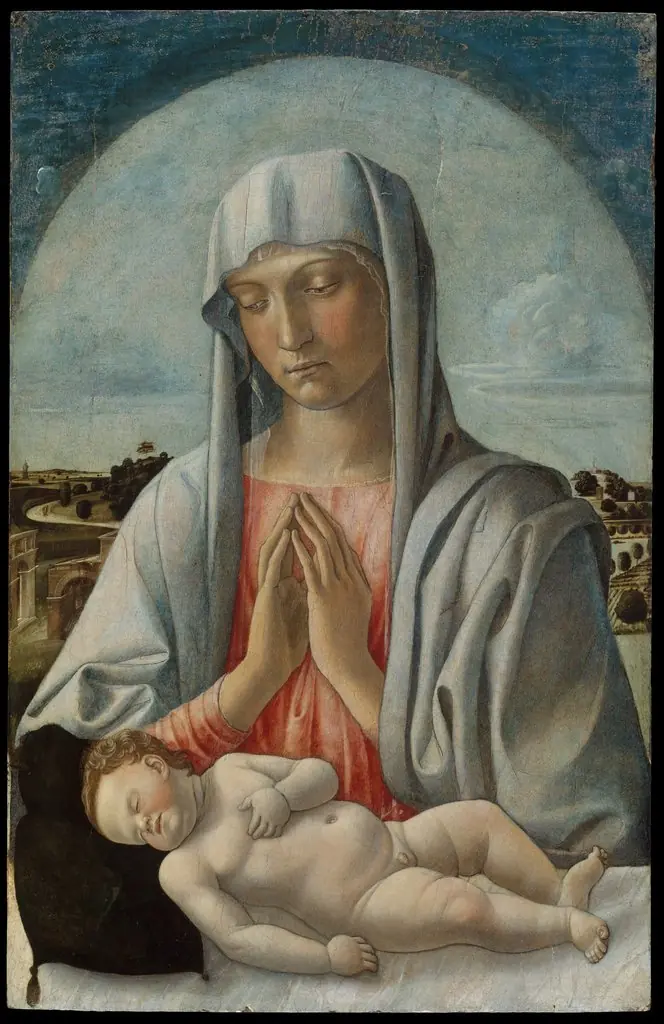
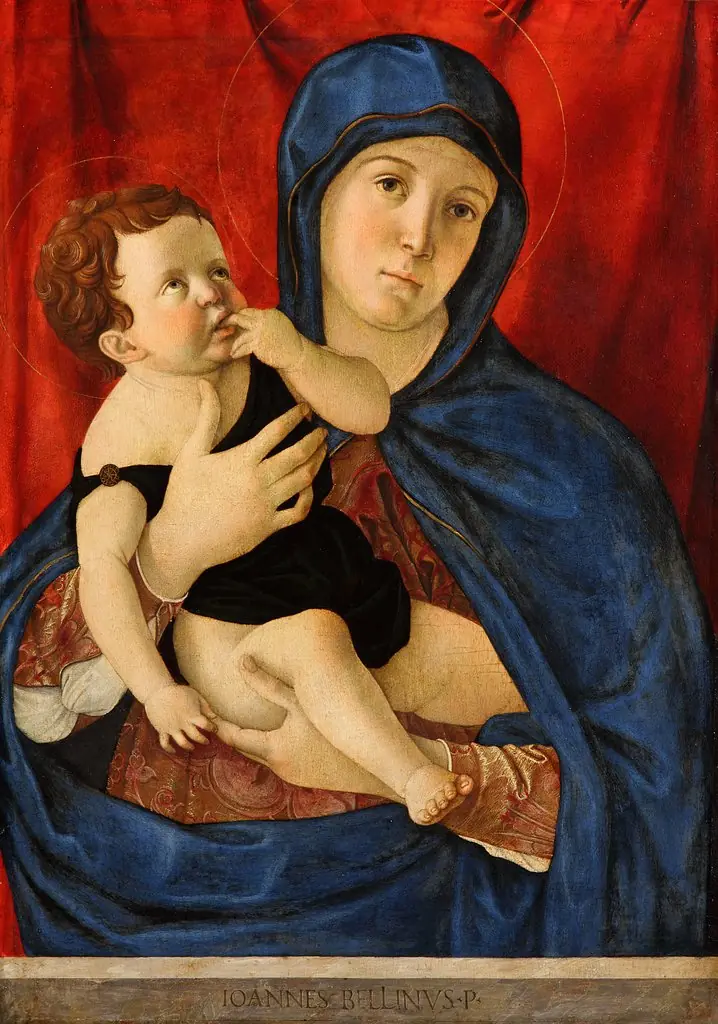
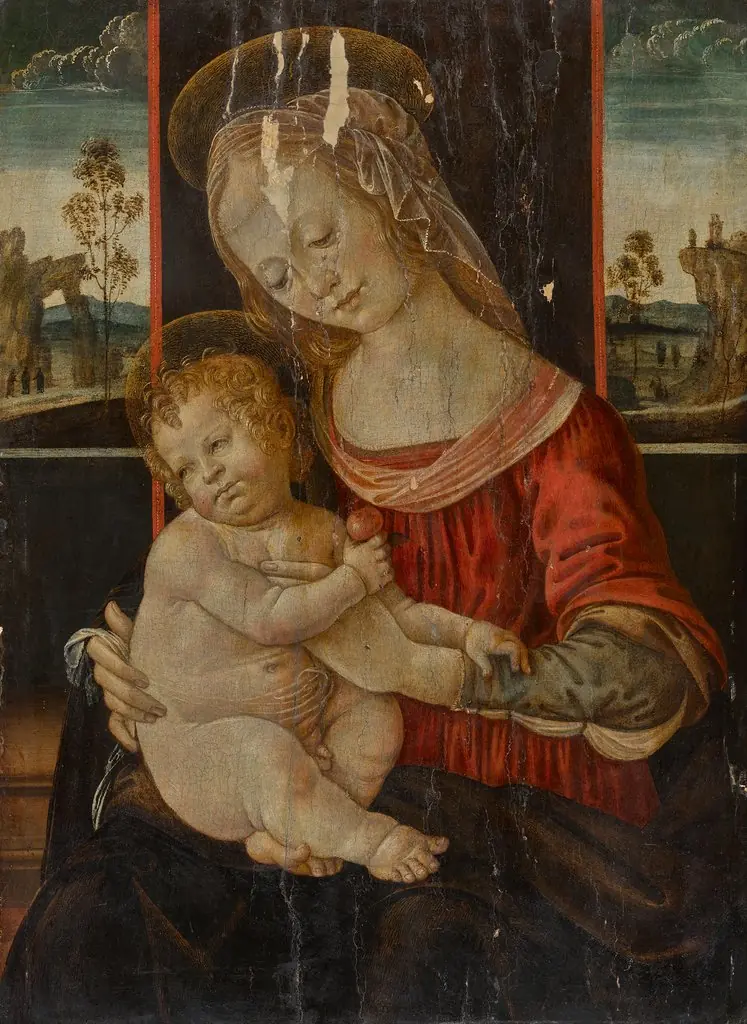
The painting depicts the Virgin Mary and the Christ Child, representing the central subject of the Madonna and Child in Christian religious art.
The painting depicts the Virgin Mary and the Christ Child, representing the central subject of the Madonna and Child in Christian religious art. Created by Giovanni Bellini around 1480, the work falls within the genre of religious art, focusing on the intimate relationship between the mother and her divine son. The composition highlights the figures of Mary and the infant Jesus as the main subjects, emphasizing their spiritual significance.
While the specific iconographic details such as gestures or attributes are not elaborated in the provided sources, the depiction itself serves as a representation of maternal devotion and the incarnation of Christ, common themes in Renaissance religious paintings. The work's classification as a religious painting underscores its purpose as an object of veneration and contemplation within the context of 15th-century Italian art.
Technique & Style
Giovanni Bellini's Madonna and Child of 1480 is executed in oil on panel, a technique characteristic of his mature practice in late fifteenth-century Venice. The support is a wooden panel, consistent with the small-scale devotional format indicated by the modest dimensions of 52.3 by 41.5 centimeters. The work belongs to the religious genre and depicts the Virgin Mary with the Christ Child, rendered in the refined devotional mode associated with Bellini's late career.
The painting is held in the Samuel H. Kress Collection at the National Gallery of Art in Washington, D.C., where it has been preserved since its 1939 gift. No specific condition issues or restoration history are documented in the available records.
History & Provenance
The Madonna and Child by Giovanni Bellini is dated to circa 1480 based on stylistic analysis and provenance records. It entered the collection of Conte Niccolò d’Attimis of Maniago in Spilimbergo, Friuli, before being purchased in 1916 by Duveen Brothers, who acted through an agent recorded as Olivotti. The painting was sent on approval to Carl W. Hamilton in New York by 1920 but returned in 1921.
In 1937, Duveen Brothers sold it to the Samuel H. Kress Foundation, which subsequently gifted the work to the National Gallery of Art, Washington, D.C., in 1939.
Giovanni Bellini's Madonna and Child is held in the permanent collection of the National Gallery of Art in Washington, D.C., where it is cataloged under the accession number 1939.1.352 within the Samuel H. Kress Collection. The painting entered the museum's holdings in 1939 as a gift from the Samuel H. Kress Foundation, following its acquisition by the foundation from Duveen Brothers in 1937. Prior to this, the work had a complex provenance involving the Maniago Collection in Friuli and a brief period on approval to New York collector Carl W. Hamilton between 1920 and 1921.
While the provided sources detail this extensive ownership history and current institutional location, they contain no specific information regarding past or future exhibitions of the work.
Context
Giovanni Bellini painted this oil panel in 1480 as a religious depiction of the Madonna and Child, exemplifying early Venetian sacra conversazione. The work entered the Niccolò d'Attimis collection, was sold through Duveen Brothers in 1937, and acquired by the Samuel H. Kress Foundation, becoming part of the National Gallery of Art’s holdings in 1939. Its inclusion in the Kress Collection Digital Archive underscores scholarly interest in Bellini’s devotional imagery and its role in the history of American museum collecting.
Overview
Giovanni Bellini's "Madonna and Child," an oil on panel painting created around 1482, presents a traditional religious subject. This work depicts the Virgin Mary tenderly holding the infant Jesus, reflecting a common devotional theme in Italian Renaissance art. The painting exemplifies Bellini's characteristic approach to sacred imagery, emphasizing a serene and intimate portrayal of the figures.

Own this work as a print
Artist & collection

Artist
Giovanni Bellini (Italian: ; Venetian: Zuane Belin; c. 1430 – 29 December 1516) was an Italian Renaissance painter, probably the best known of the Bellini family of Venetian painters. He was raised in the household of…