Artwork
Dream of Thiralatha [from "America," cancelled plate d]
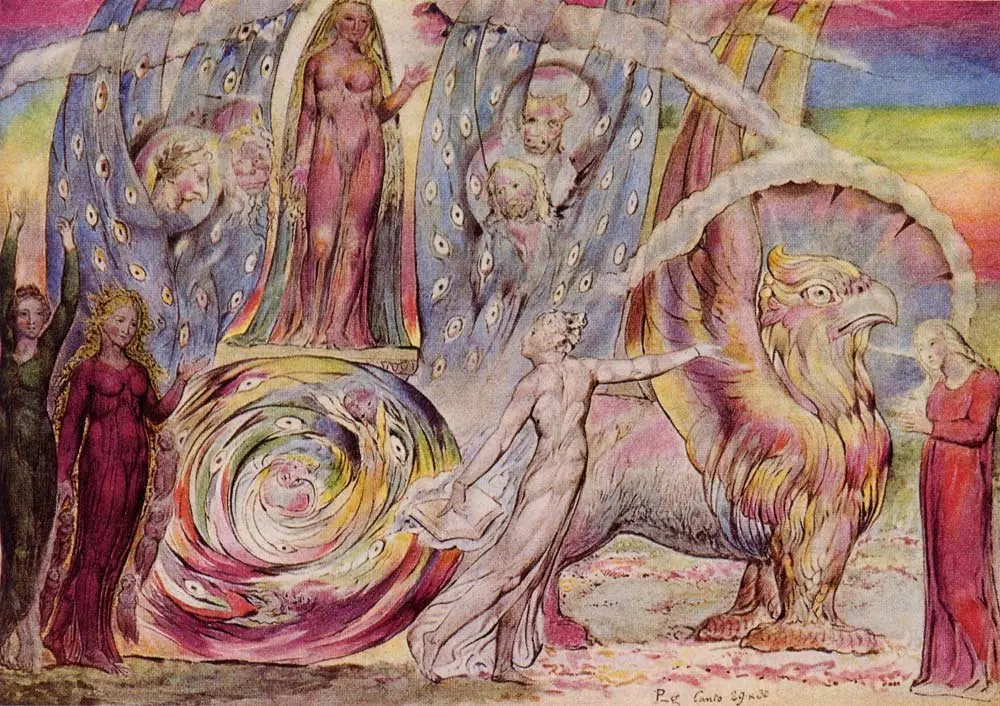
![Dream of Thiralatha [from "America," cancelled plate d], by William Blake, ink, 1795](https://artifactworldgallery.com/img/william-blake--dream-of-thiralatha-from-america-cancelled-plate-d--5757b22438efa26a-w1024.webp)
Dream of Thiralatha [from "America," cancelled plate d] is an ink print by the Romanticist artist William Blake. It dates from 1795 and is held in the collection of the National Gallery of Art. Created around 1795, Dream of Thiralatha is a relief etching that may have been finished with hand‑applied color.
About this work
Overview
Created around 1795, Dream of Thiralatha is a relief etching that may have been finished with hand‑applied color. The work belongs to William Blake’s series of visionary prints produced in London during the late eighteenth century, a period when he was experimenting with a personal symbolic language that combined image and text.
Subject & Meaning
The composition shows a kneeling woman in a dark robe, her hair flowing, her expression one of grief. Behind her a sweeping, curved form dominates the sky, from which a vague figure extends a hand toward the woman. The muted palette and the stark gesture convey a sense of sorrow and an ambiguous, perhaps supernatural, encounter.
Technique & Style
Blake employed a relief etching process, carving the design on a copper plate and printing it in ink. The printed outlines are likely supplemented by hand‑coloring, a method he used to enhance tonal variation. The image merges figurative detail with an ethereal background, reflecting Blake’s departure from the neoclassical norms of his time toward a more personal, visionary aesthetic.
History & Provenance
The print was produced in Blake’s London workshop and remained relatively obscure during his lifetime, as his work was not widely circulated. It later entered collections of Romantic art, where it has been studied as part of Blake’s broader prophetic series, illustrating his early forays into combining poetic imagination with visual invention.
Context
Dream of Thiralatha emerges from the cultural milieu of late‑eighteenth‑century England, a period marked by the rise of Romantic sensibilities that emphasized emotion, the supernatural, and individual vision. Blake’s approach anticipates later Romantic artists’ interest in mythic and dream‑like subjects, positioning the work within a transitional moment between Enlightenment rationality and Romantic imagination.
Own this work as a print
Artist & collection
Artist
William Blake (28 November 1757 – 12 August 1827) was an English poet, painter and printmaker.

- Joseph of Arimathea Preaching to the Britons
 The Third Temptation
 The Man Sweeping the Interpreter's Parlor
 Ezekiel's Wheels
 The Great Red Dragon and the Woman Clothed with the Sun
 The Circle of the Corrupt Officials; the Devils Tormenting Ciampolo
 Satan and Death with Sin Intervening
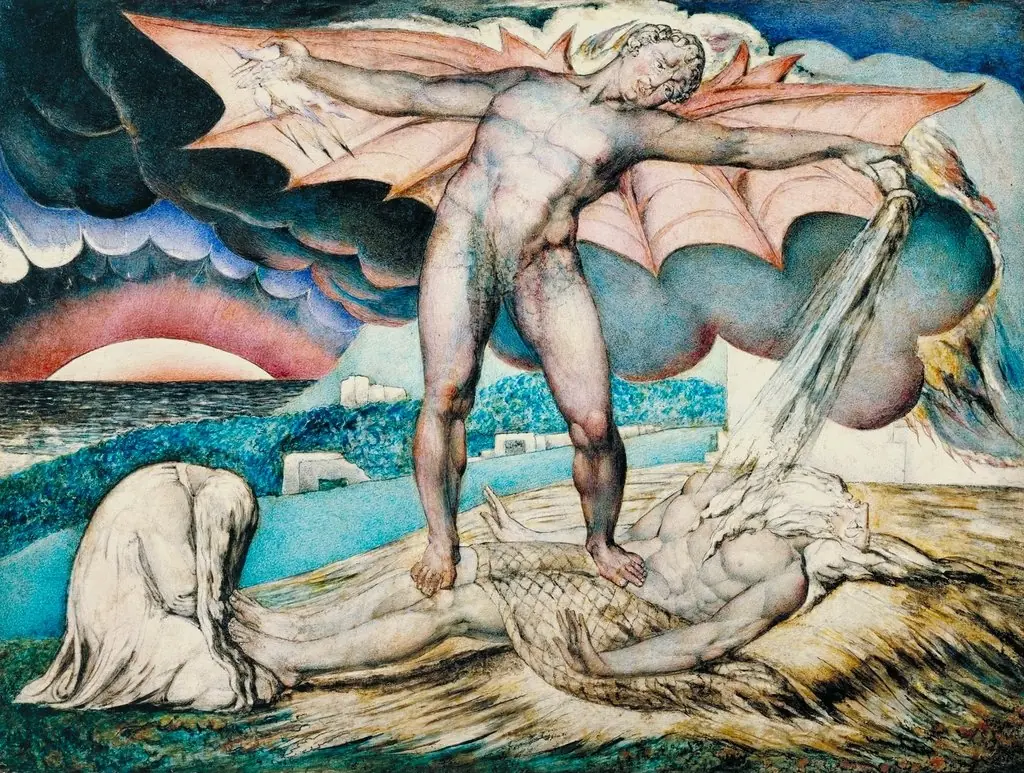 Satan Smiting Job with Sore Boils
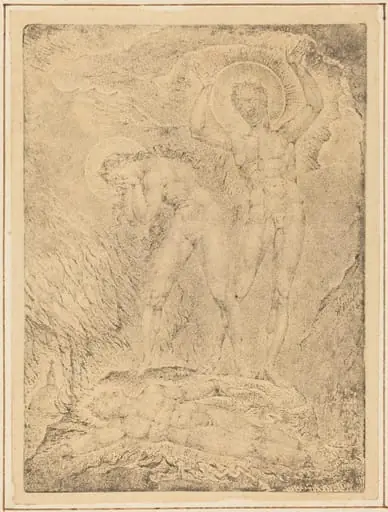 The Chaining of Orc
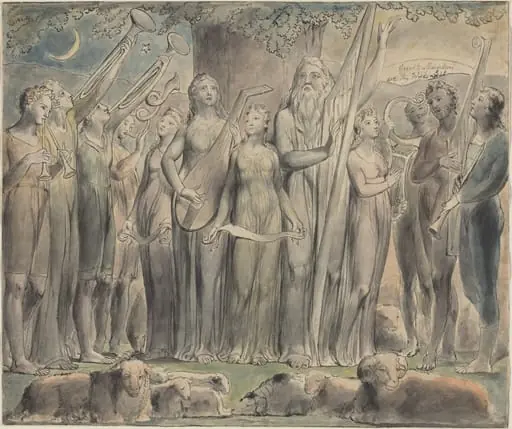 Job and His Family Restored to Prosperity
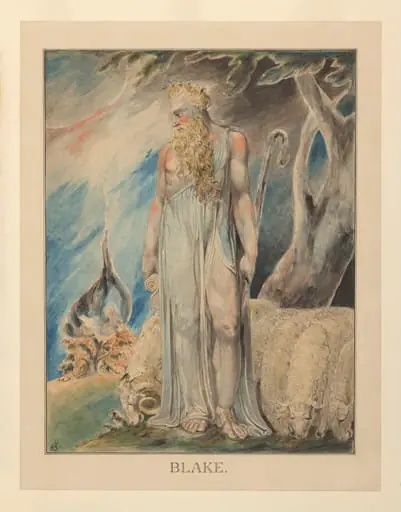 Moses and the Burning Bush
 Beatrice Addressing Dante from the Car