Artwork
The Finding of Moses
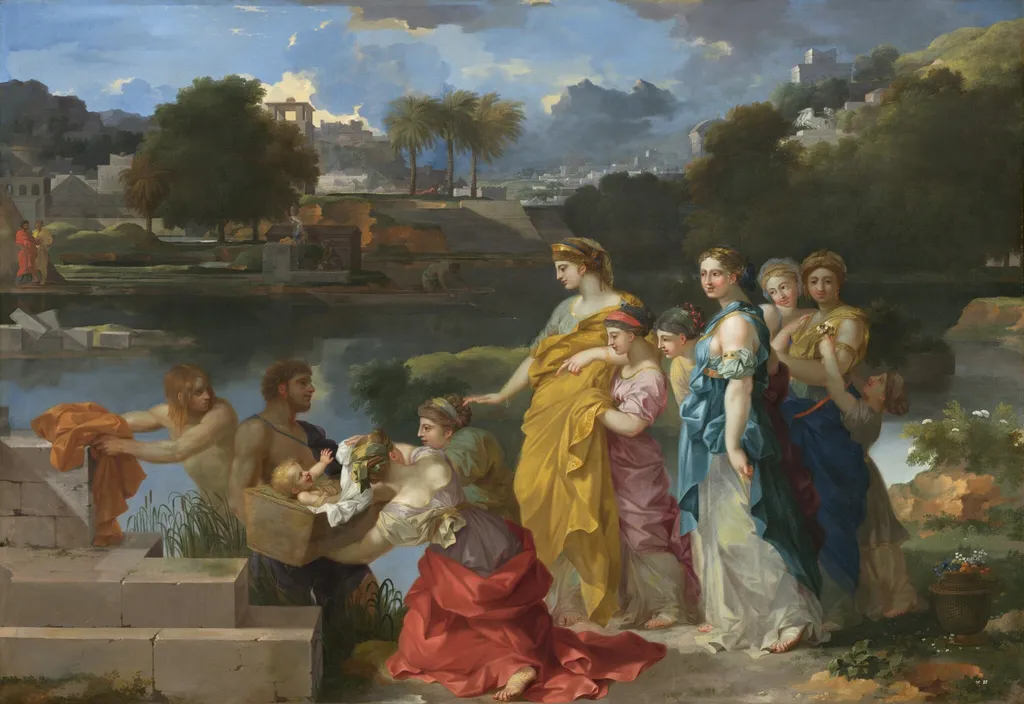
The Finding of Moses is an oil painting by the Baroque artist Sébastien Bourdon. It dates from 1658 and is held in the collection of the National Gallery of Art.
About this work
Subject & Meaning
The work's main subject is identified as the Finding of Moses, a popular religious narrative drawn from the Book of Exodus.
The painting depicts the biblical episode known as the Finding of Moses, in which the infant Hebrew child rescued from the Nile is discovered by Pharaoh's daughter and her attendants. The work's main subject is identified as the Finding of Moses, a popular religious narrative drawn from the Book of Exodus. As a religious painting, the composition treats the moment of discovery as a scene of courtly encounter on the riverbank, where the rescued child becomes the focal point of the gathered figures.
The 1713 sale catalogue for Adriaen Paets II describes the picture as illustrating "the Finding of Moses in the Nile," confirming the iconographic identification of the subject as the river rescue scene rather than any other episode from the Moses cycle.
Technique & Style
The work is executed in oil paint on a canvas support. According to the catalogue entry, it measures approximately 119.6 cm in height and 172.8 cm in width (about 3 ft 9 in by 5 ft 4 in). The medium and support are typical of mid‑seventeenth‑century French religious painting, and the piece is described as “very excellent” in its depiction of the Finding of Moses.
History & Provenance
Sébastien Bourdon's The Finding of Moses is dated 1650 and executed in oil on canvas. Its early provenance can be traced tentatively to Adriaen Paets II of Rotterdam, whose 1713 sale catalogue listed a painting by Bourdon of the Finding of Moses in the Nile at given dimensions matching the work. The painting later surfaced in the collection of François Antoine Robit in Paris, offered through Michael Bryan's Gallery in London in 1801–1802.
By 1937 the canvas was owned by Arthur L. Nicholson in London and Llandaff House, Surrey, remaining with him through at least 1939. The dealer Paul Drey in New York handled its next transfer, selling it in 1948 to the Samuel H. Kress Foundation. The Kress Foundation donated the painting in 1961 to the National Gallery of Art in Washington, D.C., where it remains in the Samuel H. Kress Collection.
The painting entered the National Gallery of Art in Washington, D.C., as part of the Samuel H. Kress Collection, received in 1961 as a gift from the Samuel H. Kress Foundation, which had acquired it in 1948 through the dealer Paul Drey in New York. Earlier in its documented history it was held by Arthur L. Nicholson of London and Llandaff House, Surrey, by 1937 and at least through 1939. It is also traced tentatively to François Antoine Robit in Paris, whose collection was exhibited and sold by private contract at Michael Bryan's Gallery in London beginning 6 November 1801 (exhibition closing 31 May 1802), as lot 44.
The earliest recorded owner is possibly Adriaen Paets II of Rotterdam, with the work appearing as lot 19 in his Rotterdam sale of 26 April 1713.
Overview
Sébastien Bourdon, a French painter and engraver, created The Finding of Moses around 1658. This oil on canvas painting exemplifies the French Classical Baroque movement. The artwork depicts a significant religious narrative, illustrating the moment the infant Moses was discovered, a pivotal event from the Old Testament. The composition features a serene landscape and a group of figures gathered around the child.
Context
Sébastien Bourdon was a prominent figure in 17th-century French art, known for his versatility across various genres. His work often combined elements of classical restraint with baroque dynamism, as seen in this piece. Beyond The Finding of Moses, Bourdon received significant commissions, including The Crucifixion of St. Peter for Notre Dame Cathedral, solidifying his reputation as an important painter of religious and historical subjects.
Own this work as a print
Artist & collection
Artist
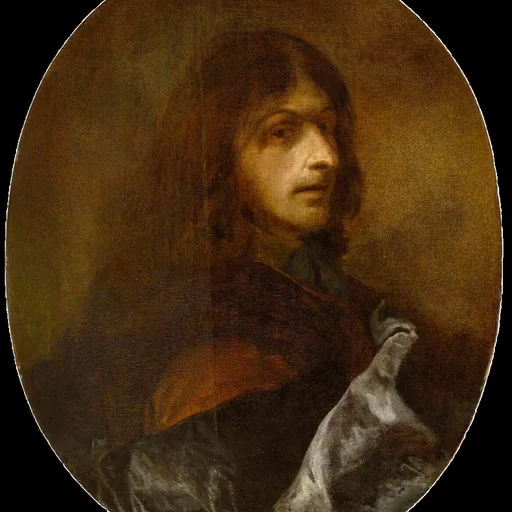
Sébastien Bourdon (French pronunciation:; 2 February 1616 – 8 May 1671) was a French painter and engraver. His chef d'œuvre is The Crucifixion of St. Peter made for the cathedral of Notre Dame.

 Die Befreiung der Andromeda
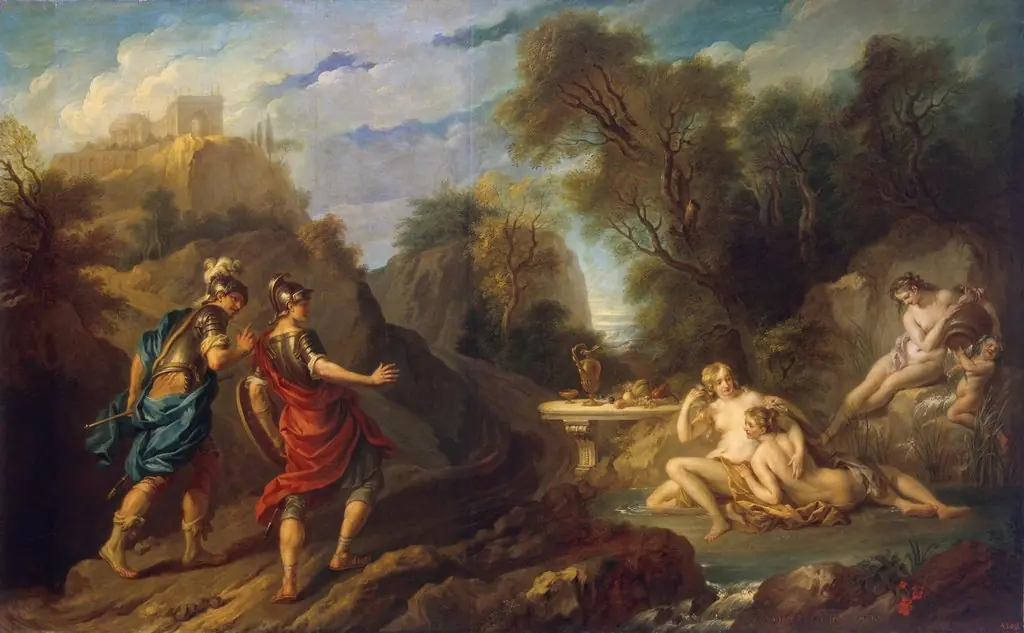 Messengers of Godfrey of Bouillon in Gardens of Armida
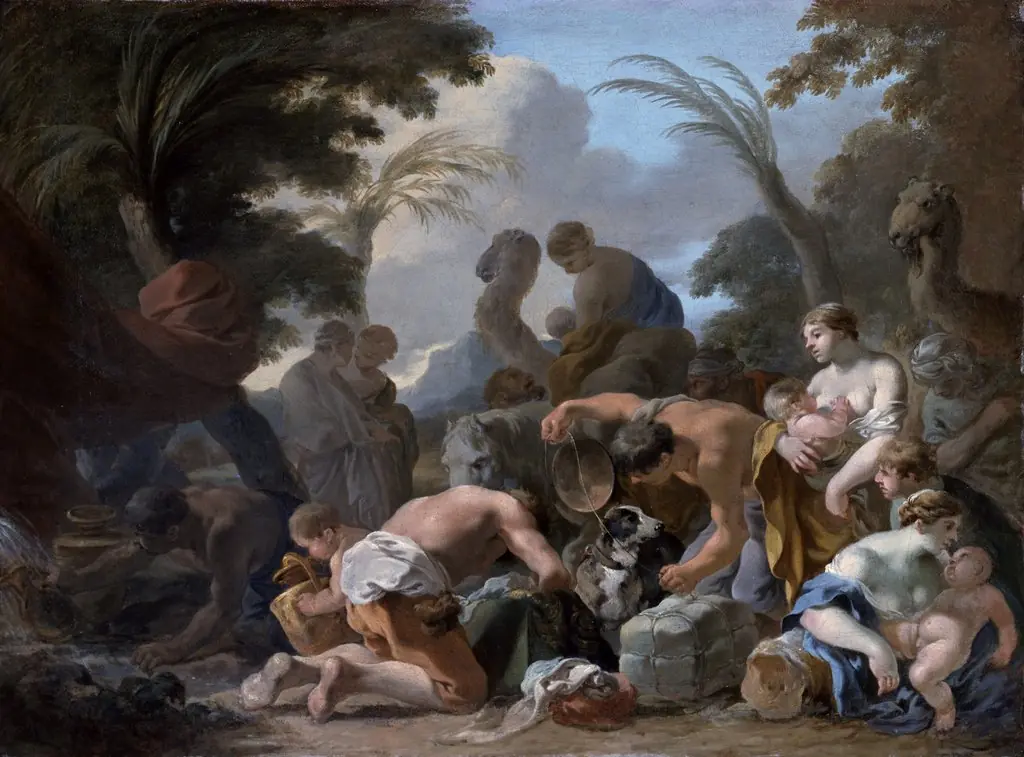 Laban Searching the Belongings of Jacob
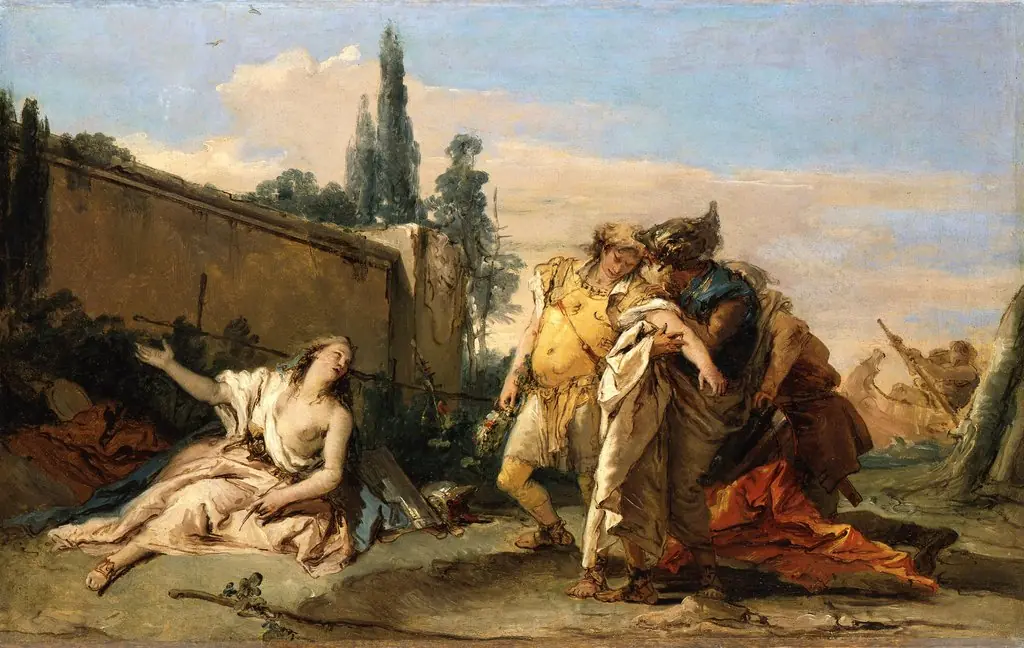 Rinaldos farewell from Armida
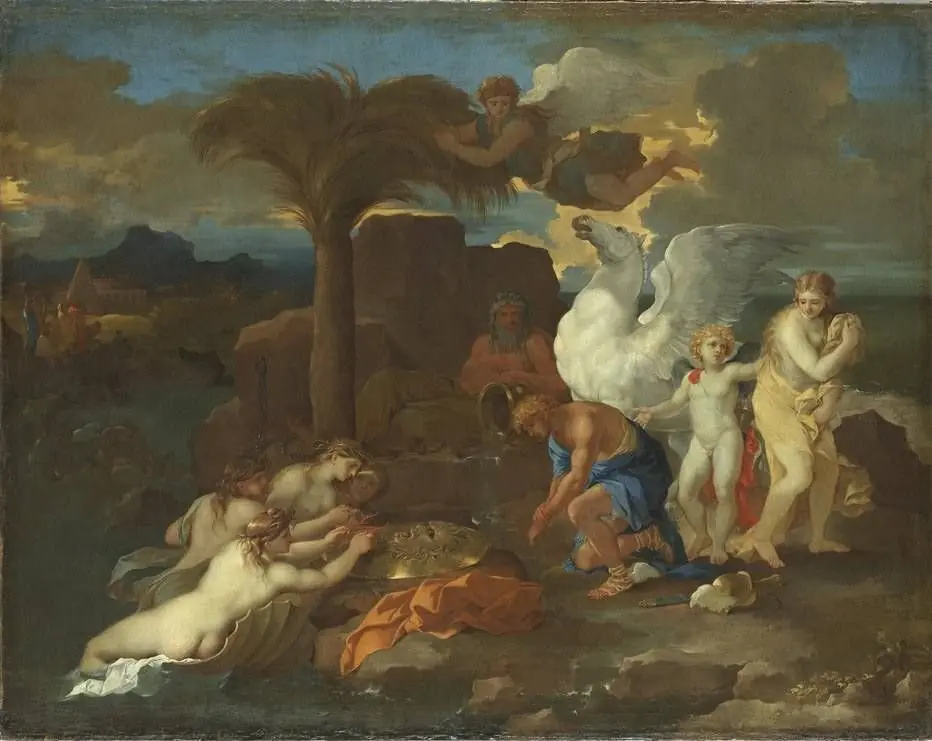
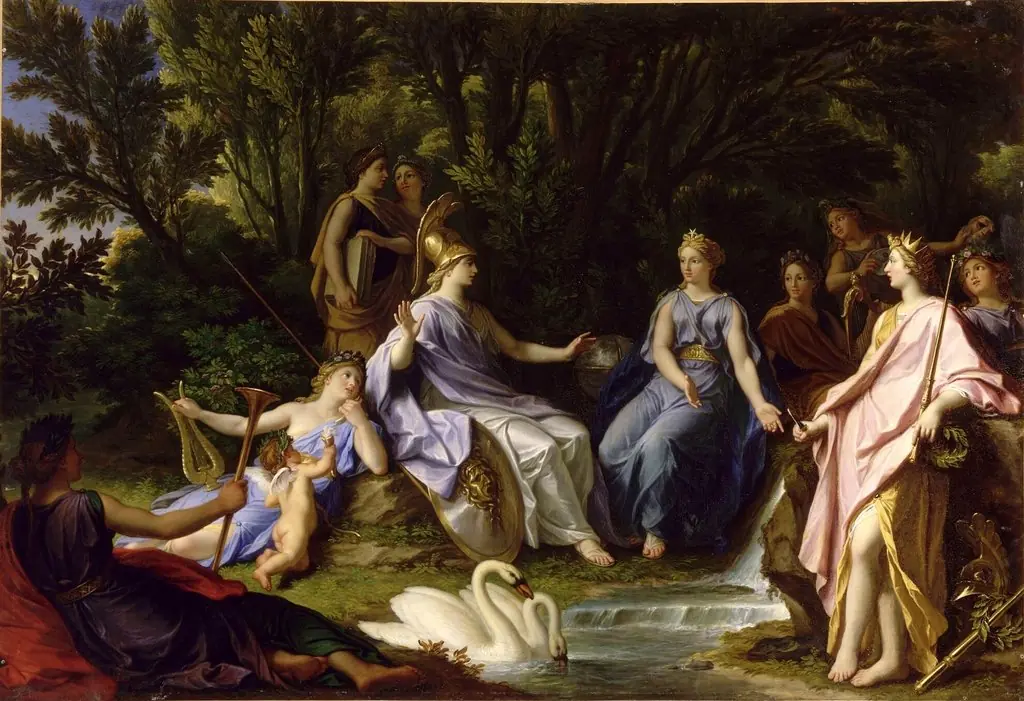 Story of Minerva - The Muses Showing Minerva Hippocrene Waters of the River that Brings Out Pegasus
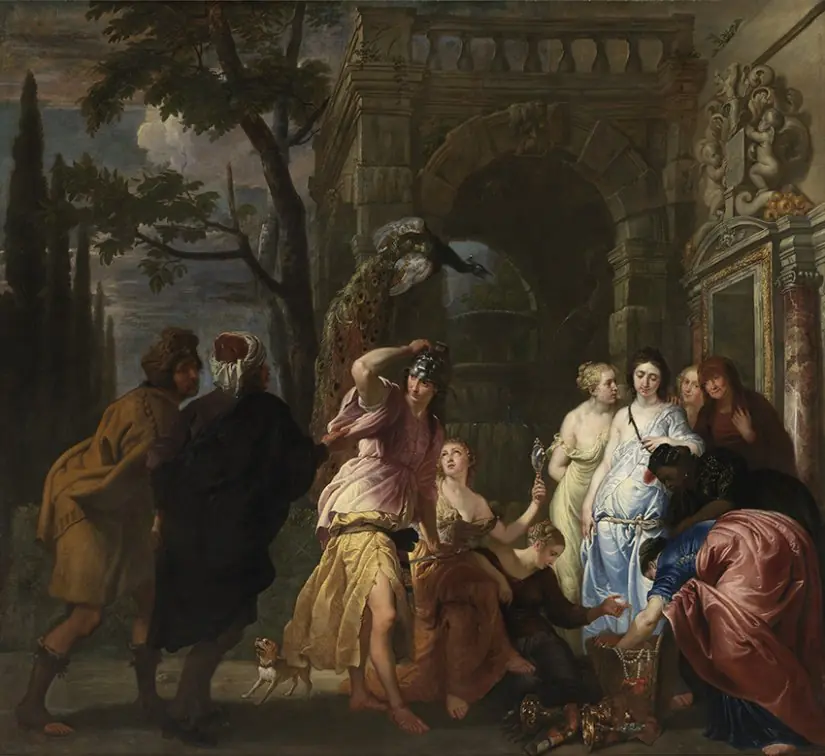 Achilles among the Daughters of Lycomedes
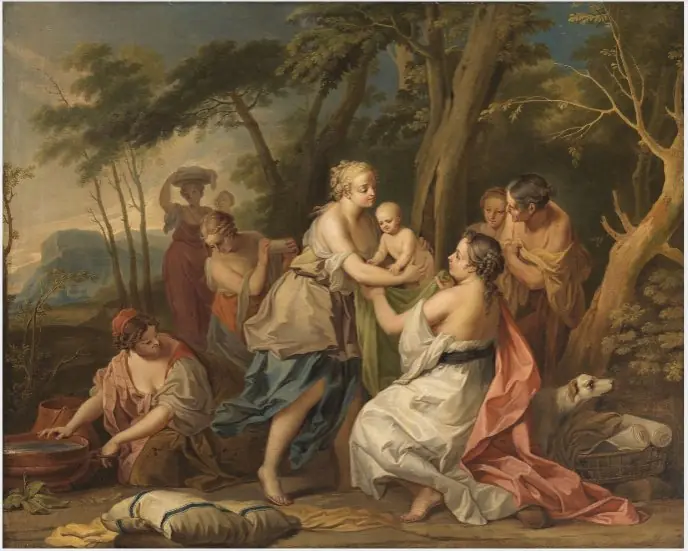 The Birth of Adonis
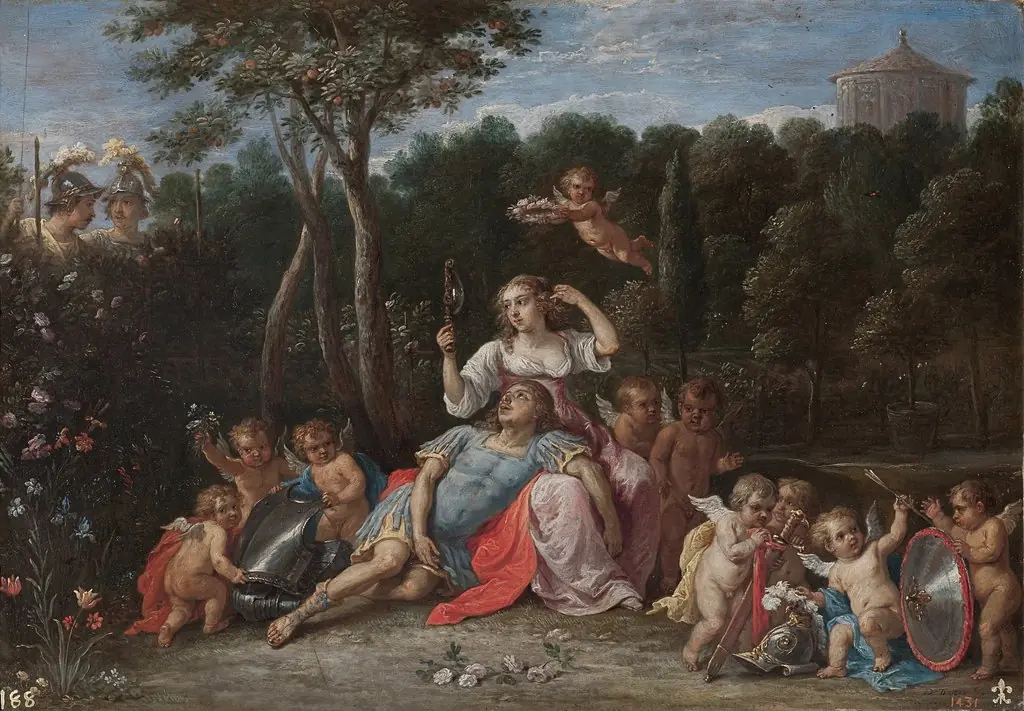 El jardín de Armida
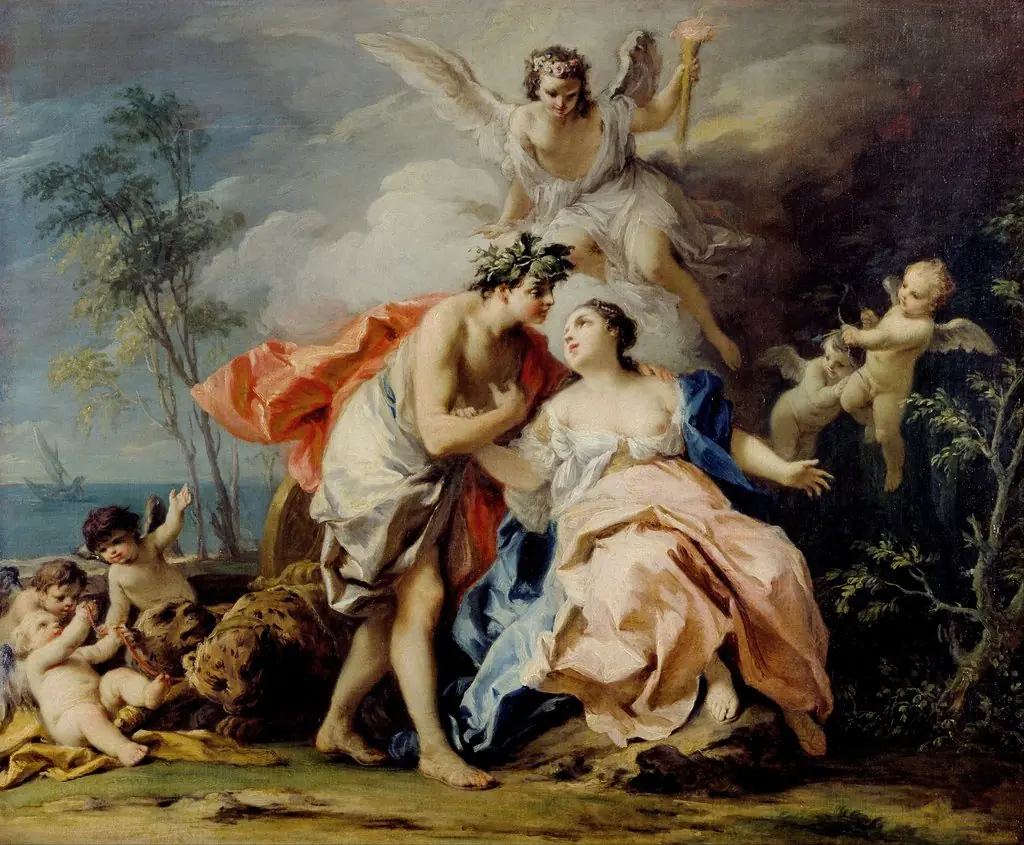 Bacchus and Ariadne