Artwork
Lime Kilns near Cardigan
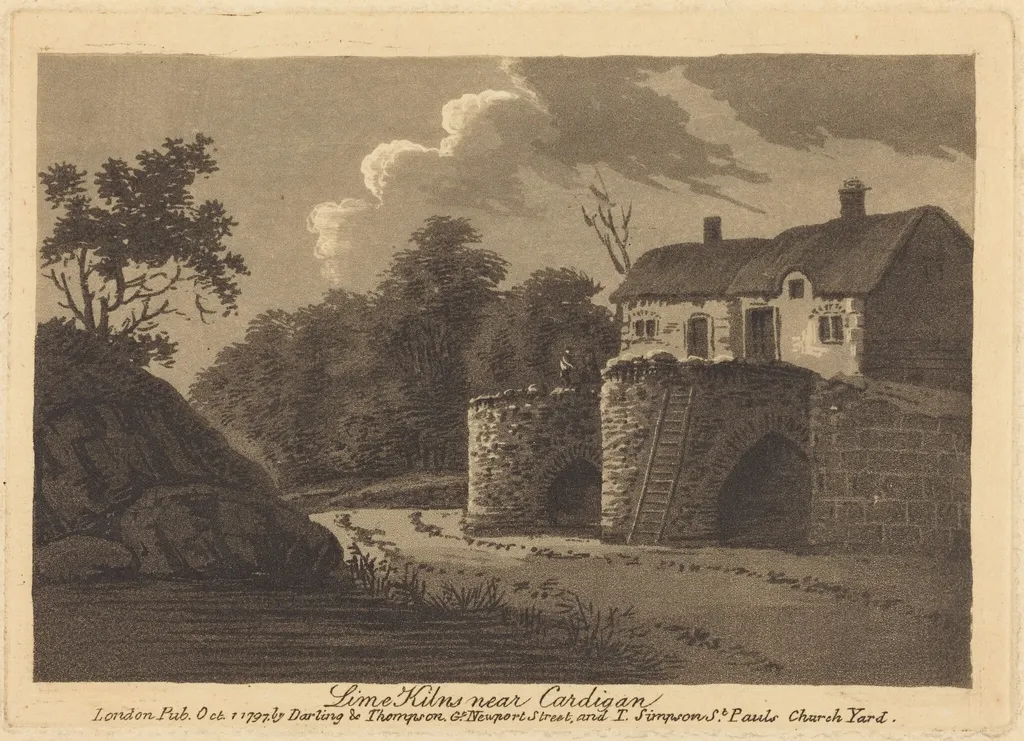
Lime Kilns near Cardigan is an ink print by the Romanticist artist British 18th Century. It is held in the collection of the National Gallery of Art.
About this work
Overview
The work captures a quiet, working countryside, emphasizing industrial activity integrated into natural surroundings without grandeur or disruption.
This aquatint print depicts a rural landscape near Cardigan, Wales, centered on a stone lime kiln and a modest thatched cottage perched on a hill. Smoke drifts from the kiln into a soft, overcast sky, while trees frame the composition. A solitary figure on the roof provides subtle scale.
The work captures a quiet, working countryside, emphasizing industrial activity integrated into natural surroundings without grandeur or disruption.
Subject & Meaning
The scene illustrates the practical labor of lime production, essential for mortar and plaster in regional construction. The kiln, a functional structure, stands beside a domestic dwelling, suggesting the interdependence of industry and rural life. The lone figure implies human presence without narrative, reinforcing the quiet dignity of everyday work in the Welsh countryside during the early 19th century.
Technique & Style
Aquatint was used to achieve subtle tonal gradations, mimicking the hazy atmosphere of the scene. Acid-treated resin particles on the plate created soft, granular textures, allowing the artist to render smoke, cloud cover, and shadow with delicate transitions. The technique avoids sharp lines, favoring a muted, atmospheric quality that enhances the sense of stillness and solitude in the landscape.
History & Provenance
The print originates from a series documenting industrial and rural sites in Wales during the early 1800s, a period of expanding quarrying and building activity. While the artist remains unconfirmed, the work aligns with regional topographical prints produced for local patrons and antiquarians interested in documenting vernacular architecture and economic practices of the time.
Context
Lime kilns were common in Wales due to abundant limestone deposits and the demand for building materials in expanding towns and farms. This print reflects a landscape shaped by local industry, where domestic life and economic labor coexisted. Unlike romanticized views of nature, it presents a grounded reality, industrial tools and structures as natural elements of the terrain.
Legacy
The print contributes to a modest but significant body of early 19th-century British topographical prints that recorded everyday rural industry. It preserves a visual record of a now-rare practice, offering insight into pre-industrial material production. Its quiet realism distinguishes it from more dramatic landscapes, making it a quiet testament to the rhythms of provincial life.
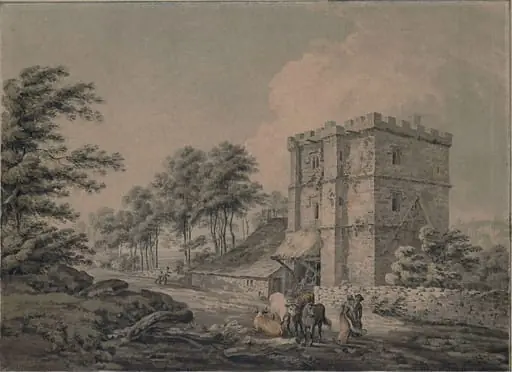
Artist & collection

Artist
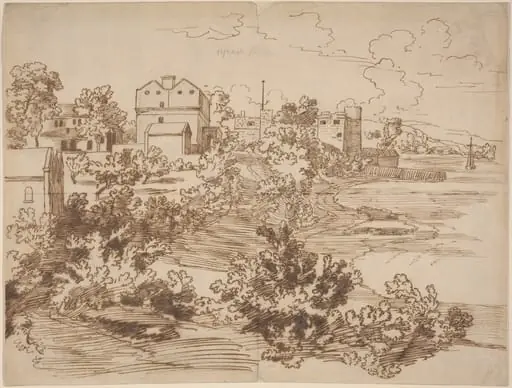
This artist left small, precise pictures from 18th-century Britain: buildings, faces, and landscapes etched or drawn in ink and chalk.



- Wetheral Priory, Cumberland, with figures and cattle
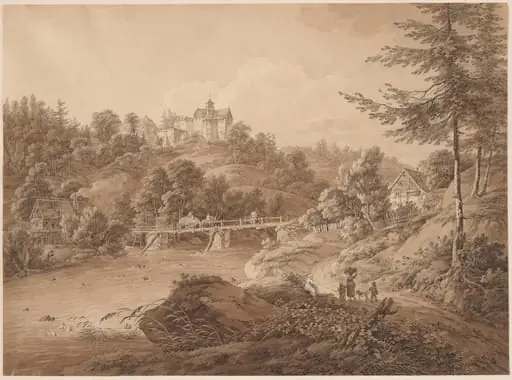 Rauenstein Castle Seen from the River's Edge
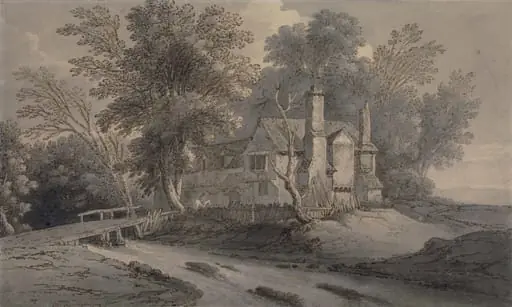 An Old Manor House
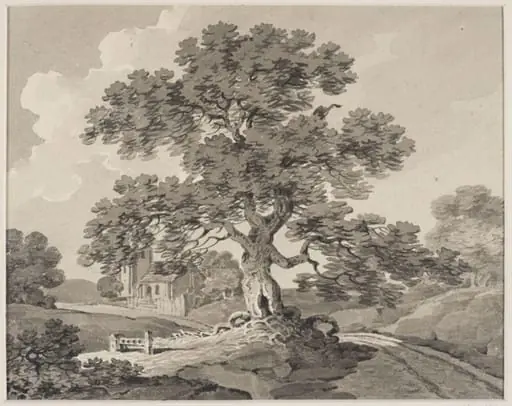 Landscape with church
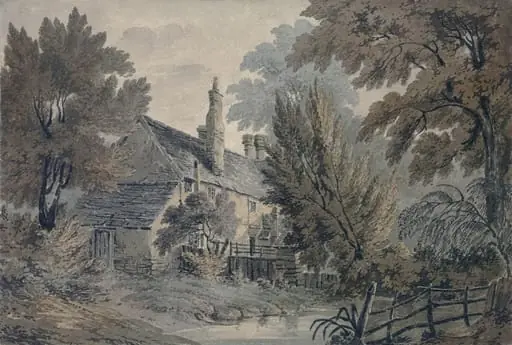 Landscape with House by a Pond
 Untitled
 Landscape with ecclesiastical ruins
 Mortham Tower, near Rokeby, Yorkshire.
 Landscape with cottage and waterwheel
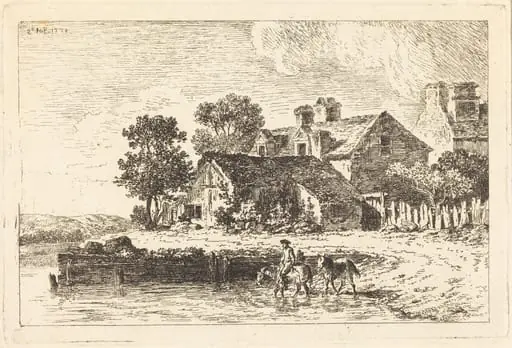 Horses Being Led to Water on a Winding Riverbank
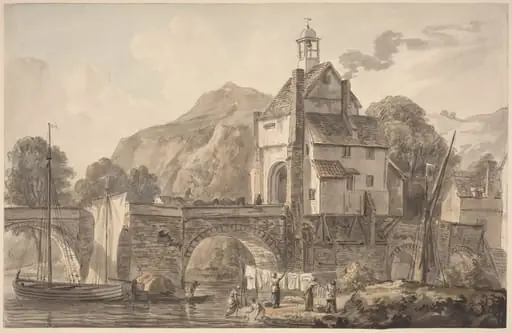 The Bridge at Bridgnorth in Shropshire
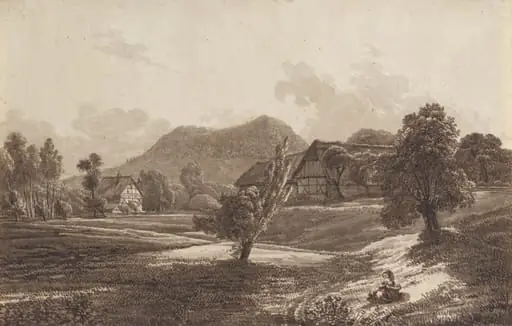 Lusatian Landscape with the Landeskrone Mountain