Artwork
The Crystal Palace
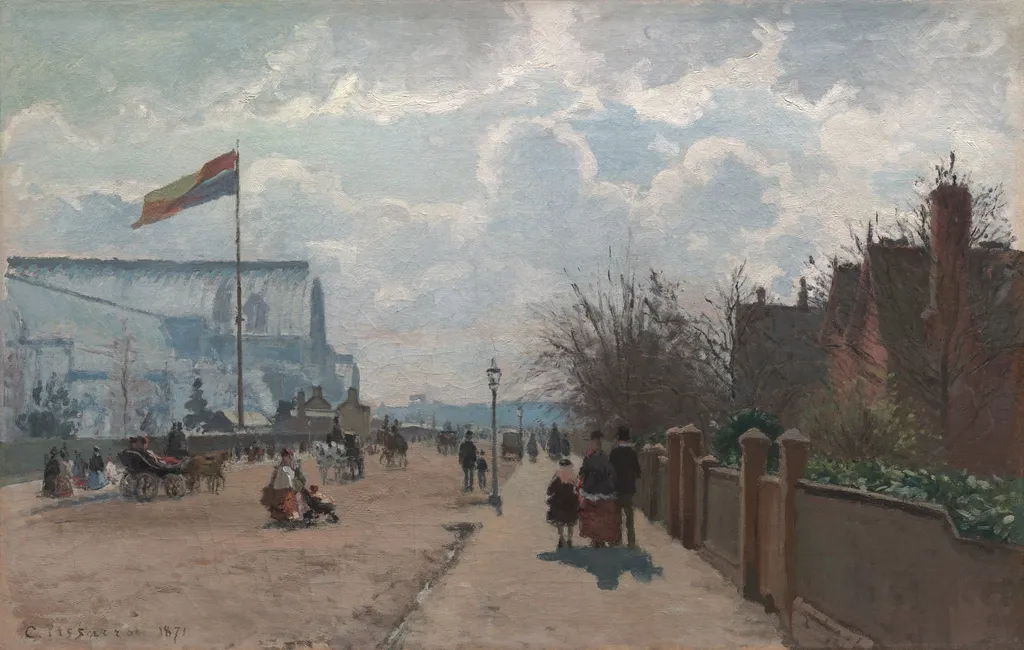
The Crystal Palace is an oil painting by the Impressionist artist Camille Pissarro. It dates from 1871 and is held in the collection of the Art Institute of Chicago.
- Accession no.
- 110541
- Credit line
- Gift of Mr. and Mrs. B. E. Bensinger
About this work
Overview
Painted in 1871, this oil on canvas by Camille Pissarro captures the Crystal Palace in Sydenham, London, during his exile from France. He and his family had fled the Franco-Prussian War and the Paris Commune, settling temporarily in Lower Norwood. The work reflects his observation of everyday life in a suburban landscape, framed by the presence of a recently relocated industrial landmark.
Subject & Meaning
Pissarro depicts the Crystal Palace not as a dominant monument but as one element within a quiet suburban scene. Families and horse-drawn carriages move along tree-lined roads beside newly built middle-class homes, suggesting the rhythms of ordinary life. The building’s scale is deliberately diminished, shifting focus from architectural spectacle to the social fabric of its surroundings.
Technique & Style
Light filters through the trees onto the glass and iron structure, rendered with muted tones rather than dramatic contrast.
Pissarro employs loose, observational brushwork typical of his early Impressionist approach. Light filters through the trees onto the glass and iron structure, rendered with muted tones rather than dramatic contrast. The composition balances architectural form with natural elements, emphasizing atmosphere and transient light over precise detail, aligning with his interest in modern life as lived experience.
History & Provenance
The Crystal Palace was originally constructed in Hyde Park for the 1851 Great Exhibition, then dismantled and rebuilt in Sydenham by 1854. Pissarro painted it during his stay in London (1870–71), shortly after its relocation. The structure stood until 1936, when it was destroyed by fire. This painting remains one of the few artistic records made during its Sydenham years.
Context
Pissarro’s time in London exposed him to English landscape painting and the urban expansion of Victorian suburbs. The Crystal Palace, a symbol of industrial progress, was both admired and scrutinized. By placing it alongside domestic life, Pissarro subtly questioned the relationship between modernity and the private sphere, a theme central to his broader artistic project.
Legacy
The painting contributes to a small but significant body of work documenting the Crystal Palace in its Sydenham phase. It reflects Pissarro’s consistent focus on ordinary scenes and his refusal to glorify technological marvels. As a record of a lost structure and a moment of exile, it holds historical and artistic value beyond its aesthetic qualities.
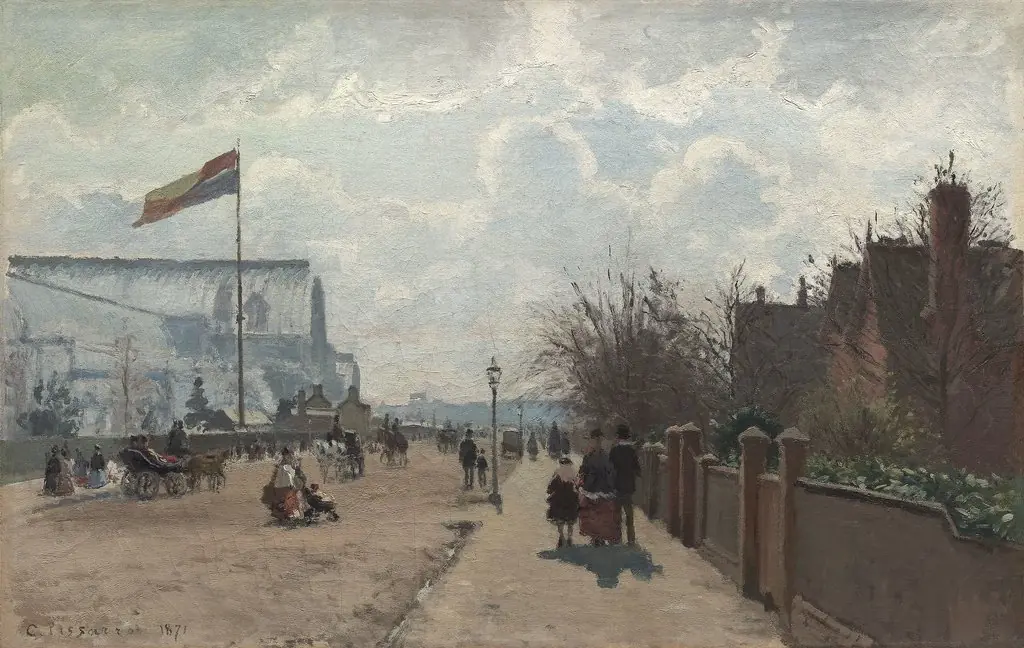
Own this work as a print
Artist & collection


 Dordecht
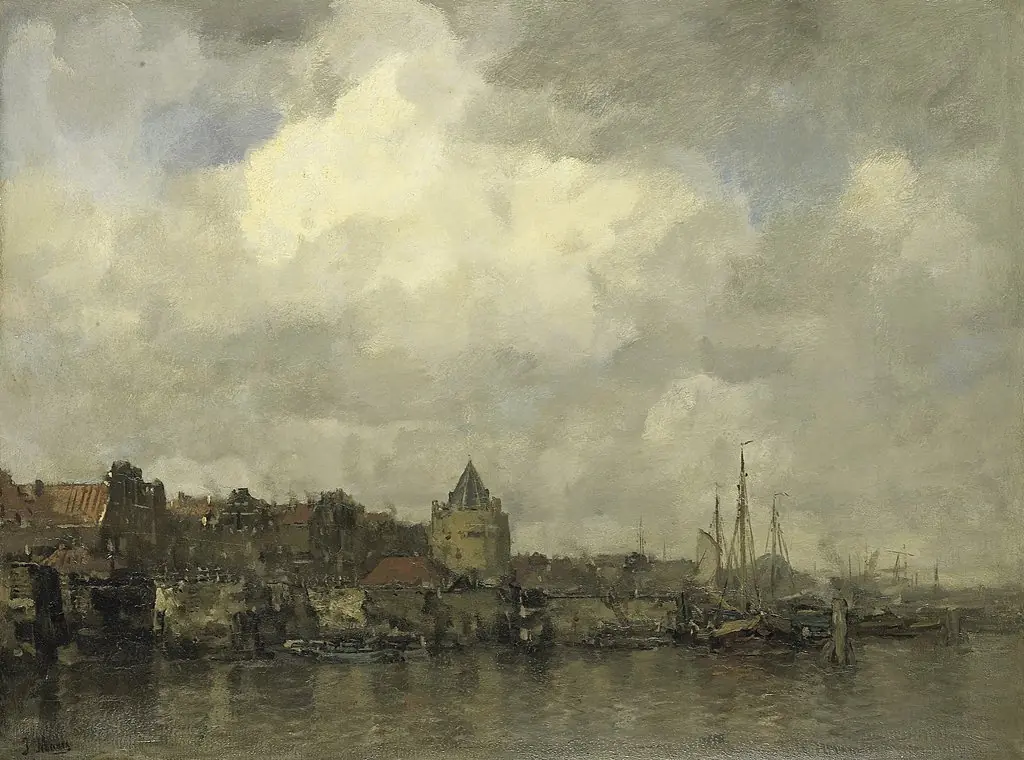 De Schreierstoren aan de Buitenkant te Amsterdam
 Deauville at Low Tide
 Townscape with a Domed Church
 De Schreierstoren met de brug over de Gelderse Kade te Amsterdam
 View of Nantes
 Näköala Havnegadelta
 A View of Temse
 Banks of the Seine
 Jetty and Wharf at Trouville
 Banks of the Seine
- The Crystal Palace