Artwork
Portrait of Constantijn Huygens (1596-1687), lord of Zuylichem, secretary of Frederik Hendrick, Willem II and Willem III, and poet
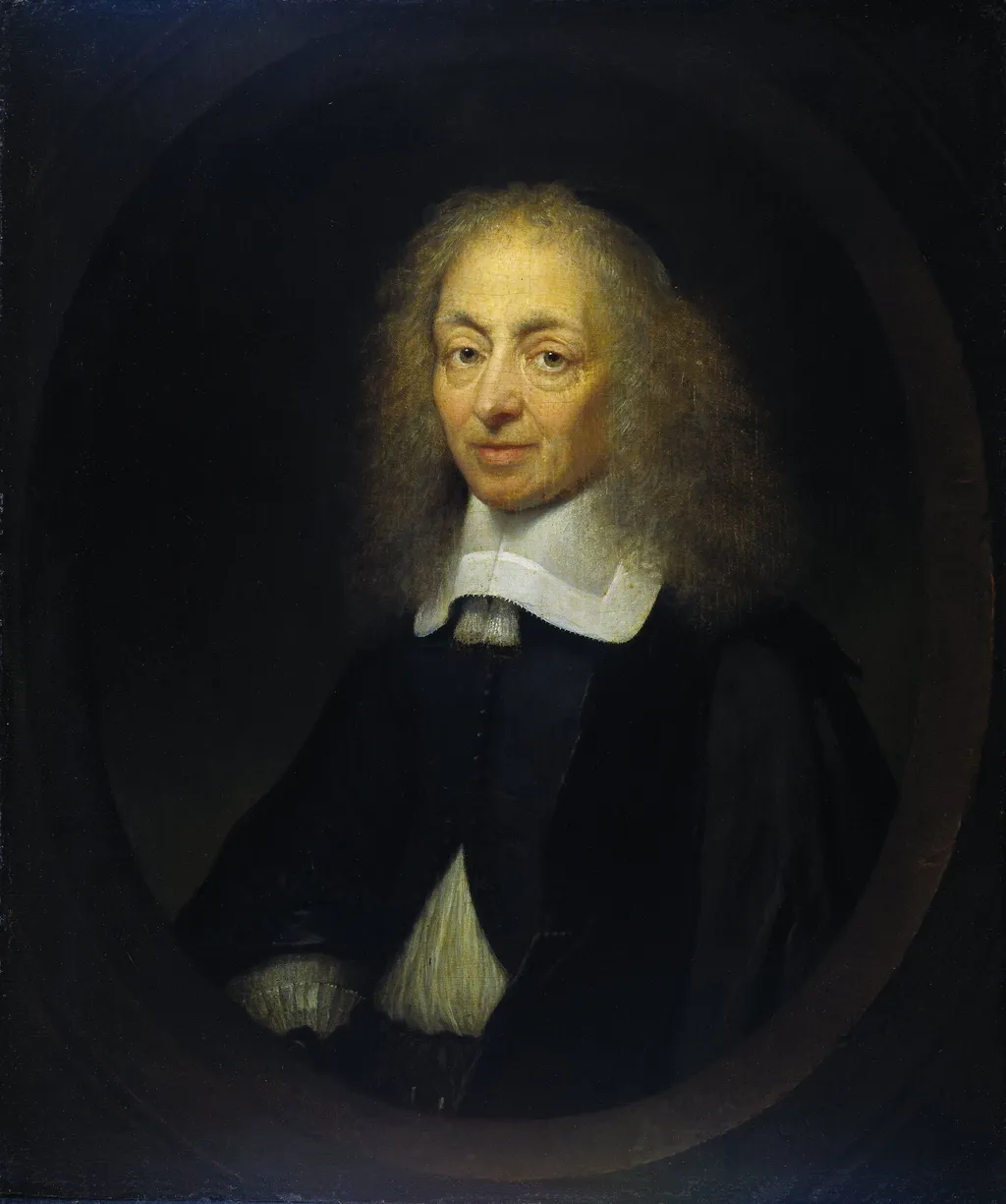
Portrait of Constantijn Huygens (1596-1687), lord of Zuylichem, secretary of Frederik Hendrick, Willem II and Willem III, and poet is an oil painting by the Dutch Golden Age artist Caspar Netscher. It dates from 1672 and is held in the collection of the Rijksmuseum.
About this work
Technique & Style
As a genre painting classified specifically as a portrait, the piece depicts Constantijn Huygens, the secretary to multiple Dutch stadtholders and a noted poet.
Created in 1672 by Caspar Netscher, this portrait is executed in oil paint on a panel support. The work measures 27 cm in height and 23 cm in width, adhering to the small-scale format often favored for intimate portraiture of the period. As a genre painting classified specifically as a portrait, the piece depicts Constantijn Huygens, the secretary to multiple Dutch stadtholders and a noted poet.
The medium of oil on panel was a standard choice for Dutch Golden Age artists, allowing for detailed rendering and durability. Currently held in the collection of the Rijksmuseum, the painting represents Netscher's approach to capturing the likeness and status of a prominent literary and political figure of the seventeenth century.
History & Provenance
The painting was commissioned and executed in 1672 by Caspar Netscher. It depicts Constantijn Huygens, lord of Zuylichem, who served as secretary to successive stadtholders Frederik Hendrick, Willem II, and Willem III.
The work entered the collection of the Rijksmuseum, where it remains today. According to the museum’s records, the painting is oil on panel, measuring 27 cm in height by 23 cm in width.
The Portrait of Constantijn Huygens is held in the collection of the Rijksmuseum in Amsterdam. The work, painted by Caspar Netscher in 1672, is cataloged within the museum's holdings as an oil painting on panel. Specific inventory or accession numbers are not provided in the available documentation. The provided sources do not contain information regarding a history of exhibitions for this specific portrait.
Context
Caspar Netscher painted this portrait in 1672, depicting the influential Dutch statesman Constantijn Huygens. The work entered the Rijksmuseum collection shortly after its creation and remains part of their holdings. Art historians view it as a representative example of 17th-century Dutch portraiture, reflecting the era's focus on dignified representation of civic and intellectual figures.
Netscher's role as court painter to William III contextualizes this portrait within the broader trajectory of Dutch Golden Age art, demonstrating the intersection of artistic practice and political patronage.
Overview
Caspar Netscher’s oil portrait, executed in 1672, presents the Dutch polymath Constantijn Huygens (1596‑1687). The work, now part of the Rijksmuseum’s collection, measures the sitter in a dignified pose, his gaze directed forward. Huygens is shown with curled gray hair, a white ruff, and a dark coat over a light shirt, set against an unadorned black backdrop that isolates his features.
Subject & Meaning
Constantijn Huygens, ennobled as lord of Zuylichem, served as secretary to three successive Dutch stadtholders, Frederik Hendrick, Willem II, and Willem III, and earned renown as a poet and diplomat. The portrait underscores his status through refined attire and a composed expression, suggesting the intellectual poise and civic responsibility that defined his public life.
Own this work as a print
Artist & collection

Artist
Caspar Netscher was a Dutch painter. He was a master in depicting oriental rugs, silk and brocade and introduced an international style to the Northern Netherlands.

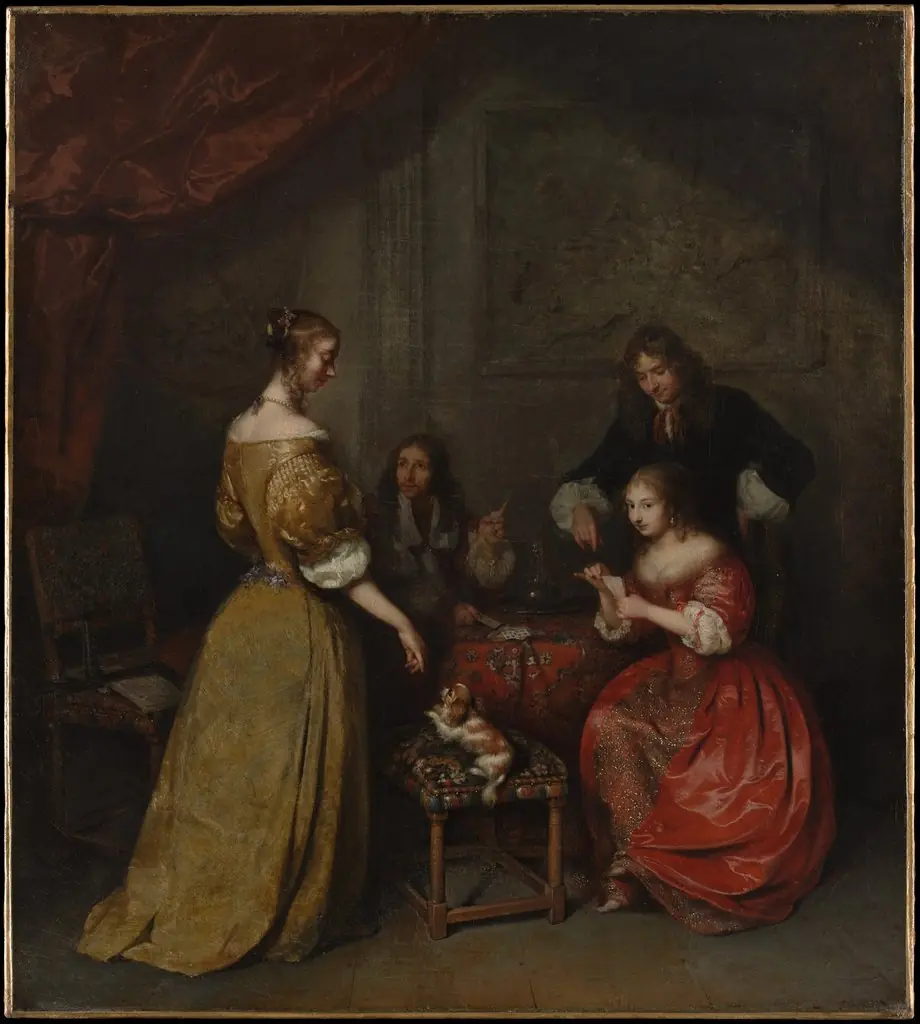 The Card Party
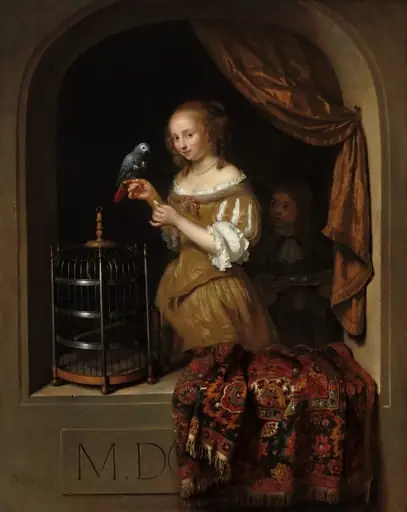 A Woman Feeding a Parrot, with a Page
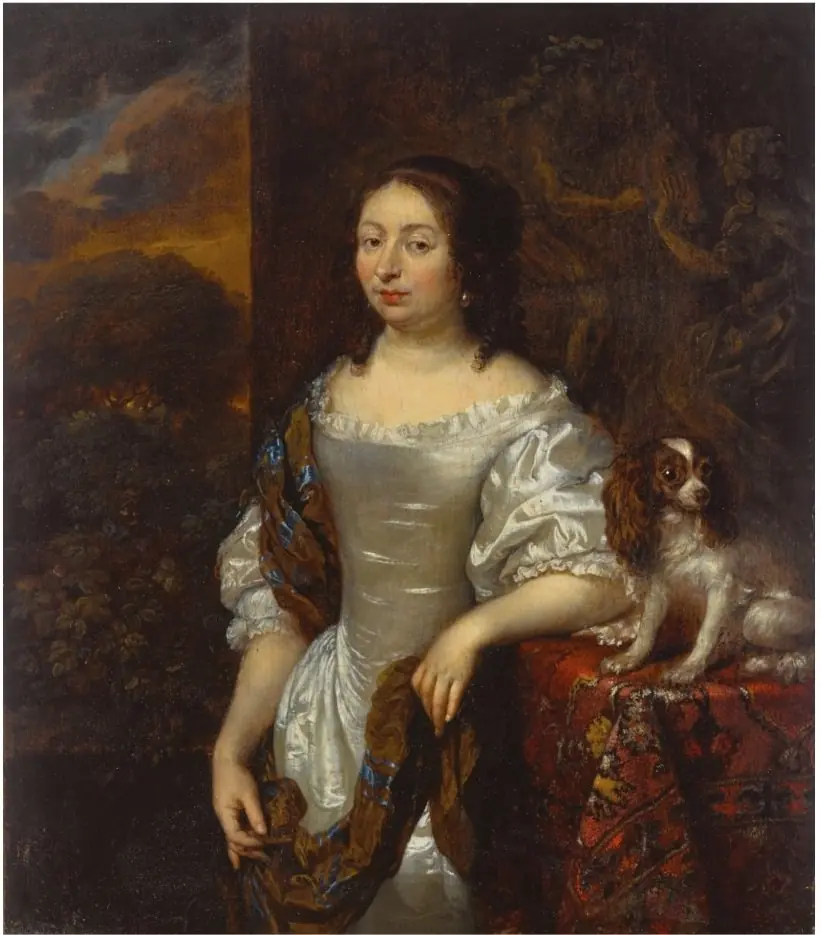 Portrait of a Lady with a Dog on a Table
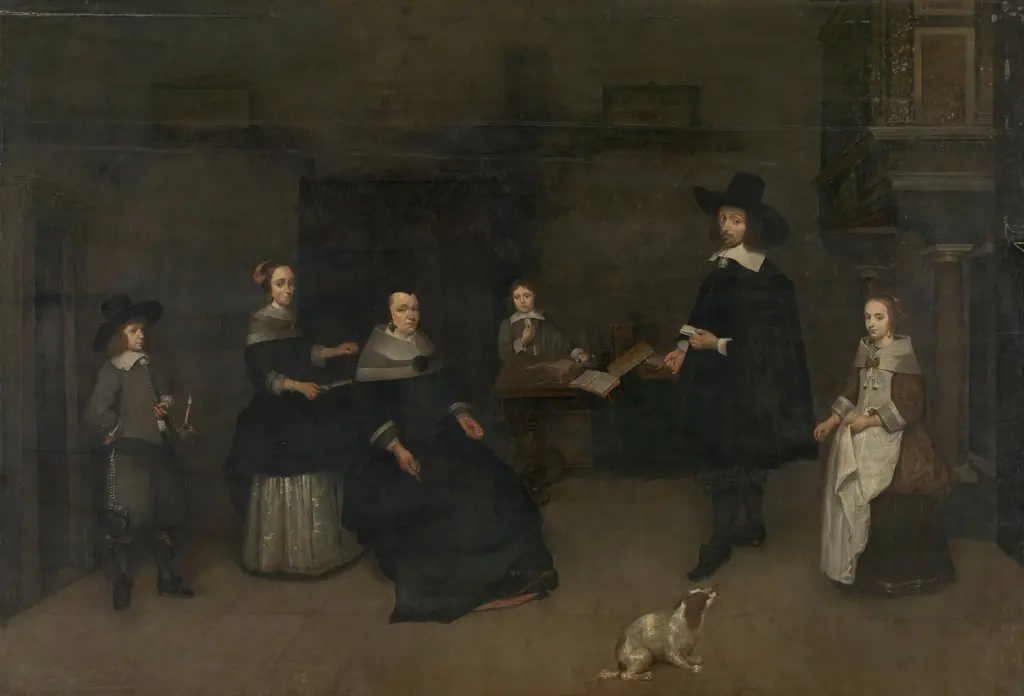 Family scene
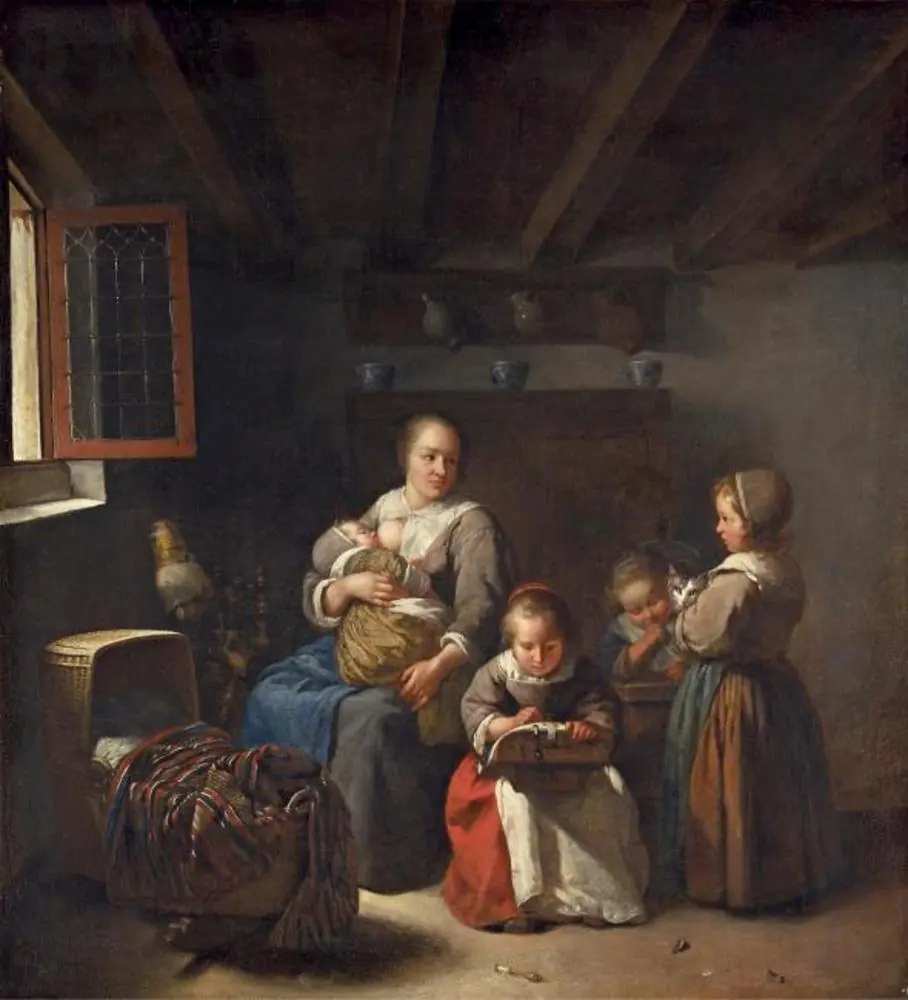 Nursing mother with three girls
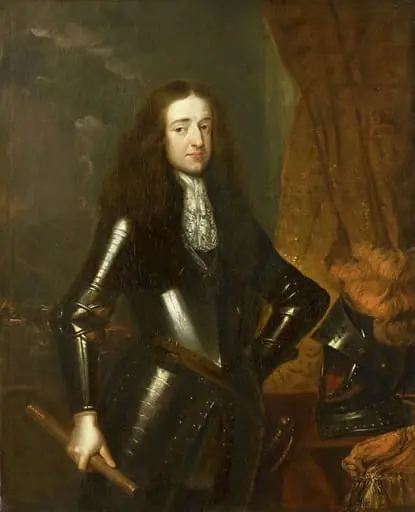 Portrait of Willem III (1650-1702), Prince of Orange and since 1689, King of England
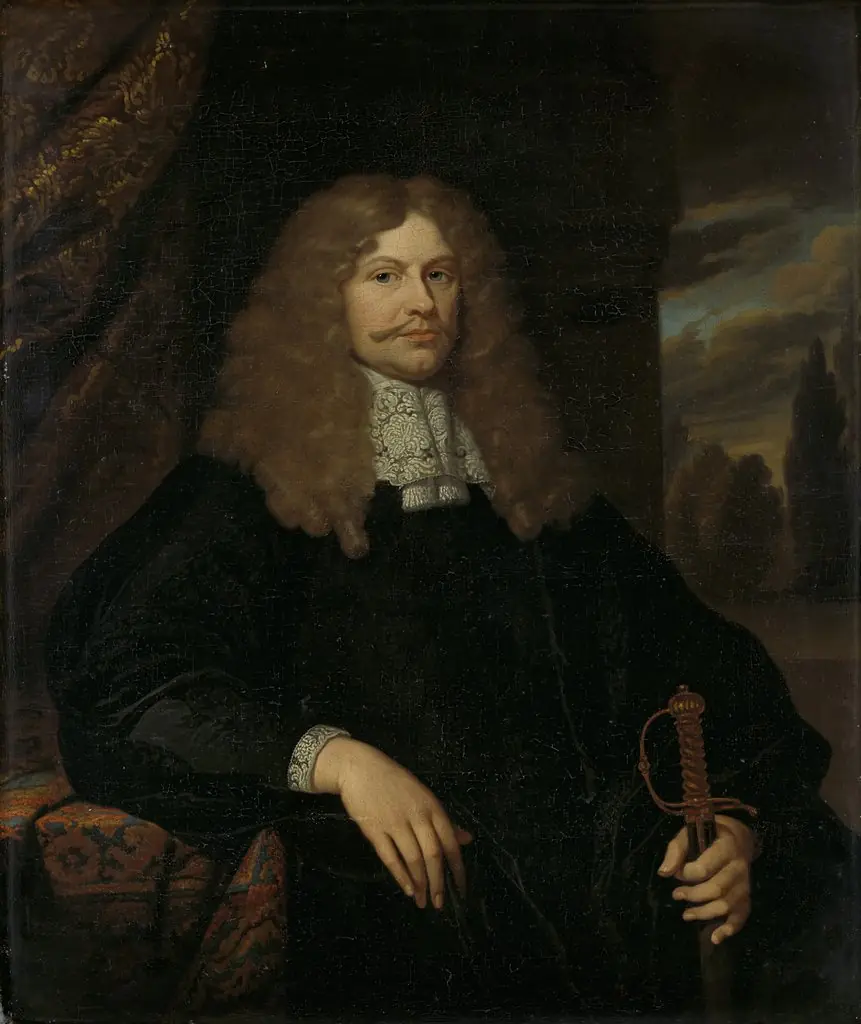 Portrait of Cornelis Backer (1633-81), councillor, alderman, and colonel of the Amsterdam militia
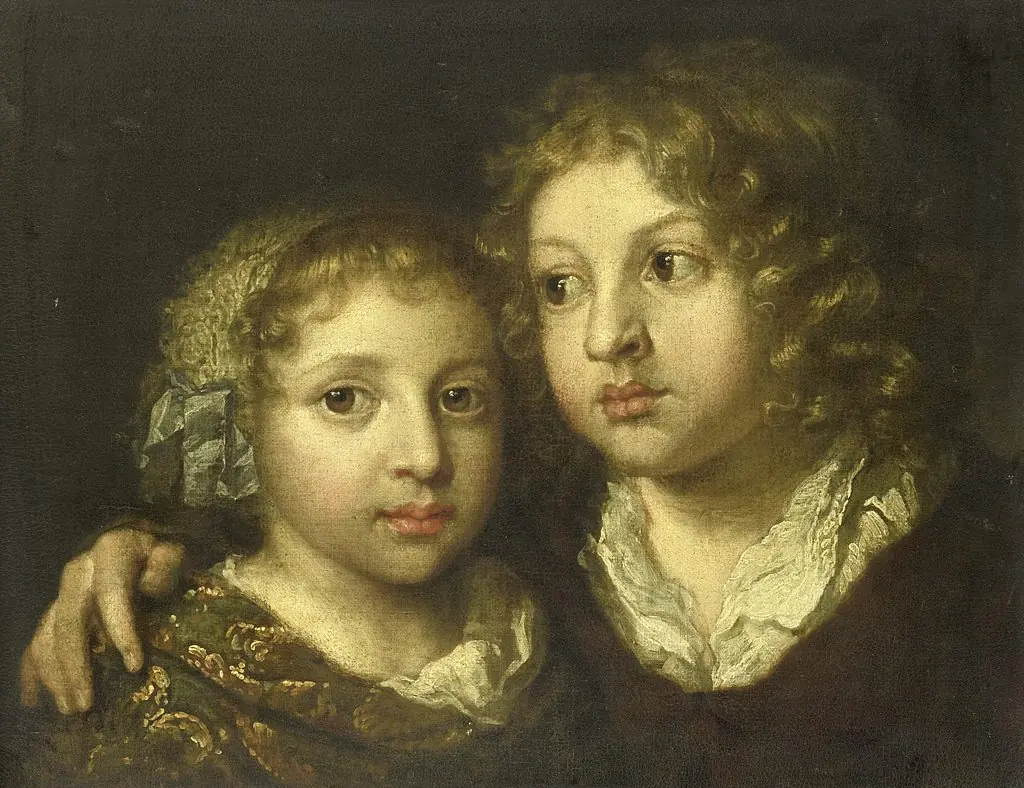 A daughter and a son (Constantijn?) of the artist
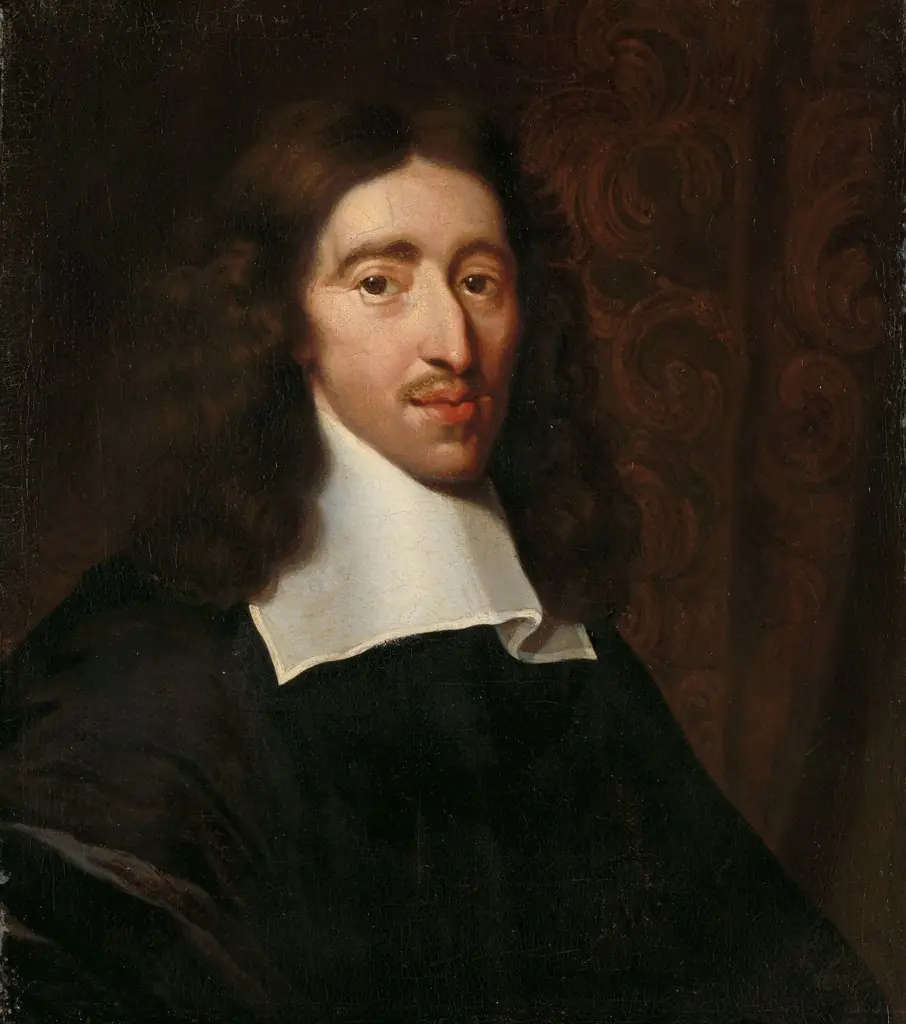
- Portrait of Johan de Witt (1625-72), Grand pensionary of Holland
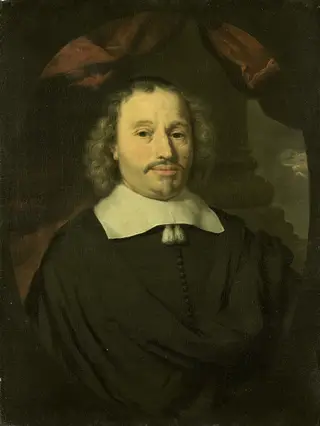 Portrait of Hendrick Wijnands (1601/2 - 76), grocer of Amsterdam
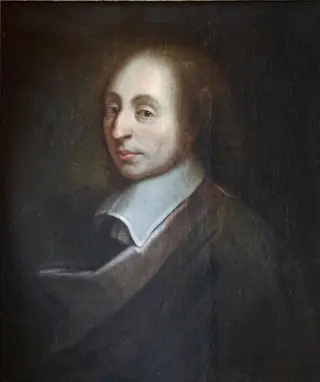 Blaise Pascal, philosopher and mathematician
 Portrait of one of the brothers Van der Burch, probably Arent van der Burch (1621-1691), 1656
 Portrait of a man
 Joost van den Vondel (1587-1679), Poet
 Henry More, Platonist and Theologian
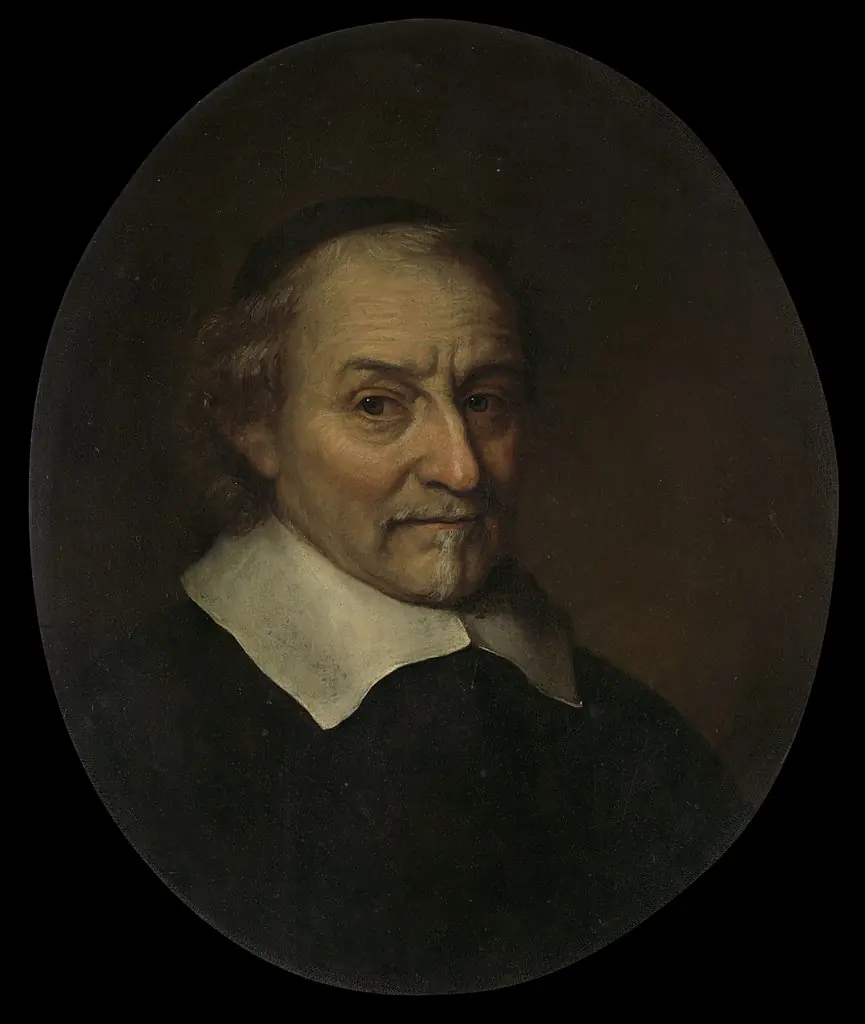 Joost van den Vondel (1587–1679). Poet
 Portrait of a Man
 Portrait of a Man