Artwork
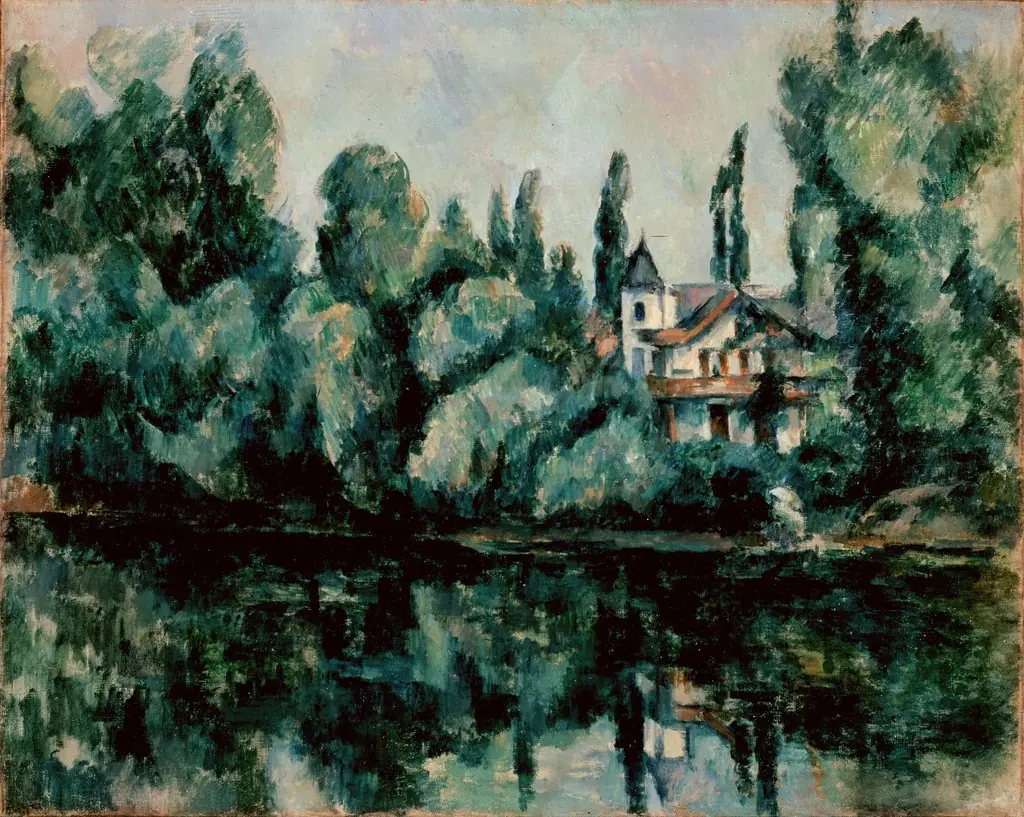
Banks of the Seine at Médan
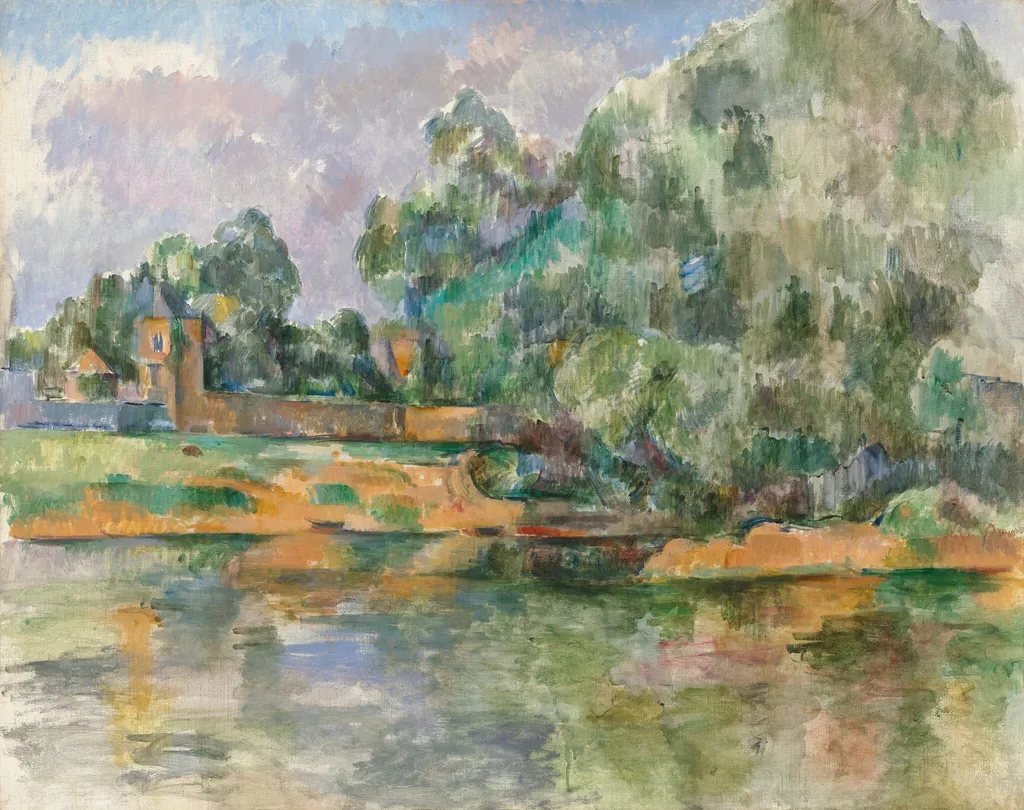
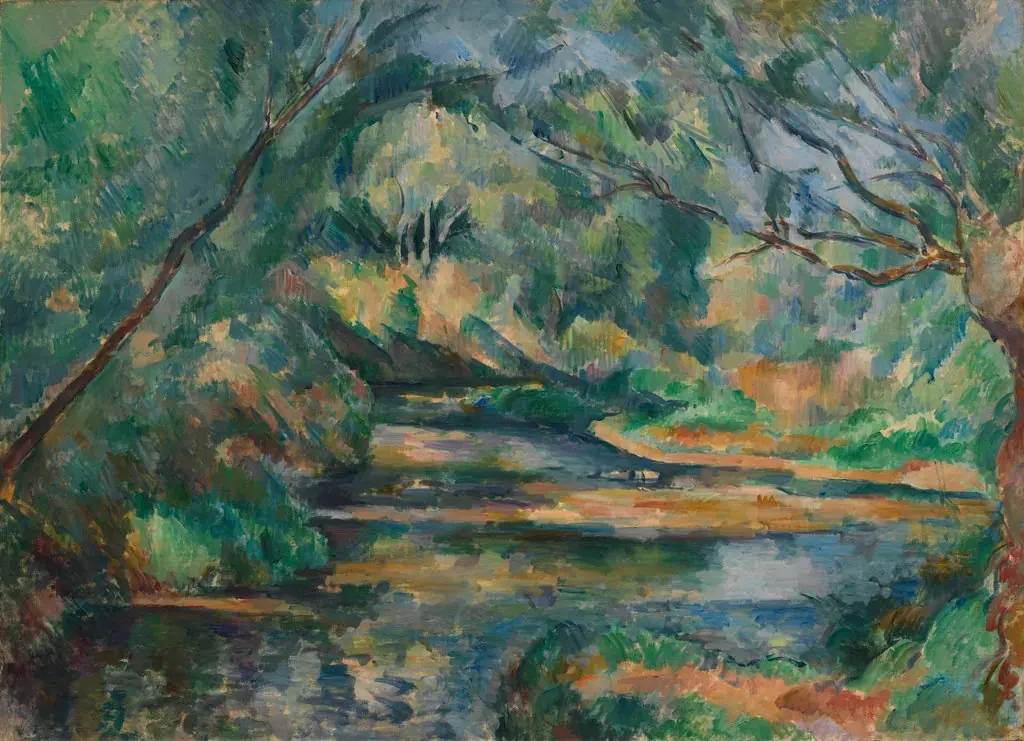
Banks of the Seine at Médan is an oil painting by the Impressionist artist Paul Cézanne. It dates from 1888 and is held in the collection of the National Gallery of Art.
About this work
Subject & Meaning
As a work by Paul Cézanne, the painting focuses on the structural rendering of this natural environment rather than narrative action or complex allegory.
Created in 1888, this oil on canvas is classified as a landscape painting depicting the banks of the Seine at Médan. The primary visual element identified within the composition is a tree, which anchors the scene along the river. As a work by Paul Cézanne, the painting focuses on the structural rendering of this natural environment rather than narrative action or complex allegory.
The available records confirm the specific location and the presence of arboreal forms but do not provide further details regarding specific symbolic meanings beyond its status as a study of the French countryside.
Technique & Style
Executed in 1888, Banks of the Seine at Médan is an oil painting on canvas measuring 73 by 92.3 centimeters. As a landscape work, the piece utilizes oil paint applied to a woven canvas support. The composition features trees as its primary depicted subject matter.
While specific details regarding the artist's brushwork, surface condition, or distinct handling techniques are not explicitly detailed in the available records, the work is formally classified as a painting within the landscape genre. The material composition remains consistent with standard late nineteenth-century French practices, relying on oil pigments and canvas to render the natural scenery of Médan.
History & Provenance
Painted in 1888, the work entered the market through Ambroise Vollard in Paris, who sold it on 31 July 1926 to Dr. Gottlieb Friedrich Reber and Erna Reber in Lugano. It was consigned from 4 August 1927 by the Thannhauser Galleries in Lucerne to dealer D. Pagenstecher in Wiesbaden, then sold in 1951 to Walter Feilchenfeldt in Zürich. After a brief return to Feilchenfeldt in 1964, it was purchased by M. Knoedler & Co. on 15 January 1964 and resold on 13 June 1964 to Ailsa Mellon Bruce, who bequeathed it to the National Gallery of Art, Washington, in 1970.
Banks of the Seine at Médan is held by the National Gallery of Art in Washington, D.C., where it entered the collection through the 1970 bequest of Ailsa Mellon Bruce.
Overview
Banks of the Seine at Médan is an oil painting by Paul Cézanne, created around 1888. This landscape depicts a tranquil scene along the Seine River near Médan, France, focusing on a solitary tree positioned at the water's edge under a pale blue sky. The work exemplifies Cézanne's late-career exploration of natural forms and light, offering a quiet contemplation of the environment.
Context
Cézanne created this work towards the end of his artistic career, a period marked by his intense focus on landscape painting and the structural qualities of nature. His persistent study of light's effects on seemingly ordinary subjects, such as this river scene, became central to his practice. This dedication to capturing the essence of a scene through careful observation was a hallmark of his mature style.
Own this work as a print
Artist & collection

Artist
Paul Cézanne ( say-ZAN, UK also siz-AN, US also say-ZAHN; French: ; Occitan: Pau Cesana; 19 January 1839 – 22 October 1906) was a French Post-Impressionist painter whose work introduced new modes of representation,…

 Harlequin
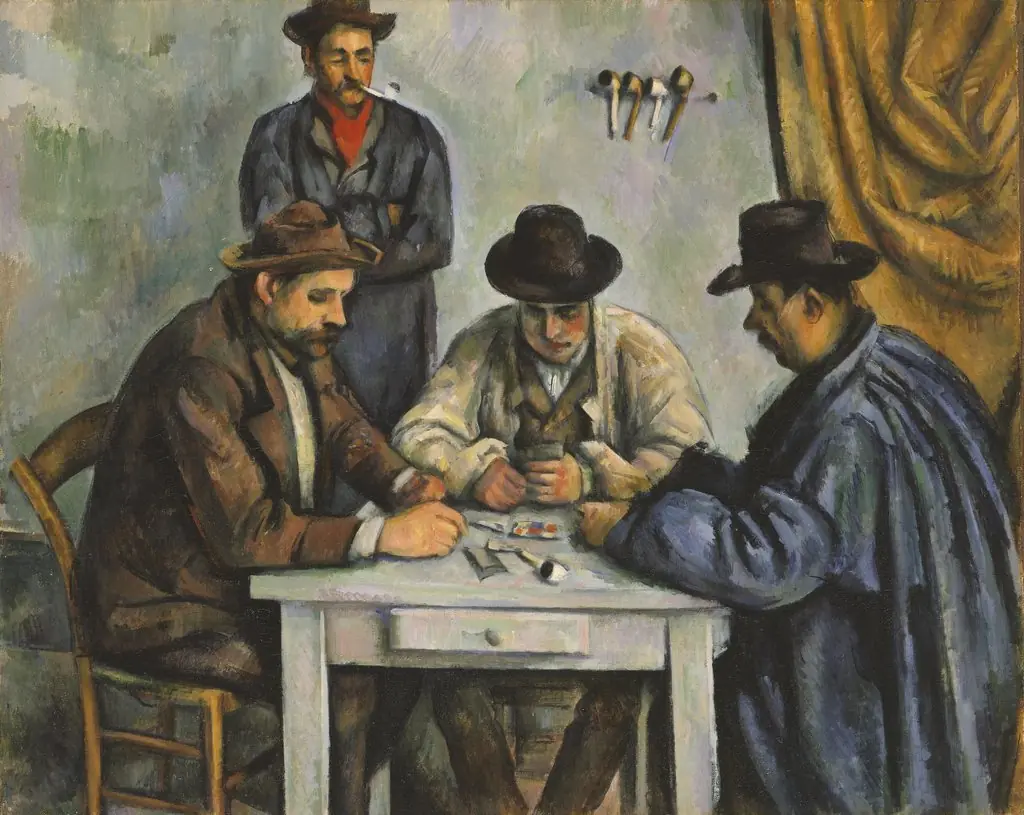 The Card Players
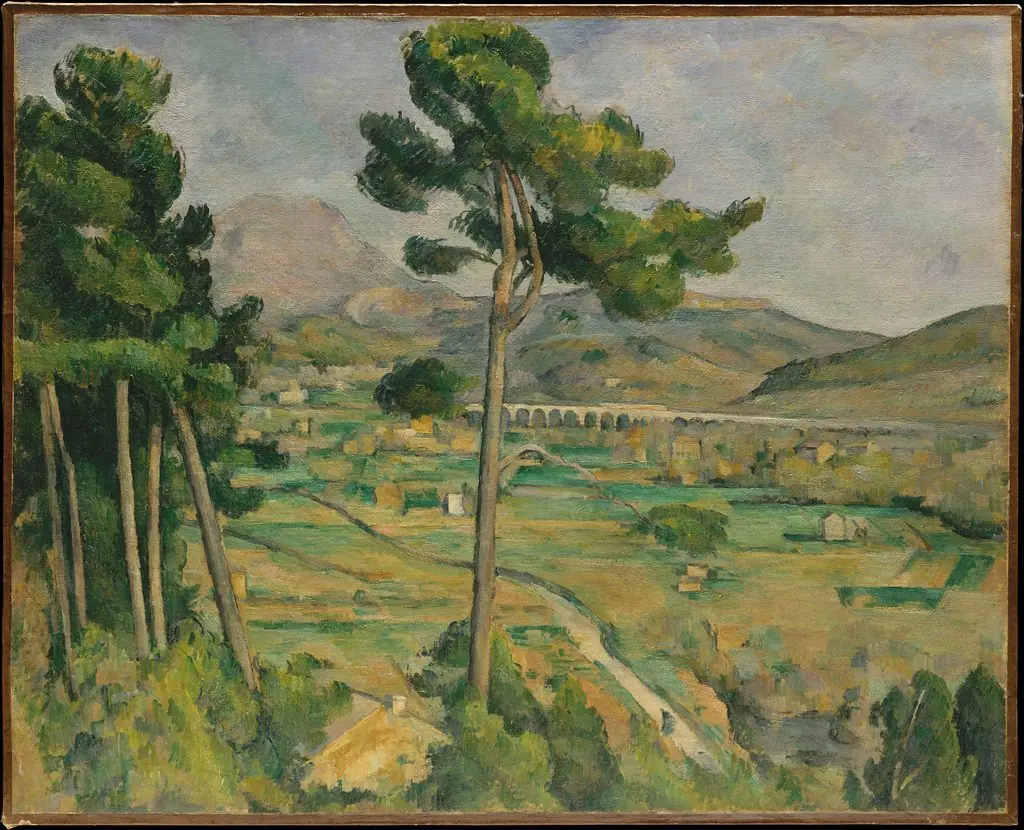 Mont Sainte-Victoire and the Viaduct of the Arc River Valley
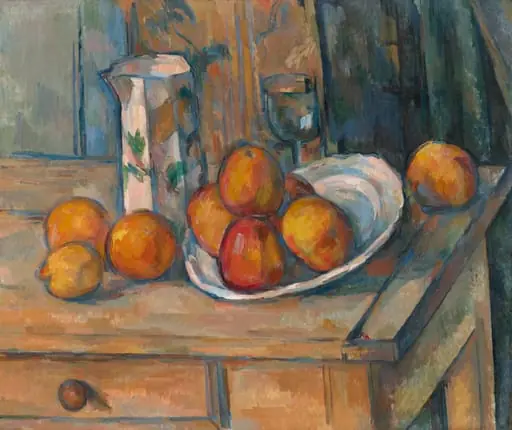 Still Life with Milk Jug and Fruit
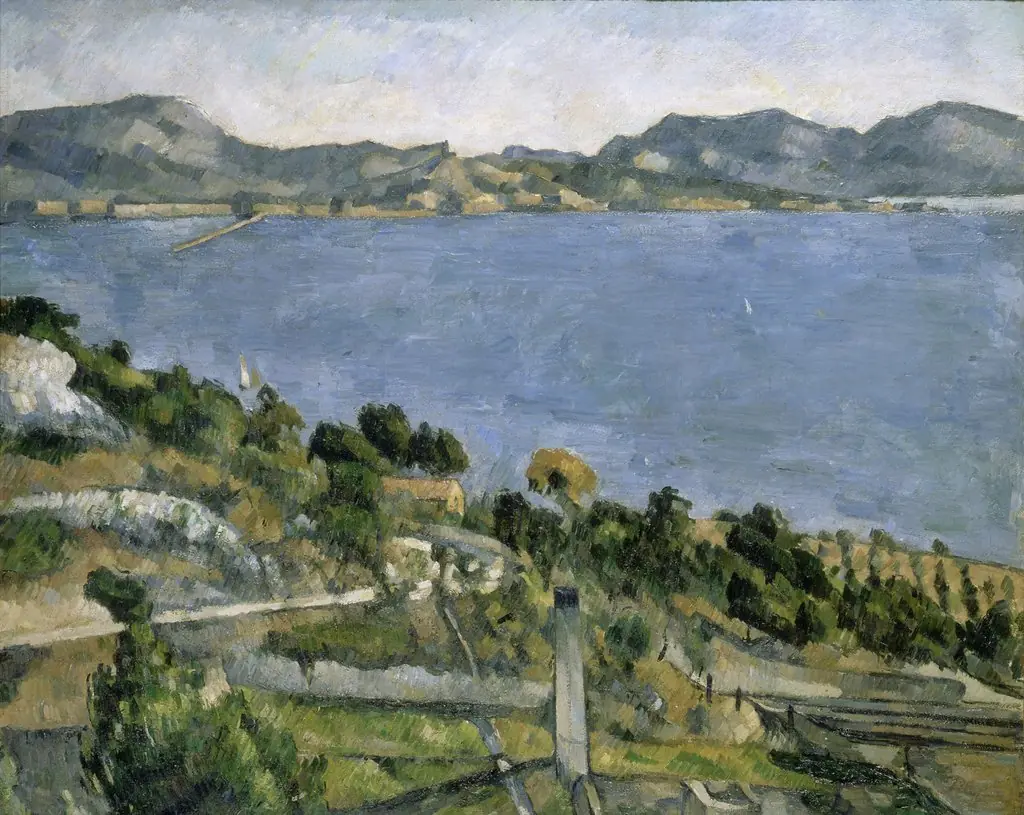 Le Golfe de Marseille vu de l'Estaque (The Gulf of Marseille Seen from L'Estaque)
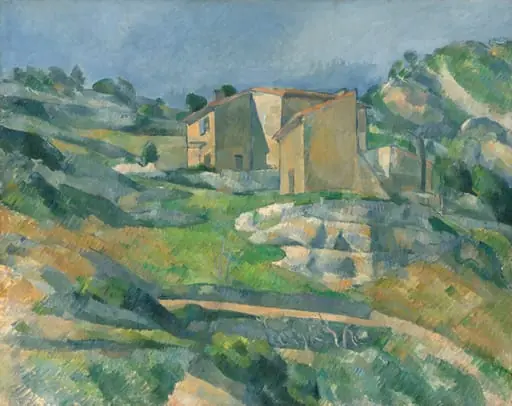 Houses in Provence: The Riaux Valley near L'Estaque
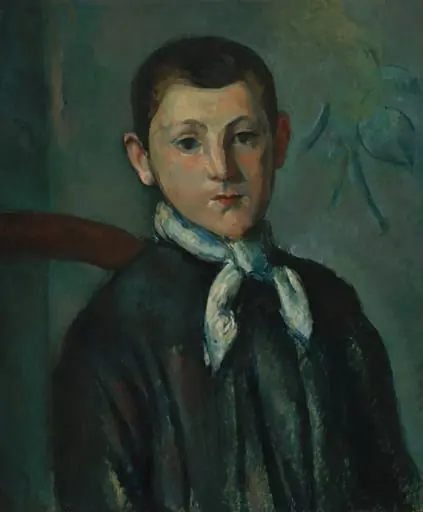 Louis Guillaume
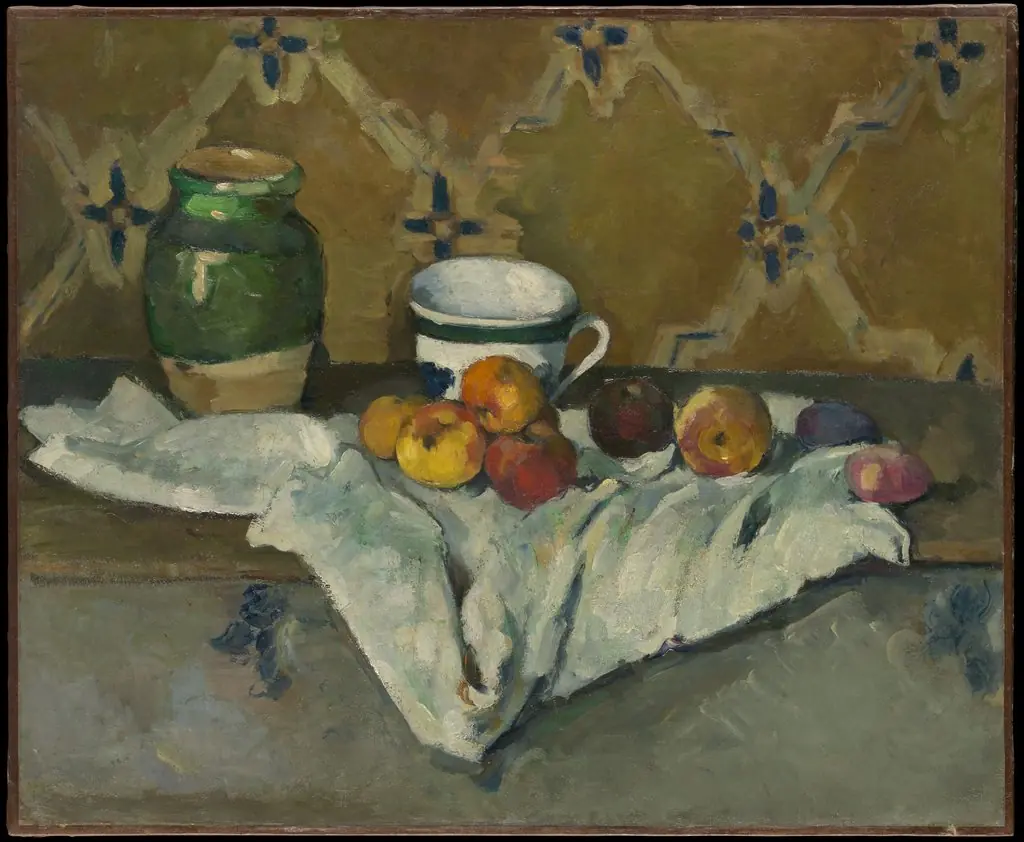 Still Life with Jar, Cup, and Apples