Artwork
Moonlight
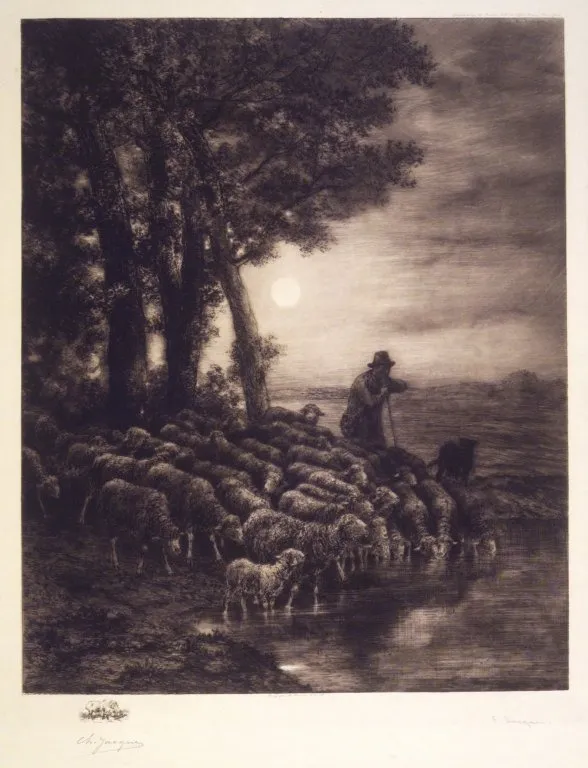
Moonlight is an unspecified painting by the Impressionist artist Charles-Émile Jacque. It dates from 1894 and is held in the collection of the Brooklyn Museum.
About this work
If you want to learn more about the artist who created this painting, you might want to look up Charles Jacque.
You're looking at a painting called "Moonlight" by Charles Jacque. It's from 1888 and is held at the Brooklyn Museum.
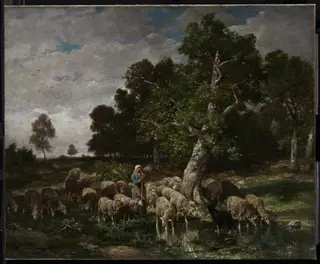
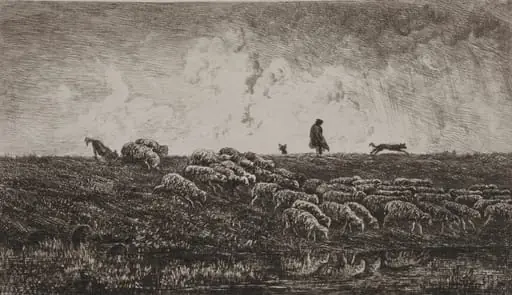
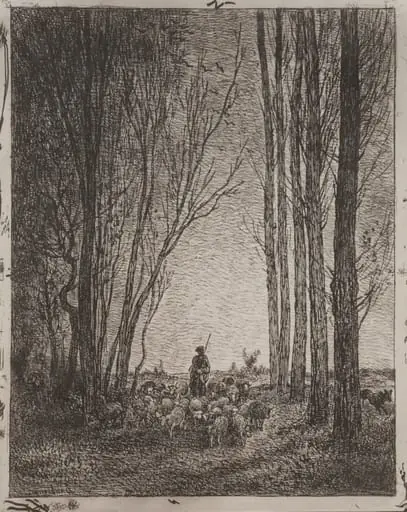
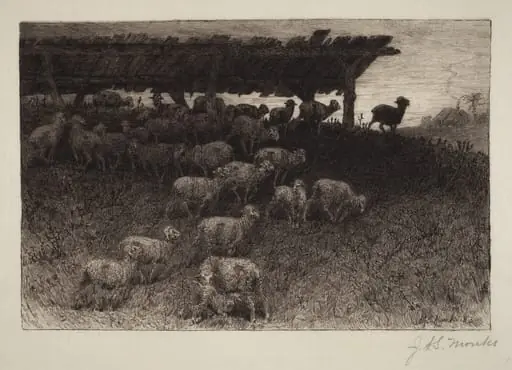
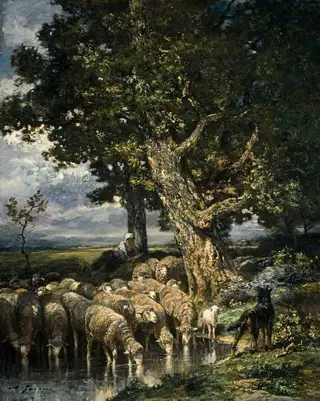
The painting shows a shepherd and his flock of sheep by a river, under the light of the full moon. The shepherd is sitting on a rock, holding a long stick. The sheep are gathered around him, some drinking from the river.
The trees and bushes are dark and shadowy, but the moonlight casts a silver glow over the scene.
The painting is very peaceful and quiet, like a moment of stillness in the night. If you want to learn more about the artist who created this painting, you might want to look up Charles Jacque.
Overview
Charles-Émile Jacque, a French artist linked to the Barbizon School, produced Moonlight in 1888. Though trained in map engraving during his military service, he turned to pastoral subjects in painting. The work is part of the Brooklyn Museum’s collection and reflects his enduring interest in rural life, rendered with quiet precision rather than dramatic flourish.
Subject & Meaning
The painting depicts a shepherd seated on a rock beside a quiet river, his flock gathered nearby, some drinking, others resting. The scene conveys stillness and solitude, emphasizing the harmony between human and animal within a nocturnal landscape. There is no narrative tension; instead, the moment suggests a natural rhythm of care and repose under the moon’s watch.
Technique & Style
Jacque employed subtle tonal gradations to capture the silvery sheen of moonlight on water and wool, contrasting it with deep, muted shadows of trees and underbrush. His brushwork is restrained, avoiding the loose strokes of high Impressionism in favor of controlled detail. The composition directs the eye gently from the shepherd to the river, reinforcing the calm, meditative mood.
History & Provenance
Created in 1888, Moonlight entered the Brooklyn Museum’s collection through documented acquisition, though its earlier ownership remains unrecorded in public sources. Jacque’s reputation as a printmaker and rural scene painter ensured his works were collected by institutions interested in 19th-century French realism, even as Impressionism gained prominence.
Context
While Jacque was associated with the Barbizon painters who sought truth in rural life, Moonlight aligns more with quiet realism than the color experiments of Impressionism. The era saw growing urbanization, making such scenes of pastoral serenity a deliberate counterpoint, offering viewers a vision of continuity and quiet endurance in nature.
Legacy
Jacque’s focus on nocturnal pastoralism influenced later artists interested in mood over spectacle. Though less celebrated than his Barbizon peers, his work preserved a sensitive record of rural labor and animal life under natural light. Moonlight endures as a quiet testament to his technical restraint and devotion to the ordinary rhythms of the countryside.
Artist & collection

Artist
Charles-Émile Jacque (23 May 1813 – 7 May 1894) was a French painter of Pastoralism and engraver who was, with Jean-François Millet, part of the Barbizon School. He first learned to engrave maps when he spent seven years in the French Army.