Artwork
Japanese Footbridge, Giverny
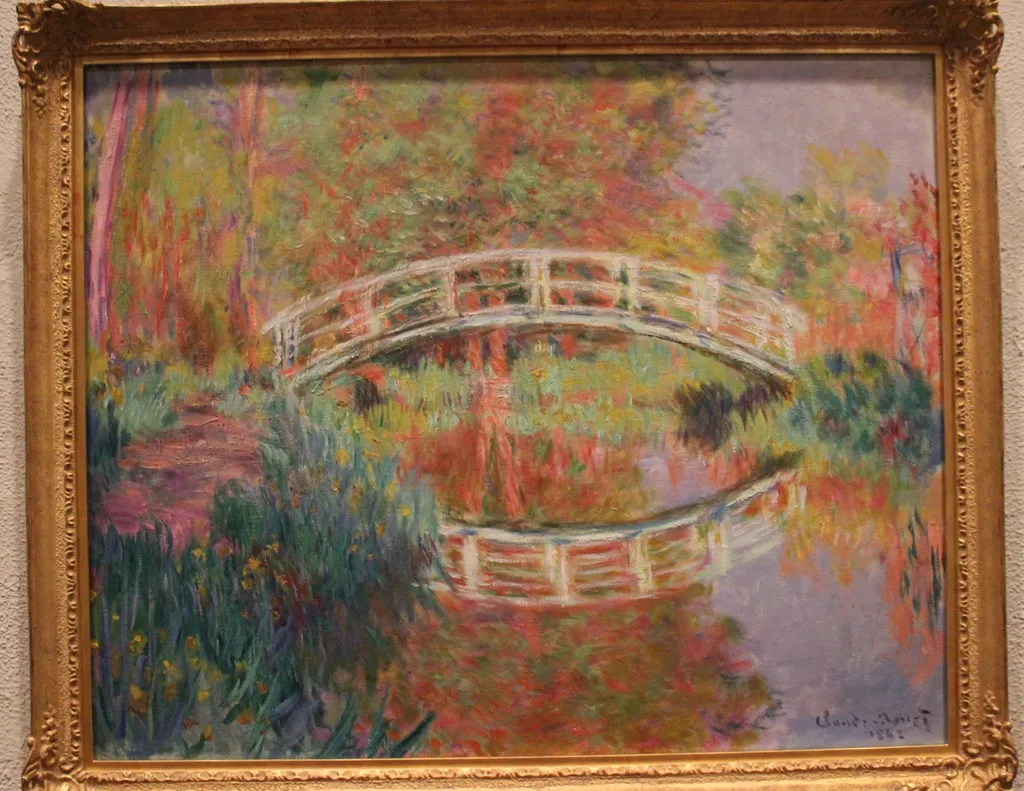
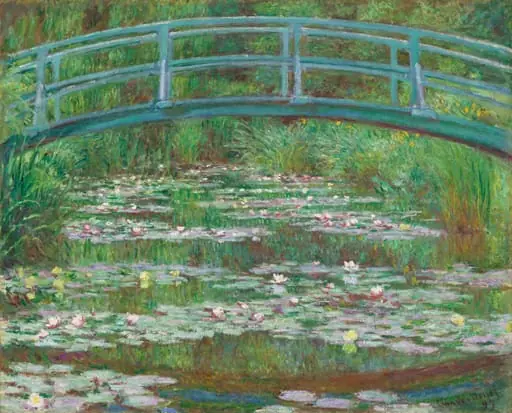
Japanese Footbridge, Giverny is an oil painting by the Impressionist artist Claude Monet. It dates from 1898 and is held in the collection of the Philadelphia Museum of Art.
About this work
Overview
The composition centers on a curved, white wooden bridge arching over a pond filled with water lilies, framed by dense, vibrant foliage and climbing wisteria.
Claude Monet's 'Japanese Footbridge, Giverny,' painted in 1898, captures a specific view within the artist's water garden at his home in Giverny. The composition centers on a curved, white wooden bridge arching over a pond filled with water lilies, framed by dense, vibrant foliage and climbing wisteria. Executed in oil paint, the work exemplifies Monet's mature Impressionist style, characterized by loose, visible brushstrokes that dissolve distinct forms into a tapestry of light and color.
The palette is dominated by varying shades of green, blue, and violet, with the bridge rendered in soft whites and pale grays that contrast against the lush surroundings. This series of works, created during the late 1890s, marks a pivotal moment in Monet's career where he shifted focus from external landscapes to the intimate, controlled environment of his own garden. The painting reflects his lifelong study of atmospheric effects and the changing qualities of light on water and vegetation.
It stands as a significant contribution to the Impressionist canon, demonstrating the artist's transition toward the more abstract, all-over compositions that would define his later Water Lilies series.
Subject & Meaning
The composition shows a low, arched bridge set amid a pond edged with reeds and flowering plants. Soft, muted tones and delicate brushwork convey a tranquil atmosphere, inviting contemplation of the garden’s quiet rhythm.
Technique & Style
Monet employs his characteristic impressionist approach: loose, layered strokes and a palette of pastel greens, blues, pinks, and yellows. The surface captures fleeting light on water and foliage, while the subtle color harmonies suggest depth without sharp outlines.
History & Provenance
Created during Monet’s later years at his Giverny estate, the painting reflects his ongoing fascination with water and Japanese garden motifs. It entered the Philadelphia Museum of Art’s holdings in the early 20th century, where it remains on display.
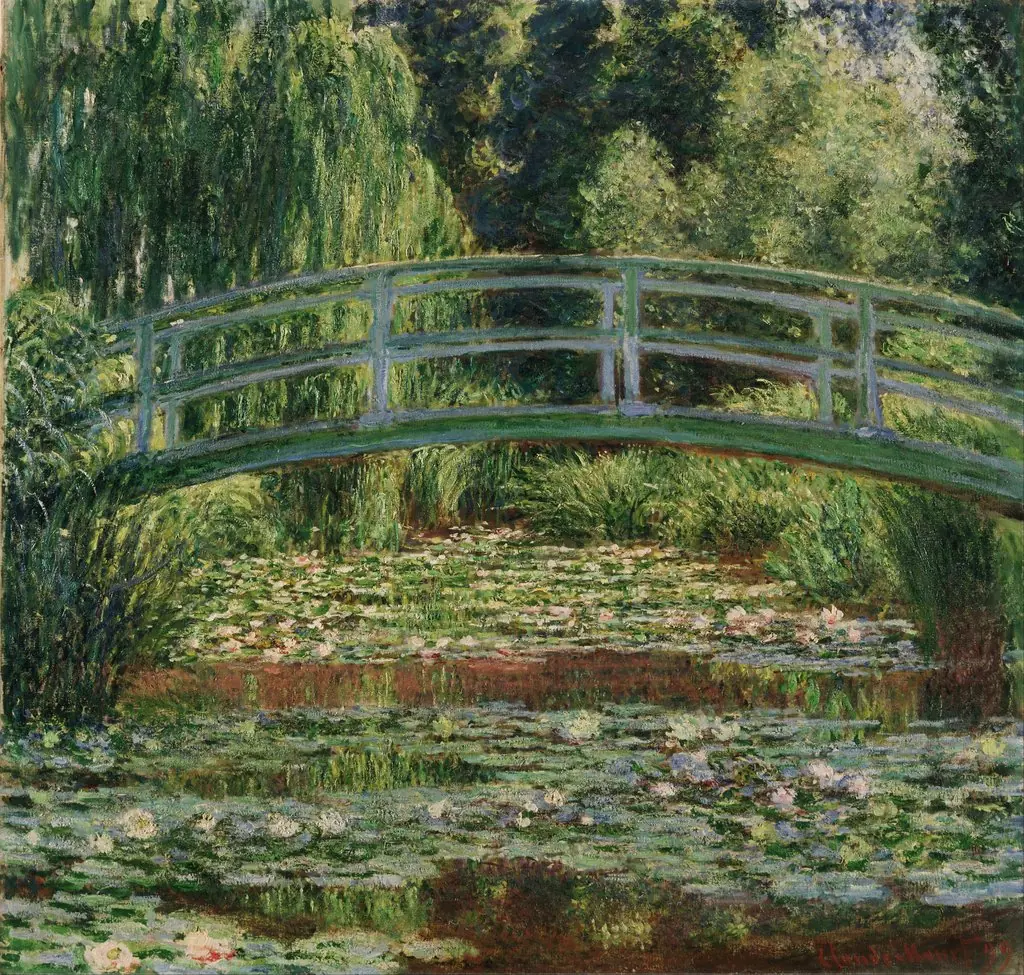
Own this work as a print
Artist & collection
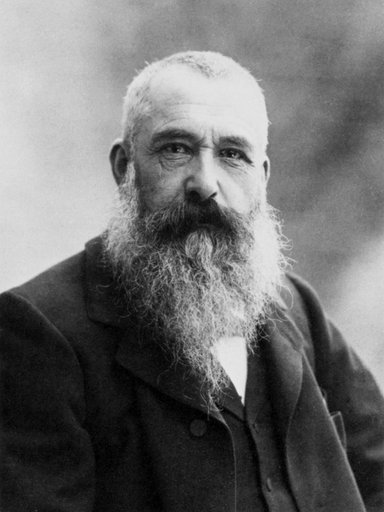
Artist
Oscar-Claude Monet was a French painter and founder of Impressionism who is seen as a key precursor to modernism, especially in his attempts to paint nature as he perceived it.