Artwork
Adam Babcock
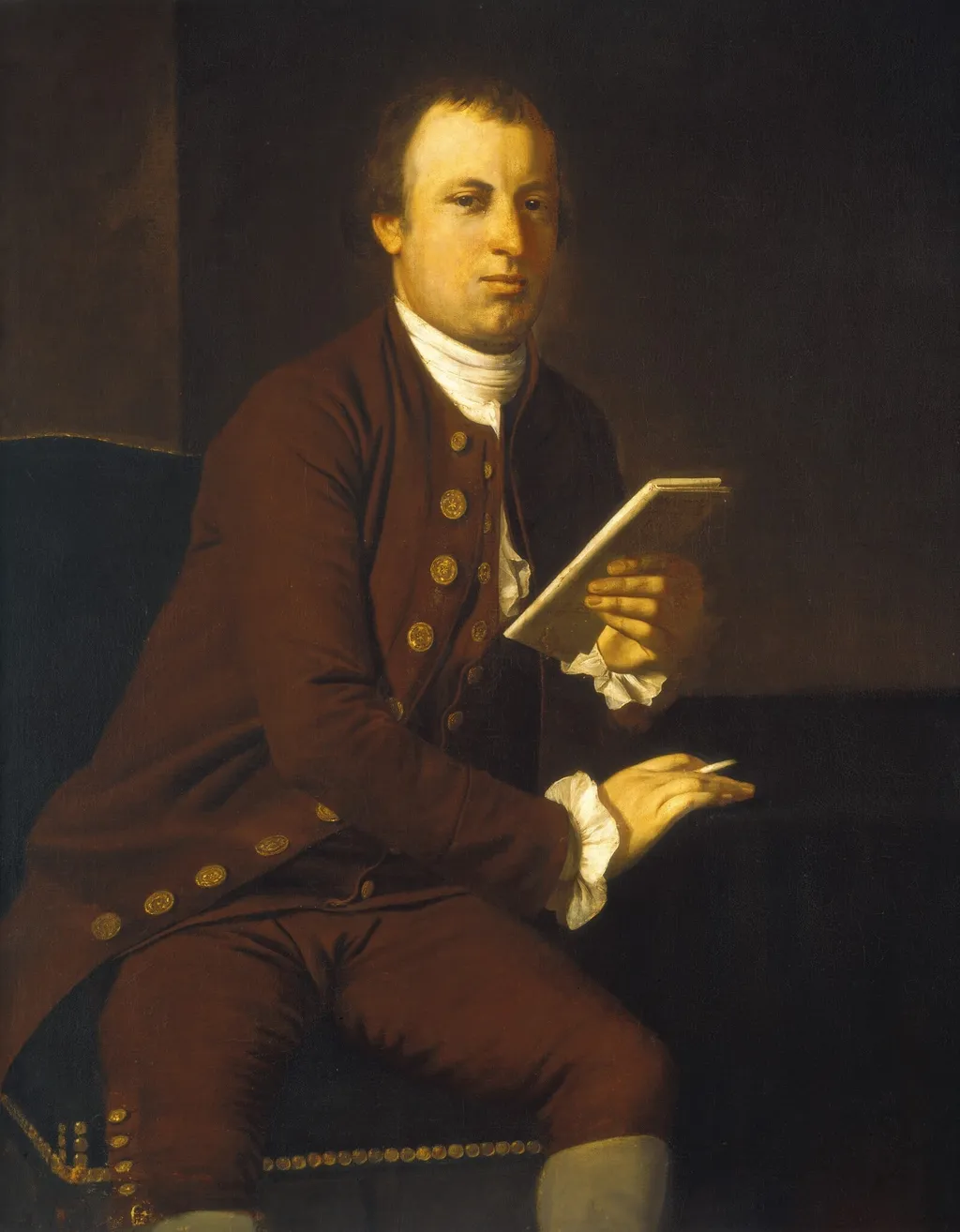
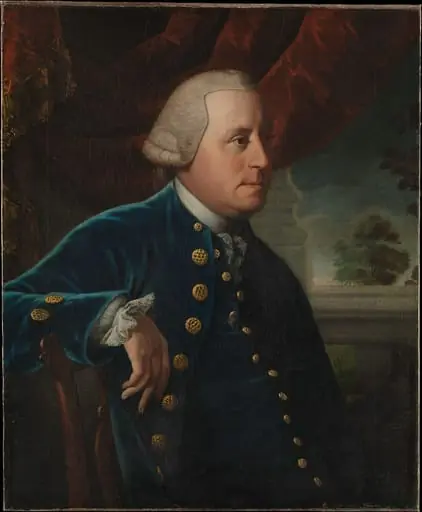
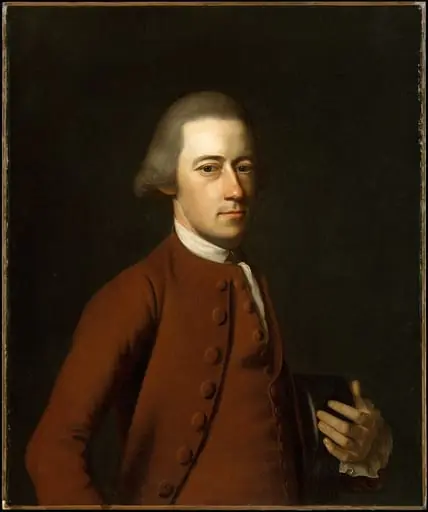
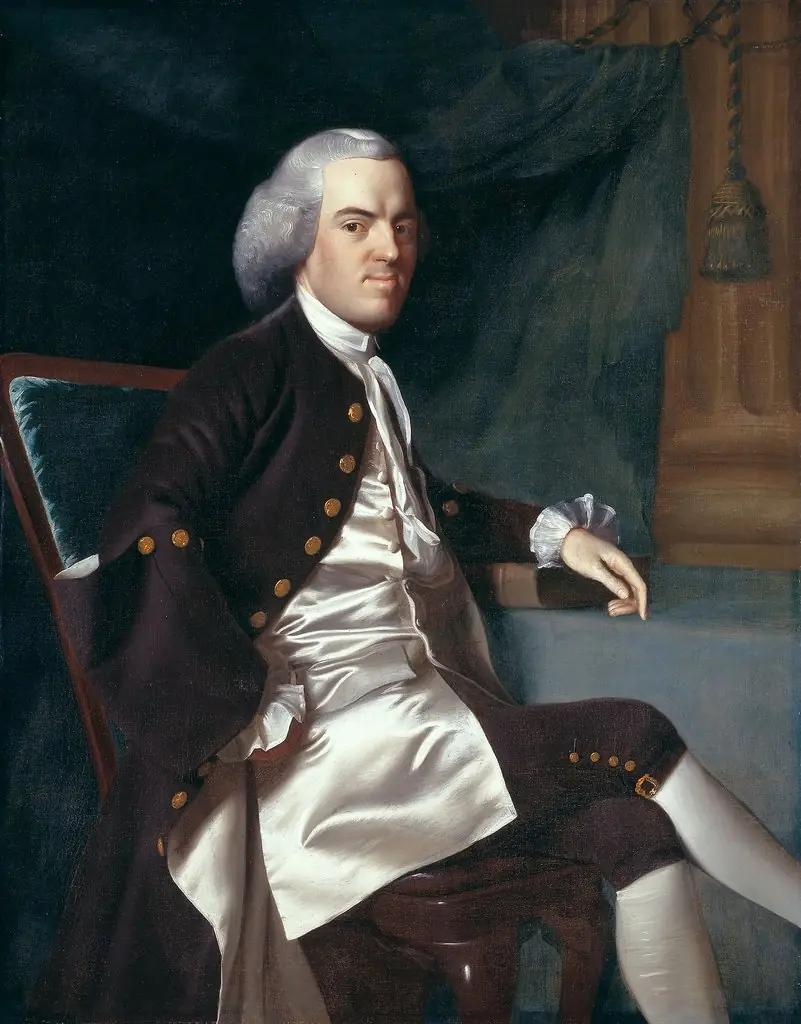
Adam Babcock is an oil painting by the Rococo painting artist John Singleton Copley. It dates from 1774 and is held in the collection of the National Gallery of Art.
About this work
Technique & Style
Copley’s handling of light and brushwork produces a refined modeling of facial features and clothing, emphasizing texture through layered glazes.
John Singleton Copley executed this portrait using oil paint applied to a canvas support, a technique typical of his mature portraiture. The work measures 117 cm in height by 91.7 cm in width, reflecting the standard dimensions of 18th‑century full‑length portraits. Copley’s handling of light and brushwork produces a refined modeling of facial features and clothing, emphasizing texture through layered glazes.
The composition balances three‑quarter view orientation with a restrained palette, allowing subtle gradations of color to define form. These stylistic choices contribute to a realistic yet idealized representation characteristic of Copley’s approach to aristocratic subjects.
History & Provenance
Adam Babcock was painted by John Singleton Copley in 1774 in oil on canvas. The portrait descended within the sitter's family to his great-grandson Edwin A. Blake (1847–1928), who sold it in 1916 through the Macbeth Galleries in New York. Alice Greenwood Chapman of Milwaukee purchased it in 1917 but soon reconsidered, citing the war as a reason to forgo such luxuries, and the Macbeth Gallery repurchased the work.
On 25 February 1919 the gallery sold it to Arthur Meeker (1866–1946) of Chicago. The painting subsequently passed to Fannie Morris Babcock Murray (1858–1940) in New York, then to her son Dr. Henry A. Murray (1893–1988) of Cambridge, Massachusetts, who gave it to the National Gallery of Art in 1978.
The portrait Adam Babcock by John Singleton Copley is held in the collection of the National Gallery of Art in Washington, D.C. The work entered the museum in 1978 as a gift from Dr. Henry A. Murray, the sitter's grandson, following a lineage of private ownership that included Edwin A. Blake, Alice Greenwood Chapman, and Arthur Meeker. While the source text does not explicitly state the accession number, it references a related painting of Mrs. Babcock with the identifier NGA 185.20.1, implying the standard cataloging format for the gallery. The painting has not been documented as part of a specific exhibition list in the provided sources, though its provenance traces a path from the sitter's great-grandson through New York and Chicago dealers before reaching its current permanent home.
Context
John Singleton Copley painted the portrait in 1774, depicting Adam Babcock in a style characteristic of colonial American portraiture. The work entered the National Gallery of Art collection in 1978 through the gift of Dr. Henry A. Murray, whose mother, Fannie Morris Babcock Murray, had acquired it from Arthur Meeker in 1919. Its provenance reflects a documented chain of ownership beginning with Edwin A. Blake and passing through Macbeth Galleries before reaching the artist’s descendants.
The painting’s subject, Adam Babcock, was a notable figure in early American history, and the portrait remains a key example of Copley’s work in the National Gallery’s holdings.
Overview
Painted in 1774 by John Singleton Copley, 'Adam Babcock' is a half-length portrait of the New Haven merchant and lawyer seated in an armchair. The subject is depicted in a moment of intellectual engagement, holding a book in his right hand and a quill pen in his left, signaling his profession and literacy. Copley renders Babcock in contemporary 18th-century attire, consisting of a brown coat with gold buttons, a white shirt, and brown breeches.
The composition utilizes a dark, neutral background to isolate the figure and emphasize the textures of the fabric and the subject's thoughtful expression. Created shortly before Copley's permanent departure for Europe, this work exemplifies the artist's mature colonial style, characterized by precise realism and a psychological depth that elevates the American merchant class. The painting stands as a significant example of Copley's portraiture from the eve of the American Revolution, capturing the dignity and status of his sitter through meticulous attention to detail and lighting.
Subject & Meaning
Babcock is shown holding a book in his right hand and a quill in his left, suggesting scholarly or literary activity. His serious expression and poised posture convey a mood of thoughtful concentration, typical of portraiture intended to reflect personal virtue and intellectual engagement.
Own this work as a print
Artist & collection

Artist
John Singleton Copley (July 3, 1738 – September 9, 1815) was an American-born British painter active in both the Thirteen Colonies and England.