Artwork
Eleazer Tyng
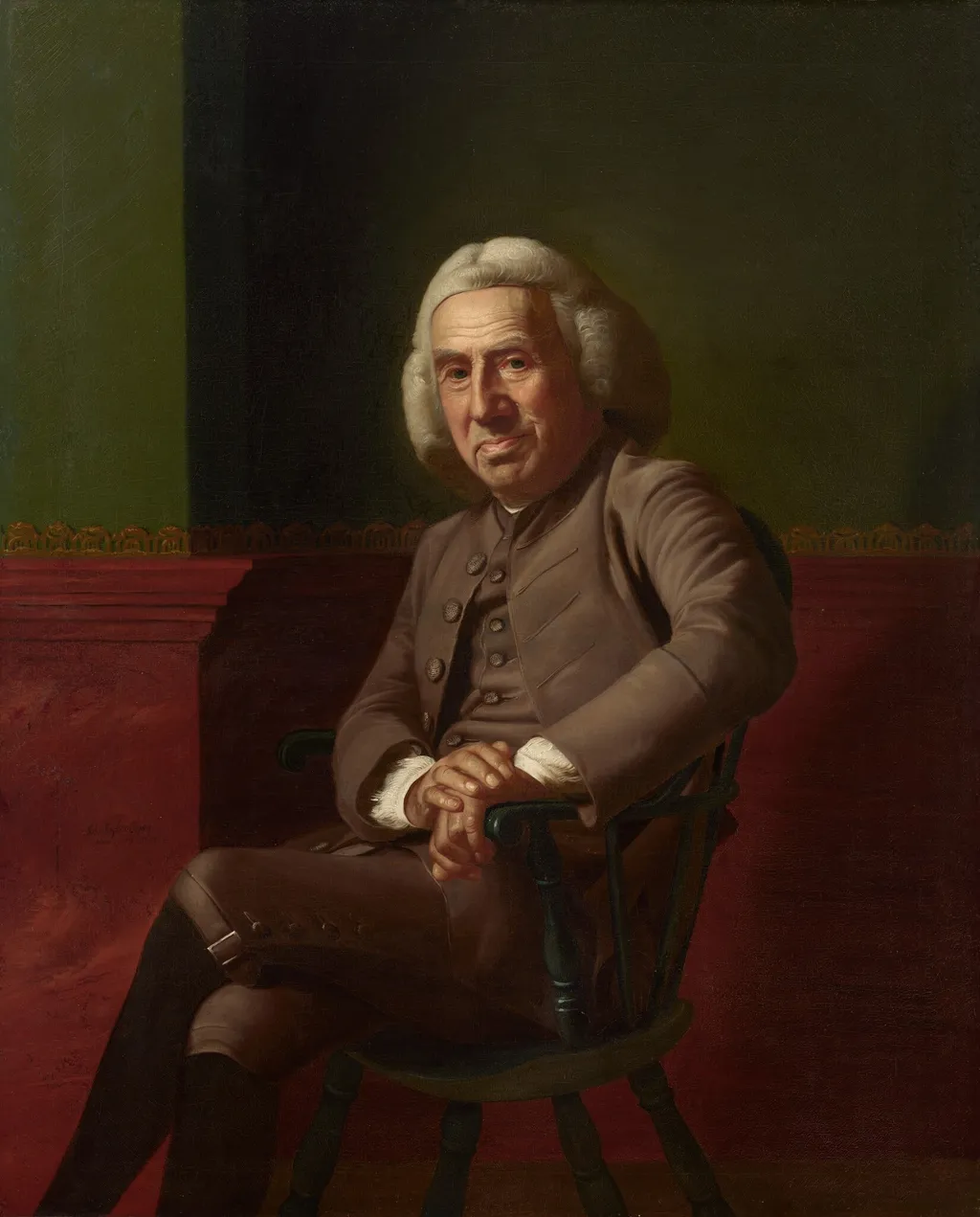
Eleazer Tyng is an oil painting by the Rococo painting artist John Singleton Copley. It dates from 1772 and is held in the collection of the National Gallery of Art.
- Inscription
- Inscribed:lower left: John Singleton Copley / pinx.1772.Boston.-
About this work
Technique & Style
Executed in 1772, this portrait is an oil painting on canvas. The work measures 126.5 cm in height and 100.2 cm in width. As a formal likeness of Eleazer Tyng, the piece employs the standard materials and support typical of John Singleton Copley's portraiture from this period.
History & Provenance
The painting then descended through the Amory family: to his son Copley Amory, to his wife Mary Forbes Russell Amory in 1929, and to their son Copley Amory, Jr.
John Singleton Copley painted the portrait of Eleazer Tyng in 1772. The work was offered for sale by an unidentified owner in Boston in 1841, possibly a distant relative, as the sitter left no direct descendants following his daughter Sarah Tyng Winslow's death in 1791. Copley Amory, the artist's great-grandson, likely acquired or was given the portrait around that time despite having no family connection to the Tyngs; his ownership was first recorded in 1873.
The painting then descended through the Amory family: to his son Copley Amory, to his wife Mary Forbes Russell Amory in 1929, and to their son Copley Amory, Jr., in 1944. He bequeathed it to his nephew Walter Amory. The National Gallery of Art purchased the work in 1965 using funds from the Avalon Foundation.
The portrait of Eleazer Tyng is held in the collection of the National Gallery of Art in Washington, D.C., where it was acquired in 1965 with funds from the Avalon Foundation. Prior to this acquisition, the work passed through several generations of the Amory family, beginning with Copley Amory, the artist's great-grandson, whose ownership was first recorded in 1873. The painting was later inherited by Copley Amory, Jr., and subsequently bequeathed to his nephew, Walter Amory, before entering the museum's holdings.
Historical records indicate the portrait was exhibited at the Boston Athenaeum, where it was listed in the exhibition catalog as "Mr. E. Tyng. For sale." This exhibition occurred before the painting entered the Amory family collection, likely around the time it appeared for sale in Boston in 1841.
Legacy
The painting's legacy is anchored by its provenance and institutional home. After remaining in private hands through several generations of the Amory family, it entered the National Gallery of Art in 1965 via the Avalon Foundation, ensuring public access and scholarly attention. Its documented exhibition history at the Boston Athenaeum in 1841 marks one of the earliest recorded public showings, reflecting early 19th-century interest in Copley's portraiture.
As a work by John Singleton Copley, the piece contributes to the understanding of colonial American art and the depiction of prominent families such as the Tyngs, whose lineage ended with the death of Sarah Tyng Winslow in 1791, leaving no direct descendants.
Overview
John Singleton Copley’s 1772 oil on canvas presents Eleazar Tyng, an elderly gentleman seated in a chair. He is attired in a brown coat trimmed with white cuffs and buttons, his hands resting on a cane, and a light‑colored wig crowns his head. The backdrop consists of a dark greenish wall and a red curtain, while the composition is dominated by a focused illumination on the sitter’s face and hands.
Subject & Meaning
The portrait records Eleazar Tyng, a prominent figure of his community, in a dignified pose that emphasizes his status and age. The restrained setting and the sitter’s calm demeanor suggest a contemplative character, while the cane and formal attire underscore his experience and social standing within the colonial milieu.
Own this work as a print
Artist & collection
Artist
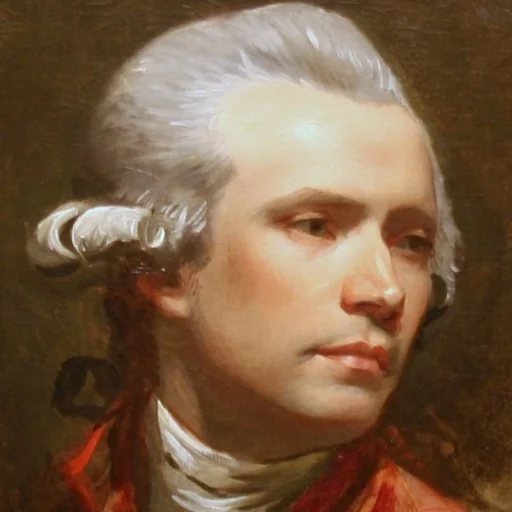
John Singleton Copley (July 3, 1738 – September 9, 1815) was an American-born British painter active in both the Thirteen Colonies and England.

- John Barker (1707–1787)
 Gabriel Manigault
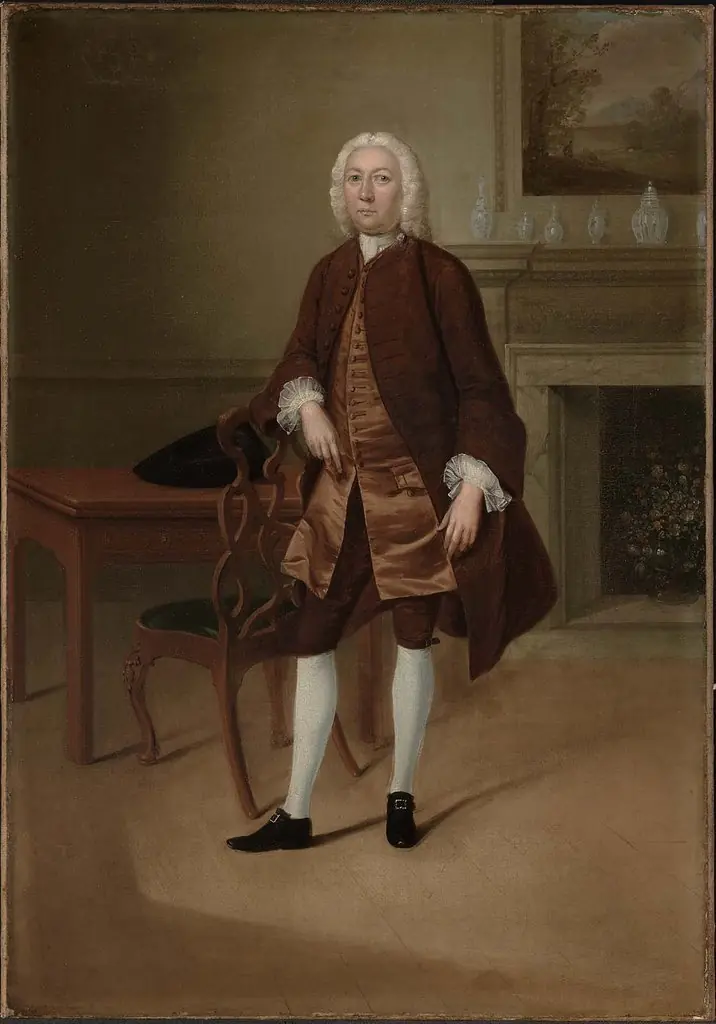 Portrait of a Man Standing Beside a Table
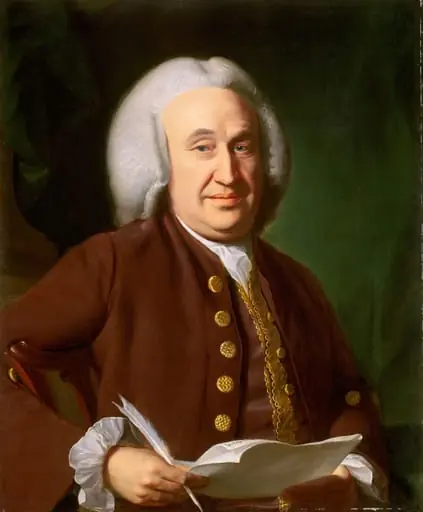 Harrison Gray
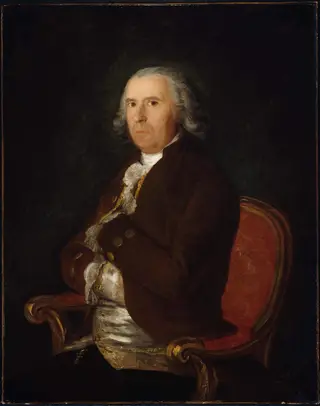 Portrait of a Man in a Brown Coat
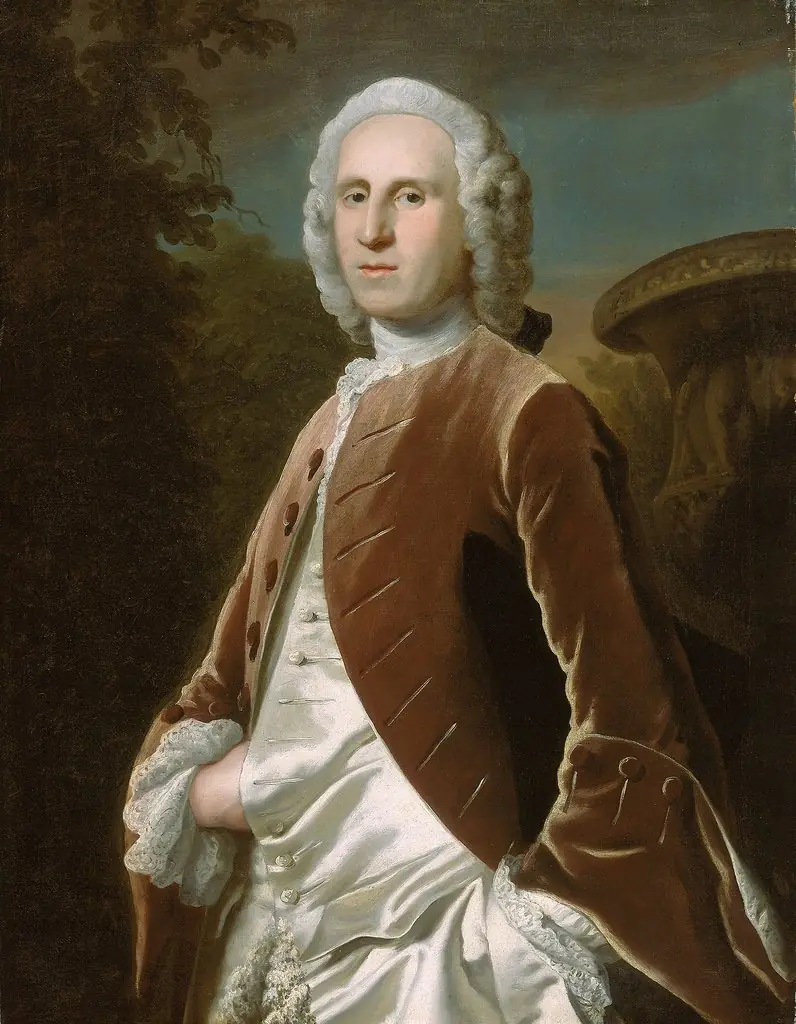 Freeman Flower
 John Gray (1731–1811) of Newholm
 John Boydell
 Joseph Warren
 Portrait of Louis Métayer Phz., Goldsmith and Art Collector
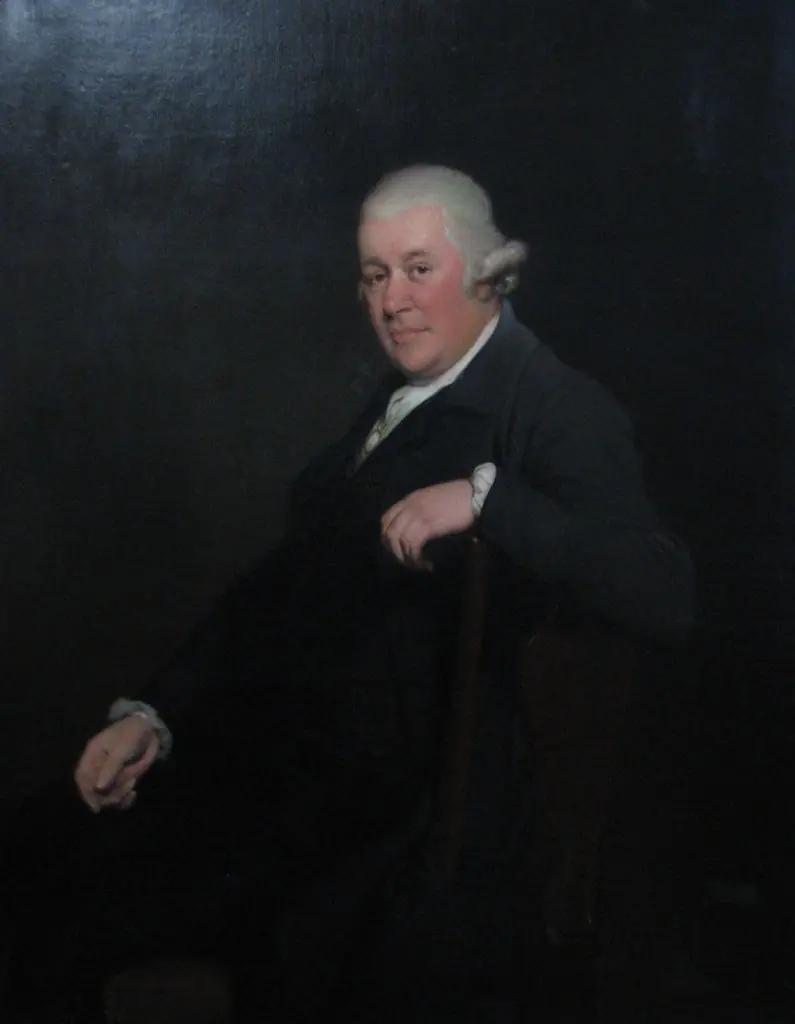 Reverend Basil Bury Beridge
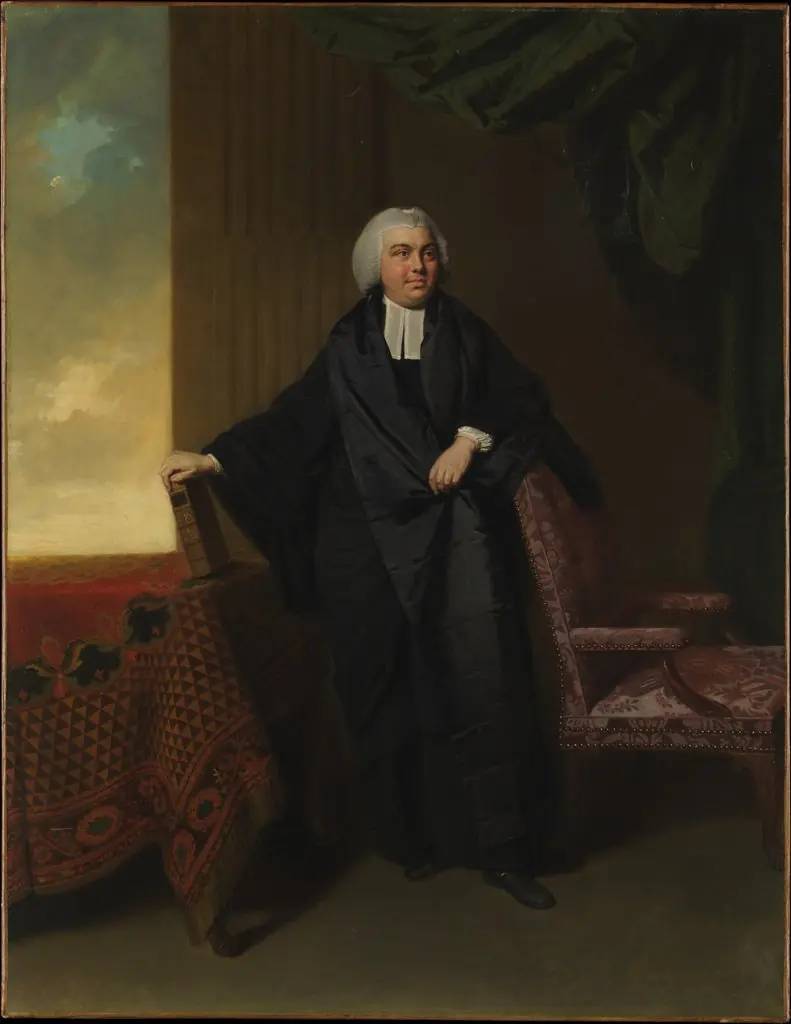 The Reverend Philip Cocks (1735–1797)