Artwork
Harrison Gray
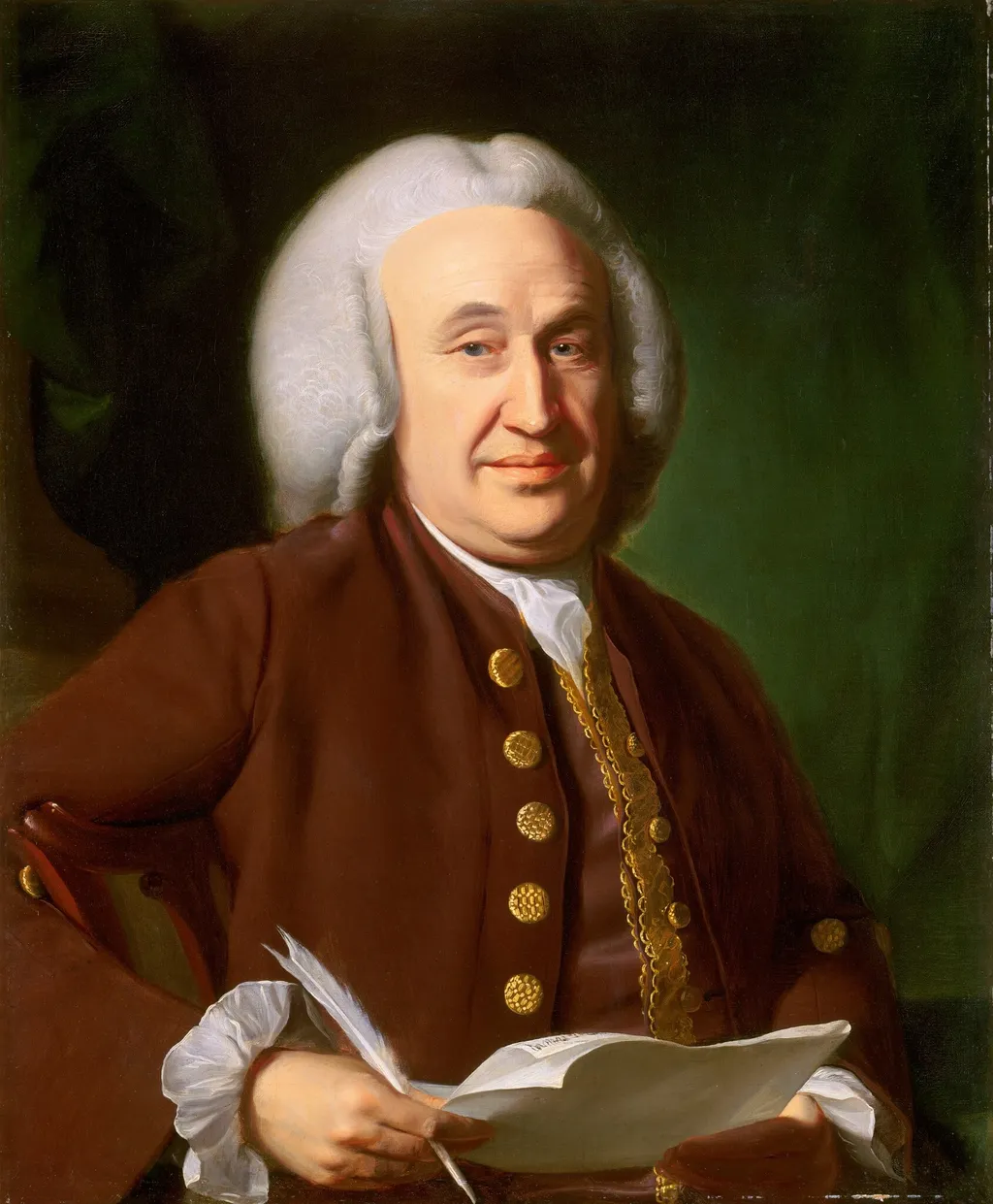
Harrison Gray is an oil painting by the American Impressionist artist John Singleton Copley. It dates from 1767 and is held in the collection of the National Gallery of Art.
About this work
Harrison Gray sits in eighteenth-century dress, books on the table beside him. The folds of cloth and the props suggest his interests, while the handling shows a young Copley working out depth and texture. Oil on canvas, 1767.
Subject & Meaning
Classified within the genre of portraiture, the image functions primarily as a likeness of the specific individual rather than an allegorical composition.
Painted by John Singleton Copley in 1767, this oil on canvas work is a portrait depicting Harrison Gray as its sole main subject. Classified within the genre of portraiture, the image functions primarily as a likeness of the specific individual rather than an allegorical composition. The provided records identify the sitter explicitly but do not describe specific iconographic elements, symbolic attributes, or broader representational meanings beyond the direct depiction of Gray himself.
The work's significance in the available documentation rests on its identity as a formal representation of the sitter, created during the mid-eighteenth century, rather than on complex narrative or symbolic content.
Technique & Style
Harrison Gray is executed in oil on canvas, the standard medium for John Singleton Copley's American portrait practice of the 1760s. The support measures 77.5 by 64 centimeters, a moderately scaled format suited to an intimate, half-length portrayal. The work is classified as a portrait painting and is held in the collection of the National Gallery of Art in Washington, D.C. No specific information is provided in the available sources regarding Copley's brushwork, palette, handling of paint, surface condition, or stylistic characterization beyond the basic medium and dimensions.
History & Provenance
John Singleton Copley executed this oil-on-canvas portrait of Harrison Gray in 1767. While the earliest documented owner is the sitter's great-grandson, James William Otis of New York, the work likely descended directly from Gray to his daughter, Elizabeth Gray Otis, and then to her son, Harrison Gray Otis (1765–1848). The painting subsequently passed to James's son, William Church Otis of Nahant, Massachusetts, and then to William's son, Harrison Gray Otis (1856–1915).
Records indicate the work was owned by Robert H. Gardiner and associates between 1917 and 1926. Later ownership transferred to William Alleyne Otis of Boston, followed by his cousins, Robert Helyer Thayer and Virginia Pratt Thayer of Washington, D.C. The Thayers donated the portrait to the National Gallery of Art in 1976.
The painting is held by the National Gallery of Art in Washington, D.C., where it entered the collection as a gift in 1976 from Robert Helyer Thayer and Virginia Pratt Thayer. Its provenance traces from the sitter through his daughter Elizabeth Gray Otis and her son Harrison Gray Otis to his great-grandson James William Otis of New York, then to William Church Otis and Harrison Gray Otis of Massachusetts, and to William Alleyne Otis of Boston, before passing to the Thayers in Washington, D.C. Records from the Museum of Fine Arts, Boston, indicate that the work was also owned between 1917 and 1926 by Robert H. Gardiner, Robert H. Gardiner Jr., and William Tudor Gardiner.
Context
John Singleton Copley painted Harrison Gray in 1767, a portrait that exemplifies his role in colonial American portraiture. The work, executed in oil on canvas, measures 77.5 × 64 cm and is housed in the National Gallery of Art, Washington, D.C. Its provenance traces from the sitter through successive generations of the Otis family to a 1976 gift to the museum, a lineage documented by genealogical research and cited in scholarly studies of Copley’s oeuvre. Art historians such as William A. Otis and Frank W. Bayley have used this painting to illustrate Copley’s technique and the social networks of Massachusetts elites, situating it within the broader development of 18th‑century portraiture.
Overview
John Singleton Copley's oil on canvas portrait, Harrison Gray, was created around 1767. This painting depicts its namesake subject, Harrison Gray, presented in a formal pose. It stands as an example from Copley's formative years, illustrating his evolving approach to portraiture.
The artwork provides a glimpse into both the sitter's public image and the artistic conventions prevalent during the mid-18th century.
Own this work as a print
Artist & collection
Artist
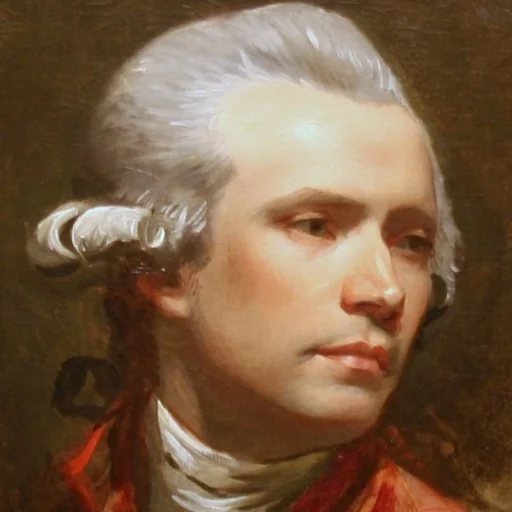
John Singleton Copley (July 3, 1738 – September 9, 1815) was an American-born British painter active in both the Thirteen Colonies and England.

 Captain Alexander Graydon
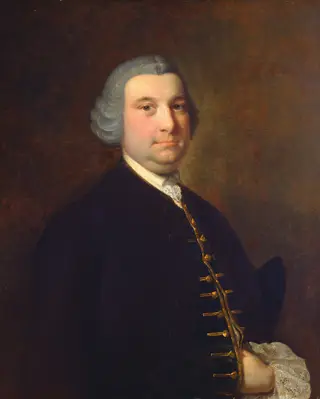 Portrait of a Gentleman
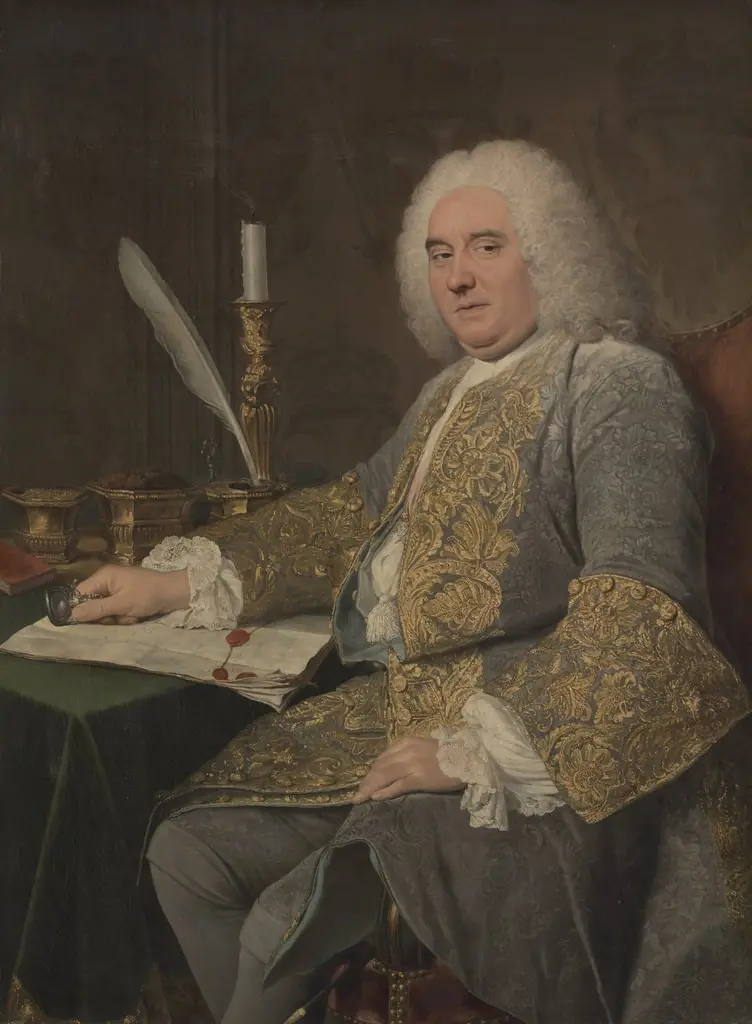 Portrait of Jean-Gabriel du Theil at the Signing of the Treaty of Vienna
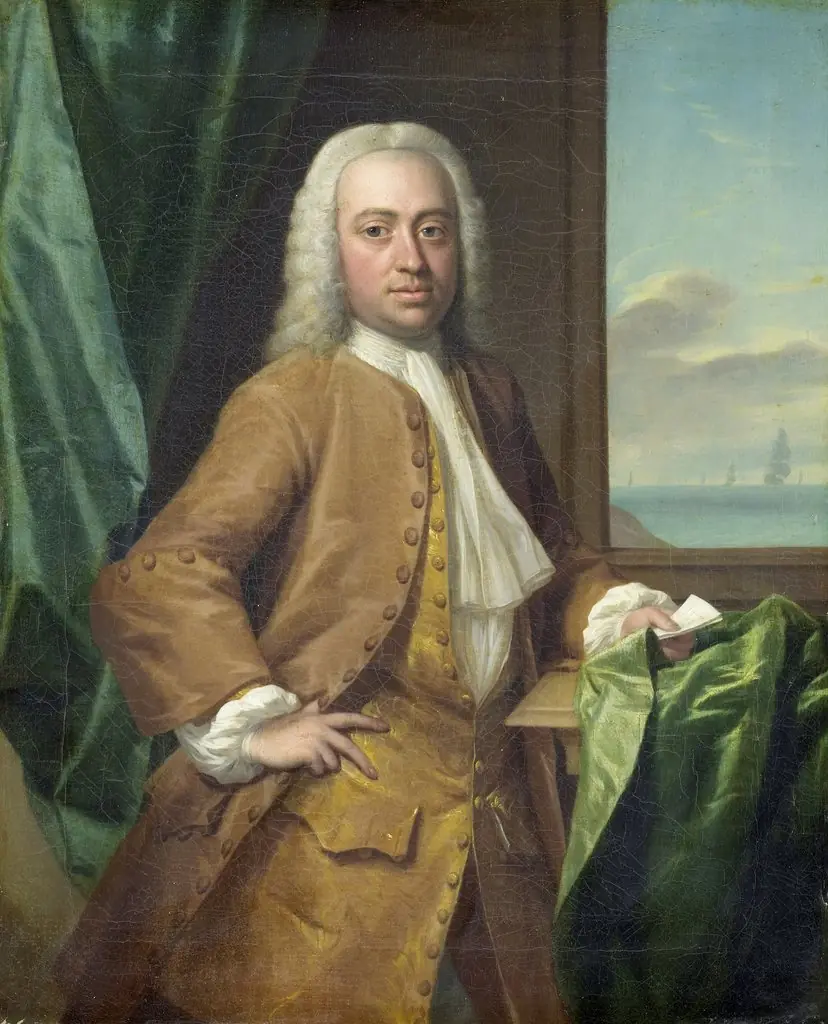 Portrait of Isaac Parker, Merchant from Middelburg
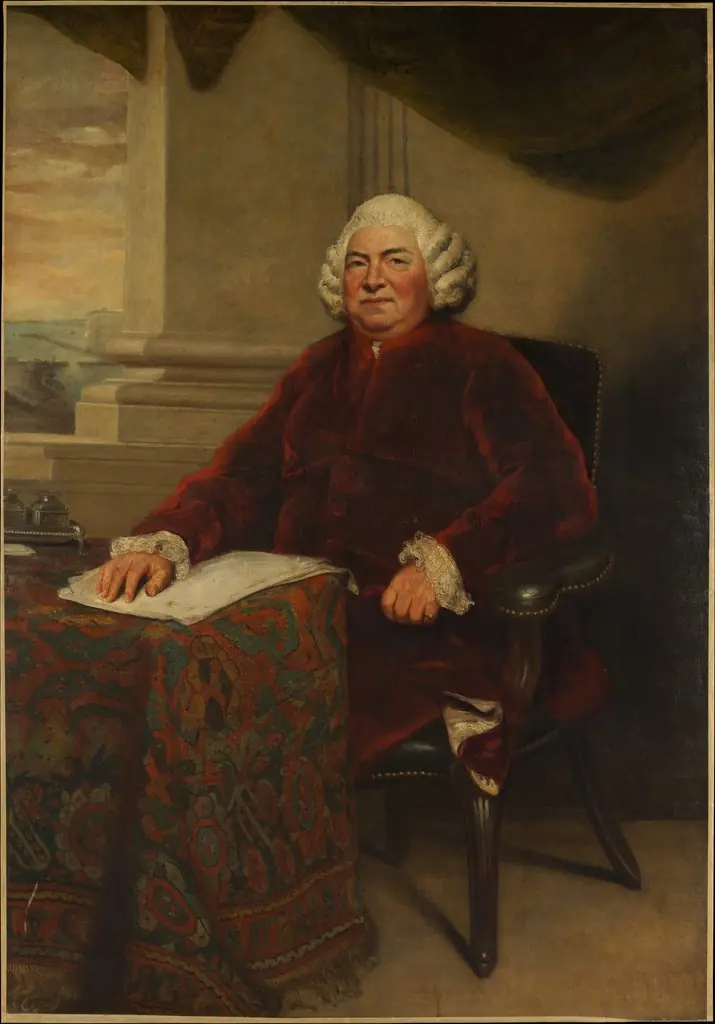 John Barker (1707–1787)
 Portrait of a Gentleman
 Portrait of Johan Willem Parker, Lord of Saamslag, Geersdijk, Wissekerke, Cats and Soelekerke, Burgomaster of Middelburg, Deputy of Walcheren in Zeeland
 Portrait of Sigismund Streit
 James Pitts
 Dr. Samuel Boude
 Ezekiel Goldthwait
- John Gray