Artwork
The Apostle Jean Journet Setting Out for the Conquest of Universal Harmony
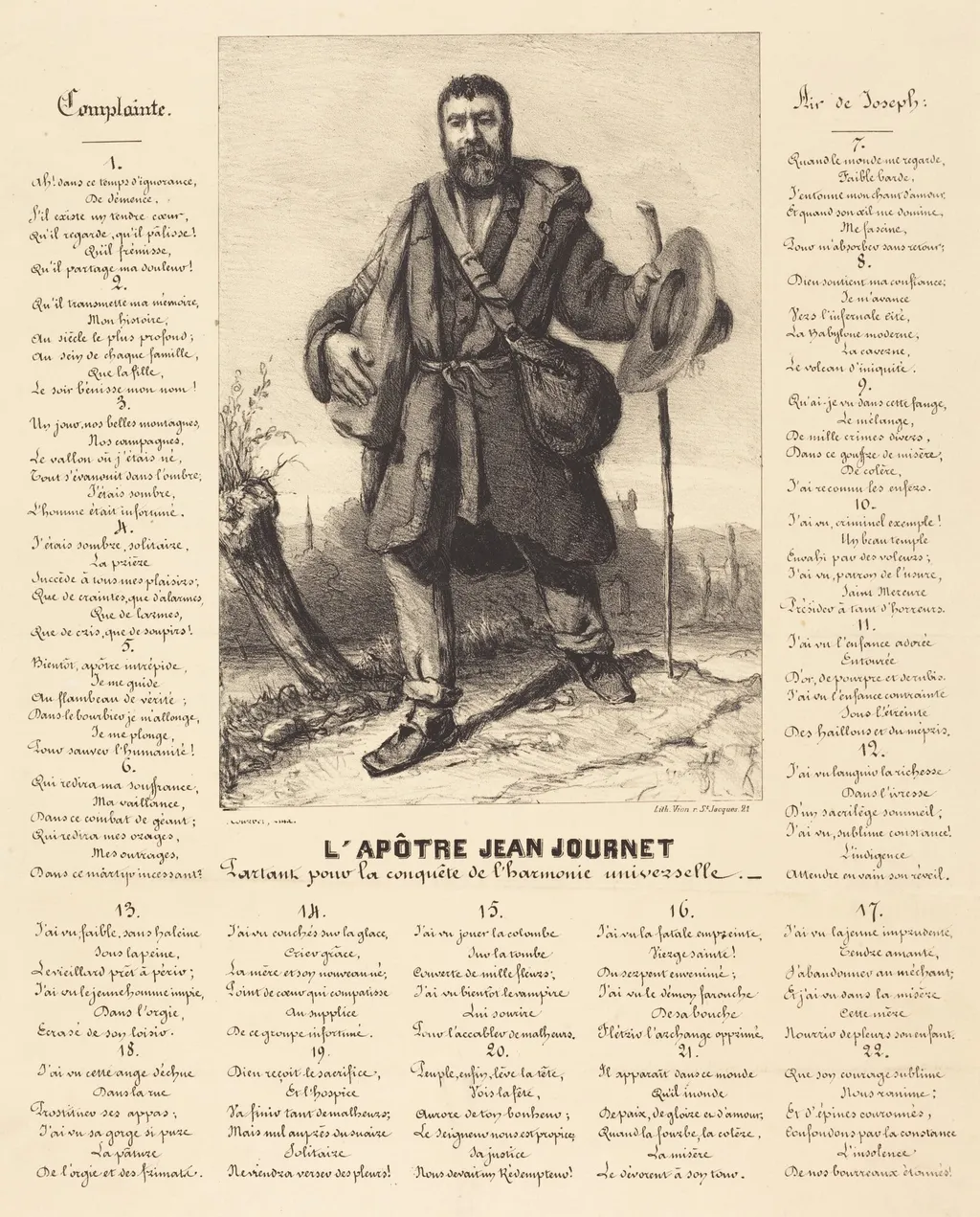
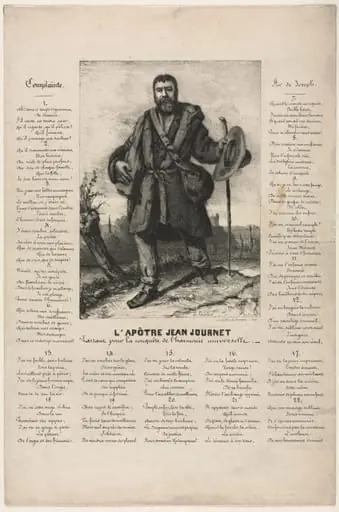
The Apostle Jean Journet Setting Out for the Conquest of Universal Harmony is an ink print by the Impressionist artist Gustave Courbet. It dates from 1850 and is held in the collection of the National Gallery of Art.
About this work
Overview
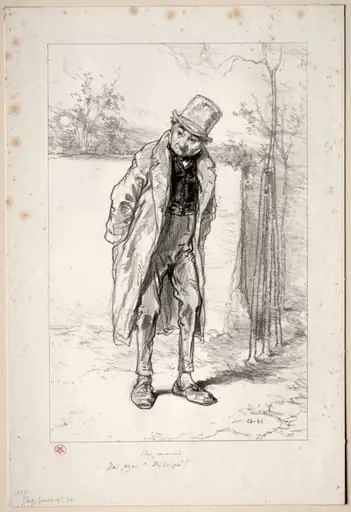
Created in 1850, this lithograph by Gustave Courbet depicts a solitary figure preparing for travel, rendered with the directness characteristic of Realism.
Created in 1850, this lithograph by Gustave Courbet depicts a solitary figure preparing for travel, rendered with the directness characteristic of Realism. Unlike the idealized subjects of academic art, Courbet chose an ordinary man, likely a contemporary figure, as the focus. The work belongs to a series of prints in which he explored themes of personal conviction and societal change, using the accessibility of printmaking to reach broader audiences.
Subject & Meaning
The figure, identified as Jean Journet, is portrayed not as a hero but as a quiet pilgrim, equipped with a walking stick and satchel, stepping onto a rugged path. The presence of a wild plant beside him suggests resilience and natural growth, possibly symbolizing the persistence of ideas amid adversity. Courbet avoids narrative drama, instead inviting contemplation of individual purpose and the quiet pursuit of ideals in a changing world.
Technique & Style
Courbet employed lithography to achieve fine tonal gradations and tactile textures, emphasizing the weight of fabric, the roughness of stone, and the delicate structure of the plant. The background is softly blurred, directing attention to the figure and foreground elements. His use of chiaroscuro and deliberate line work reflects a commitment to observed reality, rejecting theatrical lighting and idealized forms common in Romantic and academic traditions.
History & Provenance
Produced during Courbet’s early career, this print emerged alongside his growing notoriety for challenging artistic norms. It was likely circulated among intellectual circles in France, aligning with his broader efforts to democratize art. The work’s survival in institutional collections attests to its role in documenting the shift from Romanticism to Realism in mid-19th-century print culture.
Context
In 1850s France, the art world was dominated by state-sponsored academies favoring historical and mythological subjects. Courbet’s choice to depict an unremarkable man in a mundane setting was a quiet rebellion. His use of lithography, a medium often reserved for illustrations or propaganda, subverted expectations, positioning everyday life as worthy of serious artistic treatment.
Legacy
Though less known than his paintings, this lithograph exemplifies Courbet’s influence on later movements. His emphasis on direct observation and rejection of embellishment paved the way for Impressionist focus on the present moment and Cubist fragmentation of form. The print’s unadorned realism became a touchstone for artists seeking to ground art in lived experience rather than inherited convention.
Own this work as a print
Artist & collection
Artist
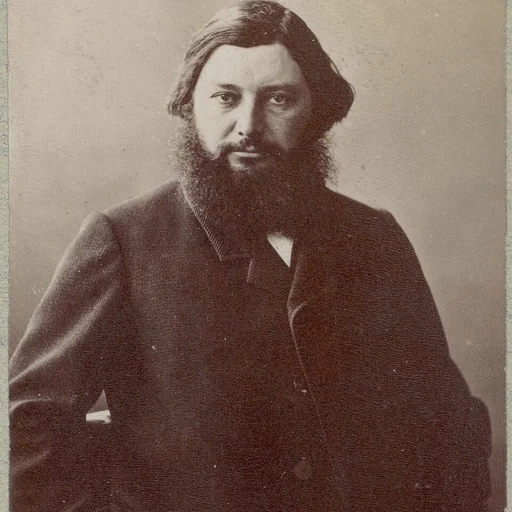
Jean Désiré Gustave Courbet (UK: KOOR-bay; US: koor-BAY; French:; 10 June 1819 – 31 December 1877) was a French painter who led the Realism movement in 19th-century French painting.

 Soldier with Dog
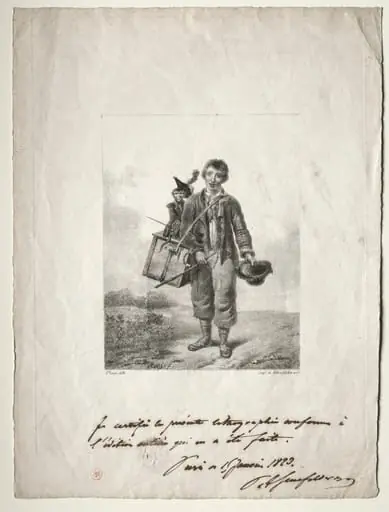 Organ-Grinder Boy
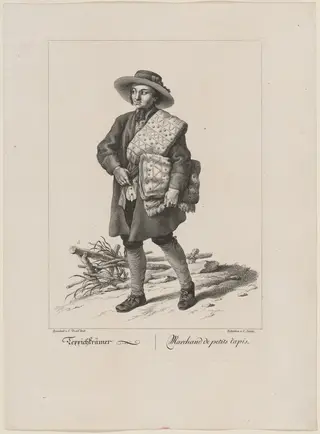 Teppichkrämer (Textile Merchant)
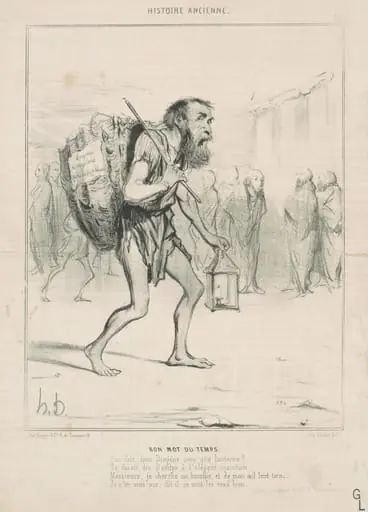 Bon mot du temps
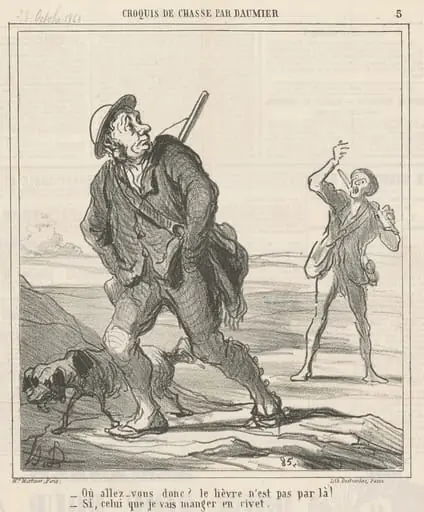 Ou allez-vous donc?
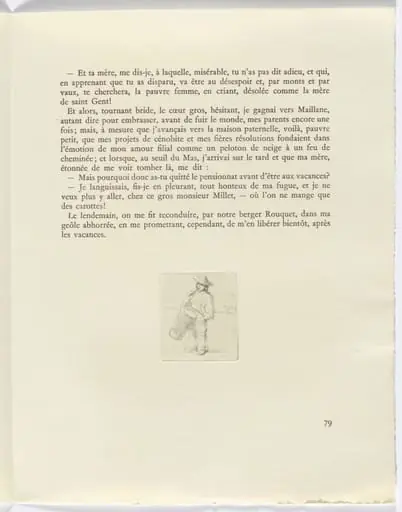 Frédéric Mistral: Mémoires et Recits by Frédéric Mistral: boy playing drum (page 79)
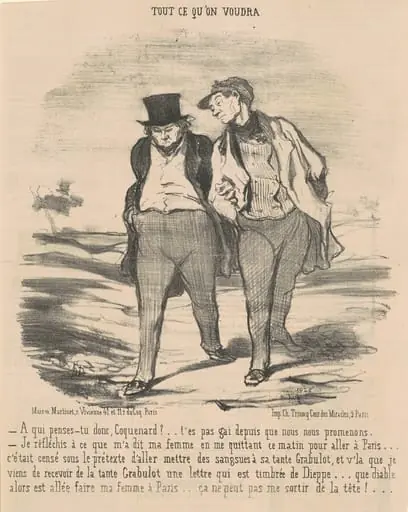 A qui penses-tu donc, coquenard? ...
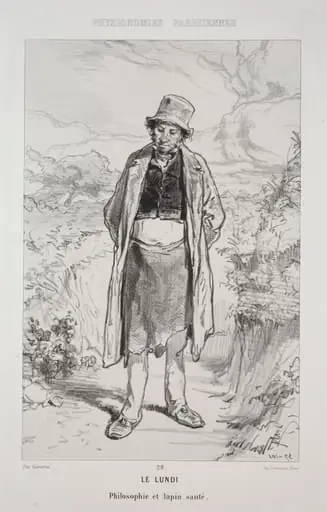 Le Lundi
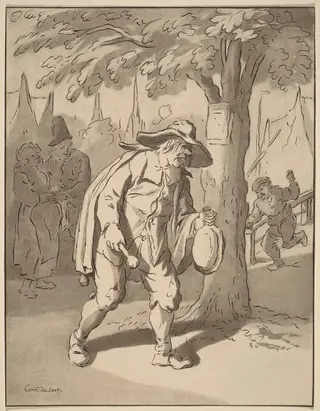 Town Crier
 Physionomies Parisiennes: Au Marais. Ici, Azor! ici!
 Five Vignettes
- Jean Journet Departing for the Conquest of Universal Harmony