Artwork
Jean Journet Departing for the Conquest of Universal Harmony
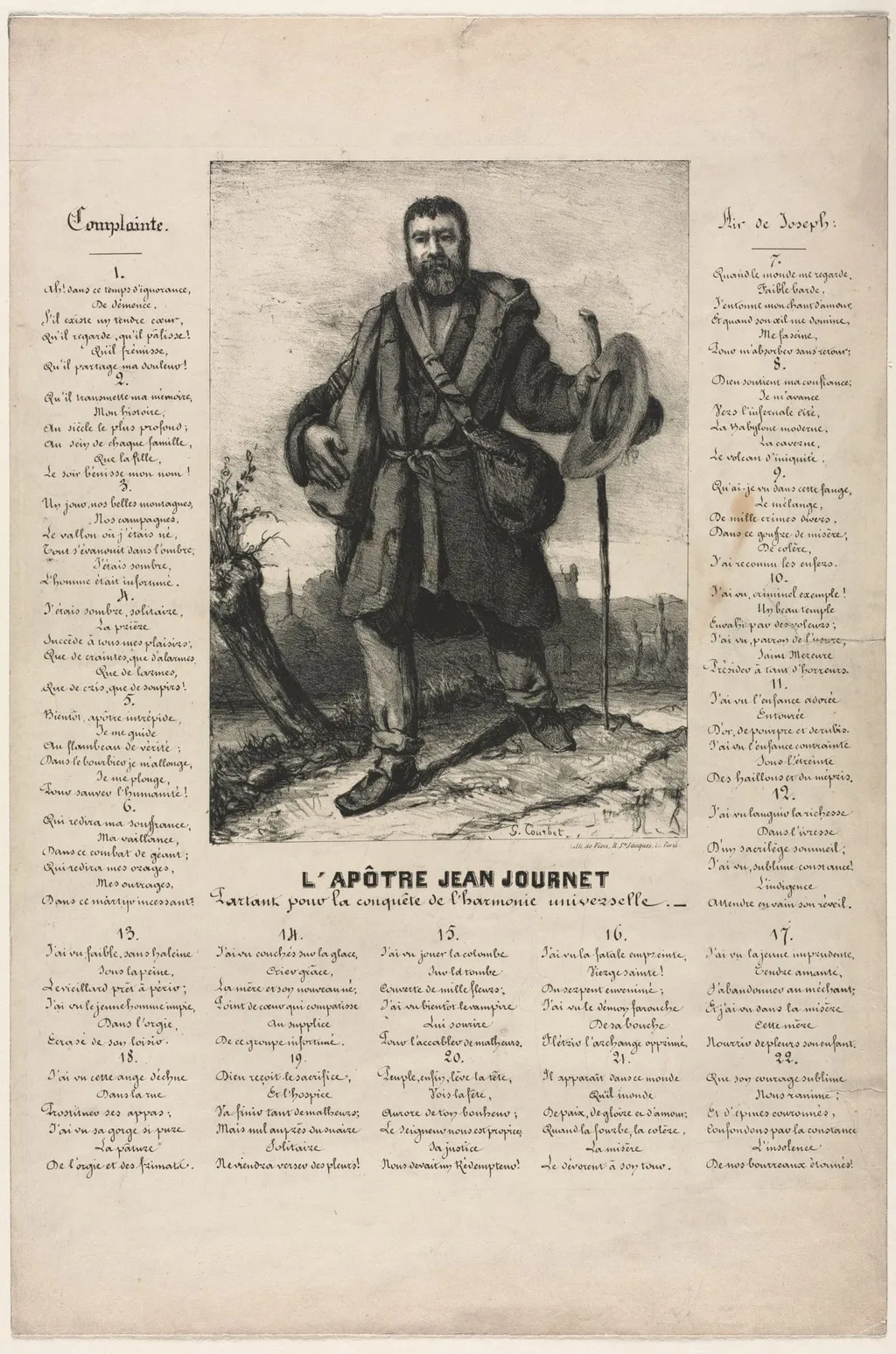
Jean Journet Departing for the Conquest of Universal Harmony is a print by the Impressionist artist Gustave Courbet. It dates from 1850 and is held in the collection of the Cleveland Museum of Art.
- Accession no.
- 1948.65
- Credit line
- Mr. and Mrs. Lewis B. Williams Collection
About this work
Overview
Unlike the dramatic narratives favored by academic painters, Courbet chose a moment of stillness, capturing a solitary individual in an unidealized setting.
Painted in 1850 by Gustave Courbet, this ink sketch depicts Jean Journet, a figure associated with Courbet’s circle, seated alone on a rugged outcrop. Unlike the dramatic narratives favored by academic painters, Courbet chose a moment of stillness, capturing a solitary individual in an unidealized setting. The work’s informal quality suggests it was made as a preparatory study, reflecting Courbet’s interest in direct observation over staged composition.
Subject & Meaning
The figure, identified as Jean Journet, is portrayed not in action but in contemplation, his posture suggesting inner tension rather than heroic departure. The title implies a grand mission, 'the conquest of universal harmony', yet the image offers no symbols of triumph or journey. Instead, the quiet intensity of the figure contrasts with the abstracted landscape, hinting at personal or philosophical struggle rather than literal adventure.
Technique & Style
Courbet employed loose, expressive ink lines against a pale paper ground, emphasizing texture and mood over detail. The brushwork is rapid and economical, with dark strokes defining the figure’s form and the shadowed terrain behind him. This approach aligns with Realist principles: rejecting polished finish in favor of immediacy, capturing the physical presence of the subject without embellishment or idealization.
History & Provenance
The sketch entered the collection of The Cleveland Museum of Art through documented acquisition, though its early ownership history remains partially obscure. Created during Courbet’s formative years as a Realist, it likely served as a study for a larger, unrealized composition. Its survival reflects its value to Courbet’s process, even if it was never intended as a finished public work.
Context
In 1850, Courbet was challenging the French art establishment by prioritizing ordinary subjects and rejecting mythological or historical themes. Journet, a fellow artist and political radical, embodied the era’s intellectual ferment. This sketch, though modest in scale, aligns with Courbet’s broader project: elevating the individual, the contemporary, and the unadorned into the realm of serious art.
Legacy
Though not widely exhibited, this sketch exemplifies Courbet’s commitment to authenticity in representation. Its rawness influenced later generations of artists who valued process over polish, and personal expression over conventional narrative. It stands as a quiet testament to the Realist movement’s emphasis on truth over spectacle.
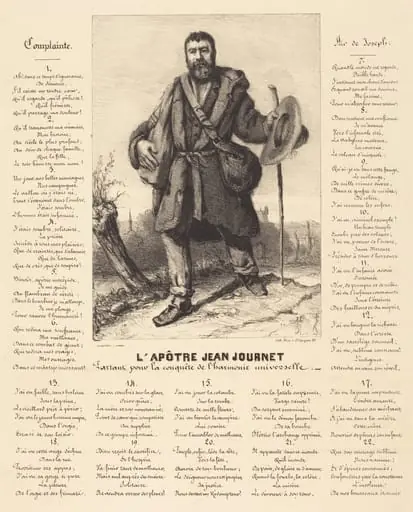
Own this work as a print
Artist & collection
Artist
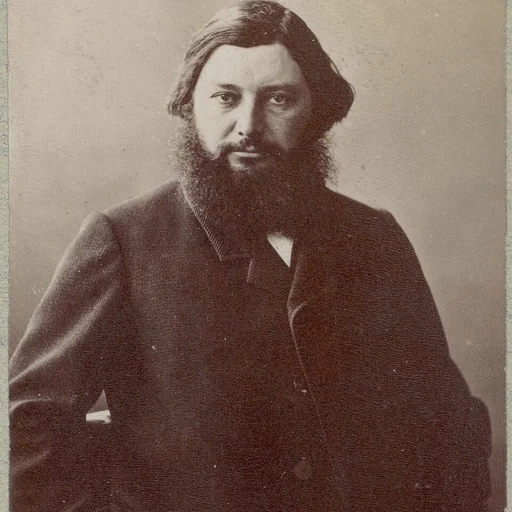
Jean Désiré Gustave Courbet (UK: KOOR-bay; US: koor-BAY; French:; 10 June 1819 – 31 December 1877) was a French painter who led the Realism movement in 19th-century French painting.

 Organ-Grinder Boy
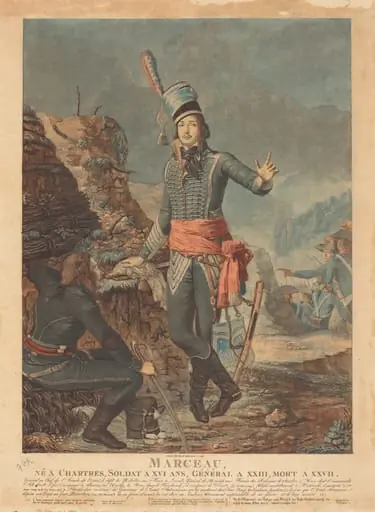 François Séverin Marceau-Desgraviers
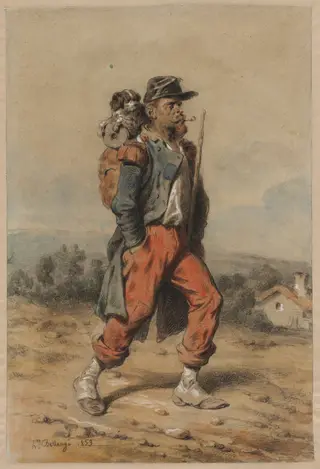 Soldier with Dog
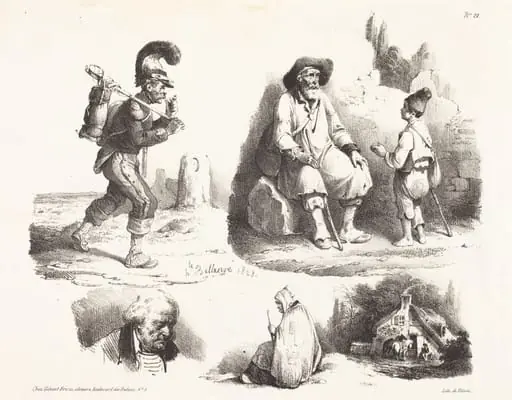 Five Vignettes
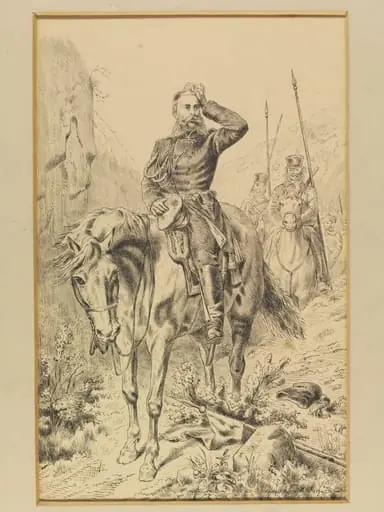 Portrait of General Mikhail Dmitrievich Skobelev
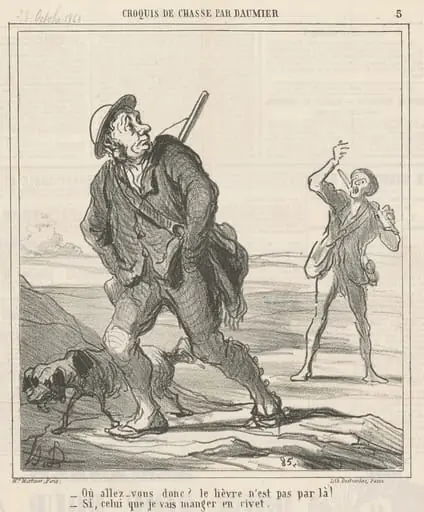 Ou allez-vous donc?
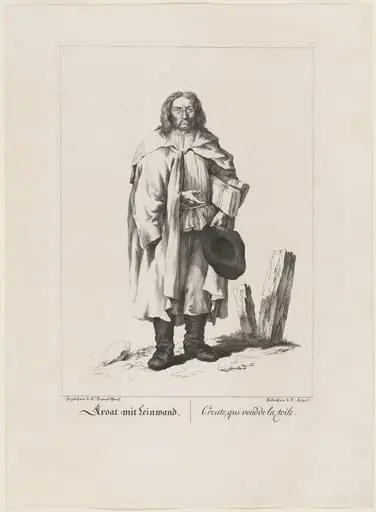 Kroat mit Leinwand (Linen Merchant)
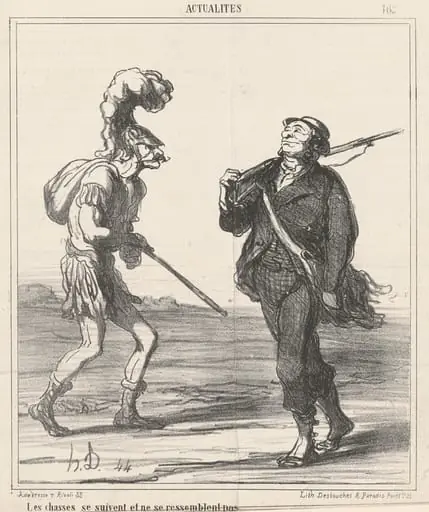 Les chasses ... ne se ressemblent pas
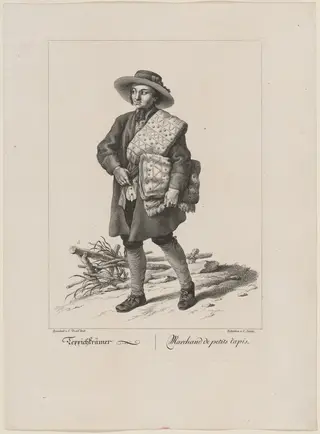 Teppichkrämer (Textile Merchant)
 "Les Scélérats!..."
- The Apostle Jean Journet Setting Out for the Conquest of Universal Harmony
 The Man of Sorrows Mocked by a Soldier