Artwork
Saint Paul
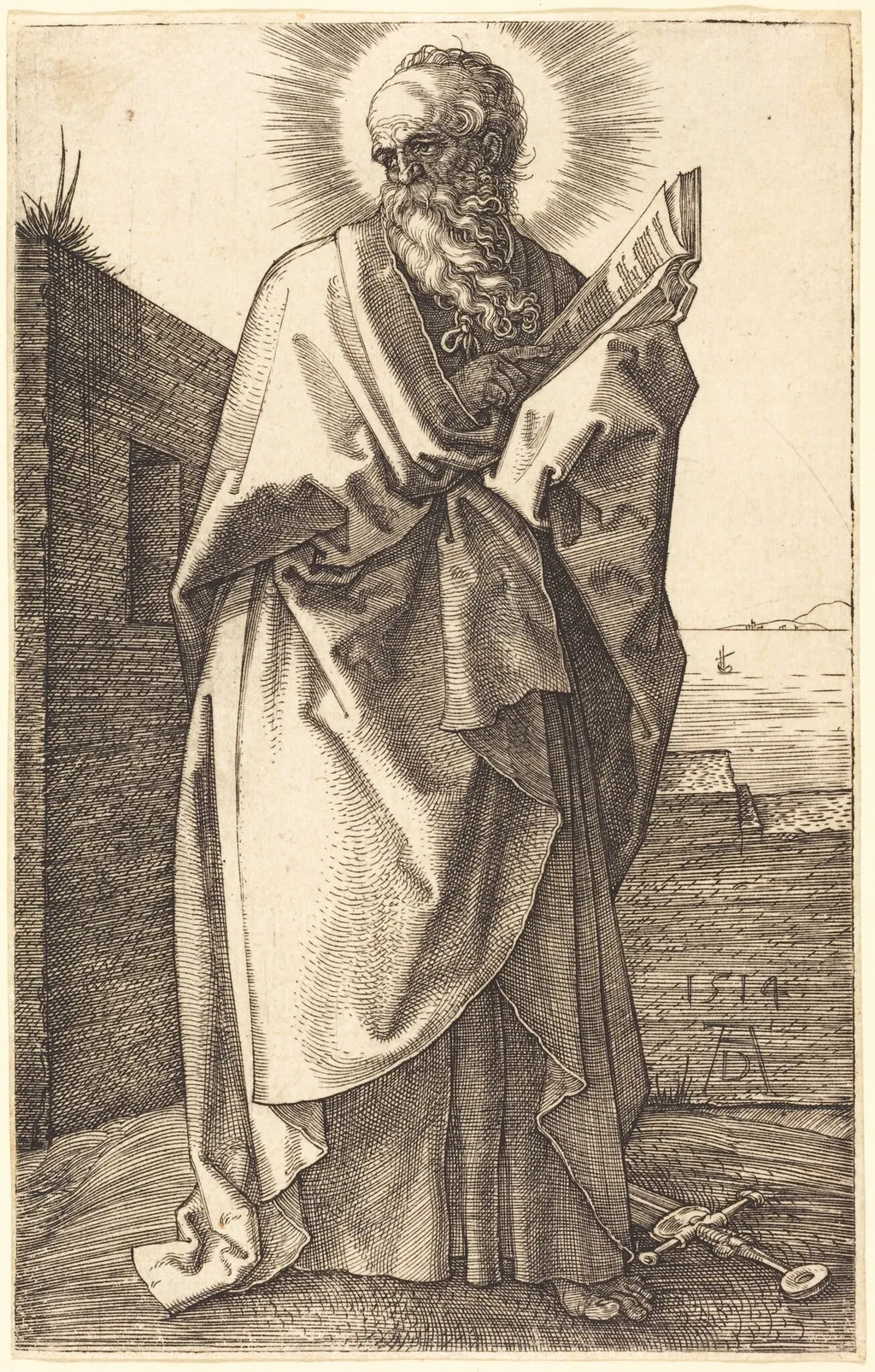
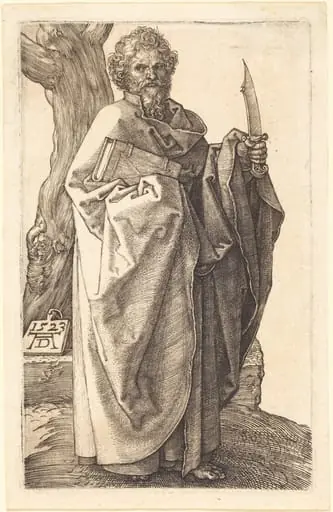
Saint Paul is an ink print by the Northern Renaissance artist Albrecht Dürer. It dates from 1514 and is held in the collection of the National Gallery of Art.
- Inscription
- Inscribed:in plate, lower right: 1514 / AD [artist's monogram]; verso, center, in graphite by a later hand: C.19409; verso, lower left, in graphite by a later hand: 69; verso, lower center, in graphite by a later hand: A 779; verso, lower left, in graphite by a later hand: K8208 J.4280; verso, lower right, in graphite by a later hand: B50; verso, lower left, in graphite by a later hand: Cons. 8594; verso, bottom center, in graphite by a later hand: 521g
About this work
Overview
This print is part of Dürer's celebrated series of engravings from 1513 and 1514, which includes Knight, Death, and the Devil and Melencolia I.
Created in 1514, Saint Paul is a masterful engraving by the German Renaissance artist Albrecht Dürer. The work depicts the Apostle Paul seated in a dimly lit interior, characterized by Dürer's precise hatching and cross-hatching techniques that model form and texture with remarkable depth. The figure is shown as an older man with a long beard and curly hair, wearing a loose robe while holding an open book, symbolizing his role as a writer of the New Testament epistles.
A distinctive feature of the composition is the small birdcage resting on a table in the background, a detail often interpreted as a symbol of the soul or spiritual captivity. Divine light streams through a window, illuminating the saint's head and the book, emphasizing his inspiration. This print is part of Dürer's celebrated series of engravings from 1513 and 1514, which includes Knight, Death, and the Devil and Melencolia I. These works represent the apex of his graphic art, demonstrating his synthesis of Northern European detail with Italian Renaissance principles of proportion and perspective.
The engraving stands as a definitive example of Dürer's ability to convey complex theological themes through intricate visual narrative.
Subject & Meaning
The image portrays the apostle Paul, traditionally associated with scholarly authority and missionary zeal. The open book suggests his epistolary contributions to early Christianity, while the illuminated head may allude to divine inspiration. The presence of a birdcage could symbolize the containment of the soul or the spread of the gospel, reinforcing themes of knowledge and spiritual guidance.
Technique & Style
Dürer employs fine cross‑hatching to build tonal depth, especially in the folds of the robe and the texture of the hair. The dense network of lines creates subtle shadows and a sense of three‑dimensionality on the flat surface of the paper. This precise, linear approach reflects the artist’s mastery of engraving and his interest in rendering material surfaces with scientific exactness.
History & Provenance
The engraving has been part of the collection of the National Gallery of Art in Washington, D.C. since the museum acquired it in the mid‑20th century. Its provenance traces back to early European collections of Dürer’s prints, illustrating the work’s continued relevance to scholars and collectors of Northern Renaissance graphic art.
Context
Created during the later phase of Dürer’s career, Saint Paul reflects his ongoing engagement with religious subjects amid the Reformation’s early stirrings. The work aligns with Dürer’s broader print output, which sought to disseminate theological ideas through accessible, reproducible media, allowing a wider audience to encounter devotional imagery beyond painted altarpieces.
Own this work as a print
Artist & collection
Artist
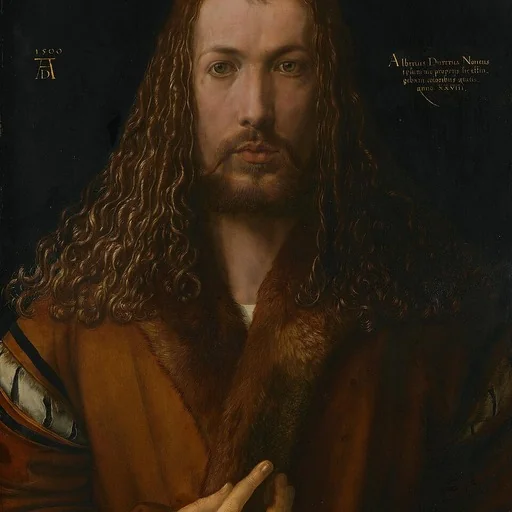
Albrecht Dürer spent his life in Nuremberg, a busy German city where artists traded prints like currency.

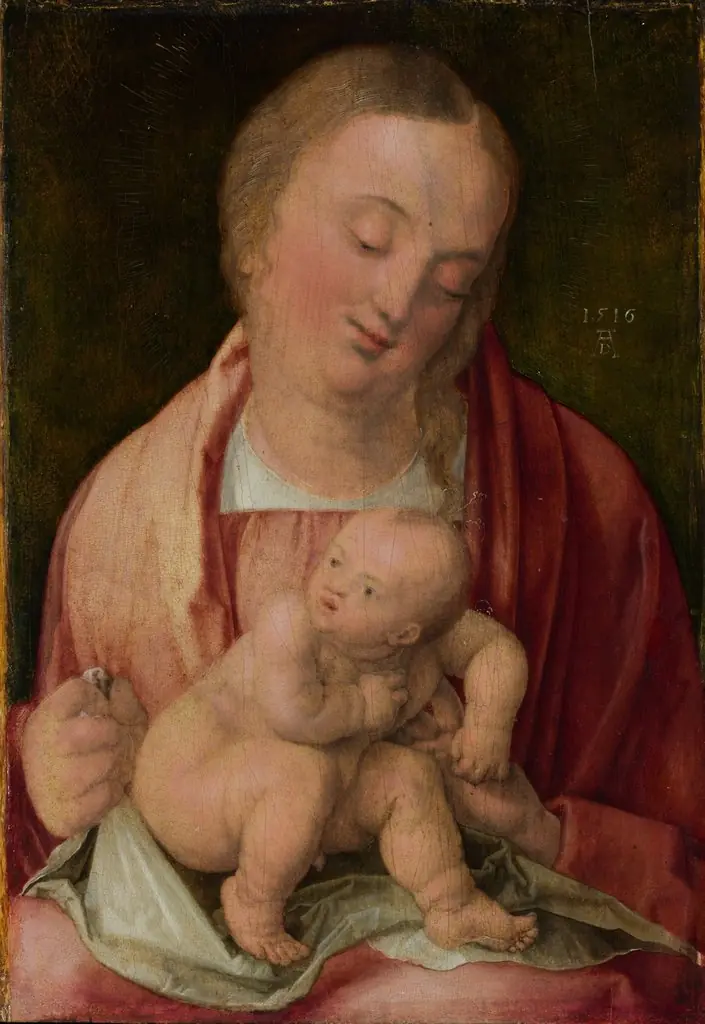
![Madonna and Child [obverse], by Albrecht Dürer](https://artifactworldgallery.com/img/albrecht-durer--madonna-and-child-obverse--d7b8ebf05d22ebe5-w320.webp)
![Lot and His Daughters [reverse], by Albrecht Dürer](https://artifactworldgallery.com/img/albrecht-durer--lot-and-his-daughters-reverse--b4ebf9b282faa17a-w320.webp)