Artwork
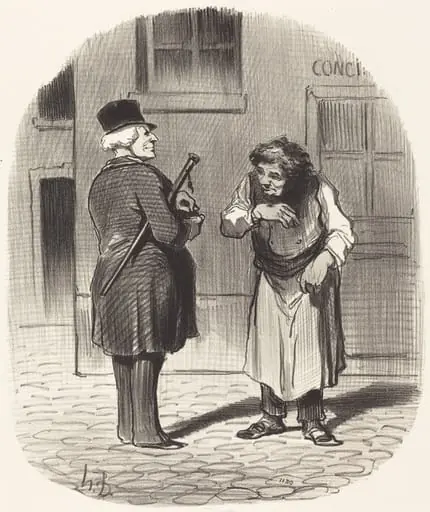
Comment on donne... le goût de la navigation
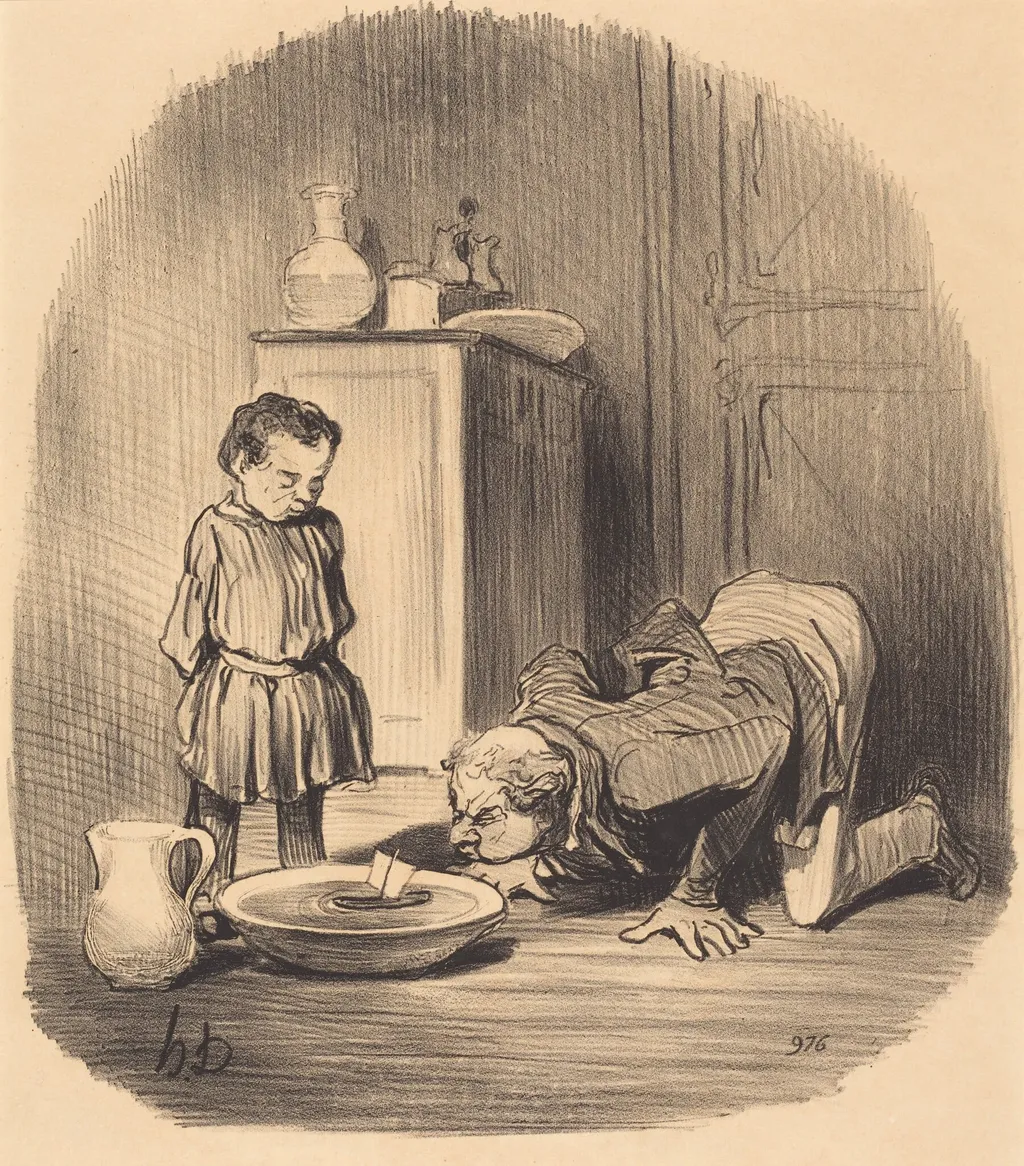
Comment on donne... le goût de la navigation is an ink print by the Romanticist artist Honoré Daumier. It dates from 1846 and is held in the collection of the National Gallery of Art. Created in 1846, Comment on donne.
About this work
Overview
The image, rendered in a loose, sketch‑like manner, captures a domestic scene that doubles as a social observation.
Created in 1846, Comment on donne... le goût de la navigation is a lithographic print by Honoré Daumier. Executed during the turbulent years of the July Monarchy and the early Second Republic, the work exemplifies Daumier’s habit of using print media to comment on contemporary French life. The image, rendered in a loose, sketch‑like manner, captures a domestic scene that doubles as a social observation.
Subject & Meaning
The composition presents a young boy in worn clothing, standing solemnly while a man crouches over a shattered plate, reaching toward the floor. A cluttered shelf bearing jars and a small statue, together with a jug and bowl scattered nearby, suggests a cramped interior. The boy’s mournful expression and the man’s strained posture evoke hardship and the precariousness of daily existence, hinting at broader social anxieties.
Technique & Style
Daumier employed the lithographic process, drawing directly onto a limestone surface with greasy crayon before treating the stone chemically to fix the image. The resulting print is characterized by rapid, gestural lines that prioritize emotional impact over precise detail. This approach allows the artist to convey tension and melancholy through the economy of line, a hallmark of his caricatural style.
History & Provenance
The print first appeared in the mid‑19th‑century French satirical press, where Daumier regularly contributed to titles such as La Caricature and Le Charivari. Though originally circulated as a newspaper illustration, the work later entered private collections and was eventually acquired by several European museums, reflecting its continued relevance as a document of period journalism and visual satire.
Context
Produced at a time of political upheaval, the image reflects Daumier’s broader critique of the ruling classes, the clergy, and the social order. By focusing on an intimate, seemingly mundane scene, he underscores the everyday consequences of systemic instability. The print remains a reference point for scholars studying the intersection of art, journalism, and social commentary in 19th‑century France.
Own this work as a print
Artist & collection
Artist
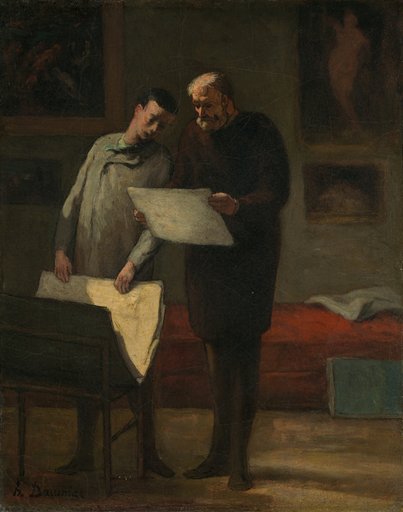
Honoré-Victorin Daumier (French: ; 26 February 1808 – 10 or 11 February 1879) was a French painter, sculptor, and printmaker, whose many works offer commentary on the social and political life in France, from the…









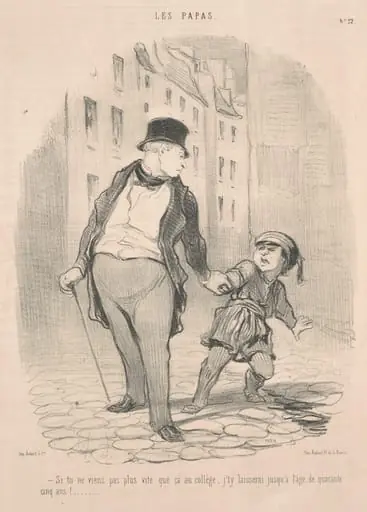 Si tu ne viens pas plus que ça au collège ...
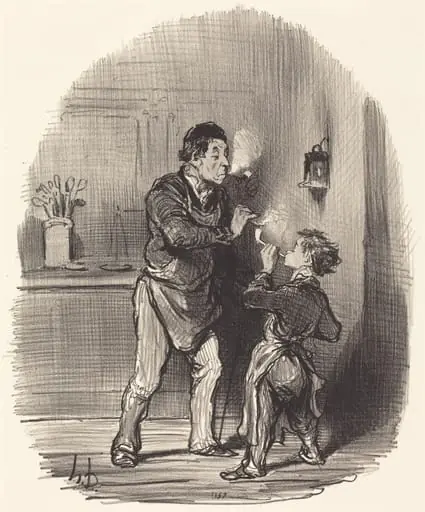 Le Chiffonnier philosophe
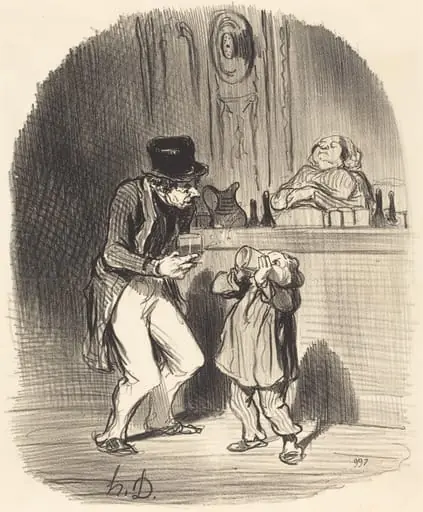 Un Père qui fait sucer à son fils...
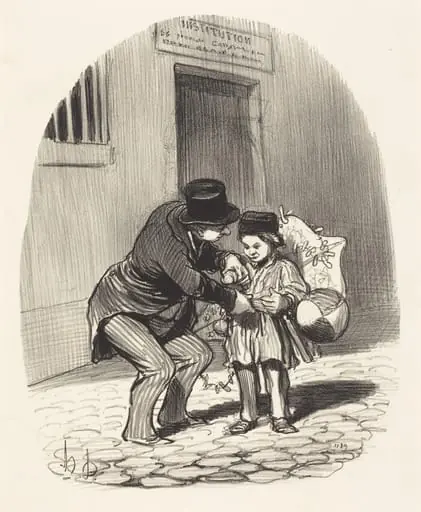 Le Jour de sortie
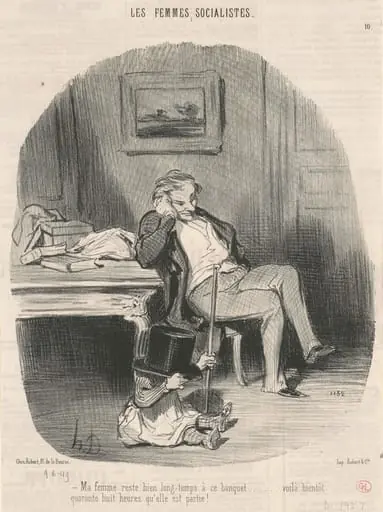 Ma femme reste bien longtemps a ce banquet ...
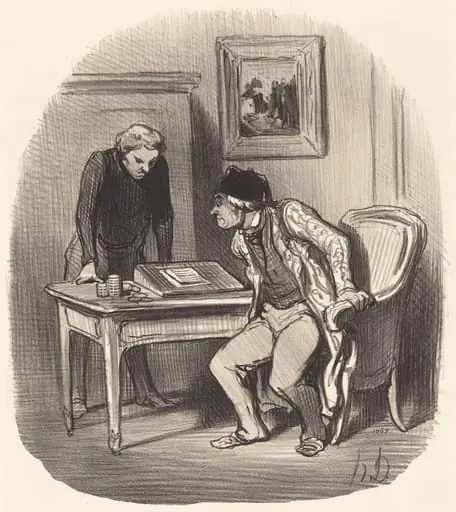 Le Compte est-il bien exact?...
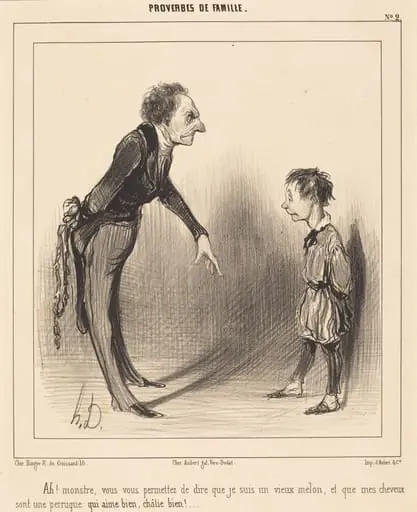 Ah! monstre, vous vous permettez...
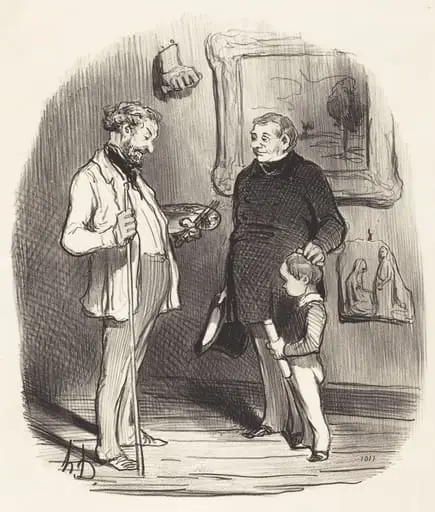 V'la mon petit... s'il n'a pas assez de moyens...
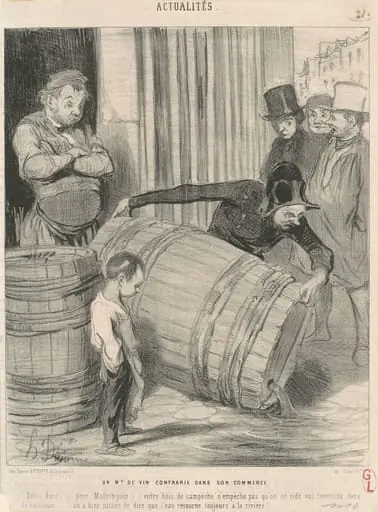 Un marchand de vin contrarié dans son commerce
 Le Jour de l'an