Artwork
Oh! ma femme est morte!
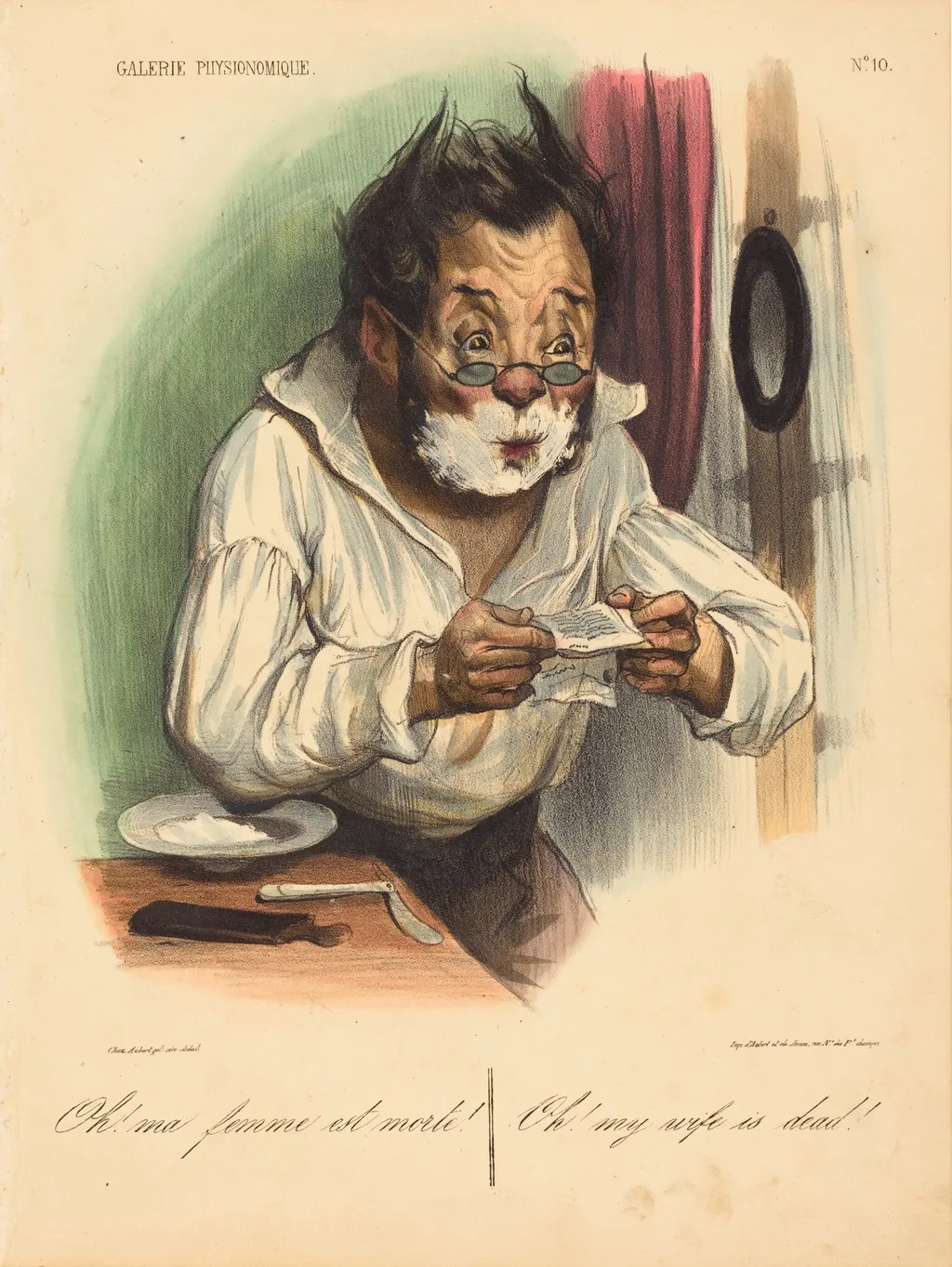
Oh! ma femme est morte! is an ink print by the Romanticist artist Honoré Daumier. It dates from 1836 and is held in the collection of the National Gallery of Art.
About this work
Overview
As part of his prolific output for satirical journals, the print uses visual wit to reflect the emotional extremes of middle-class life under the July Monarchy.
Created in 1836, this hand-colored lithograph by Honoré Daumier captures a moment of sudden grief with dark humor. As part of his prolific output for satirical journals, the print uses visual wit to reflect the emotional extremes of middle-class life under the July Monarchy. Its immediacy and expressive line work were typical of lithographic satire, designed for rapid circulation and public recognition.
Subject & Meaning
The scene depicts a man reacting to news of his wife’s death, clutching a letter while seated at a modest table. His disheveled appearance and exaggerated expression suggest absurdity rather than solemnity. The juxtaposition of domestic banality, a half-eaten meal, a hanging hat, with profound loss critiques the performative nature of emotion in bourgeois society, hinting at emotional detachment masked by theatrical grief.
Technique & Style
Daumier employed rapid, fluid lines to convey psychological intensity, characteristic of his lithographic approach. The hand-coloring adds subtle emphasis without softening the sketchy, almost spontaneous quality of the image. This technique allowed for mass reproduction while preserving the raw energy of his draftsmanship, making the emotional impact immediate and accessible to a broad readership.
History & Provenance
Produced during Daumier’s most active period of political satire, the print likely appeared in Le Charivari, a journal known for its sharp social commentary. Though specific publication details are unrecorded, the work aligns with his broader body of prints from the mid-1830s, which often led to censorship and legal trouble. Its survival reflects its resonance within contemporary visual culture.
Context
Under the July Monarchy, public discourse was tightly controlled, yet satirical prints thrived as subversive tools. Daumier’s work tapped into widespread public skepticism toward social norms and institutional authority. By rendering personal tragedy with comic exaggeration, he exposed the gap between societal expectations and human behavior, offering a quiet critique of bourgeois values.
Legacy
Daumier’s approach influenced later generations of illustrators and cartoonists who prioritized emotional truth over formal polish. His use of lithography to convey complex social observations set a precedent for visual journalism. Though initially dismissed as ephemeral, works like this one are now recognized for their psychological depth and enduring commentary on human frailty.
Own this work as a print
Artist & collection
Artist
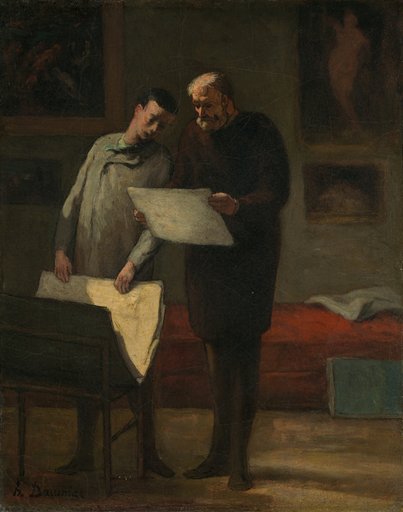
Honoré-Victorin Daumier (French: ; 26 February 1808 – 10 or 11 February 1879) was a French painter, sculptor, and printmaker, whose many works offer commentary on the social and political life in France, from the…









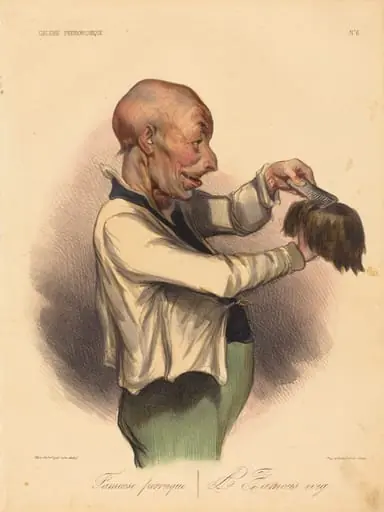 Fameuse perruque
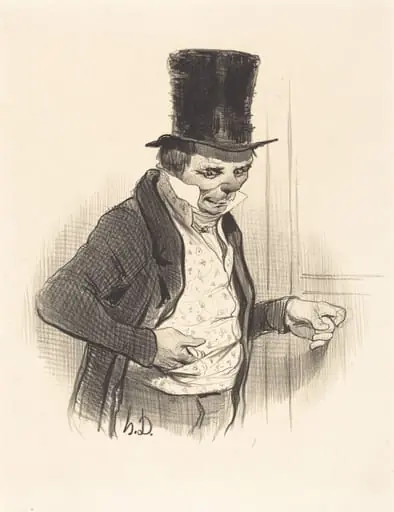 Le Portier en tournées de visites...
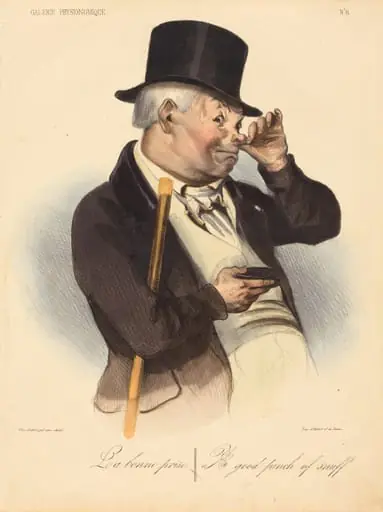 La bonne prise
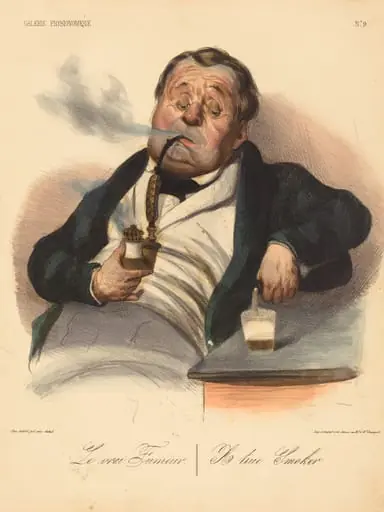 Le vrai Fumeur
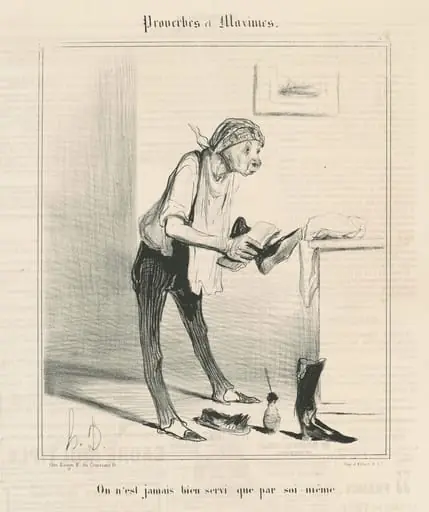 On n'est jamais bien servi que par soi-même
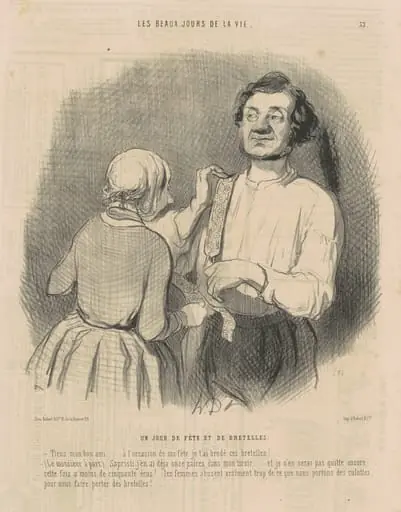 Un jour de fête et de bretelles
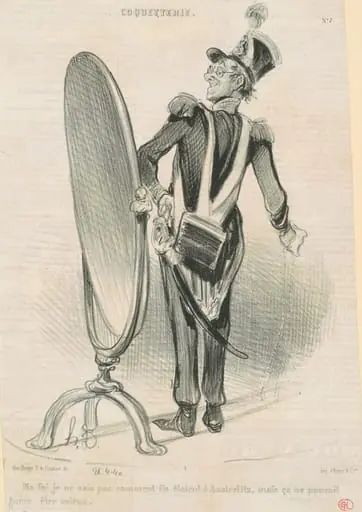 Ma fois je ne sais pas comment ils ...
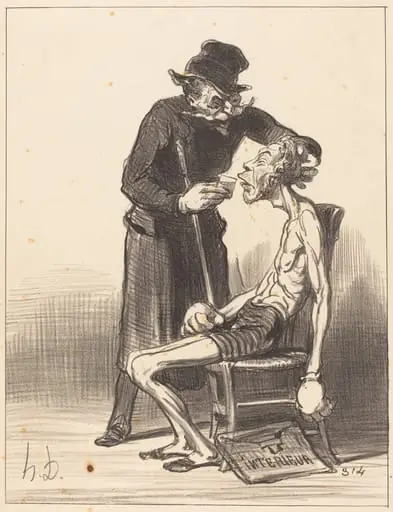 Un Lutteur malheureux
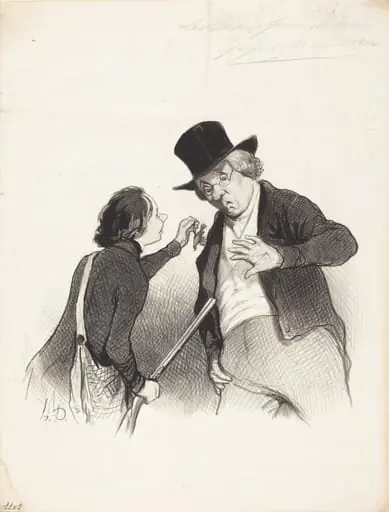 Un Début a la chasse
 Qu'il est gentil comme ça, Dodore...
 Vanity Fair: Men of the Day, No. 60, "A Novelist"
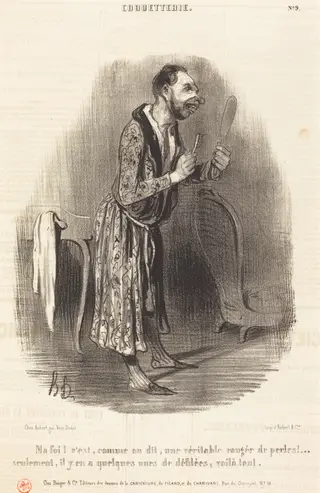
- Ma foi! c'est comme on dit...