Artwork
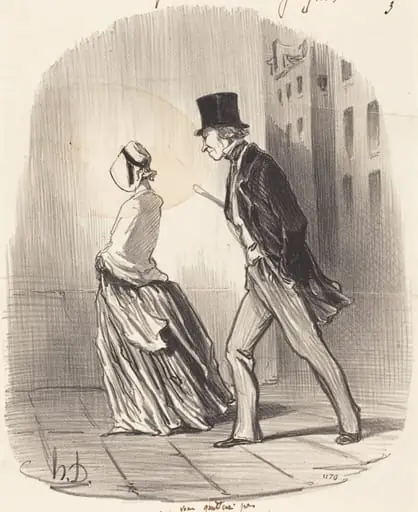
Oh! p'pa... la belle femme!
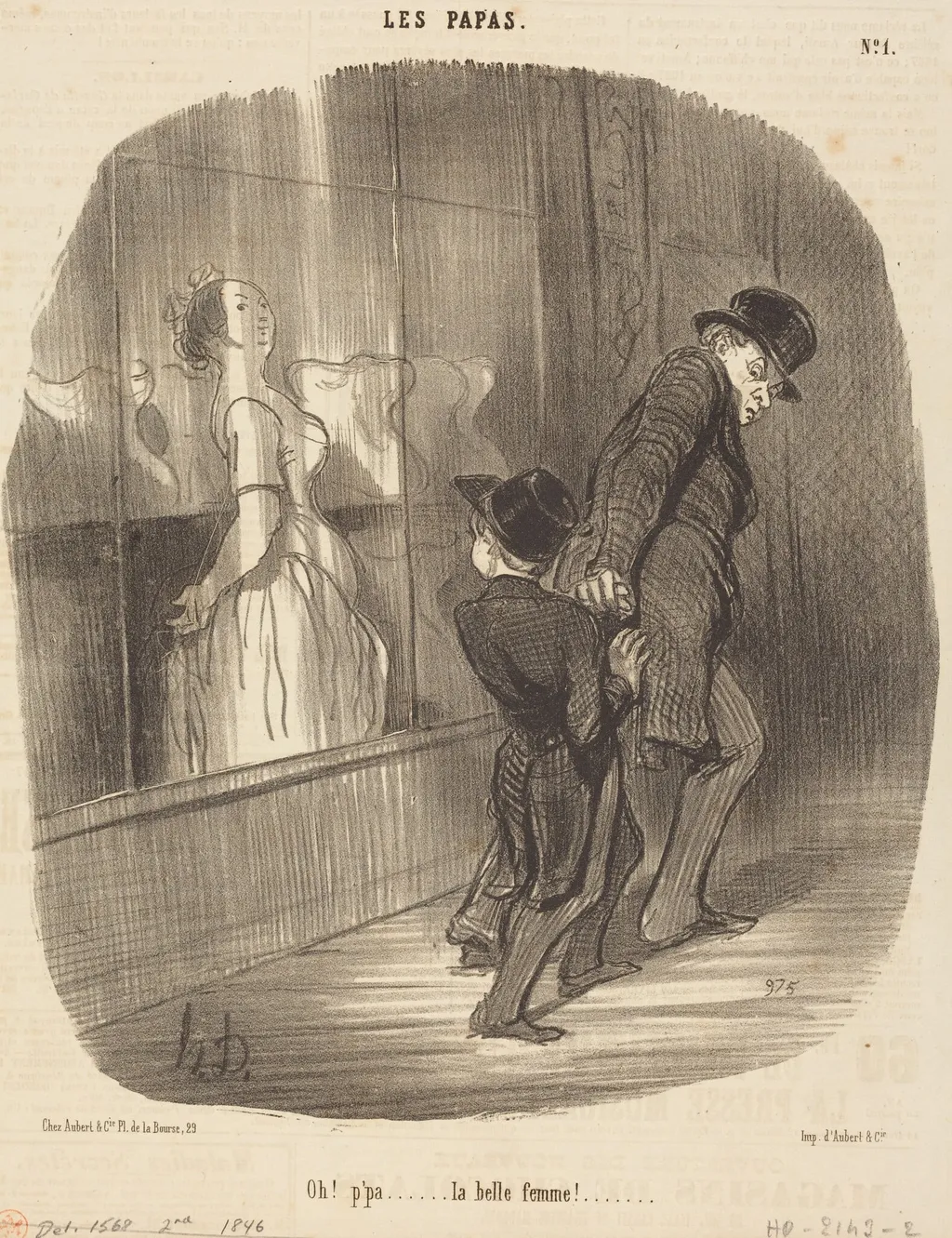
Oh! p'pa... la belle femme! is an ink print by the Romanticist artist Honoré Daumier. It dates from 1846 and is held in the collection of the National Gallery of Art.
About this work
Overview
Created in 1846, this lithograph by Honoré Daumier was produced for mass distribution on inexpensive newsprint, typical of his newspaper illustrations.
Created in 1846, this lithograph by Honoré Daumier was produced for mass distribution on inexpensive newsprint, typical of his newspaper illustrations. It captures a fleeting urban moment with minimal detail, emphasizing immediacy and social observation. Daumier’s work during this period often targeted bourgeois behavior through sharp, humorous vignettes, making art accessible to a broad public audience beyond elite circles.
Subject & Meaning
Two men lean over a bridge railing, gesturing toward a woman visible through a glass enclosure, likely a shop window or gallery display. Their exaggerated reactions, implied by the title, mock the objectification of women in public spaces. The woman remains still and composed, contrasting with the men’s animated postures. The scene critiques the voyeurism and superficial admiration prevalent among the lower-middle class in mid-19th century Paris.
Technique & Style
Daumier employed rapid, fluid lines typical of lithographic sketching, using minimal shading and loose contours to suggest movement and emotion. The background is rendered in soft, indistinct washes, drawing focus to the central figures. The medium’s immediacy suited his journalistic approach, allowing quick production for daily publications. His style prioritizes expressive gesture over anatomical precision, enhancing the satirical tone.
History & Provenance
This print emerged during Daumier’s tenure as a regular contributor to French satirical journals like La Caricature and Le Charivari. It was likely published in one of these outlets around 1846, a time of political tension following the July Monarchy. Few original impressions survive due to the fragile newsprint, making extant copies rare. Its circulation reflects Daumier’s role as a visual journalist rather than a fine artist.
Context
In 1840s Paris, rising urbanization and the expansion of print media created new audiences for visual satire. Daumier’s work responded to the growing middle class’s fascination with spectacle and social performance. His images often exposed the hypocrisy of public manners, aligning with republican ideals that questioned inherited privilege. This print reflects a society increasingly defined by observation, display, and the commodification of appearance.
Legacy
Daumier’s lithographs, including this one, influenced later generations of illustrators and realist painters by demonstrating how everyday scenes could carry critical weight. His use of mass media to deliver social commentary prefigured modern editorial cartooning. Though produced for ephemeral purposes, these works are now recognized for their psychological insight and formal economy, bridging journalism and fine art traditions.
Own this work as a print
Artist & collection
Artist
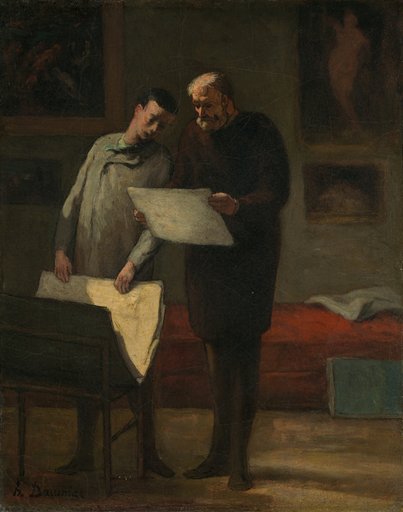
Honoré-Victorin Daumier (French: ; 26 February 1808 – 10 or 11 February 1879) was a French painter, sculptor, and printmaker, whose many works offer commentary on the social and political life in France, from the…









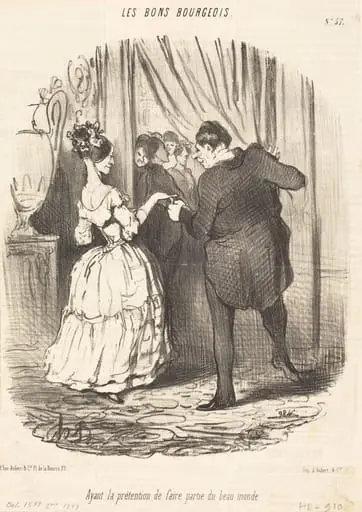 Ayant la prétention de faire partie du beau monde
 Non, madame, je ne vous quitterai pas...
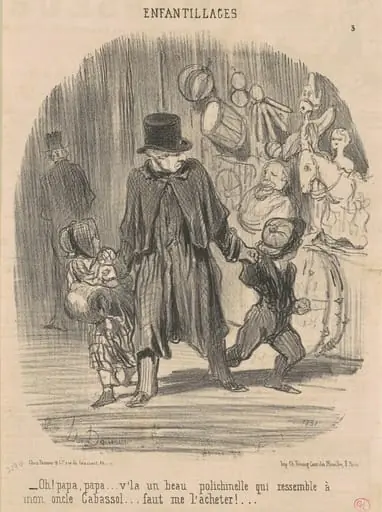 Oh! Papa, papa ...v'la un beau ...
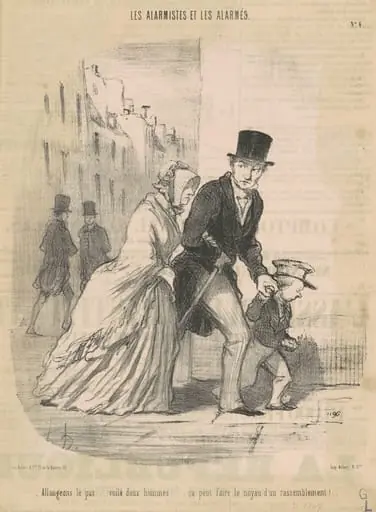 Allongeons le pas ... voila ceux hommes ...
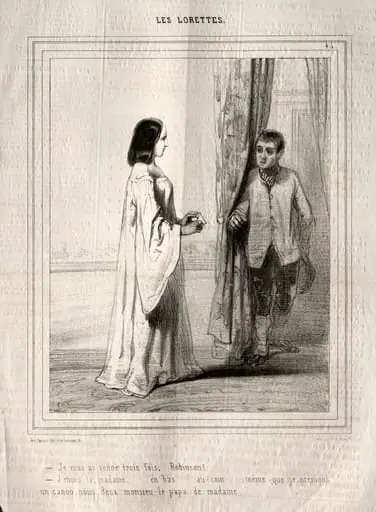 Les Lorettes
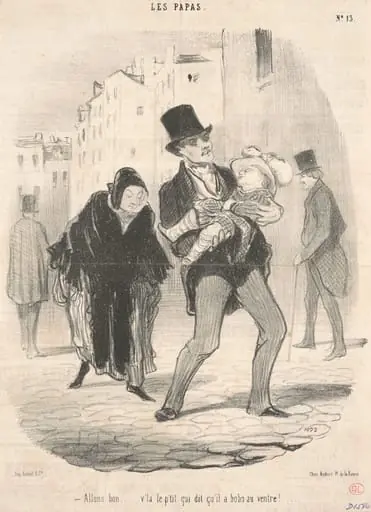 Allons bon ... v'la p'tit qui dit ...
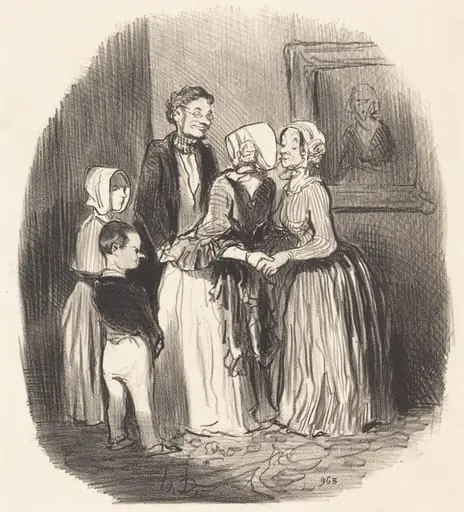 Au novel an, visite... a la tante Rabourdin
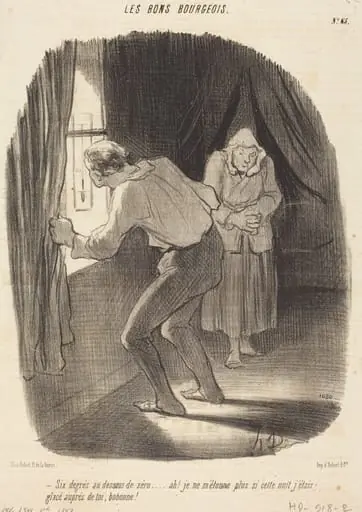 Six degrés au-dessous de zéro...
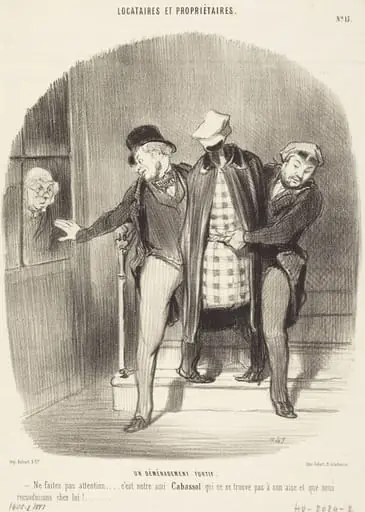 Un Déménagement furtif
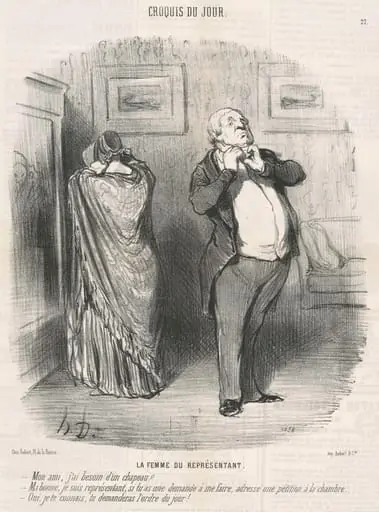 La femme du représentant
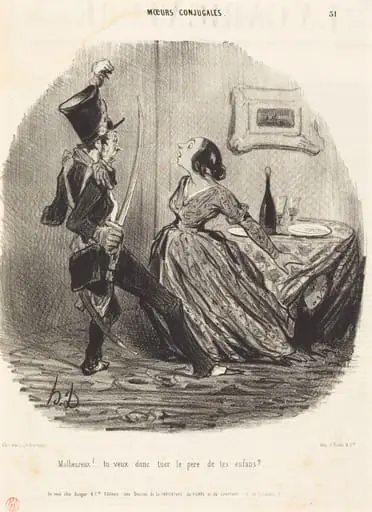 Malheureux! tu veux donc tuer le père de tes enfants?
- Ma femme est-elle a la maison?