Artwork
Christopher Columbus and His Son at La Rábida
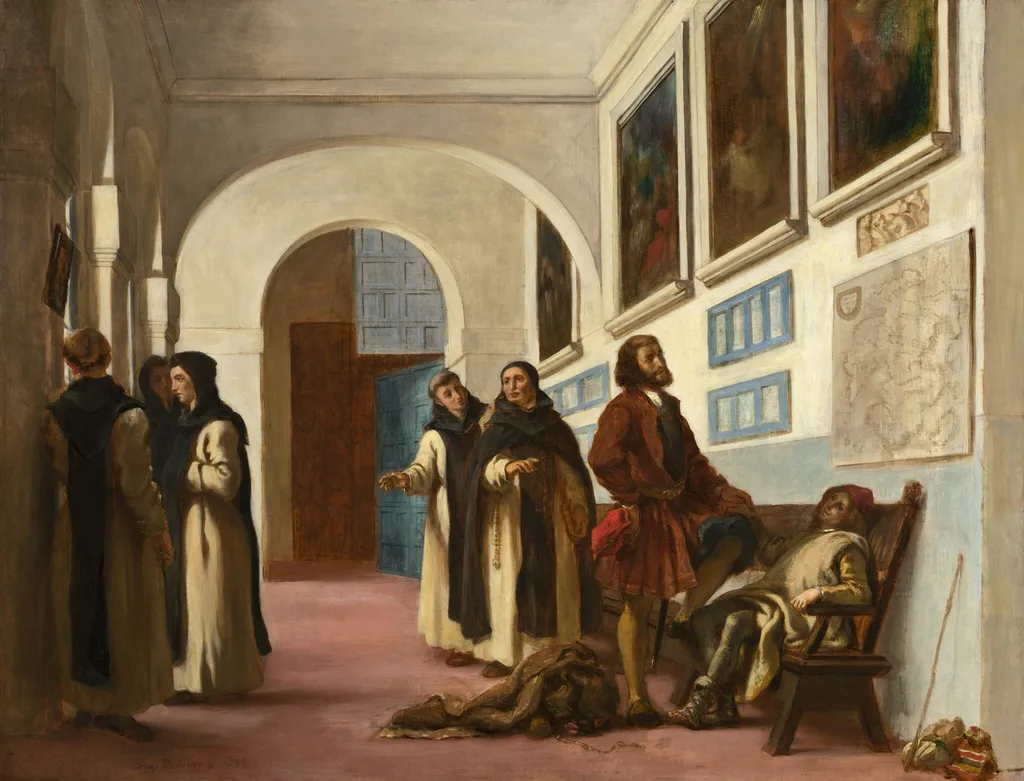
Christopher Columbus and His Son at La Rábida is an oil painting by the French Romanticist artist Eugène Delacroix. It dates from 1838 and is held in the collection of the National Gallery of Art.
- Inscription
- Inscribed:lower left: Eug. Delacroix. 1838.
About this work
Subject & Meaning
As a history painting, it emphasizes the relationship between the figure of Columbus and his heir, suggesting themes of mentorship and national destiny.
The painting titled Christopher Columbus and His Son at La Rábida shows the explorer with his young son in the interior of the La Rábida monastery, a setting that frames the narrative of discovery. Executed in 1838 by Eugène Delacroix, the work belongs to the history‑painting genre, using a dramatic composition to commemorate a foundational moment in European expansion. As a history painting, it emphasizes the relationship between the figure of Columbus and his heir, suggesting themes of mentorship and national destiny.
The canvas entered the National Gallery of Art’s collection, where it is preserved as a representation of historical exploration.
Technique & Style
Executed in 1838, this history painting by Eugène Delacroix utilizes oil paint applied to a canvas support. The work measures 90.3 cm in height and 118 cm in width. As a history painting, the composition depicts a narrative scene involving Christopher Columbus and his son at the monastery of La Rábida. The piece is currently held in the collection of the National Gallery of Art in Washington, D.C.
History & Provenance
Christopher Columbus and His Son at La Rábida was commissioned in 1838 by Anatoly Nikolaievich Demidov, prince of San Donato, near Florence. Following Demidov's death, the painting appeared in his sale at 26 boulevard des Italiens, Paris, on 21 February 1870 (lot 25), where it was purchased by the Parisian collector Edouard André for 38,000 francs. It subsequently passed through the hands of the dealers Arnold & Tripp, E. Secrétan, Durand-Ruel et Cie., and M. Knoedler & Co. before being acquired by Peter A.B. Widener of Philadelphia by 1892.
In 1910 the work was consigned to Knoedler and P. & D. Colnaghi & Co., then handled by Galerie Georges Petit, Paris, before entering the collection of Ferdinand Blumenthal by 1912. Count Cecil Pecci-Blunt acquired it in 1929, sharing ownership with La Peinture Contemporain of Lucerne and Paris. Chester Dale of New York purchased the painting on 9 February 1932, and in 1963 Dale bequeathed it to the National Gallery of Art.
Overview
Painted in 1838 by Eugène Delacroix, Christopher Columbus and His Son at La Rábida is an oil on canvas work emblematic of the French Romantic movement. This painting presents a pivotal moment from history, rendered with the dramatic flair characteristic of its creator. Delacroix, a leading figure of his era, often explored historical and literary subjects, imbuing them with emotional intensity and dynamic composition.
Context
As a prominent exponent of French Romanticism, Delacroix's Christopher Columbus and His Son at La Rábida aligns with the movement's broader interests. Romantic artists often turned to historical narratives, exotic locales, and dramatic events to explore themes of human emotion, individual struggle, and the sublime. This painting exemplifies the Romantic inclination to depict significant historical moments with a heightened sense of atmosphere and psychological intensity, moving beyond mere factual representation.
Own this work as a print
Artist & collection
Artist
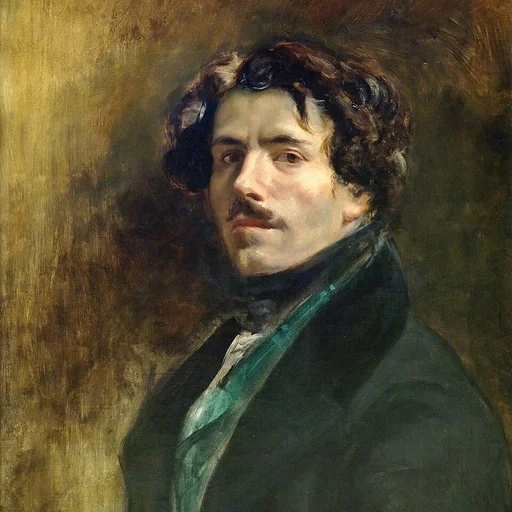
Ferdinand Victor Eugène Delacroix ( DEL-ə-krwah, -KRWAH; French:; 26 April 1798 – 13 August 1863) was a French Romantic artist who was regarded as the leader of the French Romantic school.

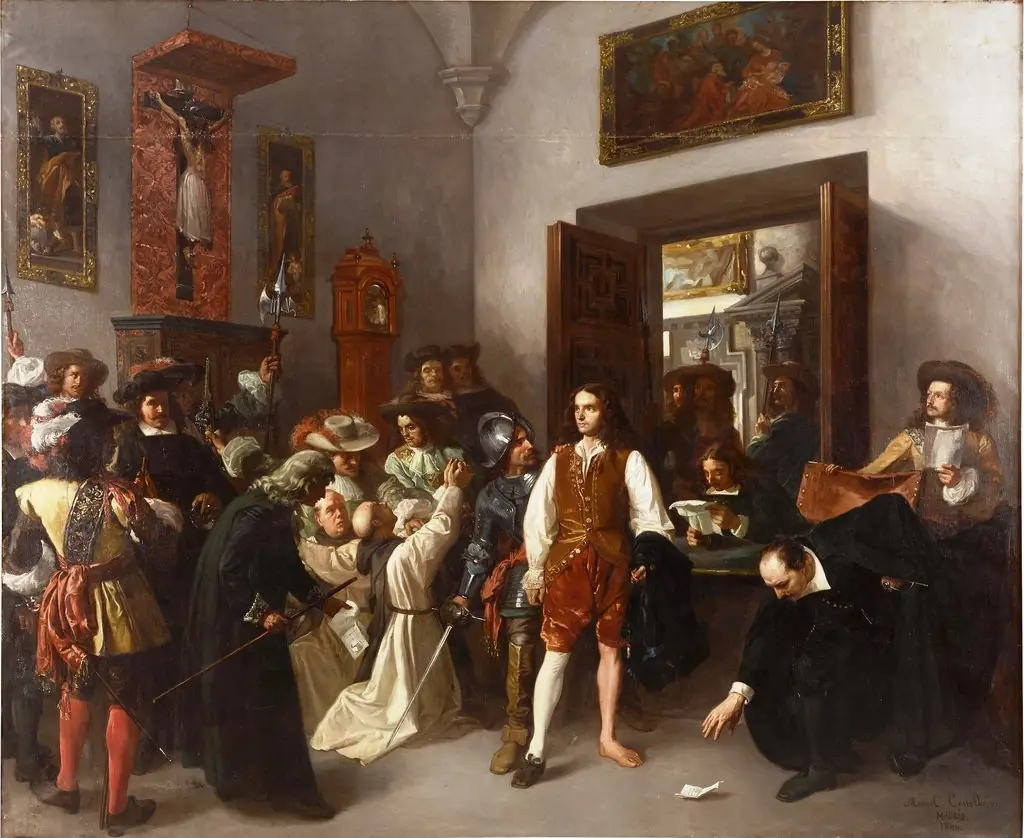
- Prisión de don Fernando de Valenzuela
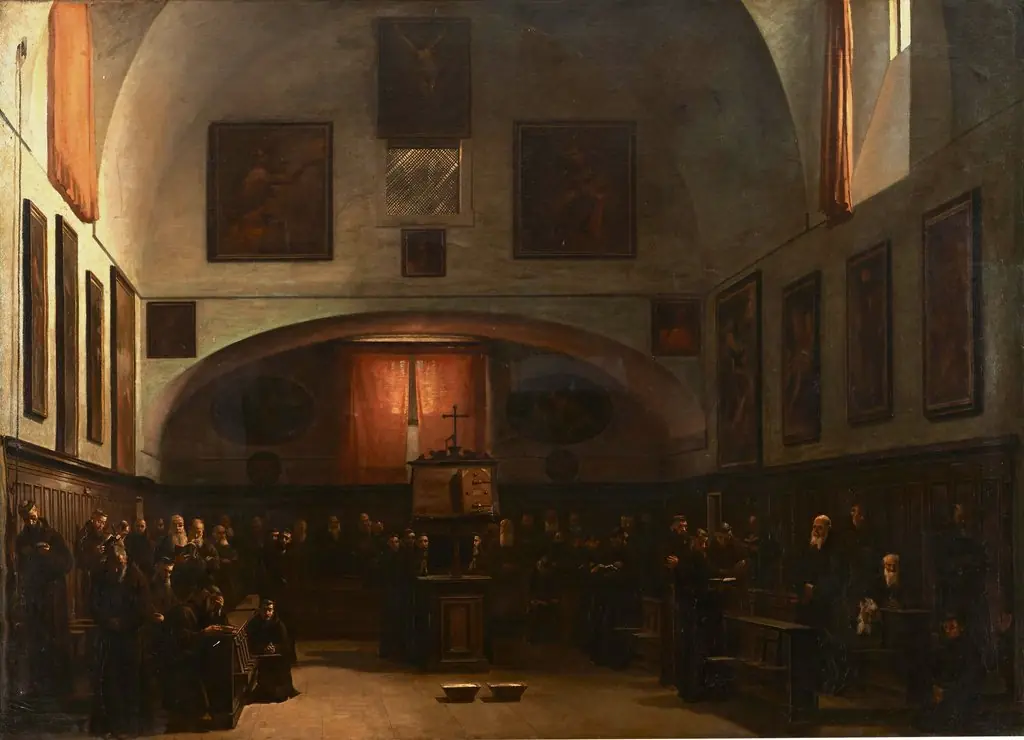 Capuchinos en el coro
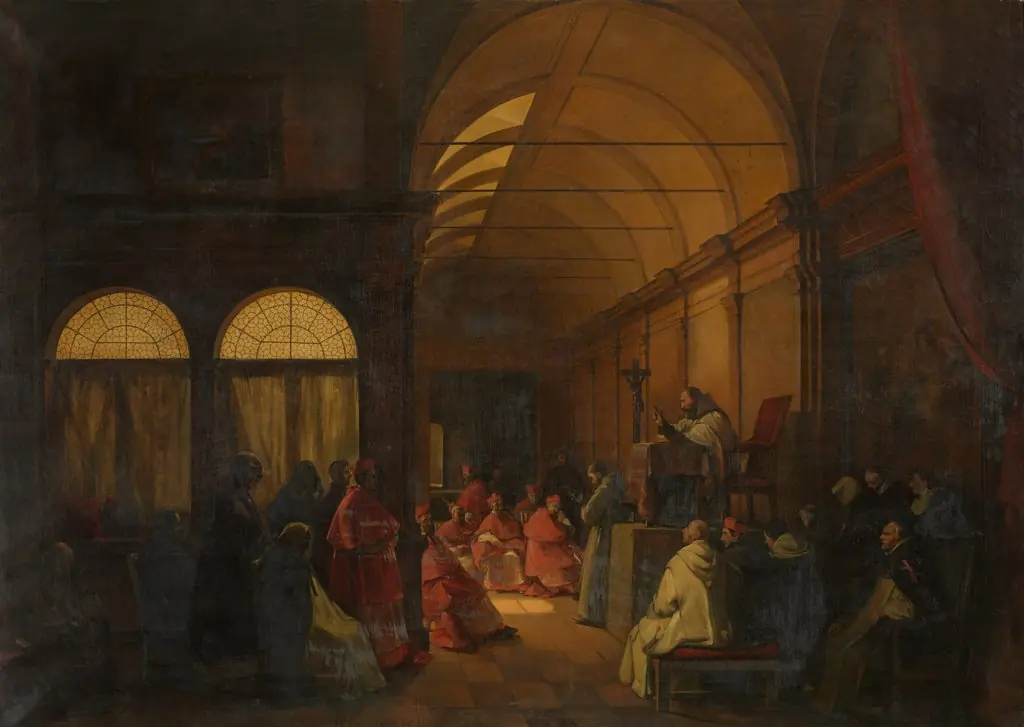 Before the Conclave
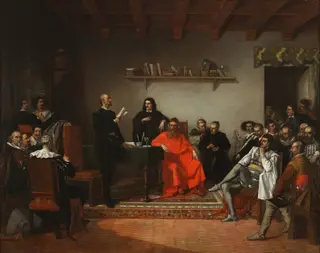 Reading Don Quixote
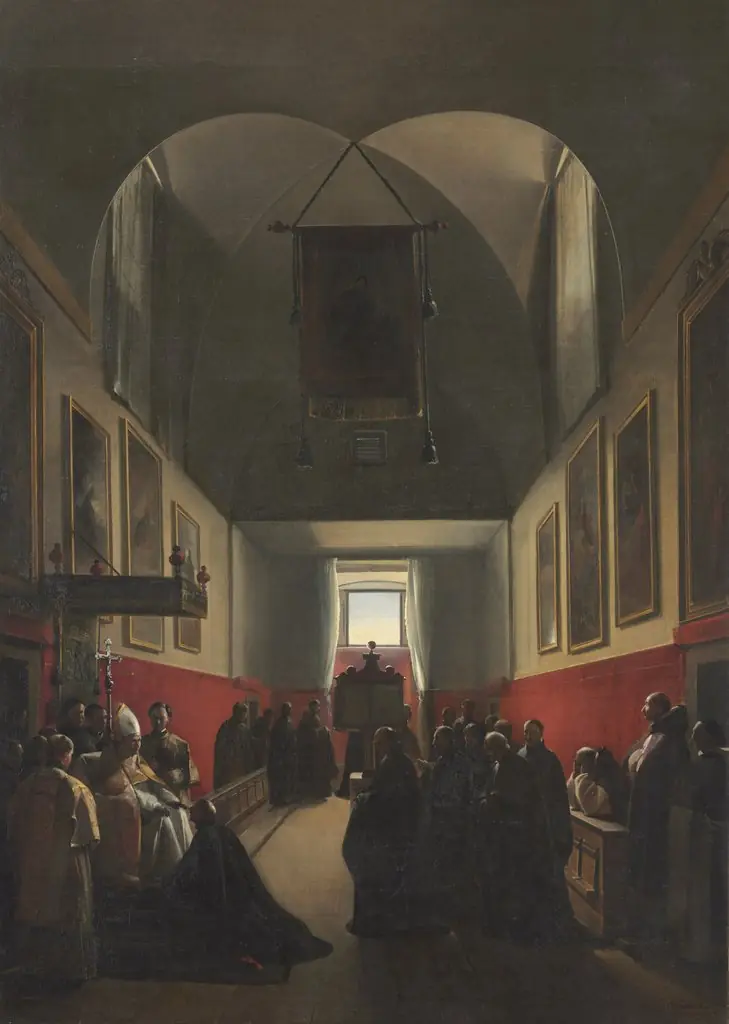 Homage to a Bishop
 Homage to a Bishop
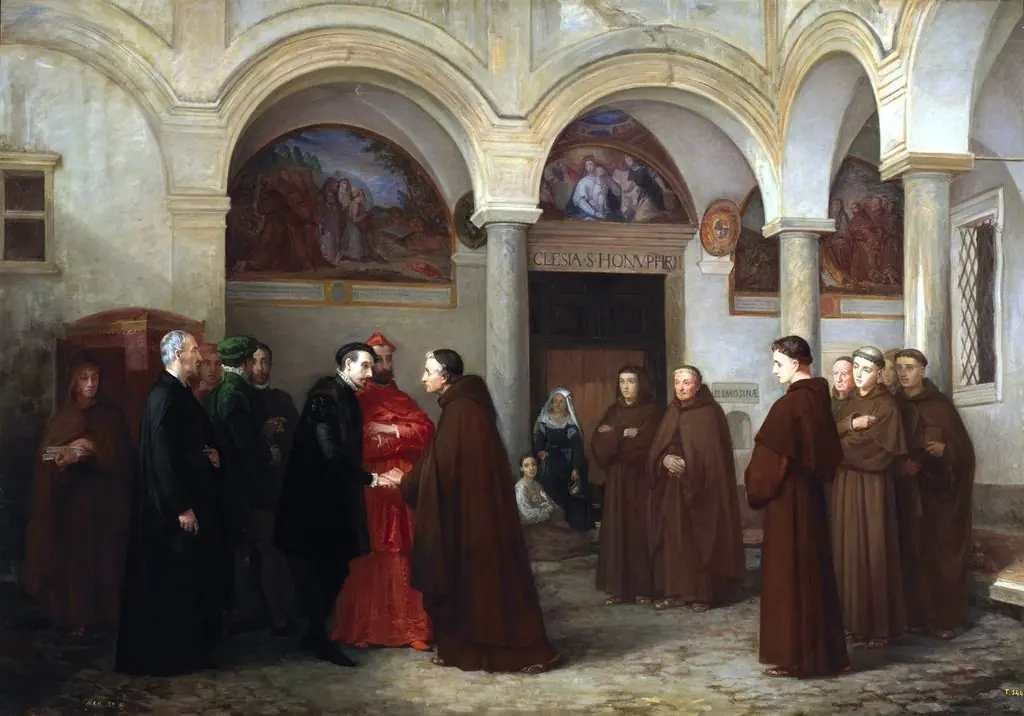 Torcuato Tasso se retira al convento de San Onofre en el Janículo
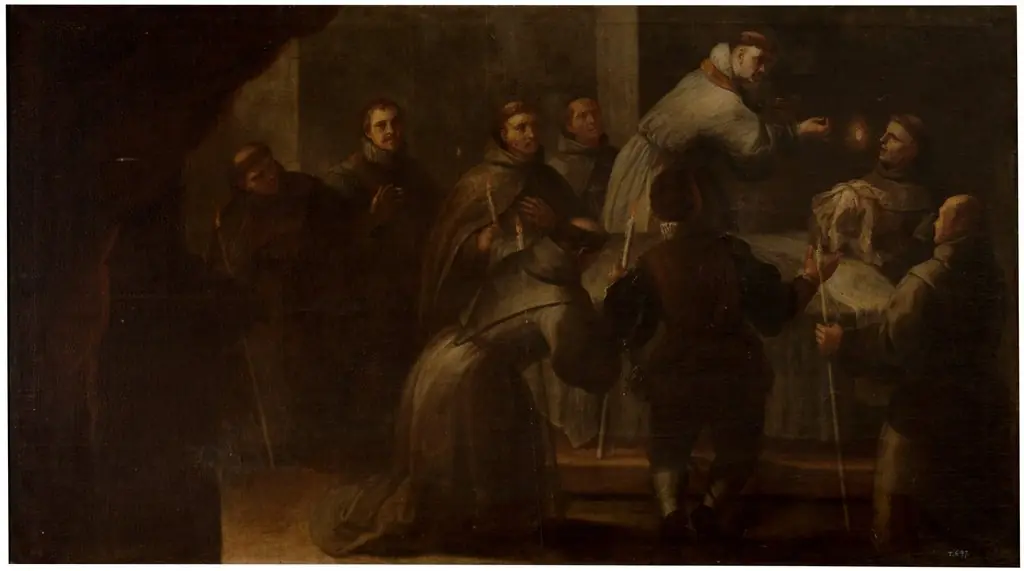 La última comunión de San Diego de Alcalá
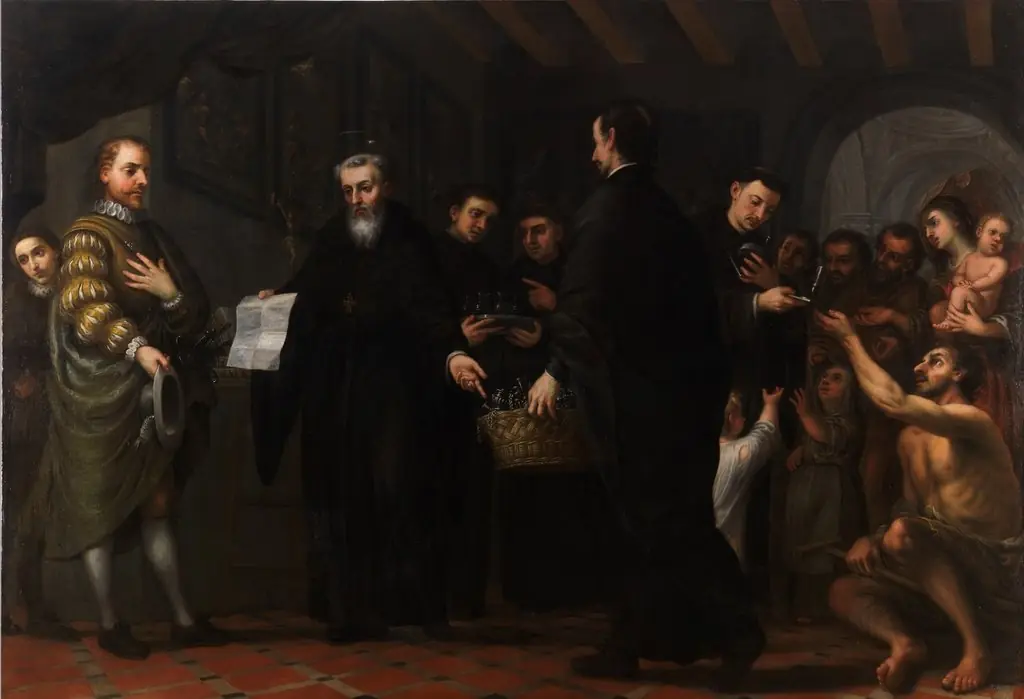 San Agustín repartiendo los bienes de los ricos entre los pobres
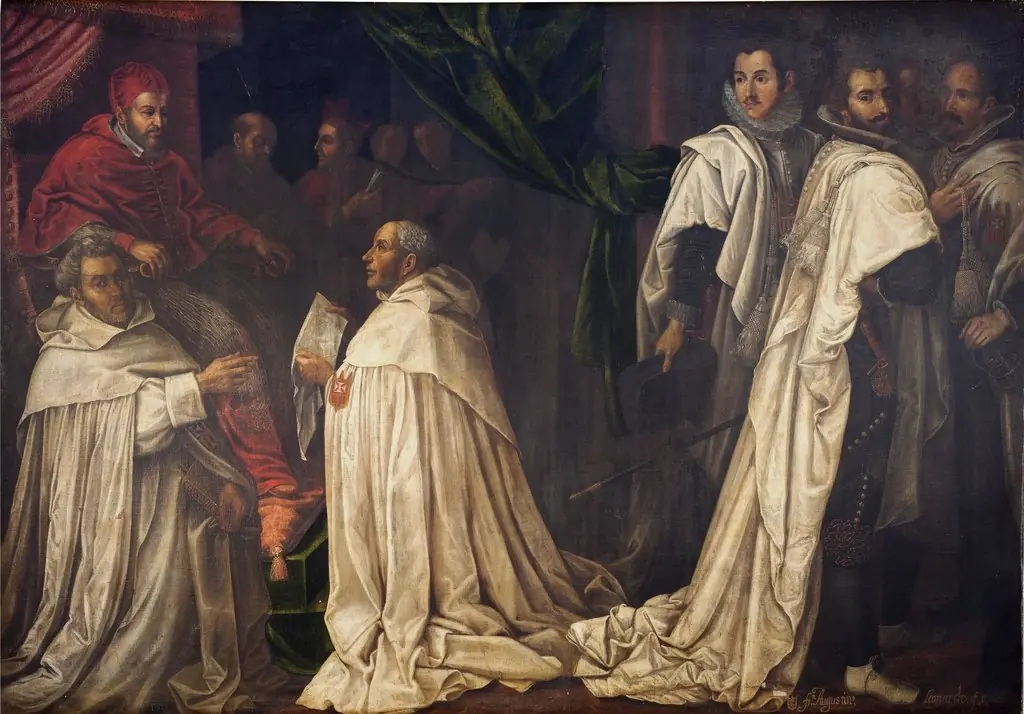 Decisión del pleito entre religiosos y caballeros
 Jacob Simonsz de Rijk Secures from Spanish Governor-General Requesens the Release of Marnix van Sint Aldegonde
 Monks in the Cloister of the Church of Gesù e Maria, Rome