Artwork
Rochefort's Escape
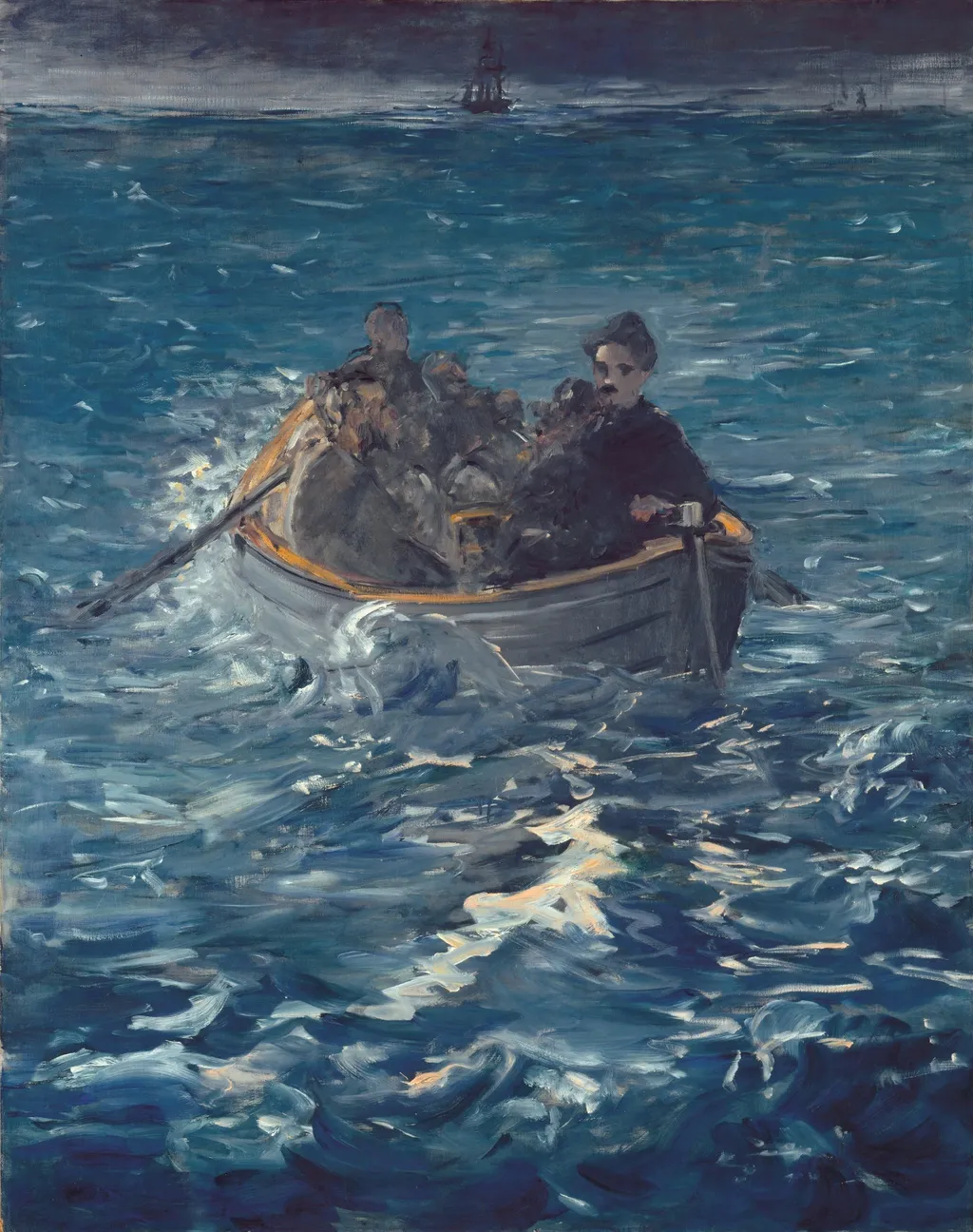
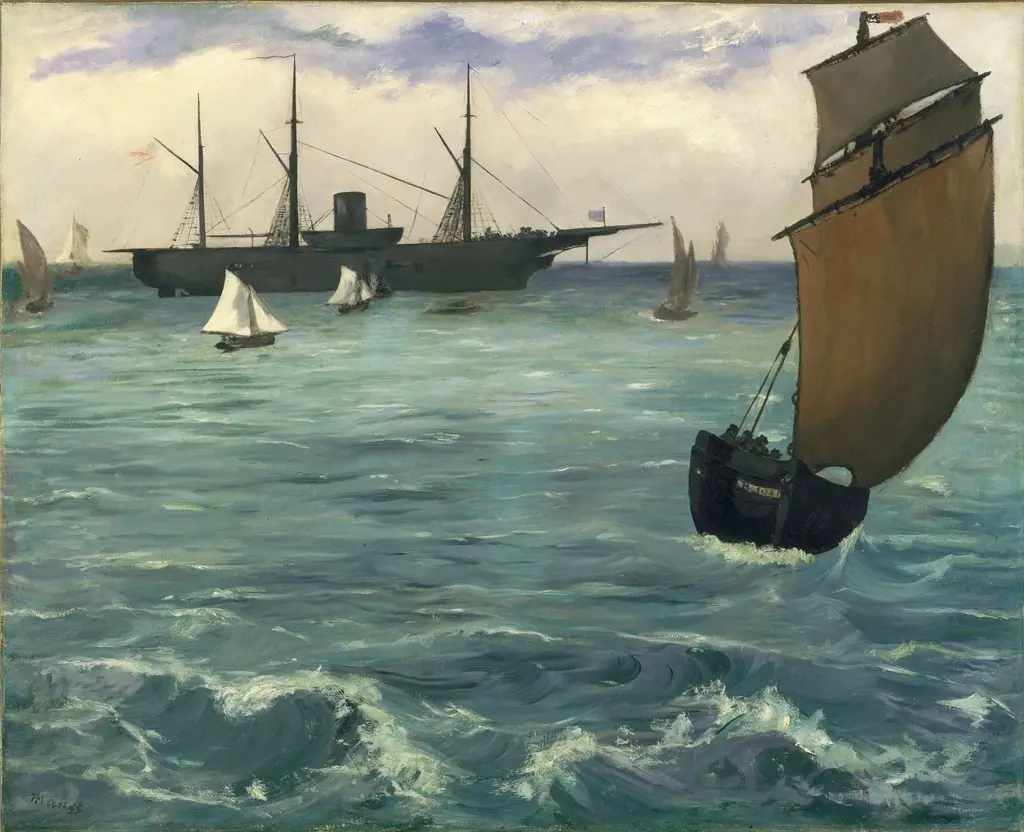
Rochefort's Escape is an oil painting by the Impressionist artist Édouard Manet. It dates from 1880 and is held in the collection of the Kunsthaus Zürich.
About this work
Subject & Meaning
The painting shows the 1874 flight of Henri Rochefort, a French radical, from a penal colony in New Caledonia, as he and companions flee in a small boat under a night sky. Manet places the escaping figures against a towering, restless sea that dominates the composition, emphasizing the perilous journey rather than individual faces. The work functions as a modern history painting, linking the recent event to contemporary criticism of imperial authority and celebrating a daring act of resistance.
A second, calmer version shifts focus to the sea's tranquility and obscures Rochefort's identity, reflecting the artist's ambivalence toward the episode's political symbolism.
Technique & Style
The painting measures 143 cm by 114 cm and is categorized as a marine work within Manet's oeuvre.
Manet executed Rochefort's Escape in oil on canvas. The painting measures 143 cm by 114 cm and is categorized as a marine work within Manet's oeuvre. It was conceived as a history painting, a genre traditionally concerned with narrative subjects.
Stylistically, the composition foregrounds the tumultuous sea that envelops the escaping figures, rendering the water as a massive, intimidating force rather than focusing on the fugitives themselves; this approach inverts the dramatic narrative emphasis of Théodore Géricault's raft scene. The sources do not provide details on the work's physical condition or handling.
History & Provenance
Édouard Manet executed this marine painting in December 1880, intending it for the Paris Salon of 1881, shortly before his death. The work commemorates the 1874 escape of Henri Rochefort and his companions from the penal colony in New Caledonia, a subject chosen to renew the genre of history painting with contemporary political resonance. Manet produced more than one version of the composition: the larger version depicts Rochefort actively steering the whaleboat amid a turbulent sea, while a second, smaller variant features a calmer ocean and a less defined figure of Rochefort.
In the end Manet did not exhibit the escape scene at the Salon of 1881, showing instead his portrait of Henri Rochefort.
The principal version of Rochefort's Escape is held by the Kunsthaus Zürich; no specific inventory or accession number is provided in the available sources. A second version of the composition is held by the Musée d'Orsay in Paris.
Context
Painted in late 1880 and intended for the Salon of 1881, shortly before Manet's death, Rochefort's Escape is regarded as a significant example of history painting updated to address a contemporary political event: the 1874 flight of Henri Rochefort from the penal colony in New Caledonia, where he had been sentenced for his role in the Paris Commune. Critics have noted the painting's break with neoclassical convention, which traditionally favored antique or mythological subjects, and its critical stance toward authority in depicting a communard's escape from forced labor.
Scholarship has focused on the two versions Manet produced. The Zurich canvas emphasizes the threatening sea over its occupants, inverting the approach Théodore Géricault took in The Raft of the Medusa (1818-1819), while a calmer second version is now in the Musée d'Orsay. The shift has been linked to Manet's unease over contemporary disputes about Rochefort's role in the escape, as discussed in Joël Dauphiné's study of Rochefort's deportation and flight.
Legacy
Rochefort's Escape is regarded as a significant example of history painting that broke with neoclassical conventions by treating a recent political event rather than antiquity or mythology. The work is valued for its depiction of an escape still fresh in public memory, allowing viewers to commemorate an episode that had strongly shaped public opinion.
Manet's choice to emphasize the threatening sea rather than the occupants of the whaleboat is read as a deliberate inversion of Géricault's The Raft of the Medusa (1818-1819), signaling a renewal of the historical genre. The painting also carries a critical stance toward authority, since Rochefort had been condemned as a communard and escaped a penal colony. The existence of a second, calmer version, now in the Musée d'Orsay, reflects Manet's continued engagement with the subject in the period before his death in 1883.
Overview
Édouard Manet completed Rochefort's Escape around 1881, an oil painting now housed at the Kunsthaus Zürich. This work portrays the dramatic 1874 flight of Victor Henri Rochefort, Marquis de Rochefort-Luçay, from his penal exile in New Caledonia. Manet's choice of a recent, politically charged event as his subject marked a departure from conventional artistic themes, engaging directly with contemporary public memory.
Own this work as a print
Artist & collection
Artist
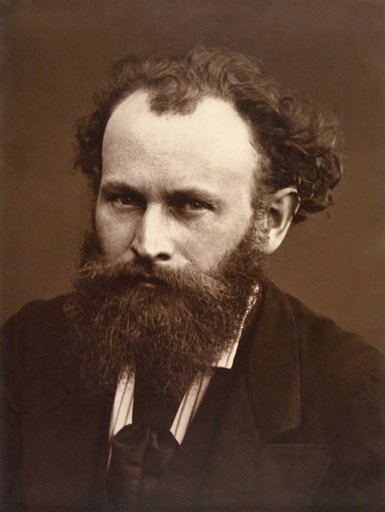
Édouard Manet was a French modernist painter. He was one of the first 19th-century artists to paint modern life, as well as a pivotal figure in the transition from Realism to Impressionism.