Artwork
Young Woman in Oriental Garb
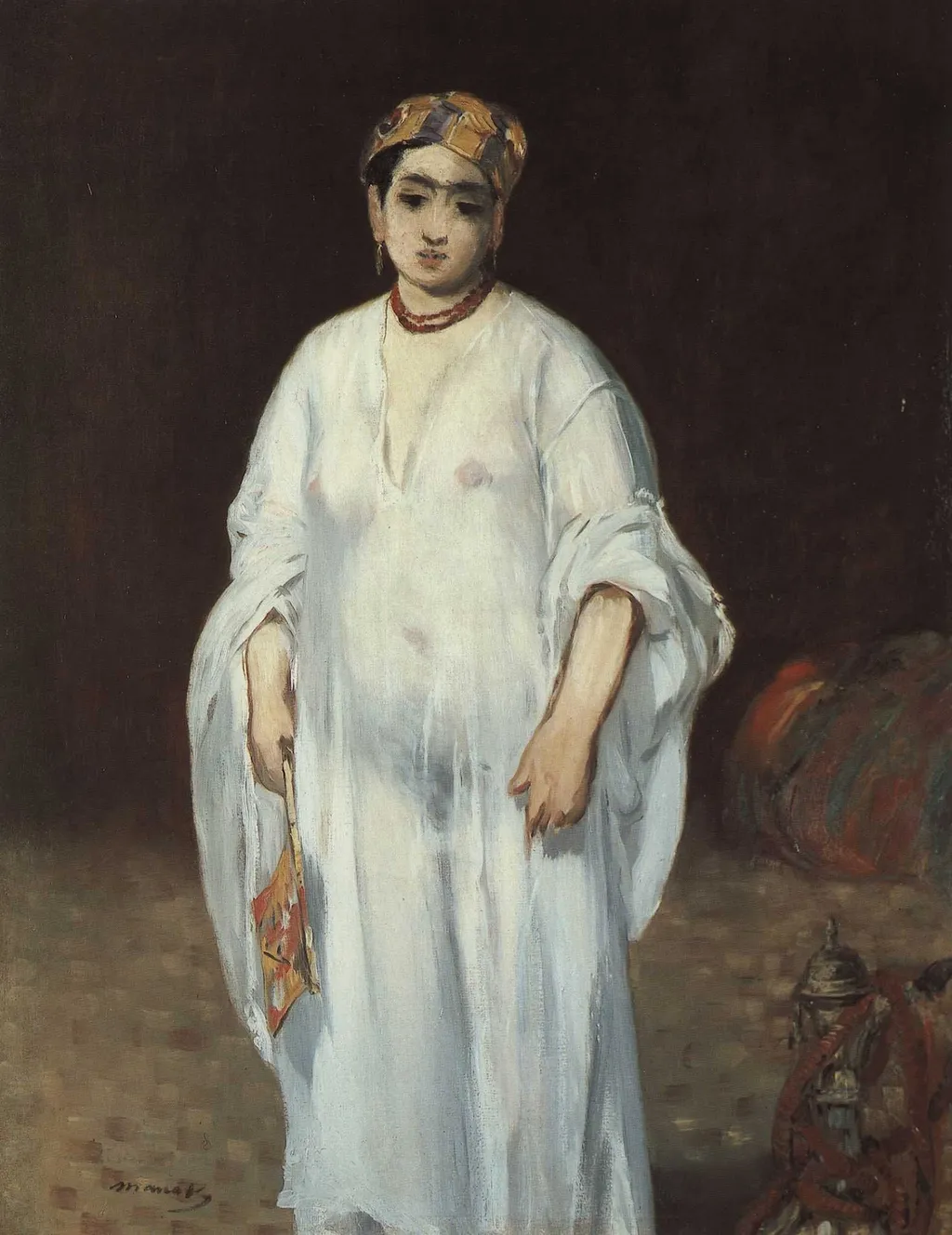
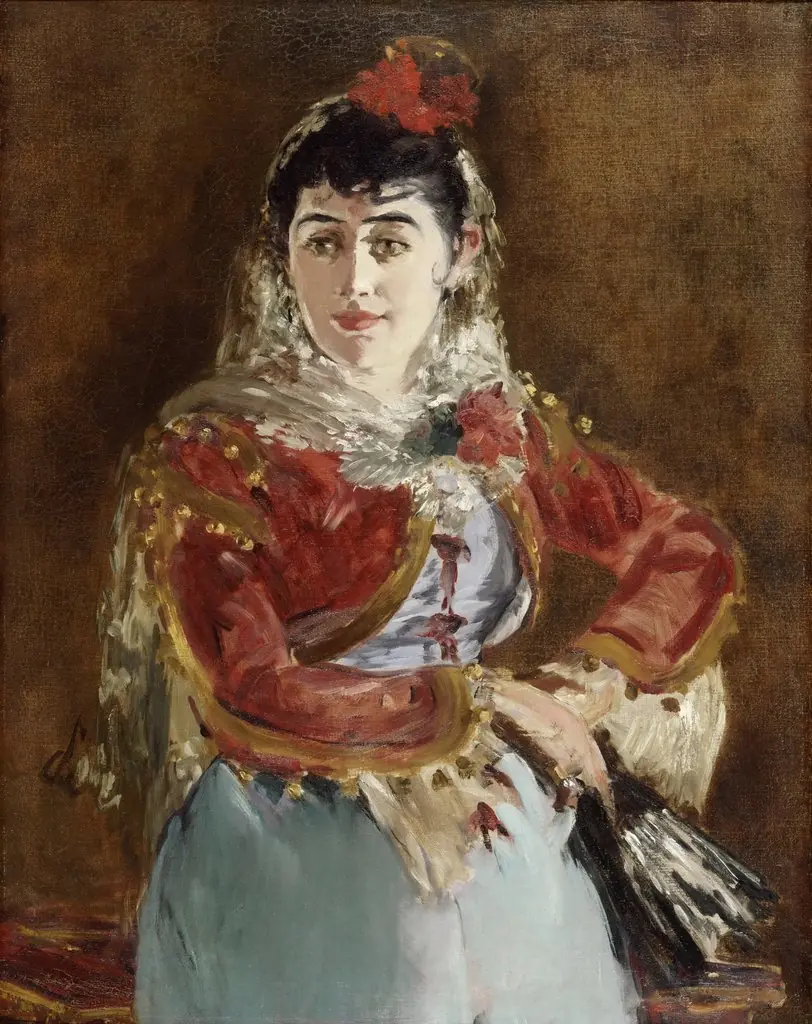
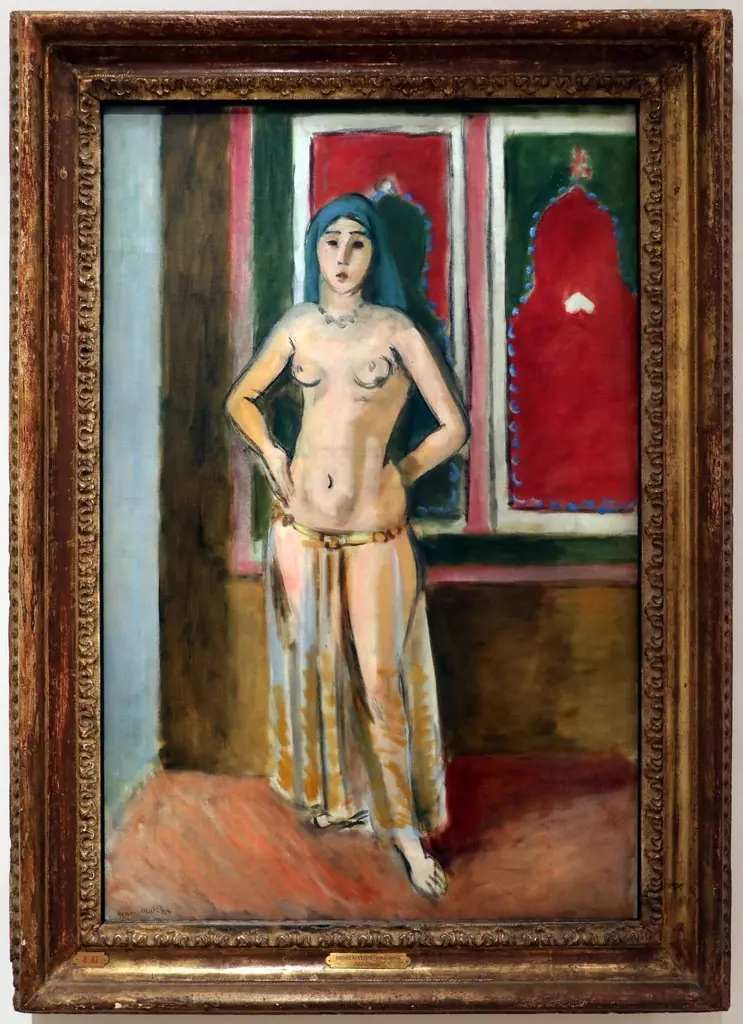
Young Woman in Oriental Garb is an oil painting by the Impressionist artist Édouard Manet. It dates from 1871 and is held in the collection of the Foundation E.G. Bührle Collection.
About this work
Overview
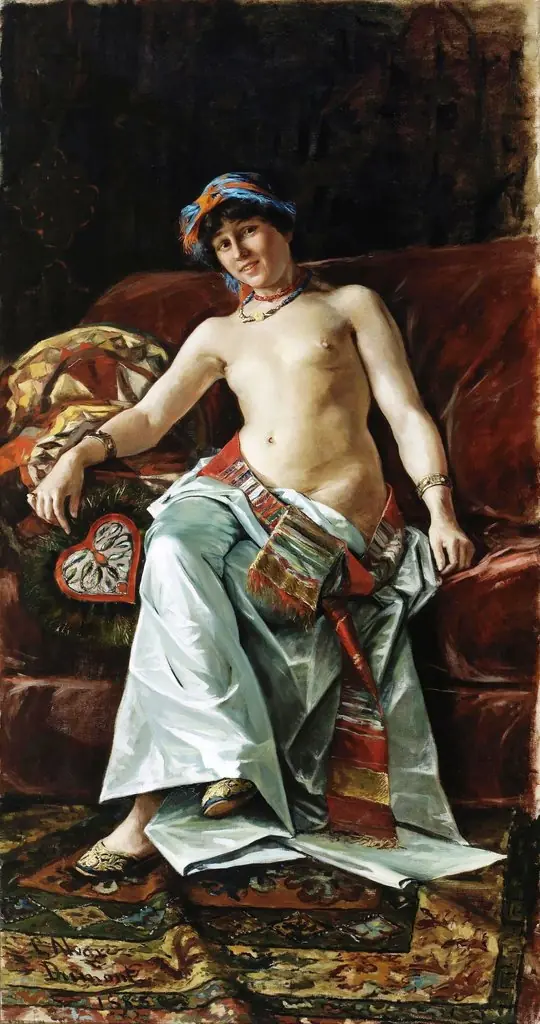
Painted in 1871 by Édouard Manet, this oil work portrays a young woman dressed in attire inspired by Eastern dress.
Painted in 1871 by Édouard Manet, this oil work portrays a young woman dressed in attire inspired by Eastern dress. The figure stands against a deep, neutral background, her form rendered with loose brushwork and muted contrasts. The painting is part of the collection at Kunsthaus Zürich, where it has been held since the early 20th century. Its quiet composition reflects Manet’s interest in formal economy and atmospheric tone.
Subject & Meaning
The subject is a woman clad in a white robe, red necklace, and headscarf, holding a fan with composed stillness. Her face is softly blurred, obscuring identity and inviting ambiguity. Rather than depicting a specific individual, the figure evokes an idealized, anonymous presence.
The orientalizing costume reflects 19th-century European fascination with the East, though the painting avoids narrative or exoticism, focusing instead on presence and poise.
Technique & Style
Manet employed broad, fluid brushstrokes to define form without detailed modeling. The white robe and pale skin emerge from a dark ground through subtle tonal shifts rather than sharp outlines. Warm accents in the necklace and fan contrast with cool shadows, creating a restrained chromatic harmony.
The lack of environmental detail and the flattened space align with Manet’s move away from academic realism toward a more modern, suggestive approach.
History & Provenance
Completed in 1871, the painting entered the collection of the Kunsthaus Zürich in 1912 through a bequest from the Swiss collector Rudolf Lämmel. Prior to that, it remained in private hands in France. Its journey from Parisian studio to Swiss museum reflects broader patterns of European art collecting in the early 20th century. No significant alterations or restorations are documented in its modern history.
Context
This work emerged during a period when Manet was exploring themes of identity and costume, following his earlier Orientalist studies. While contemporaries like Delacroix depicted the East with theatrical flair, Manet stripped the subject of narrative, focusing on the figure’s autonomy. The painting aligns with his broader challenge to academic conventions, favoring direct observation over idealized storytelling.
Legacy
Though less known than Manet’s major public works, this painting exemplifies his quiet revolution in portraiture. Its emphasis on ambiguity, simplified form, and psychological reserve influenced later modernists, including Matisse and Bonnard. It remains a quiet testament to his ability to convey presence through restraint, bridging 19th-century realism and early modern abstraction.
Own this work as a print
Artist & collection
Artist
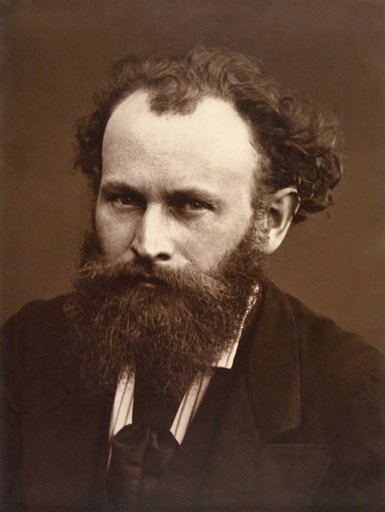
Édouard Manet was a French modernist painter. He was one of the first 19th-century artists to paint modern life, as well as a pivotal figure in the transition from Realism to Impressionism.