Artwork
The Angel
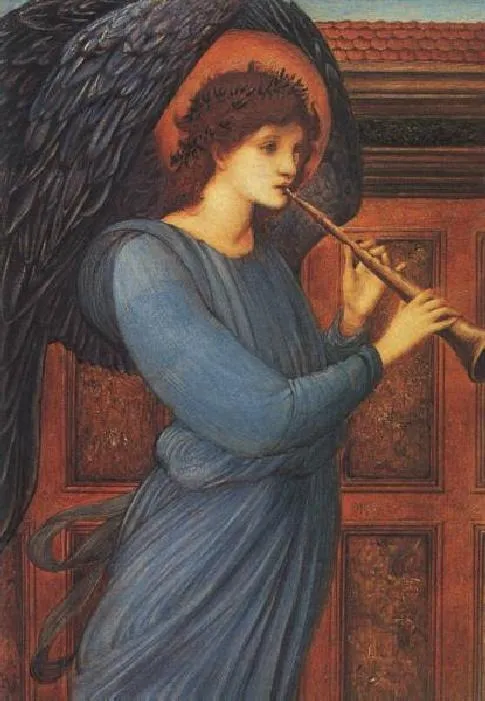
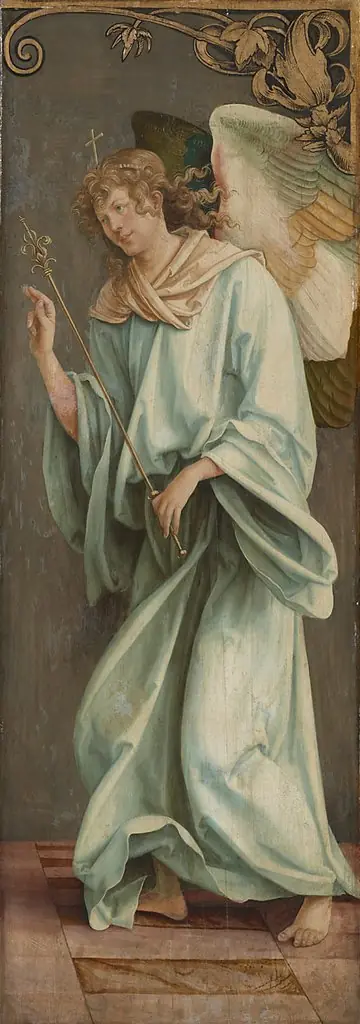
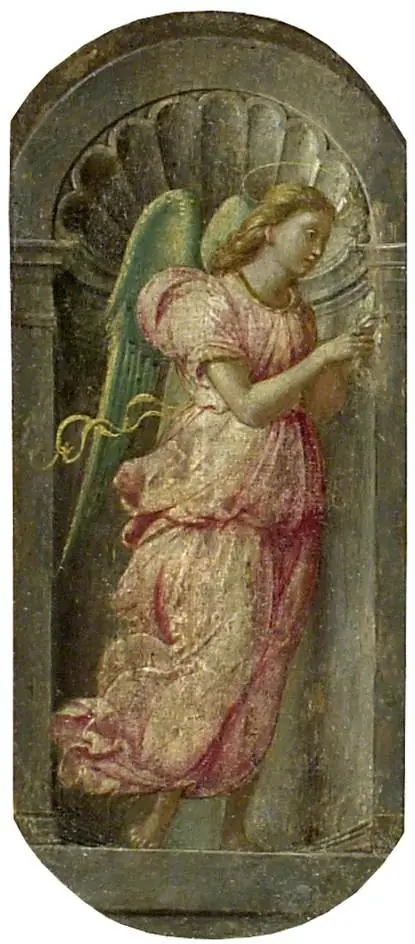
The Angel is an oil painting by the Pre-Raphaelite artist Edward Burne-Jones. It dates from 1891 and is held in the collection of the Kelvingrove Art Gallery and Museum.
About this work
Overview
Though associated with the Pre-Raphaelite circle, his work evolved beyond early medievalism into a more contemplative, symbolic realm.
Edward Burne-Jones completed The Angel in 1891 as an oil painting that exemplifies his mature style. Though associated with the Pre-Raphaelite circle, his work evolved beyond early medievalism into a more contemplative, symbolic realm. The piece reflects his lifelong interest in spiritual and mythic subjects, rendered with quiet precision and a restrained palette. It remains part of the Kelvingrove Art Gallery and Museum’s permanent collection.
Subject & Meaning
The painting presents a solitary angel, flute in hand, gazing downward in quiet devotion. The figure’s stillness and lowered eyes suggest introspection rather than performance, evoking a sense of sacred silence. The red halo and deep blue robe contrast subtly against the ornamental red wall, reinforcing an otherworldly presence.
The flute, rarely a symbol of triumph, here implies meditation or divine communication, aligning with Burne-Jones’s preference for ambiguous, poetic narratives.
Technique & Style
Burne-Jones employed fine brushwork and layered glazes to achieve a luminous, enamel-like surface. The angel’s form is rendered with precise, linear clarity, characteristic of his draughtsmanship, while the wings and drapery flow with rhythmic grace. The background’s decorative pattern echoes medieval tapestries, yet the overall composition avoids narrative clutter. Color is subdued, with emphasis on tonal harmony rather than dramatic contrast, enhancing the painting’s meditative mood.
History & Provenance
Created near the end of Burne-Jones’s career, The Angel was painted during a period when he focused increasingly on spiritual and allegorical themes. It entered the Kelvingrove Art Gallery and Museum’s collection in the early 20th century, likely through a public acquisition or donation. The work has remained in public ownership since, with no documented private transactions, reflecting its status as a recognized example of late Victorian symbolic art.
Context
Burne-Jones worked alongside William Morris in the decorative arts, yet his easel paintings diverged in tone, favoring introspection over narrative. The Angel emerged amid a broader cultural revival of interest in mysticism and medieval aesthetics, though his approach was less revivalist and more personal. Unlike his earlier mythological scenes, this work strips away storytelling to isolate a single, contemplative presence, reflecting the era’s shifting spiritual sensibilities.
Legacy
Though not among Burne-Jones’s most widely reproduced works, The Angel exemplifies his mature aesthetic: serene, stylized, and emotionally restrained. It influenced later Symbolist painters who sought to convey inner states through simplified forms and atmospheric color. The painting continues to be studied for its quiet intensity and its role in bridging Pre-Raphaelite ideals with the more abstract spiritual concerns of early modern art.
Artist & collection
Artist
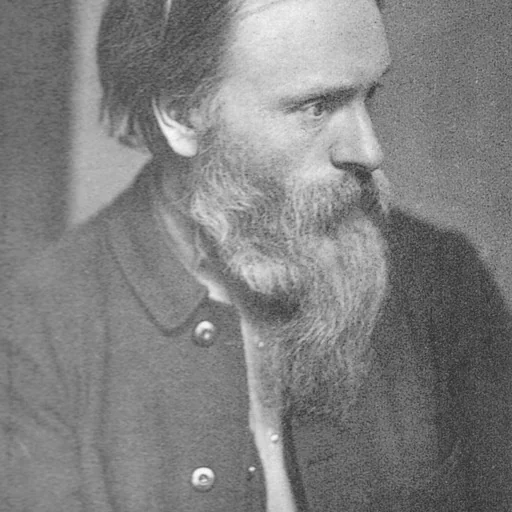
Sir Edward Coley Burne-Jones, 1st Baronet (; 28 August 1833 – 17 June 1898) was an English painter and designer associated with the Pre-Raphaelite Brotherhood's style and subject matter.