Artwork
Retrato de un caballero desconocido
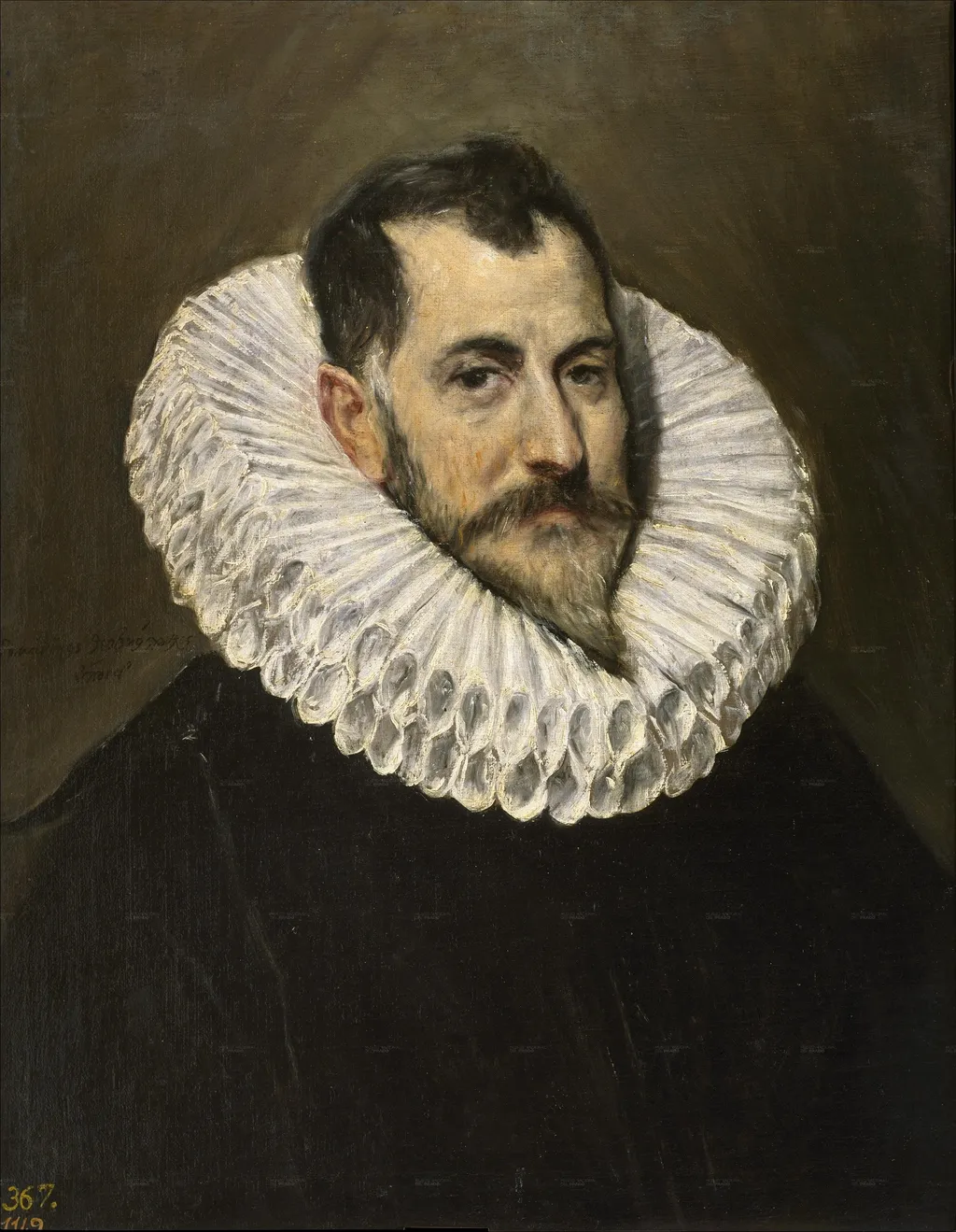
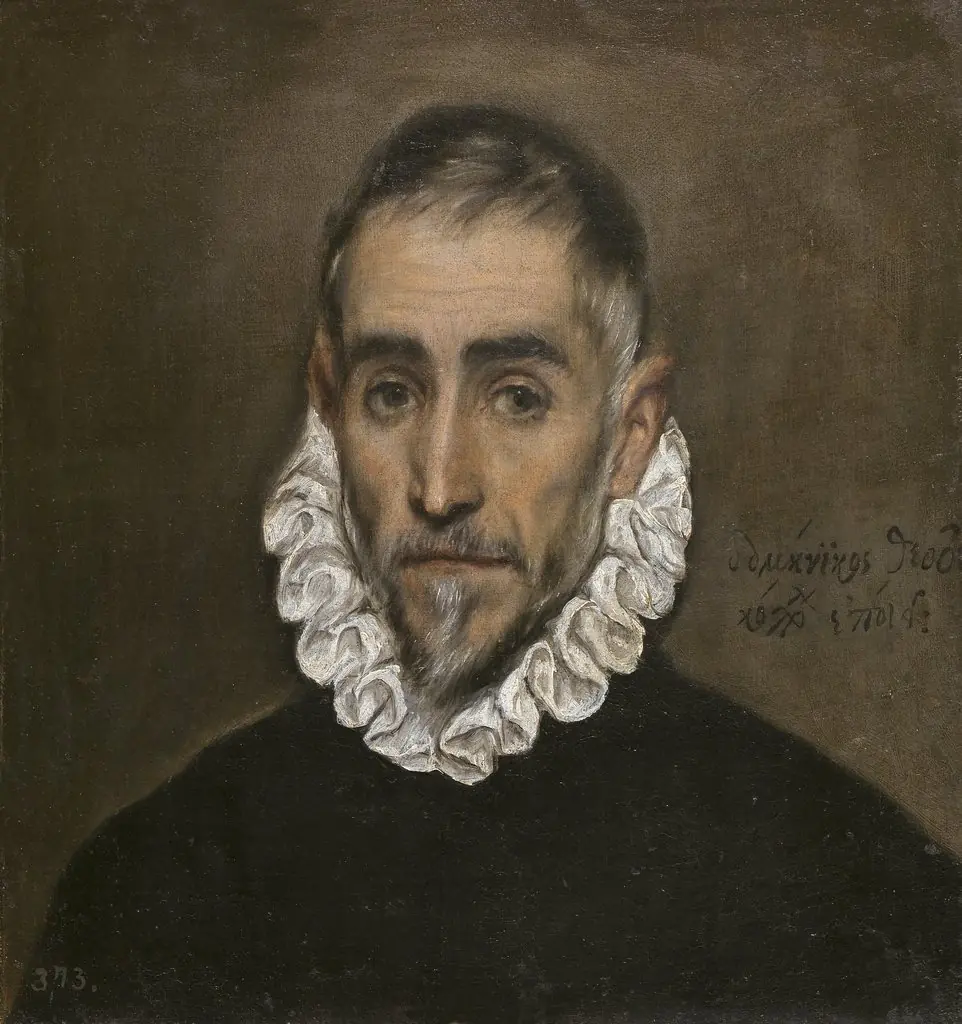
Retrato de un caballero desconocido is an oil painting by El Greco. It dates from 1600 and is held in the collection of the Museo del Prado.
About this work
Subject & Meaning
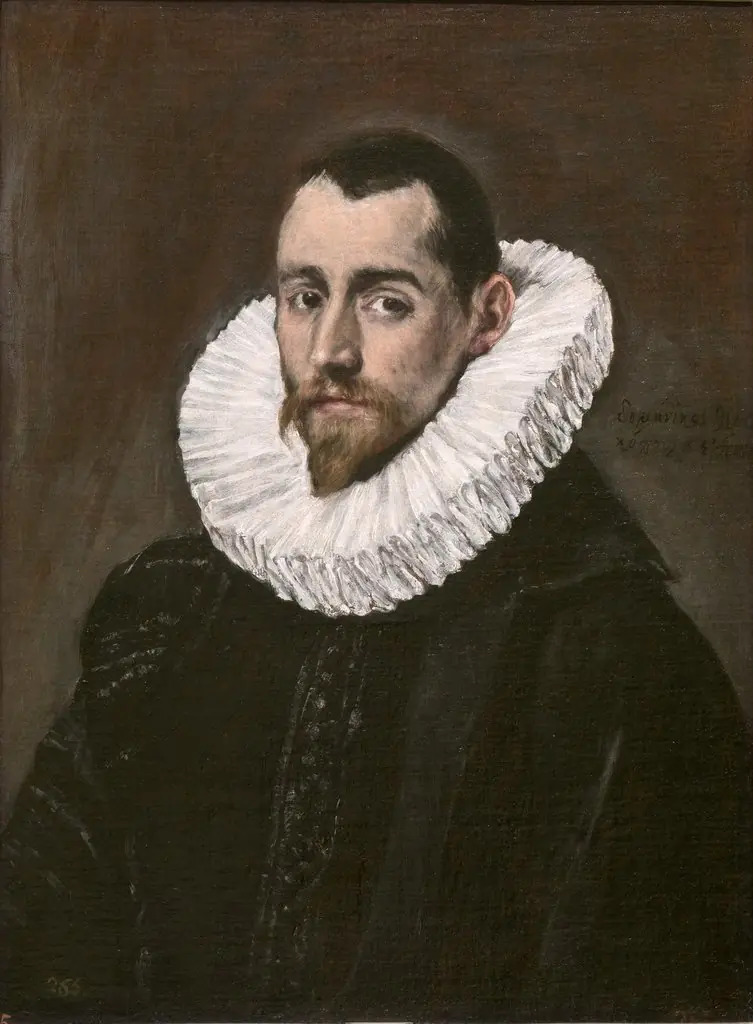
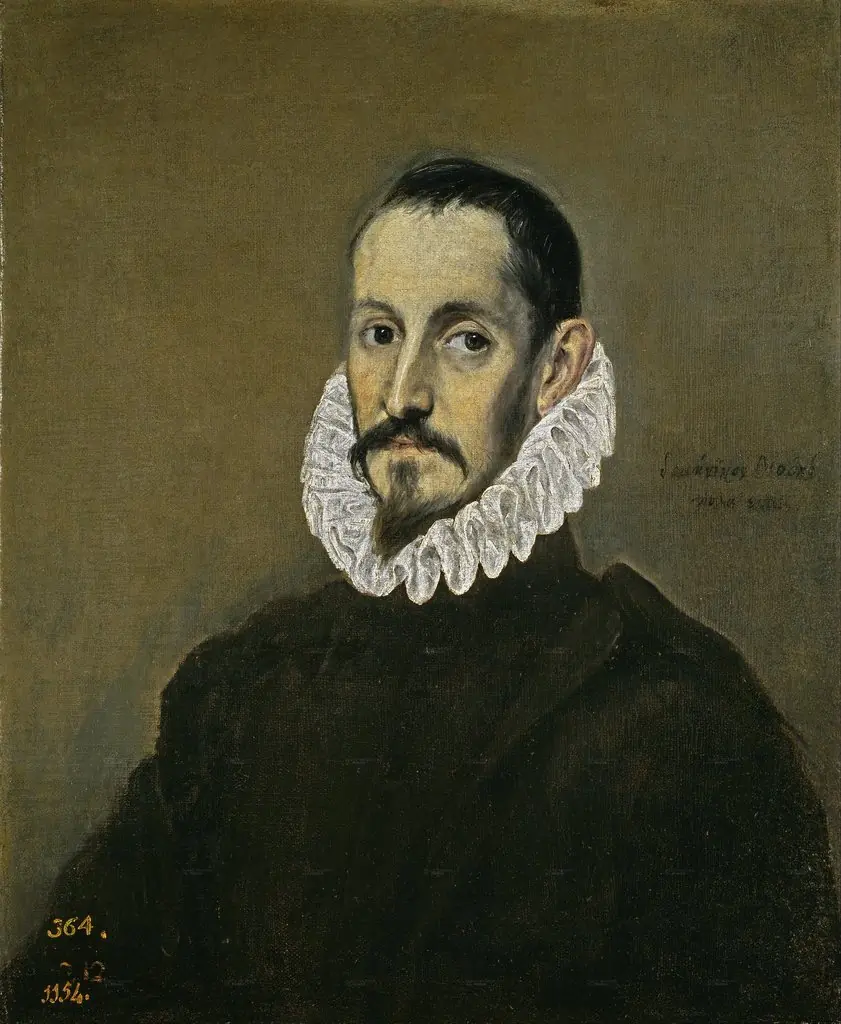
The work depicts an unidentified man dressed in black with a wide white ruff against a dark background, adhering to a standardized formula used by El Greco for his secular portraits of gentlemen. While the sitter's identity remains unknown, scholarly hypotheses suggest he may be the writer Miguel de Cervantes, the poet Eugenio Manzanas, or the Count of Mora, all of whom had connections to the artist. The subject's expression is characterized by a frank gaze that lacks hardness or suspicion, contrasting the detailed rendering of his nose with the smooth firmness of his forehead.
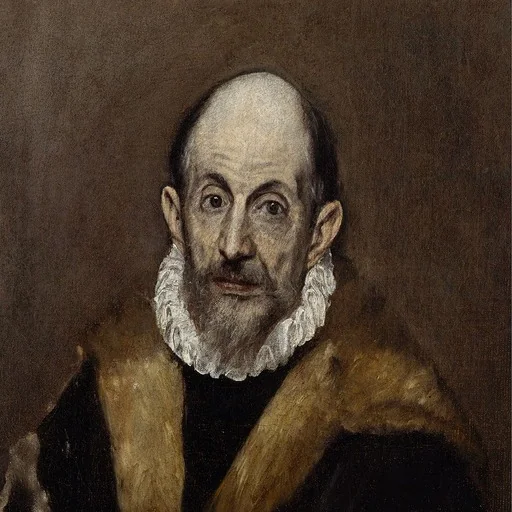
This portrait is part of a series of similar works featuring men in black attire with white collars, sharing stylistic proximity to the painting known as Portrait of an Old Gentleman.
Technique & Style
Stylistically, the composition adheres to a standardized formula featuring a half-length figure dressed in black with a wide ruff against a dark background.
Executed in oil on canvas, this portrait measures 64 by 51 centimeters. The artist signed the work on the left shoulder using cursive lowercase Greek letters. Stylistically, the composition adheres to a standardized formula featuring a half-length figure dressed in black with a wide ruff against a dark background.
The handling of the paint is characterized by thick, soft, and illusionistic brushstrokes that generate significant volume and depth, particularly in the facial features and the ruff. This technique creates a notable contrast between the finished texture of the nose and the smooth hardness of the forehead. Critics have observed an impressionistic quality in the chromatic range and the tenderness of the subject's expression, which lacks any hint of suspicion.
History & Provenance
Painted by El Greco in Toledo, this oil on canvas work measures 64 by 51 centimeters. While some authorities date the inception to 1600, other scholars propose a range between 1597 and 1605, with Harold Wethey specifically suggesting 1600 to 1605 based on the painting's soft, illusionistic brushwork. The artist signed the piece in Greek minuscules on the subject's left shoulder.
The painting's documented history begins in the Royal Collection under King Philip V. By 1745, it was recorded in the summer quarters of the Duke of Arco's estate at El Pardo, where it remained listed in inventory as late as 1794. It currently resides in the Museo del Prado in Madrid.
The painting is held in the Museo Nacional del Prado in Madrid, Spain, where it is cataloged under inventory number P000810. The work originates from the Royal Collection of Philip V and was specifically recorded in the inventory of the Quinta del Duque del Arco in El Pardo, appearing as the thirteenth summer piece in 1745 and the twelfth piece in 1794. It remains on display in one of the museum's galleries.
Context
Scholars date this portrait to between 1597 and 1605, with specific estimates varying among experts like Gudiol, Wethey, and the Museo del Prado. The work belongs to a series of secular portraits featuring unknown gentlemen in black attire with white ruffs against dark backgrounds, a formula El Greco standardized during his Toledo period. Art historian Camón Aznar noted an impressionistic quality in the thick brushwork that anticipates Velázquez, particularly in the volumetric rendering of the face and ruff.
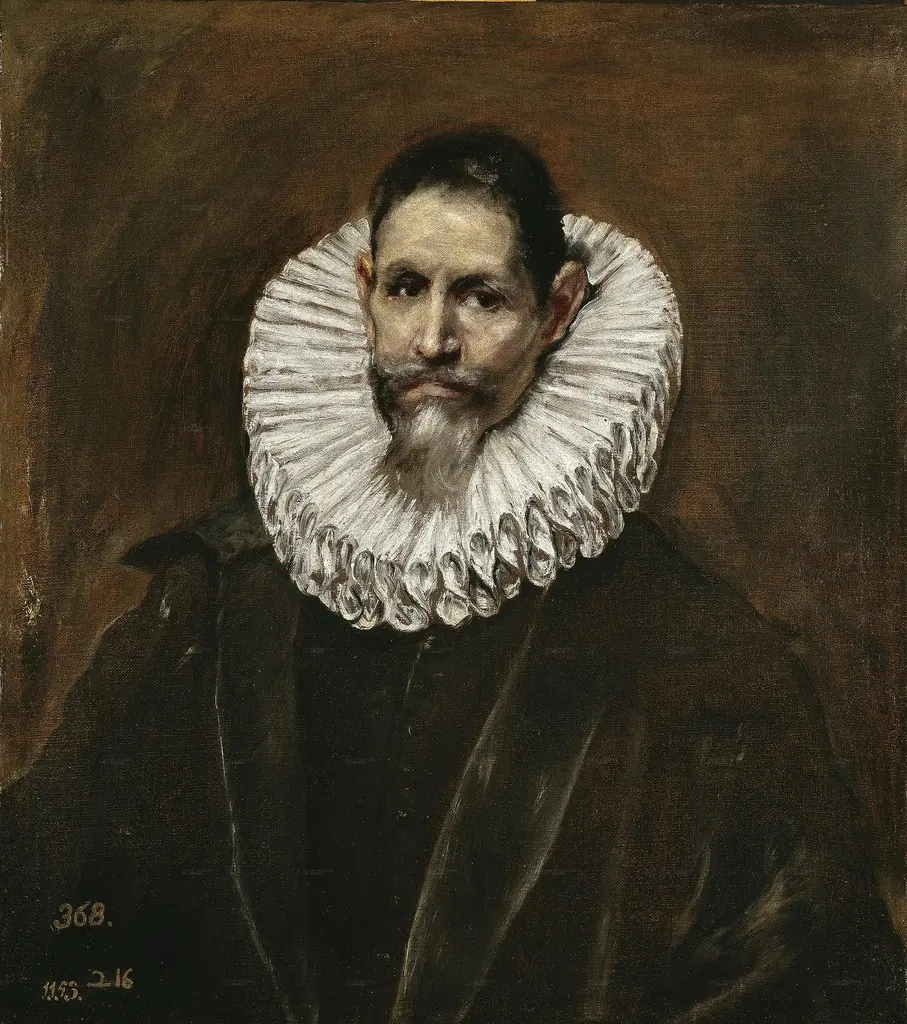
While the sitter's identity remains unconfirmed, hypotheses suggest it could depict Miguel de Cervantes, the poet Eugenio Manzanas, or the Count of Mora, all of whom had connections to the artist's circle. Wethey characterized the soft, illusionistic technique as indicative of a date slightly prior to the Portrait of Jerónimo de Cevallos, highlighting the tenderness of the expression.
Overview
El Greco’s oil portrait, titled Retrato de un caballero desconocido, was executed in Toledo between 1603 and 1607. The work is part of the Prado Museum’s collection and depicts a solitary figure in a dark setting, rendered with the artist’s characteristic elongated forms and expressive brushwork.
Own this work as a print
Artist & collection
Artist
Doménikos Theotokópoulos was born in 1541 in Candia (modern Heraklion), the capital of Venetian-ruled Crete, where he was trained in the post-Byzantine tradition of icon painting.

- Portrait of Jerónimo de Cevallos
 Portrait of a Young Gentleman
 Portrait of a gentleman
 Portrait of Gottfried Hautappel
 Portrait of a Gentleman
 Portrait of Rodrigo de la Fuente
 Portrait of an Elderly Man
 Portrait of Rodrigo Vázquez de Arce
 Portrait of a Man
 Portrait of a Man with Gloves
 Portrait of the landscape painter Jan Wildens
 Portrait of a Man