Artwork
Portrait of an Elderly Man
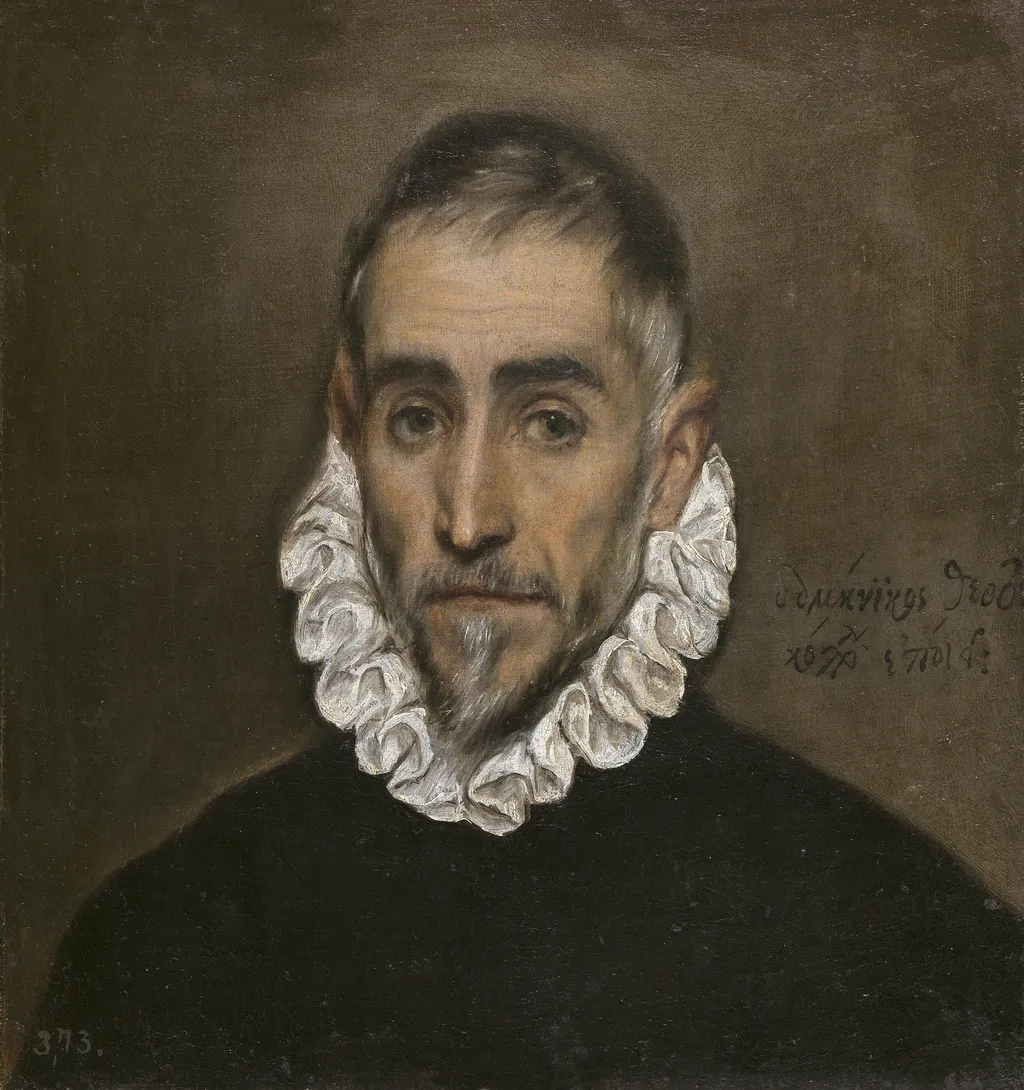
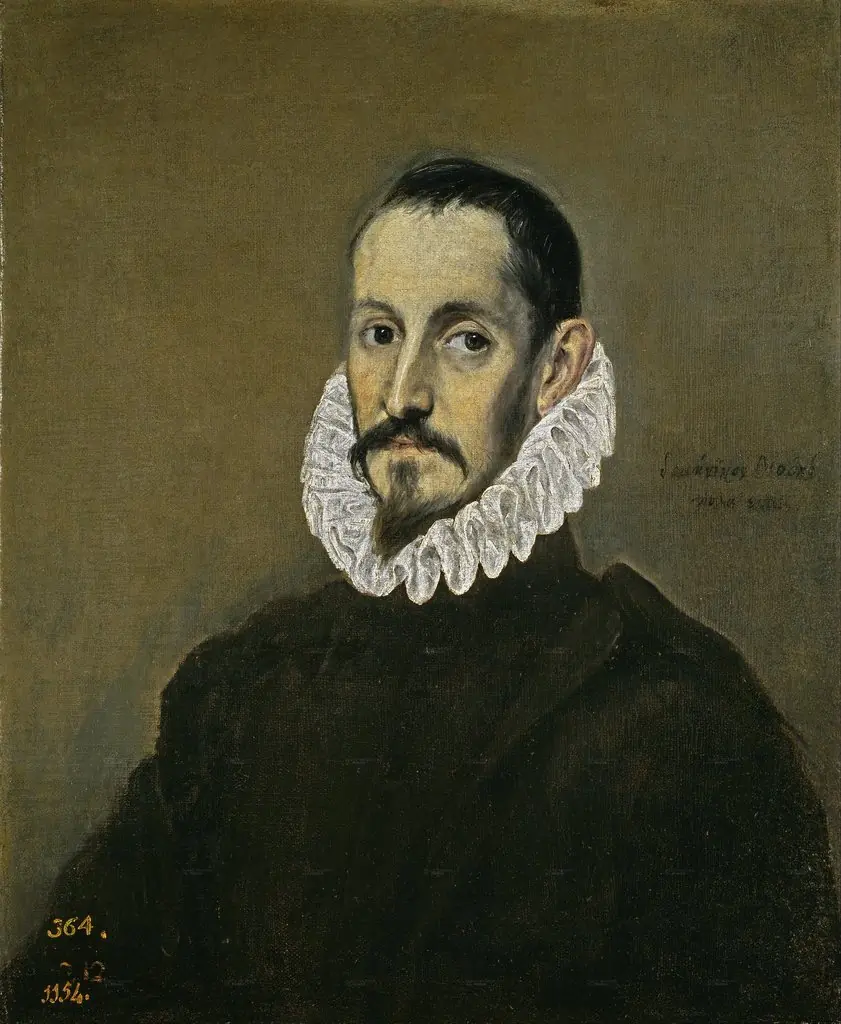
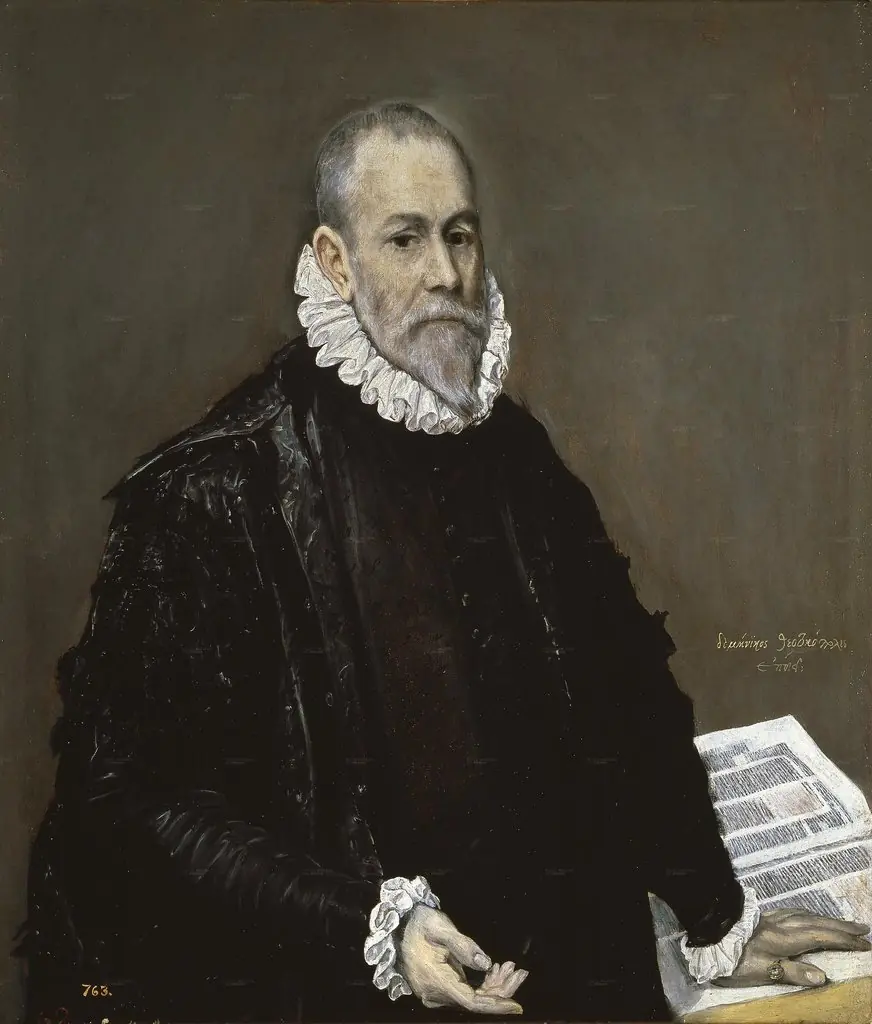
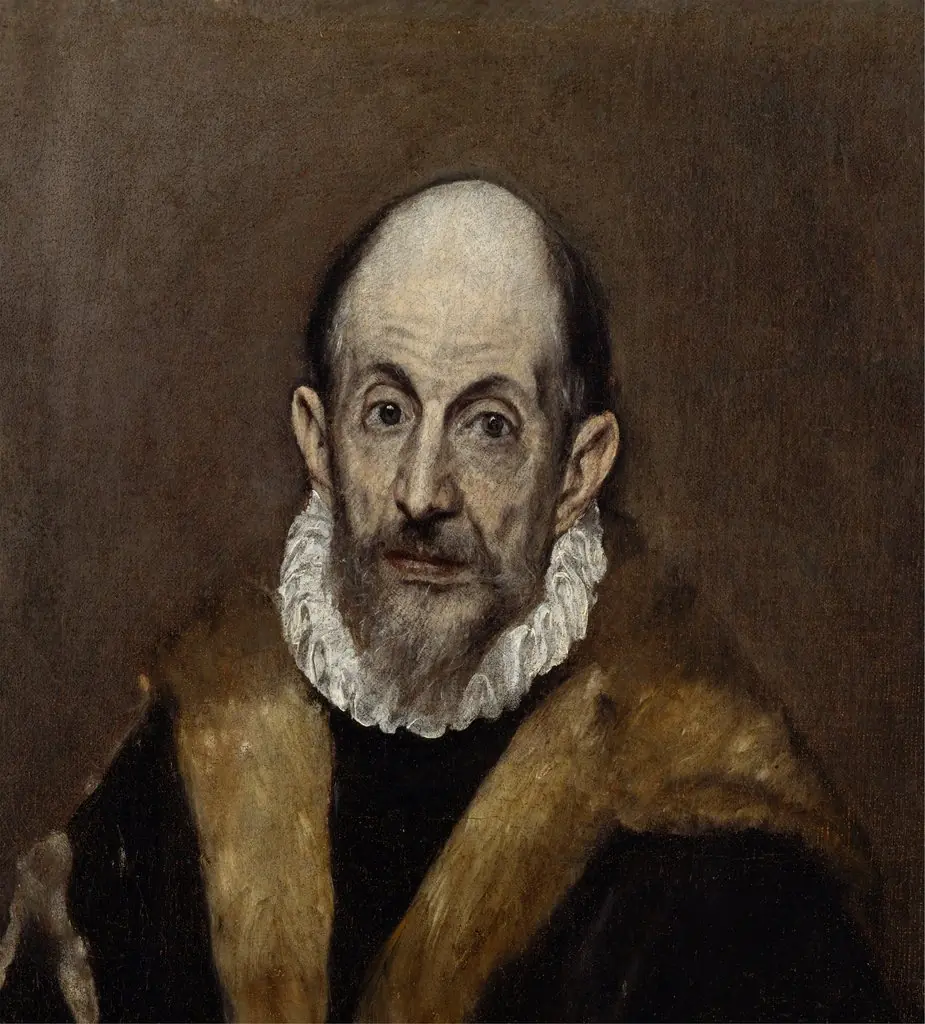
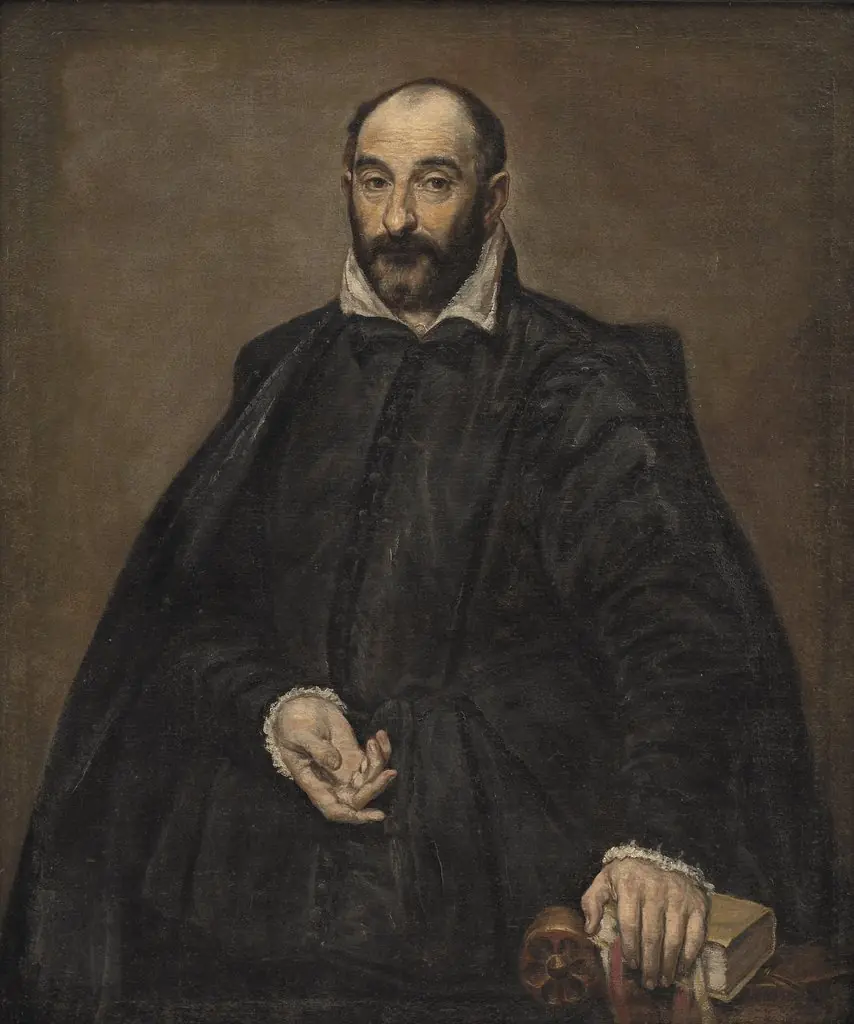
Portrait of an Elderly Man is an oil painting by the Mannerist artist El Greco. It dates from 1594 and is held in the collection of the Museo del Prado.
About this work
Subject & Meaning
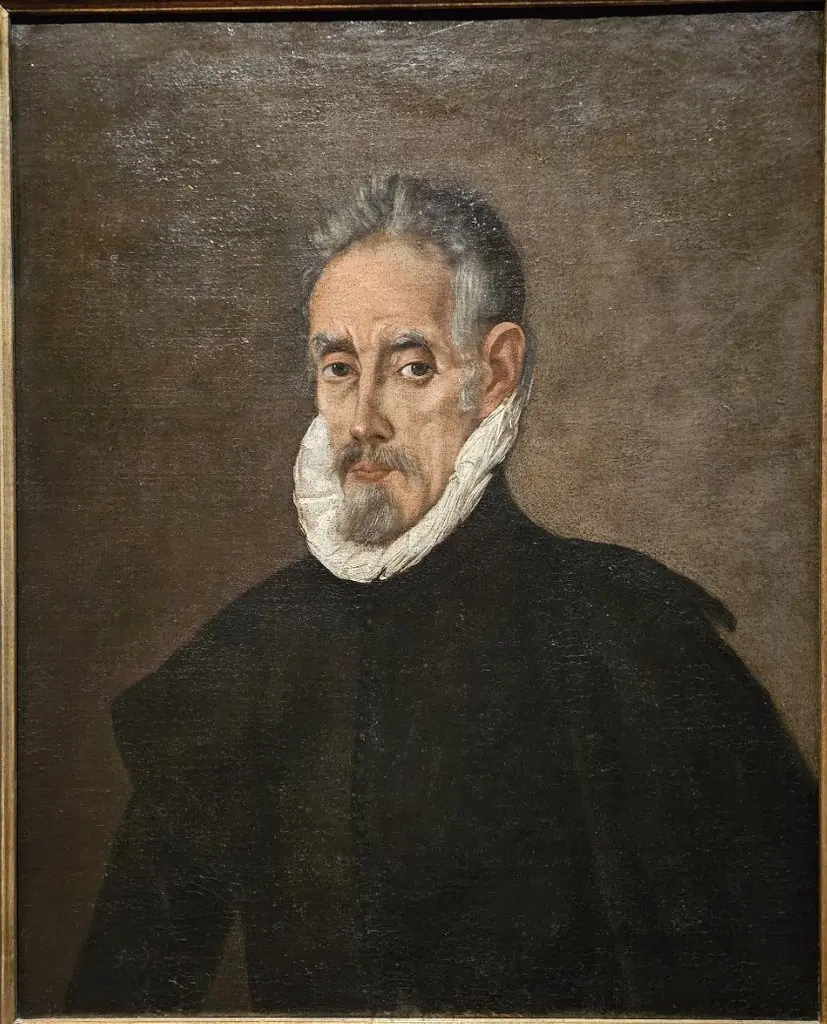
The painting depicts an unidentified elderly man, likely from Toledo where El Greco was active in the late 16th century, and is interpreted as representing a Castilian hidalgo through his dignified bearing and simple dark background.
The work's meaning is tied to its psychological depth and technical mastery, with critics highlighting its severe execution and the way light isolates the subject's head and shoulders to convey inner complexity.
Symbolically, the portrait reflects Counter-Reformation ideals of individual dignity and spiritual presence, achieved through the artist's characteristic use of elongated forms and expressive brushwork that blend physical realism with emotional resonance.
The subject's anonymity and the painting's later attribution as a model for copies underscore its historical significance as both a standalone masterpiece and a reference point for El Greco's portraiture.
Technique & Style
El Greco employed a dynamic handling of paint, utilizing both fine and thick brushstrokes to capture the subject's psychological complexity and expressive gaze.
Executed in oil on canvas, this portrait measures 46 by 43 centimeters and dates to the artist's late Toledo period, specifically circa 1585 to 1590. The composition features a bust-length figure set against a neutral dark background, with illumination concentrated on the head and a narrow white ruff. El Greco employed a dynamic handling of paint, utilizing both fine and thick brushstrokes to capture the subject's psychological complexity and expressive gaze. The work bears the artist's signature in Greek cursive characters located on the right margin above the left shoulder. Critics have noted the severe precision of the execution and the supreme simplicity of the form, marking it as a superior example of the artist's portraiture.
History & Provenance
Portrait of an Elderly Man is attributed to El Greco and was created around 1587, as indicated by multiple sources citing its date of execution. The work is an oil on canvas painting measuring 46 by 43 centimeters and is classified as a Mannerist portrait. It was originally stored in the basement of the Real Alcázar of Madrid before entering the collection of the Museo del Prado, where it remains today. The painting is signed in Greek characters on the right margin above the shoulder, reading 'domenikos theoto: / kopol´´epoiei', a detail noted in the Wikipedia entry. Its provenance traces back to the Spanish royal collection, specifically listed in the 1666 inventories of the Real Alcázar as item 476, described as 'media vara en quadro'. The work has been referenced by art critic Bartolomé Cossío in 1908 as one of El Greco's finest portraits, praised for its execution and simplicity.
The work is held by the Museo del Prado in Madrid, where it is catalogued under inventory number P000806. It was originally stored in the basement of the Real Alcázar of Madrid and appears in the 1666 Royal Alcazar inventories as item 476. The painting has been part of the Prado’s collection since at least the early 20th century and was highlighted in Bartolomé Cossío’s 1908 catalog. A watercolor copy by Ricardo de Madrazo was made in 1873, and a forged version attributed to El Greco is held by the Brooklyn Museum as part of the Michael Friedsam bequest.
Context
Scholarly attention to Portrait of an Elderly Man has centered on its technical and expressive synthesis within El Greco’s late Toledan period. Early twentieth-century critic Manuel Bartolomé Cossío positioned the work as a high point of the artist’s oeuvre, emphasizing its spare composition and incisive execution as hallmarks of a mature style. Twentieth-century cataloguers Harold Wethey and Tiziana Frati consolidated this view, assigning the canvas canonical status in El Greco’s portraiture and aligning it with the classic Castilian nobleman type that defined his Toledo years. The painting’s restrained palette and concentrated lighting, framing the sitter’s head against a dark ground, have been read as emblematic of Mannerist portraiture’s psychological intensity. Its influence is traced through multiple copies, including a 1873 watercolor study by Ricardo de Madrazo, underscoring the work’s enduring appeal. Technical scrutiny of a Brooklyn Museum forgery further underscored the original’s formal authority, as modern paint failed to replicate the aged cracking of El Greco’s technique.
Legacy
The painting has long been esteemed by scholars as one of El Greco's finest portraits. In his 1908 catalog, critic Bartolomé Cossío praised the work for its severe precision and supreme simplicity, suggesting it best captures the essence of the classic Castilian hidalgo. This high regard for the portrait's expressivity and technical execution explains the existence of several known copies produced after the original.
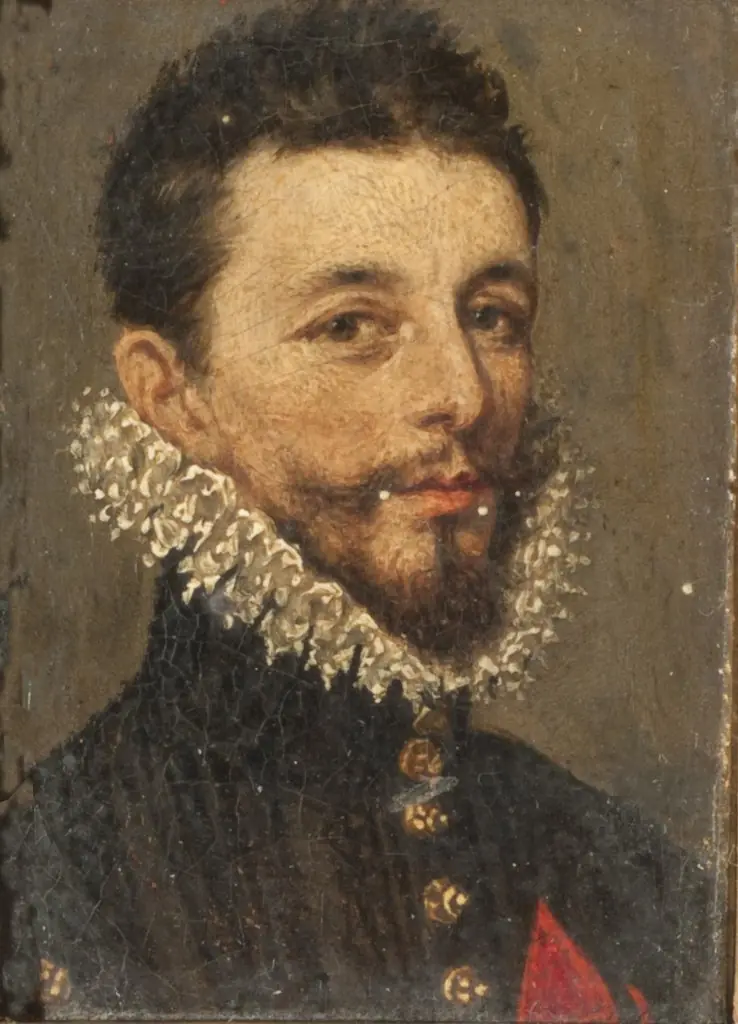
Among these derivatives is an 1873 watercolor study by Ricardo de Madrazo y Garreta. Additionally, a version held by the Brooklyn Museum, once thought to be an original, was later identified through X-ray analysis as a forgery painted over an older canvas fragment.
Own this work as a print
Artist & collection
Artist
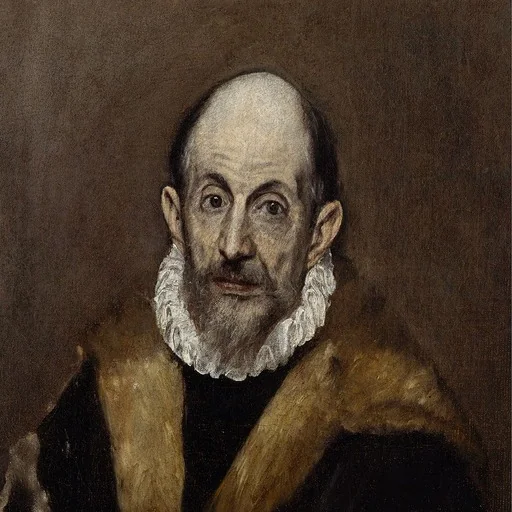
Doménikos Theotokópoulos was born in 1541 in Candia (modern Heraklion), the capital of Venetian-ruled Crete, where he was trained in the post-Byzantine tradition of icon painting.