Artwork
Christ and the Virgin in the House at Nazareth
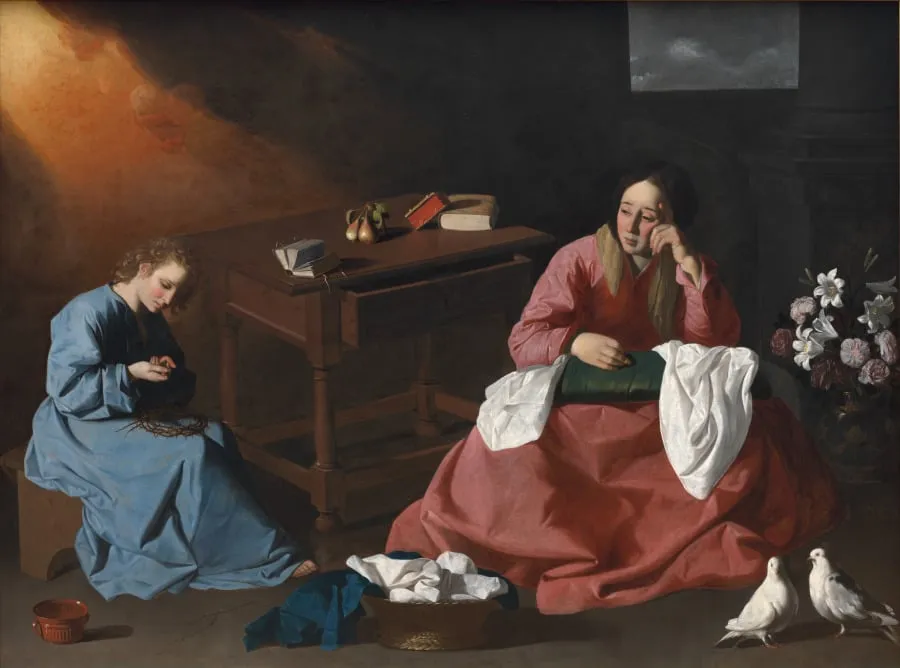
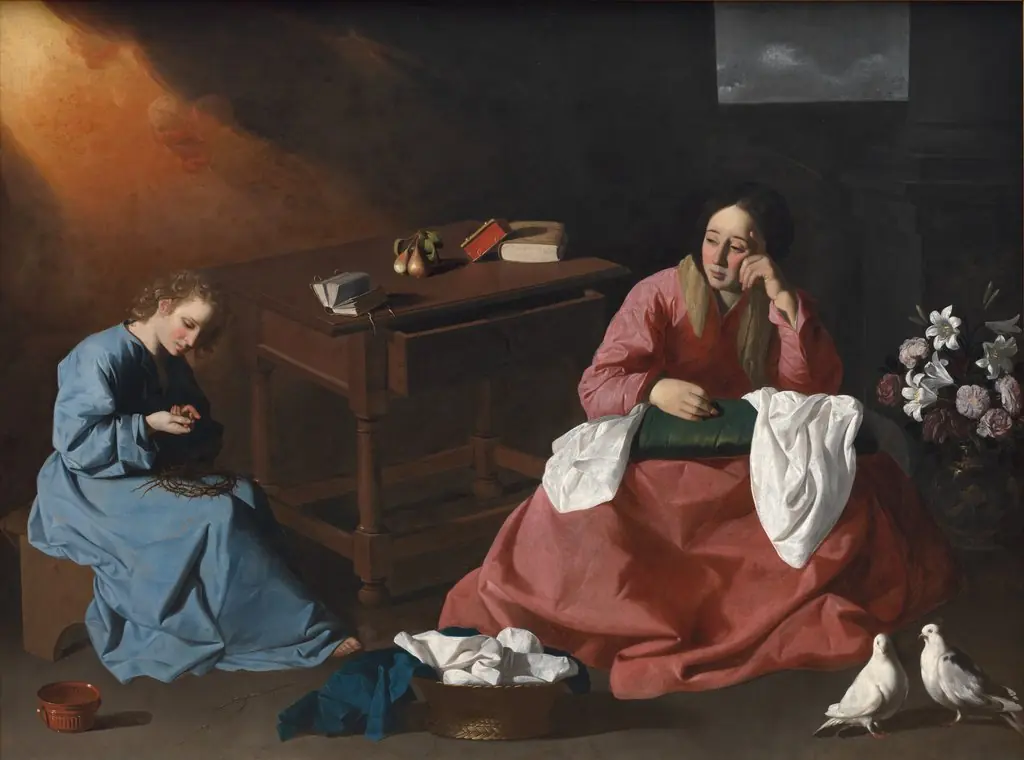
Christ and the Virgin in the House at Nazareth is an unspecified painting by the Baroque artist Francisco de Zurbarán. It dates from 1640 and is held in the collection of the Cleveland Museum of Art.
- Accession no.
- 1960.117
- Credit line
- Leonard C. Hanna Jr. Fund
About this work
Overview
Christ and the Virgin in the House at Nazareth is a painting by Zurbarán depicting a quiet moment between Jesus and his mother, Mary.
Subject & Meaning
The scene, not based on a biblical narrative, shows Jesus pricking his finger while weaving a crown of thorns, foreshadowing his Crucifixion. Mary's presence and reaction underscore the significance of the moment.
Technique & Style
The use of chiaroscuro creates a calm, introspective atmosphere, with soft light emphasizing the faces of the figures. The contrast between light and shadow adds depth to the simple, austere setting.
Context
The painting reflects the Counter-Reformation's focus on relatable stories from Christ's life, making the divine more accessible to a broad audience.
Artist & collection
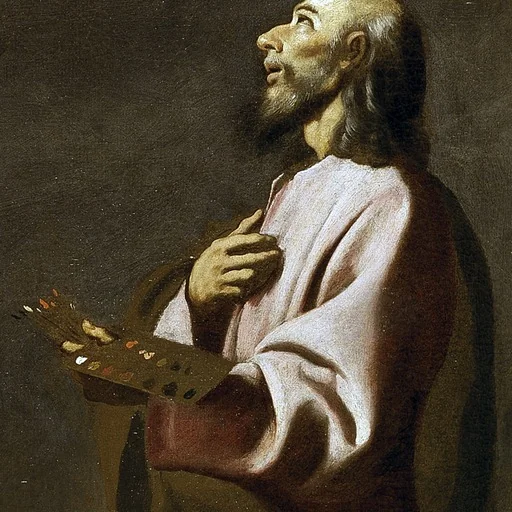
Artist
Francisco de Zurbarán was a Spanish Baroque painter. He is known primarily for his religious paintings depicting monks, nuns, and martyrs, and for his still-lifes. Zurbarán gained the nickname "Spanish Caravaggio",…