Artwork
Self-portrait of the Artist with his Daughter Antonia
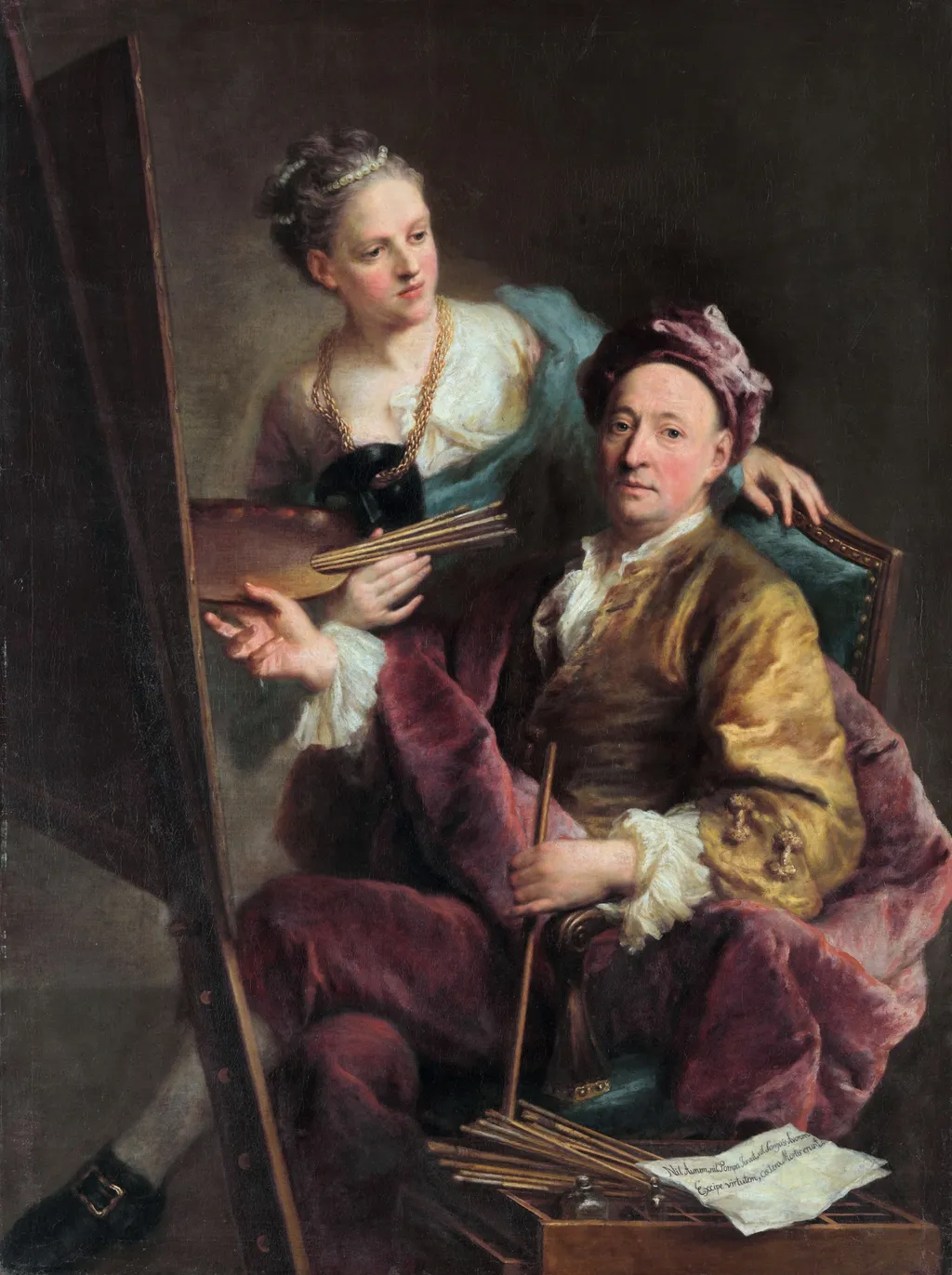
Self-portrait of the Artist with his Daughter Antonia is an oil painting by the Rococo painting artist Georg Desmarées. It dates from 1750 and is held in the collection of the Bavarian State Painting Collections.
About this work
Subject & Meaning
Georg Desmarées' 1750 oil painting, Self-portrait of the Artist with his Daughter Antonia, functions as a dual portrait within the genre of self-representation.
Georg Desmarées' 1750 oil painting, Self-portrait of the Artist with his Daughter Antonia, functions as a dual portrait within the genre of self-representation. The work depicts the artist himself alongside his daughter, Antonia, establishing a domestic and familial theme alongside his professional identity. As a self-portrait, the piece serves as a personal declaration of the artist's status and legacy, while the inclusion of his child introduces a layer of paternal intimacy.
The composition, held by the Bavarian State Painting Collections, presents the two figures as the main subjects, merging the public image of the painter with his private role as a father.
Technique & Style
The work is executed in oil paint on canvas, a standard support for mid-eighteenth-century European portraiture. According to the catalogue record, it measures 159 cm in height and 118 cm in width, giving it a tall, upright format suited to a half- or three-quarter-length composition of two figures.
The piece is classified as a painting and falls within the portrait genre, specifically identified as a self-portrait. Stylistically, it belongs to the tradition of formal family portraiture associated with Georg Desmarées, who worked in the courtly Rococo idiom of mid-18th-century Bavaria. The work is held by the Bavarian State Painting Collections at the Alte Pinakothek in Munich.
History & Provenance
Georg Desmarées created the oil-on-canvas self-portrait titled Self-portrait of the Artist with his Daughter Antonia in 1750. The work depicts the artist alongside his daughter and measures 159 cm in height by 118 cm in width. Currently, the painting is held within the collection of the Bavarian State Painting Collections.
It is specifically housed at the Alte Pinakothek in Munich. No further details regarding the specific commission, original ownership chain, or the precise circumstances of its creation are provided in the available records.
The painting is held in the collection of the Bavarian State Painting Collections and is located at the Alte Pinakothek. Created in 1750, the work measures 159 cm in height and 118 cm in width. The provided sources do not list a specific inventory or accession number, nor do they contain records of any exhibitions in which the artwork has been displayed.
Context
The work is typically dated to 1750 and is housed in the Alte Pinakothek in Munich, where it forms part of Georg Desmarées' exploration of familial portraiture within the broader Neoclassical movement. Scholars have noted its intimate composition as a significant departure from the grand historical subjects favored by contemporaries, highlighting the artist's role in advancing private portraiture during the mid-18th century. The painting's inclusion in the Bavarian State Painting Collections underscores its recognized importance within German art history, reflecting ongoing scholarly interest in Desmarées' contribution to early modern portraiture.
Overview
Georg Desmarées' Self-portrait of the Artist with his Daughter Antonia, executed in 1750, is a significant late work by the German painter that documents his professional identity alongside his familial role. The composition features the artist seated in a dimly lit interior, dressed in a yellow coat and white wig, holding a piece of paper and a drawing tool, likely a stylus or pencil. Standing behind him is his daughter Antonia, who wears a light blue dress with lace cuffs and a pearl necklace; she gestures toward the paper the artist holds, suggesting a shared engagement with his craft or a specific study.
A cane rests near the artist, and the scene is grounded by objects on the floor, reinforcing the domestic yet professional atmosphere. Painted during the height of Desmarées' career as a court painter in Munich, this work serves as a dual testament to his technical mastery of oil portraiture and his personal life. Unlike many formal court portraits of the era, this intimate grouping humanizes the artist, presenting him not merely as a servant of the court but as a father and mentor.
The painting remains a key example of mid-18th-century German portraiture, illustrating the artist's ability to blend psychological depth with elegant Rococo styling.
Own this work as a print
Artist & collection

 Een schilder aan het werk
 Self-portrait with Daughters Henriette Joyard and Marie de Rège in front of the easel
 Self-Portrait with his Wife Marie-Sybille, born Krumm
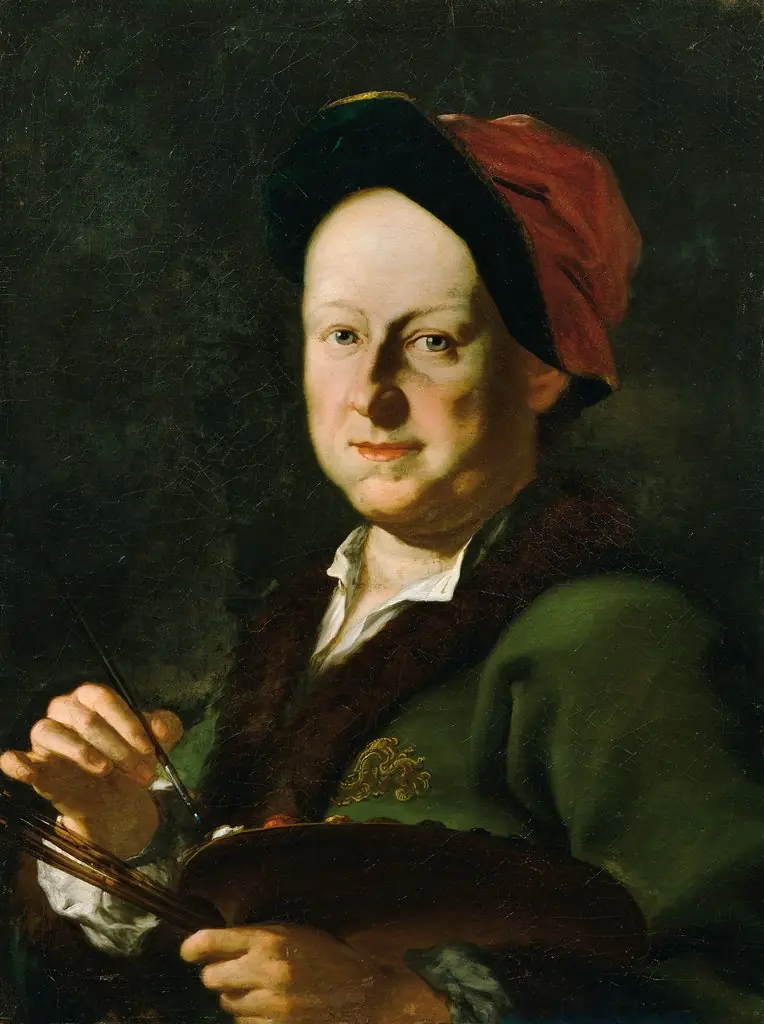 Portrait of the battle painter August Querfurt (1696-1761)
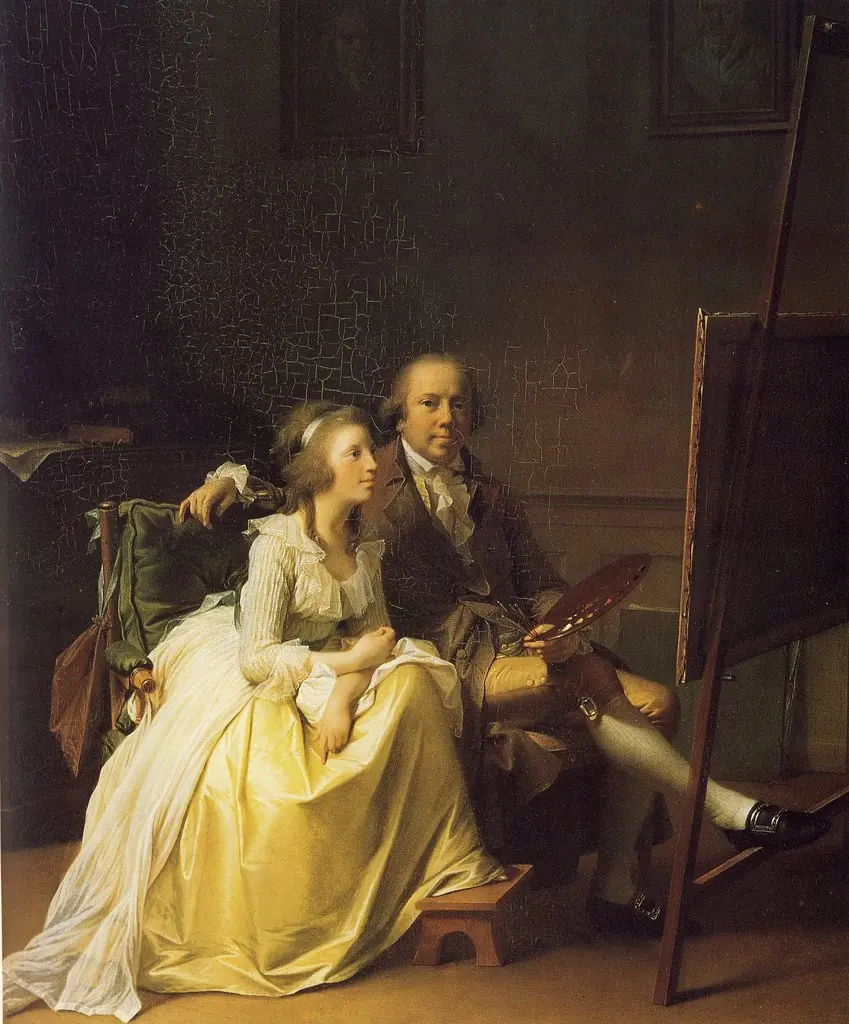 The Artist and his Wife Rosine, née Dørschel
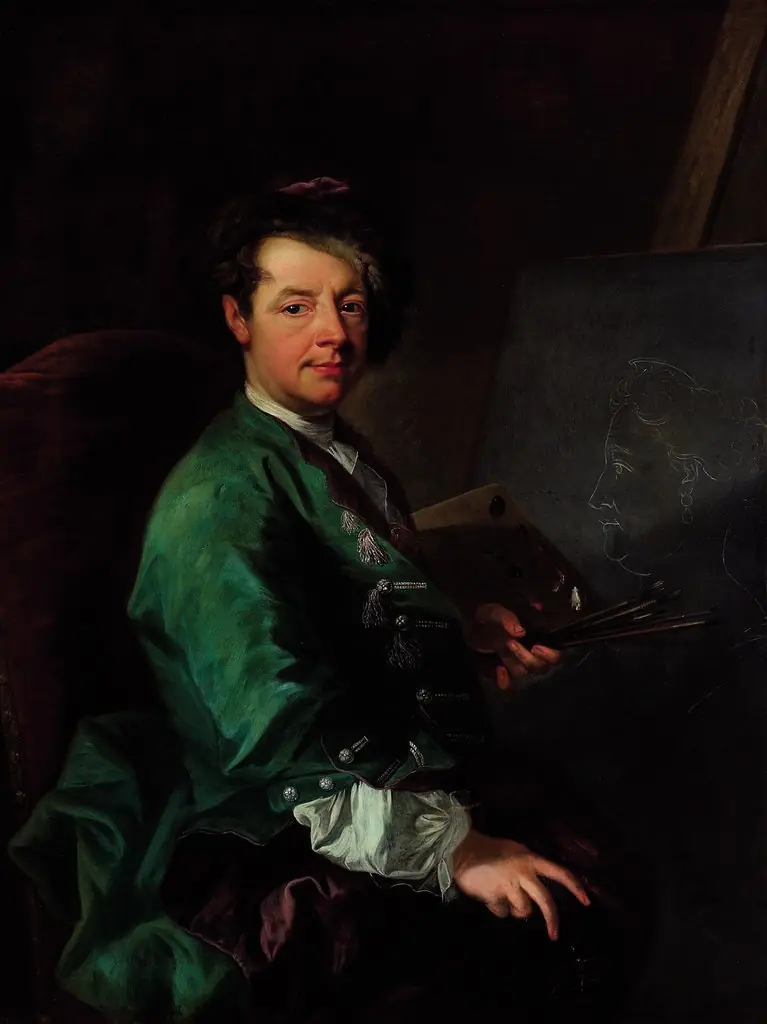 Self-portrait
 Portrait of a Painter (presumably C. L. Agricola, 1667-1719)
 Maler und Modell (Umkreis)
 Portrait of a Painter, probably a Self Portrait